
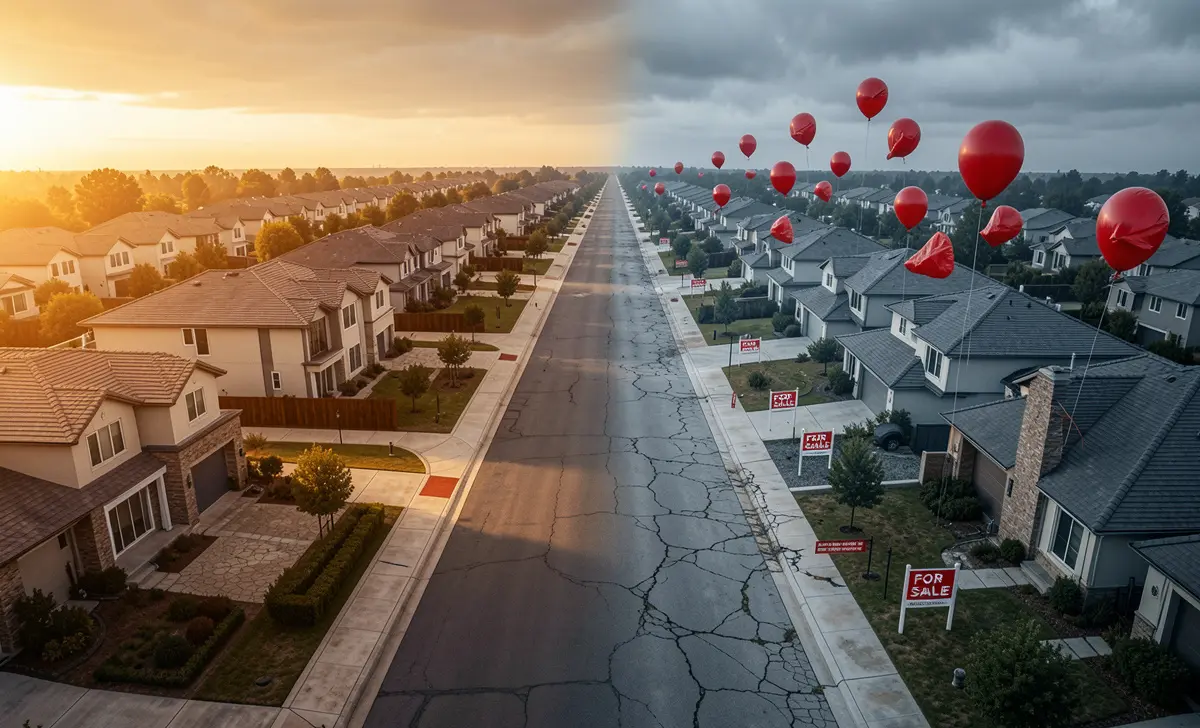
Home prices can rise so fast that buyers start fearing they may never afford a house again. That fear often pushes people to buy quickly, even when prices no longer match real market value. Understanding real estate bubble signs early can help buyers and investors make smarter decisions before the market turns. A real estate bubble happens when property prices grow too fast because of speculation, easy credit, and market hype. Buyers, investors, and homeowners all watch for warning signs because housing crashes can wipe out savings and hurt the broader economy.
In this guide, you will learn what a real estate bubble is, how it forms, the major warning signs before a crash, and how buyers can protect themselves from bad market timing.
What Is a Real Estate Bubble?
A real estate bubble happens when home prices rise far above their true market value. Demand grows quickly, buyers rush into the market, and prices keep climbing because people believe values will continue increasing indefinitely.
At first, the market looks strong. Builders construct more homes, investors buy multiple properties, and lenders approve more mortgages. Over time, however, prices become completely disconnected from incomes, rents, and economic reality. When you look at global real estate cooling patterns, you can see how quickly overheated markets can shift direction once economic conditions change.
When demand slows or borrowing becomes expensive, prices can fall sharply. That sudden drop is what economists call a housing market crash. The effects ripple far beyond homeowners — banks, businesses, and entire national economies often feel the consequences.
How Does a Real Estate Bubble Form?
Most housing bubbles follow similar stages that build on each other over several years.
Stage 1 — Economic Growth and Low Interest Rates: Central banks lower interest rates to encourage borrowing. Cheap mortgages make homes easier to purchase, which brings more buyers into the market. Demand increases faster than supply.
Stage 2 — Rapid Price Appreciation: Prices begin rising every month. Buyers develop a fear of missing out. News headlines and social media fuel excitement, and investors enter the market hoping for fast profits.
Stage 3 — Speculation Expands: People start buying homes mainly to resell them at higher prices. Some investors purchase properties without any long-term plan to live in them or rent them out. This stage creates the most dangerous market behavior.
Stage 4 — Market Peaks: Prices become too high for average buyers. Mortgage payments start consuming large portions of household income. Inventory slowly starts growing because fewer buyers can actually afford homes.
Stage 5 — Crash or Correction: Demand weakens noticeably. Prices stop rising and may suddenly fall. Owners who borrowed heavily may struggle with payments. Foreclosures increase, and panic selling begins, pushing prices even lower.
What Are the Main Signs of a Housing Bubble?
Several warning signs usually appear before a housing market crash. No single sign guarantees a collapse, but when multiple indicators appear together, the danger becomes very real.
1. Rapid Home Price Growth
One of the clearest warning signs is unusually fast price growth. When home values rise much faster than wages or inflation, the market may be overheated. During the 2008 United States housing crisis, home prices in many cities doubled within just a few years. According to the S&P/Case-Shiller U.S. National Home Price Index, prices climbed rapidly between 2000 and 2006 before collapsing.
A healthy market usually shows steady, sustainable growth. Sharp price spikes often signal speculative behavior rather than genuine demand.
2. High Household Debt Levels
Housing bubbles often depend on borrowed money. When buyers take large mortgages relative to their income, financial risk increases significantly. High debt leaves homeowners vulnerable when interest rates rise or job markets weaken.
Economists closely monitor the debt-to-income ratio because it shows whether households can realistically manage mortgage payments. Countries with rapidly rising mortgage debt frequently face higher housing risks during economic downturns.
3. Speculative Buying and Investor Frenzy
Speculation happens when people buy homes mainly for profit rather than long-term use or residence. Warning signs of speculative frenzy include investors buying multiple homes at once, house flipping increasing quickly, buyers waiving property inspections, bidding wars becoming common, and fear-driven buying decisions replacing careful analysis.
During bubble periods, many people genuinely believe prices can “only go up.” That dangerous mindset often appears near market peaks, just before sharp corrections begin. According to economists from the International Monetary Fund, speculative activity can make housing markets deeply unstable because prices become completely disconnected from real demand.
4. Oversupply of Homes
Builders often respond to rising prices by constructing more homes. At first, low inventory supports higher prices. Later, oversupply can develop if construction outpaces real demand. Common oversupply signals include rising housing inventory, empty apartment buildings, falling rental occupancy rates, longer selling times, and increasing price cuts on listed properties.
When too many homes enter the market at once, sellers compete aggressively for fewer buyers. Prices can then decline quickly and sharply.
5. Loose Lending Standards
Easy credit played a major role in many past housing crashes. Banks sometimes approve risky loans during boom periods because they expect property prices to keep rising. Danger signs include low down-payment mortgages, adjustable-rate loans, no-income verification loans, high loan-to-value ratios, and increased subprime lending.
Before the 2008 crash, many lenders issued mortgages to buyers with weak credit histories. When interest rates increased, millions of homeowners struggled to repay their loans, triggering a wave of foreclosures.
6. Rising Interest Rates
Interest rates directly affect housing affordability. When central banks raise rates, mortgage payments become more expensive. Buyers qualify for smaller loan amounts, which reduces overall market demand. Even small rate increases can significantly affect monthly payments. A mortgage rate jump from 3% to 7%, for example, can add hundreds of dollars to monthly housing costs. Higher borrowing costs frequently slow housing markets after periods of rapid growth.
7. Declining Affordability
Affordability measures whether average households can reasonably purchase homes in a given market. A dangerous imbalance appears when home prices rise faster than incomes, when renting becomes significantly cheaper than owning, and when mortgage payments begin consuming very large percentages of household income.
Housing experts regularly compare the price-to-income ratio across cities and countries. When average families can no longer afford homes at current prices, demand eventually weakens — and that weakness may trigger significant price declines.
Historical Examples of Real Estate Bubbles
Several major housing bubbles shaped global economies and serve as important lessons today.
The United States Housing Bubble (2000–2008) became one of the worst financial crises in modern history. Easy mortgage lending, rapid speculation, adjustable-rate mortgages, and financial market risks all combined to create a collapse that triggered global recession and bank failures.
The Japan Real Estate Bubble (1980s) saw property prices surge dramatically during the late 1980s. At peak levels, land in Tokyo became among the world’s most expensive real estate. Prices later collapsed, causing years of economic stagnation that Japan took decades to recover from.
The Spanish Housing Bubble (1997–2008) involved massive construction growth before the global financial crisis. When demand weakened, severe oversupply caused price declines and unemployment in construction industries across the country.
How to Protect Yourself During a Housing Bubble
Buyers and investors can significantly reduce risk by staying disciplined and informed. If you are currently evaluating property value appreciation by neighborhood, comparing recent sales data can help you spot overpriced areas before committing to a purchase.
Focus on Affordability: Buy a home you can comfortably afford even if rates rise later. Financial experts often recommend keeping total housing costs below 30% of monthly income.
Avoid Emotional Buying: Fear of missing out leads many buyers into overpriced markets. Take time to compare prices, neighborhood trends, and long-term value before making any decisions.
Watch Market Indicators: Track interest rates, inventory levels, local job growth, mortgage delinquency rates, and price-to-income ratios. These indicators provide early and reliable clues about market health.
Get a Proper Home Inspection: Never skip due diligence during uncertain market periods. Using a thorough home inspection checklist helps uncover hidden problems that could significantly impact a property’s true value, especially when buyers are competing aggressively.
Build Emergency Savings: Economic downturns can affect jobs and income quickly. Strong savings help homeowners avoid financial stress during market corrections and unexpected downturns.
Will the Housing Market Crash Again?
Housing markets move in cycles, so future corrections are always possible. However, not every price decline becomes a full crash. Some markets experience gradual slowdowns instead of sudden collapses.
Experts from organizations like the National Association of Realtors and various central banks monitor affordability, mortgage debt, and lending standards closely. Modern lending rules in many countries are stricter than they were before 2008. Still, rising rates, weak affordability, and excessive speculation remain major risks that can destabilize even well-regulated markets.
Final Thoughts
What real estate bubbles consistently teach us is that rapid price growth does not last forever. Markets become most dangerous when fear and speculation replace careful financial decisions. When you are preparing to buy or sell, it also helps to understand how to prepare property for sale quickly to take advantage of strong market conditions before a downturn begins.
The biggest warning sign is never rising prices alone. It is when prices rise far faster than incomes, affordability, and economic reality — that is when bubbles become most dangerous, and when caution matters most.