
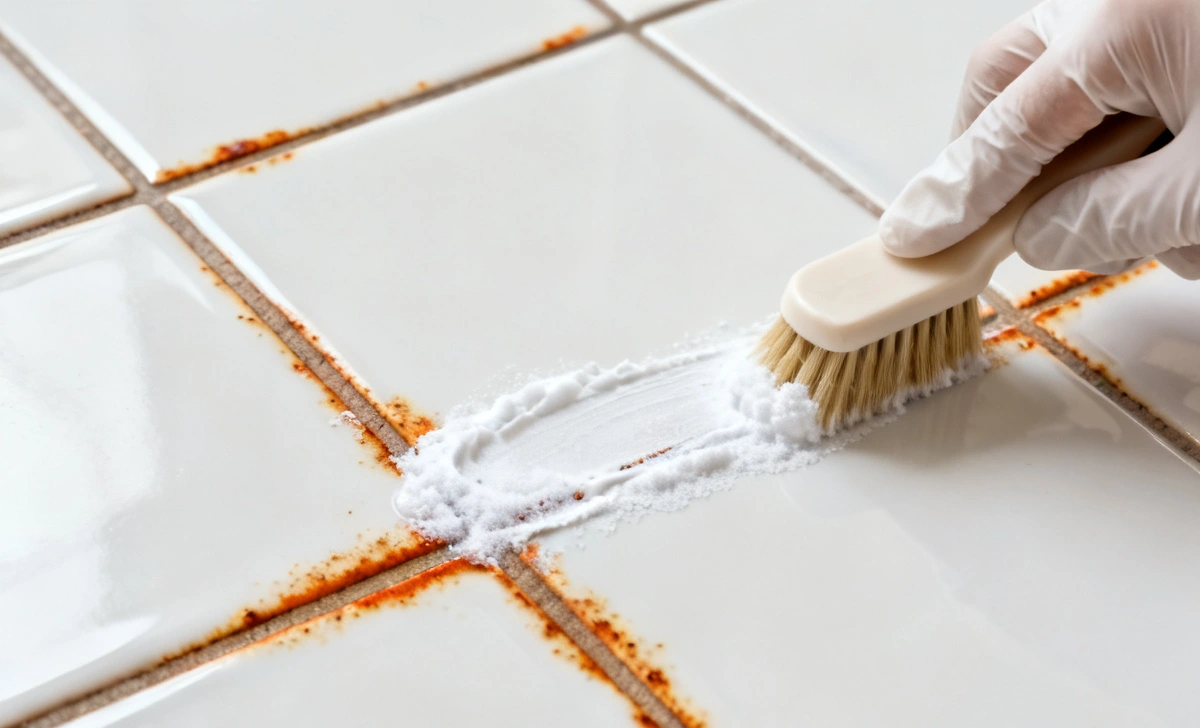
That stubborn orange stain spreading across your bathroom tiles can feel impossible to remove — no matter how much you scrub.
The good news: you don’t need harsh chemicals or expensive tools. There are safe, effective ways to remove rust stains without damaging your tiles or grout.
In this guide, you will learn how to remove rust stains from bathroom tiles using safe, proven methods — including natural solutions and commercial cleaners that actually work.
What Causes Rust Stains on Bathroom Tiles?
Rust stains form when iron-containing materials make contact with your tile surface. Water — especially hard water — speeds up this reaction.
Common sources include:
- Metal shaving cans left sitting on wet tile ledges
- Aging metal fixtures like faucets, towel bars, or drain covers that corrode over time
- Hard water deposits containing iron that leave orange or brown rings
- Leaky pipes behind walls that bleed rust through grout
- Metal soap dishes or razor holders with exposed iron at the base
For example, a shaving cream can with a rusty bottom ring can stain a white tile within 24–48 hours of exposure to moisture.
Can Rust Stains Damage Bathroom Tiles?
Rust stains are mostly a surface issue on glazed ceramic or porcelain tiles. However, if ignored for months, iron compounds can penetrate deep into unglazed tiles and porous surfaces.
The bigger risk is the grout. Grout is porous by nature. Rust can seep in and become nearly impossible to remove without professional help — or full grout replacement.
Treating rust stains early saves time, money, and tile damage.
How to Remove Rust Stains from Bathroom Tiles (Step-by-Step)
Below are four proven methods. Start with Method 1 for fresh stains — move to stronger options for older or stubborn rust.
Method 1 — Lemon and Baking Soda (Natural Solution)
Time required: 15–20 minutes
Best for: Fresh, light stains
Safe for: Ceramic and porcelain tiles
- Squeeze fresh lemon juice directly onto the rust stain and let it sit for 5 minutes.
- Sprinkle a generous amount of baking soda over the juice — it will fizz.
- Scrub the area gently using a soft-bristle brush or an old toothbrush in circular motions.
- Let the paste sit for 10 more minutes.
- Rinse thoroughly with warm water and dry the surface.
Safety tip: Lemon juice is mildly acidic — avoid using it on natural stone tiles like marble or travertine. It can etch the surface.
Method 2 — Vinegar and Salt
Time required: 20–30 minutes
Best for: Moderate stains
Safe for: Glazed tile only
- Mix white vinegar and salt into a thick paste (roughly 2:1 ratio).
- Apply the paste directly to the stain using a cloth or sponge.
- Let it sit for 15–20 minutes to break down the iron oxide.
- Scrub with a non-scratch pad or soft brush.
- Rinse completely and wipe dry.
Safety tip: Do not leave vinegar on grout for more than 10 minutes. Prolonged exposure weakens grout over time — a lesser-known risk many DIYers overlook.
Method 3 — Commercial Rust Removers
Time required: 10–15 minutes
Best for: Stubborn or set-in stains
Top picks: Zout, CLR, Bar Keepers Friend
- Read the product label carefully and check tile compatibility.
- Apply the remover to the stain using a damp cloth or sponge — do not dilute unless directed.
- Let it dwell for the time specified on the label (usually 5–10 minutes).
- Scrub with a soft brush — avoid steel wool, which scratches glaze.
- Rinse with clean water immediately. Ventilate the room well.
Safety tip: Always wear rubber gloves and ensure good ventilation. Never mix commercial rust removers with bleach — the reaction produces toxic fumes.
Method 4 — Hydrogen Peroxide Paste
Time required: 25–35 minutes
Best for: Discolored grout and tile
Safe for: Most glazed surfaces
- Mix hydrogen peroxide (3%) with cream of tartar or baking soda to form a thick paste.
- Apply to the stained area and let it sit for 20–30 minutes.
- Scrub gently using a soft-bristle brush.
- Rinse thoroughly and inspect. Repeat if needed.
Safety tip: Use only 3% hydrogen peroxide (drugstore grade). Higher concentrations can bleach colored grout and irritate skin.
Expert Tip: Cleaning professionals recommend testing any cleaner on a small, hidden tile corner first — especially on colored or patterned tiles. What works on white ceramic may dull a specialty finish. A 30-second test prevents permanent damage to your entire floor or wall.
What Is the Best Rust Remover for Bathroom Tiles?
The best option depends on your tile type and stain severity.
- Ceramic tiles: Lemon and baking soda for light stains. Bar Keepers Friend for stubborn ones. Both are glaze-safe.
- Porcelain tiles: CLR or hydrogen peroxide paste. Porcelain is dense — most commercial removers are safe when rinsed quickly.
- Grout lines: Hydrogen peroxide paste or baking soda. Avoid prolonged acid exposure — it degrades grout binding.
- Natural stone: Use only stone-safe products. Lemon and vinegar will etch marble. Consult a professional.
Natural vs commercial: Natural solutions work well on fresh stains and are safer for grout. Commercial removers are more effective on set-in stains but require more caution.
How to Remove Rust Stains from Grout Without Damage
Grout is porous and sensitive to acids. Use a gentle approach and the right tools.
- Use a narrow toothbrush or grout brush — never a metal scrubber
- Apply hydrogen peroxide paste and let it sit no longer than 15 minutes
- Scrub in the direction of the grout line using light pressure
- Rinse thoroughly — residue left in grout can attract more staining
- After cleaning, apply a grout sealer to protect against future rust penetration
Avoid vinegar and lemon juice directly on grout for more than 10 minutes. Acidic cleaners can weaken grout over time — this is a common mistake that causes crumbling months later.
Mistakes to Avoid When Removing Rust Stains
- Using strong hydrochloric or muriatic acid can etch glaze, discolor tiles, and release harmful fumes
- Scrubbing with steel wool or abrasive pads — permanently scratches tile glaze, making it harder to clean in the future
- Mixing bleach with rust removers creates toxic chlorine gas; never combine these
- Leaving acid-based cleaners on too long — even natural acids like lemon damage grout with prolonged contact
- Skipping a rinse — chemical residue left on tiles continues to react and may cause new discoloration
How to Prevent Rust Stains on Bathroom Tiles
Prevention is faster than cleaning. A few simple habits keep rust stains from forming.
- Switch to rust-proof fixtures — choose stainless steel, chrome, or plastic fittings over iron-based metals
- Dry metal items after use — lift shaving cans, razors, and metal holders off tile surfaces; use a plastic tray instead
- Install a water softener — if you have hard water with high iron content, a whole-home softener reduces mineral staining significantly
- Seal grout annually — a grout sealer prevents iron and moisture from penetrating porous lines
- Weekly wipe-down — a quick spray of white vinegar solution (diluted 1:4 with water) on tiles prevents buildup before it starts
When Should You Use a Professional Cleaner?
DIY methods work for most rust stains. But some situations call for a professional.
- The stain has been there for months or years and has penetrated deep into the grout
- You have natural stone tiles (marble, slate, travertine), where acid-based DIY methods would cause damage
- The rust originates from a leaking pipe inside the wall — the source needs fixing, not just the surface
- After multiple attempts, the stain remains unchanged
Cost comparison: A professional tile cleaning service typically costs $100–$300 for a bathroom. Compare that to DIY methods costing under $10 using household items. For most fresh-to-moderate stains, DIY is clearly the smart first step.
Key Takeaways — Removing Rust Stains the Right Way
- Rust stains come from metal objects, corroded fixtures, and iron-rich hard water
- Fresh stains respond well to lemon and baking soda or vinegar and salt — no chemicals needed
- For stubborn stains, use hydrogen peroxide paste or a commercial product like Bar Keepers Friend or CLR
- Protect grout by limiting acid exposure — rinse within 10 minutes and seal grout annually
- Never mix bleach with any rust remover — the reaction is hazardous
- Prevent stains by removing metal items from wet tile surfaces and drying fixtures regularly
- Call a professional if stains are deep-set, the tile is natural stone, or the source is a plumbing issue
Final Thoughts
Rust stains are common, but they are absolutely manageable with the right approach. You don’t need to replace tiles or spend a fortune.
Simple household items like lemon juice, baking soda, and hydrogen peroxide can outperform harsh chemicals — especially when you act fast.