
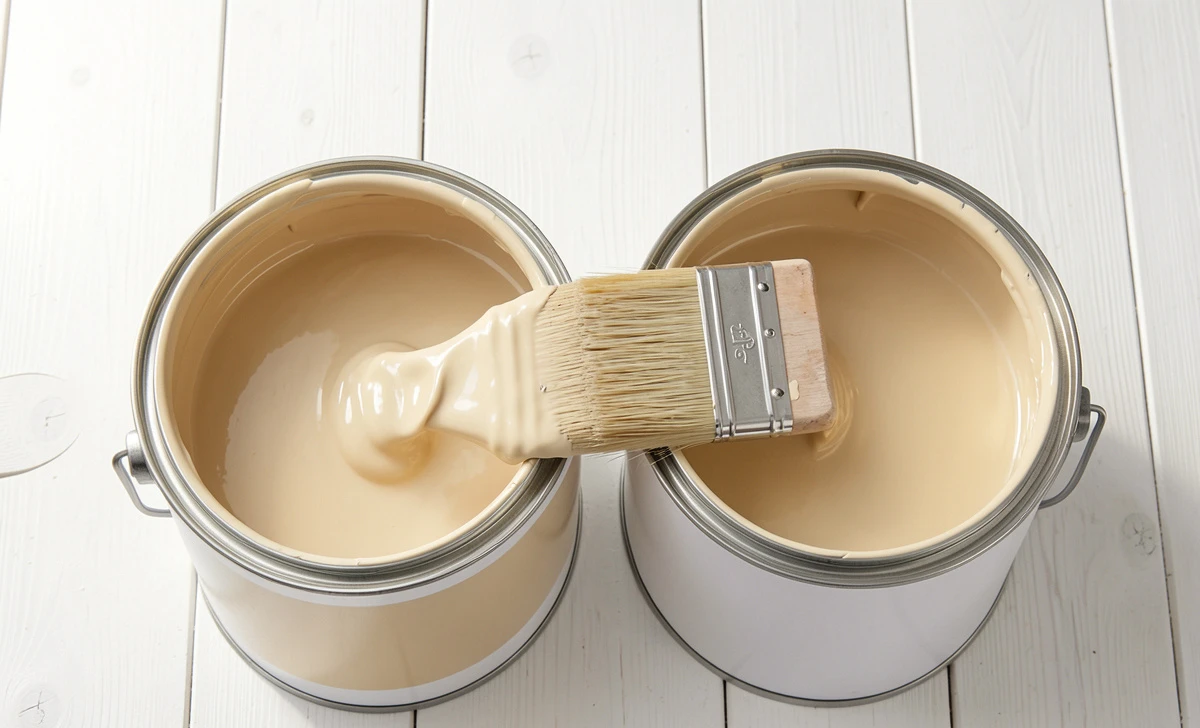
You’re standing in the paint aisle, holding two cans that look nearly identical — one says “latex,” the other says “oil-based.” The price is similar. The colors are the same. So what actually separates them?
Picking the wrong paint for your surface leads to peeling within a year, difficult cleanup, or a finish that yellows over time. Each paint type performs differently depending on the surface, exposure to moisture, and how fast you need to finish the job.
In this guide on Latex Paint vs Oil-Based Paint, you’ll learn the key differences — including durability, drying time, cleanup, cost, and the best use cases for each.
What Is Latex Paint?
Latex paint is water-based, using water as its primary carrier to suspend the pigment and binders. Despite the name, modern latex paints contain no actual latex rubber — the term stuck from early formulations.
Main Ingredients
Latex paint is made from acrylic or vinyl-acrylic resins, water, pigments, and additives. The acrylic resin is what gives better-quality latex paints their flexibility and resistance to cracking over time.
Common Uses
Latex paint works well on interior walls, ceilings, and exterior siding. It handles temperature changes without cracking, which makes it the go-to choice for most residential painting projects. If you want to learn more about choosing the right paint finish for rooms, surface type, and sheen level matter just as much as the paint base.
What Is Oil-Based Paint?
Oil-based paint uses a petroleum-based solvent — typically mineral spirits or naphtha — to carry the binder and pigment. The binder is an alkyd resin, which cures through oxidation rather than evaporation.
Main Ingredients
The main components are alkyd resin, petroleum-derived solvents, pigments, and drying agents like cobalt or manganese compounds. These drying agents speed up the oxidation process, but drying still takes significantly longer than latex.
Common Uses
Oil-based paint performs best on trim, doors, cabinetry, metal surfaces, and areas that take heavy physical contact. It’s hard, smooth finish holds up against scuffs and repeated cleaning better than most latex formulas.
What Is the Difference Between Latex and Oil-Based Paint?
Here is a direct comparison across the factors that matter most for any painting project:
| Factor | Latex Paint | Oil-Based Paint |
|---|---|---|
| Drying Time | 1–2 hours to touch; recoat in 4 hours | 6–8 hours to touch; recoat in 24 hours |
| Durability | Good; flexible, resists cracking | Excellent; very hard, scratch-resistant finish |
| Flexibility | High — expands and contracts with surfaces | Low — brittle over time, prone to cracking |
| Odor | Low to moderate | Strong; requires ventilation |
| Cleanup | Soap and water | Mineral spirits or paint thinner |
| Cost | $25–$60 per gallon | $30–$70 per gallon |
| Best Surfaces | Walls, ceilings, exterior siding | Trim, cabinets, metal, floors |
| VOC Levels | Low to very low (especially low-VOC lines) | High — some products exceed 300 g/L VOC |
Which Paint Lasts Longer?
The answer depends on where you’re painting. Both types can last 10–15 years when properly applied, but they fail in different conditions.
Indoor Durability
Oil-based paint produces a harder film that holds up against moisture, grease, and heavy scrubbing — which is why it has historically been preferred for kitchen and bathroom trim. However, oil-based paint yellows indoors over time because the alkyd resin oxidizes in low-light conditions. This is a lesser-known fact most articles skip: rooms with limited natural light cause oil-based paint to yellow faster than rooms with consistent sunlight.
Latex paint stays true to its original color indoors and resists yellowing entirely. High-quality 100% acrylic latex holds up well in kitchens and bathrooms and is now the preferred choice for most interior applications.
Outdoor Performance
For exterior surfaces, latex paint outperforms oil-based in the long run. It expands and contracts with wood as temperatures change, so it resists cracking and peeling. Oil-based paint becomes brittle outdoors after several years and tends to crack as the surface beneath it moves. If you’re dealing with older exterior surfaces, knowing how to remove old paint from walls before applying new coats is essential for good adhesion.
Which Paint Is Easier to Apply and Clean?
Application Process
Latex paint flows easily from a brush or roller and levels out quickly. It’s more forgiving for beginners because mistakes can be corrected before the paint fully dries. Oil-based paint requires a slower, more deliberate technique — it self-levels well and produces a glassy finish, but it doesn’t forgive drips or lap marks as easily.
[EXPERT TIP]: “For trim work, always apply oil-based or alkyd paint in long, uninterrupted strokes and avoid going back over areas that have started to set. Once it begins to tack up, reworking it pulls the surface and leaves drag marks.” — Mike Salvatore, professional painter and contractor with 20+ years of residential experience
Cleanup Method
Latex paint cleans up with soap and warm water while still wet — brushes and rollers are back in service in minutes. Oil-based paint requires mineral spirits or paint thinner for cleanup, which adds cost, disposal concerns, and time. Rinsing oil-based equipment also generates chemical waste that cannot go down a household drain.
Latex Paint vs Oil-Based Paint for Different Surfaces
Walls and Ceilings
Use latex paint. Walls and ceilings flex slightly with building movement and seasonal humidity changes. Latex handles this without cracking. A flat or eggshell latex finish is standard for most interior walls.
Trim and Cabinets
Oil-based or hybrid alkyd paint works best here. Trim and cabinets take constant contact from hands, cleaning products, and humidity. The harder finish resists wear better. In 2026, hybrid alkyd paints (water-cleanup oil-based formulas) have become a practical middle ground — they offer the hardness of oil-based with the cleanup convenience of latex and are growing in popularity among professional painters.
Metal and Outdoor Surfaces
Oil-based paint bonds better to bare metal and provides superior rust resistance. For painted metal surfaces already coated with latex, oil-based paint can be applied over the top after proper priming. For exterior wood siding, latex is now the industry standard because of its flexibility.
What Are the Pros and Cons of Latex Paint?
Pros:
- Dries in 1–2 hours, allowing same-day recoats
- Low odor and low VOC options are widely available
- Easy soap-and-water cleanup
- Stays flexible — resists cracking on walls and siding
- Does not yellow over time
- Works with standard brushes and rollers
Cons:
- Less hard than oil-based — not ideal for high-contact surfaces
- Raises wood grain on raw wood, requiring sanding between coats
- Lower-quality latex paints show brush marks more easily
- Less penetrating on porous or unprimed surfaces
What Are the Pros and Cons of Oil-Based Paint?
Pros:
- Extremely hard, durable finish once cured
- Excellent adhesion to bare metal and glossy surfaces
- Self-levels well, producing a smooth finish with fewer brush marks
- Strong resistance to moisture and stains
Cons:
- Takes 24+ hours to cure between coats — slows projects significantly
- Strong solvent odor requires open windows and ventilation
- Cleanup requires mineral spirits or paint thinner
- Yellows in low-light or enclosed spaces
- High VOC levels — restricted or banned in some U.S. states
- Becomes brittle outdoors after several years
Which Paint Should You Choose in 2026?
The right choice depends on your specific project:
- DIY beginners: Use latex paint. It’s forgiving, fast-drying, and easy to clean up. Mistakes are fixable before the paint sets.
- High-moisture rooms (bathrooms, kitchens): Use high-quality acrylic latex for walls and a hybrid alkyd for trim. Modern low-VOC hybrid enamels now match traditional oil-based durability.
- Furniture projects: Use oil-based or alkyd enamel for a hard, scuff-resistant finish that holds up to daily use.
- Exterior trim: Use 100% acrylic latex. It flexes with the wood, won’t crack in cold weather, and holds color far longer than oil-based outdoors.
- Fast projects: Use latex paint. If you need two coats done in one day, oil-based paint cannot keep pace.
Common Painting Mistakes to Avoid
- Skipping primer on bare or glossy surfaces. Neither latex nor oil-based paint adheres well without proper surface prep.
- Applying oil-based paint over fresh latex. Wait at least 30 days for latex to fully cure before coating with oil-based paint, or adhesion will fail.
- Using latex paint directly on bare metal. Without a rust-inhibiting primer, latex paint on metal peels within months.
- Recoating too soon. Oil-based paint must dry a full 24 hours before a second coat. Recoating early traps solvents and causes wrinkling.
- Painting in extreme temperatures. Latex paint should not be applied below 50°F (10°C) or above 90°F (32°C). Oil-based tolerates slightly cooler conditions but still need moderate temperatures. If you’re working on surfaces near windows, also check whether sealing window gaps is needed before painting to avoid moisture intrusion behind the finish.
Key Takeaways — Latex vs Oil-Based Paint
- Latex paint dries faster, cleans up with water, resists yellowing, and is the right choice for most walls, ceilings, and exterior surfaces.
- Oil-based paint produces a harder, smoother finish suited to trim, cabinets, and metal, but takes longer to dry and emits higher VOC levels.
- Hybrid alkyd paints in 2026 are closing the gap — offering oil-like hardness with water cleanup, making them a strong choice for trim and furniture.
- The surface, environment, and project timeline should drive your decision — not habit or price alone.
Final Thoughts
The best paint for your project comes down to three things: the surface you’re covering, how much wear it will take, and how fast you need to finish. Neither type is universally better — each fills a specific role.
Latex gives you speed and convenience. Oil-based gives you hardness and penetration. Pick the one that matches what the surface actually needs, and the finish will speak for itself.