
Every winter, millions of homeowners feel cold drafts coming through their windows and wonder why their heating bills keep rising. The answer is simple — window gaps. These small openings around your window frames allow cold air to sneak inside your home and push warm air out. Most people do not even notice them until the problem becomes serious.
The real danger is that window gaps are not just about comfort. They quietly drain your money every single month. A tiny gap that you can barely see can waste up to 10% of your home’s energy. Over a full year, this adds up to a big number on your electricity or gas bill. The problem gets worse if you have multiple windows with gaps around them.
The good news is that you can seal window gaps without damage to your frame — and it is simple, fast, and very affordable. You do not need to be a professional or buy expensive tools. With the right method, you can fix those gaps in less than 30 minutes per window — without scratching, cracking, or harming the frame at all. This guide will walk you through everything you need to know, step by step.
Why Do Gaps Around Windows Matter?
Most homeowners think window problems are only about broken glass or bad locks. But the truth is, gaps around the frame are one of the most common and costly issues in any home. A gap as small as 1/8 inch can increase your energy loss by up to 10%, according to the U.S. Department of Energy.
Gaps let in cold air, dust, moisture, and even insects. Over time, this reduces indoor comfort and pushes your electricity bills higher every month. In summer, hot air enters through those same gaps and forces your air conditioner to work harder.
If you live in an older home, the risk is even greater. Frames settle over time, materials shrink, and gaps become wider without you noticing. Many homeowners only discover the problem after receiving a high utility bill or feeling a constant chill near their windows.
The good news is that fixing this problem early saves money, protects your home from moisture damage, and improves your indoor air quality. Sealing is always cheaper than replacing.
How to Identify Window Gaps
Before sealing anything, you need to find the exact problem areas. Rushing this step means you might miss the real source of the draft.
Here are four simple methods anyone can use:
- Hand test: Slowly move your hand around all four edges of the window frame. If you feel cool air, that spot has a gap.
- Candle test: Hold a lit candle near the window edges. A flickering flame clearly shows where air is leaking.
- Light test: Stand inside a dark room during daylight. If you see light coming through the edges, there is a visible gap.
- Paper test: Slide a thin piece of paper between the frame and the wall. If it moves easily, the seal is broken.
Do this test on all windows in your home, not just the ones you suspect. Many gaps appear between the frame and the wall, not around the glass itself. Mark each problem area with a small piece of tape before you begin sealing.
Best Methods to Seal Window Gaps Without Damage
Choosing the right method is the most important step. The wrong material can crack paint, leave residue, or even warp the wooden frame. Here are the three best options based on gap size and window type.
Use Weatherstripping
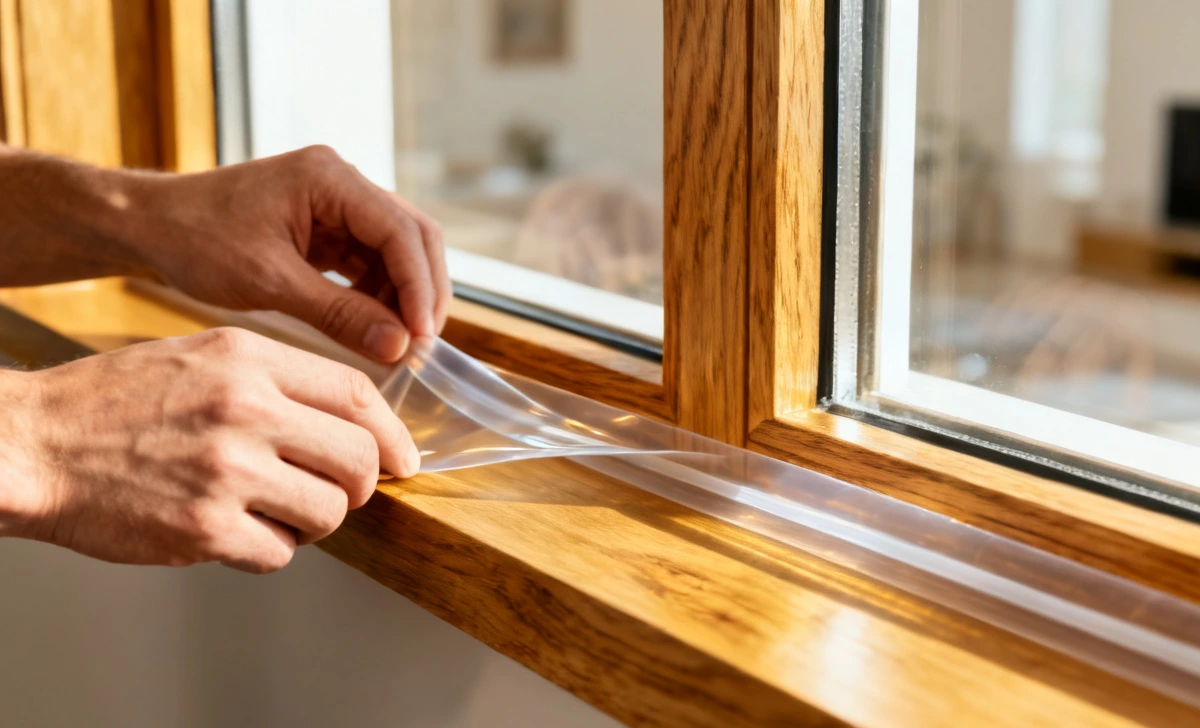
Weatherstripping is the safest and most popular solution for movable window parts like sliding or double-hung windows. It works by creating a tight seal between moving parts without gluing anything permanently to the frame.
Best for: Sliding windows, double-hung windows, and casement windows.
Types of weatherstripping include:
- Foam tape — Cheapest option, easy to install, best for small gaps
- V-strip (tension seal) — Durable and reusable, fits inside the channel of the window
- Rubber or silicone seals — Long-lasting and waterproof, best for exterior use
Proper weatherstripping can reduce drafts by up to 30% and costs as little as $5 per window. It peels off cleanly when you want to replace it, making it perfect for renters too.
Apply Removable Caulk
Removable caulk is ideal for fixed window edges where you want a seasonal seal that comes off without damage. Unlike standard caulk, the removable type stays flexible and peels away cleanly at the end of the season.
Best for: Seasonal sealing, rental properties, and fixed window frames.
Key benefits:
- Easy to apply with a standard caulk gun
- Leaves no residue on paint or wood
- Can be removed and reapplied every year
Before you apply any new sealant, always check the condition of your wall surface near the window. Old or peeling paint near the frame can stop the caulk from sticking properly. If that is an issue, you can first learn about removing old paint before you begin sealing.
Look for silicone-based removable caulk for the best results. It handles temperature changes better than acrylic options and stays flexible through winter and summer.
Install Foam Sealant
Low-expansion spray foam is the right choice for larger, deeper gaps — especially between the window frame and the surrounding wall. These gaps are often hidden behind trim or molding and cannot be reached with tape or caulk.
Best for: Large gaps between the wall and frame, gaps hidden under trim, and new window installations.
Very important: Always use low-expansion foam. High-expansion foam grows too large as it dries and can physically push and warp your window frame from the inside. This damage is hard to reverse and expensive to fix.
Apply foam in small amounts, let it expand, then trim the excess with a knife once it is fully dry.
Step-by-Step Guide to Seal Window Gaps
Follow this process for every window in your home. It works for all three methods described above.
- Clean the area — Wipe away all dust, old sealant, grease, and dirt. Use a dry cloth or mild cleaner. Let it dry completely before applying anything.
- Measure the gap — Use a ruler or your fingers to judge the size. Small gaps (under 1/4 inch) need tape or caulk. Larger gaps need foam.
- Choose and apply the right seal:
- Weatherstripping for any moving window parts
- Removable caulk for fixed edges and corners
- Low-expansion foam for deep or hidden gaps
- Smooth and press firmly — Press the weatherstripping tape flat along the entire edge. Smooth caulk with a wet finger for a clean line. Let foam dry completely before touching.
- Test for leaks — Repeat the candle or hand test after the sealant dries. If you still feel air, apply a second layer or check nearby areas you may have missed.
The entire process takes less than 30 minutes per window and requires no special skills or tools.
Common Mistakes to Avoid
Even simple jobs go wrong when people skip important steps. Here are the most common errors to avoid:
- Using permanent caulk on movable parts — This locks the window shut or cracks when the frame moves
- Applying too much foam — Excess foam expands and warps wooden frames permanently
- Skipping the cleaning step — Sealants will not stick to dusty or greasy surfaces and will fall off quickly
- Ignoring moisture problems — Sealing over damp wood or mold traps moisture and causes rot inside the frame
- Sealing from the outside only — Interior gaps also need attention or the draft will continue
Avoiding these mistakes ensures your seal lasts through multiple seasons without causing damage to the window structure.
Cost and Energy Savings
Sealing window gaps is one of the most affordable home improvements you can make. The materials cost very little, and the savings start immediately.
Average material costs:
- Weatherstripping: $5–$15 per window
- Removable caulk: $3–$10 per tube
- Low-expansion foam sealant: $5–$20 per can
One tube of caulk or one roll of weatherstripping can cover several windows. The total cost for an average home is usually under $50.
According to Energy Star, properly sealing air leaks throughout your home can reduce heating and cooling bills by up to 20% every year. For a household spending $150 per month on energy, that means saving up to $360 annually, from a $20 investment.
What Experts Say
Home energy experts consistently recommend air sealing as the first step before any insulation upgrade. It delivers faster results and costs far less.
The U.S. Department of Energy states:
“Air sealing is one of the most cost-effective ways to improve energy efficiency in a home.”
Professional energy auditors also point out that most homeowners focus on expensive upgrades like new HVAC systems while ignoring simple gaps that cost pennies to fix. Window sealing is always the smarter starting point.
Key Takeaways
- Window gaps as small as 1/8 inch can increase energy loss by up to 10%
- Use the candle, hand, light, or paper test to find exact gap locations
- Weatherstripping is best for all movable window parts
- Removable caulk seals fixed edges without damaging paint or wood
- Always use low-expansion foam — high-expansion foam warps frames
- Clean the surface before applying any sealant
- Proper sealing saves up to 20% on annual heating and cooling bills
Final Thoughts
Small gaps create big problems over time — higher bills, cold rooms, moisture damage, and poor air quality. But the fix is simple, cheap, and takes less than an hour for an entire home.
Sealing window gaps without damage is not about skill or expensive tools. It is about using the right method in the right place. Weatherstripping for moving parts, removable caulk for fixed edges, and low-expansion foam for deep gaps — that is all you need to know.
Start with one window today. Test it, seal it, and feel the difference immediately. Then move through the rest of your home one window at a time. By the time winter peaks, your home will be warmer, quieter, and your energy bill will show the results.