
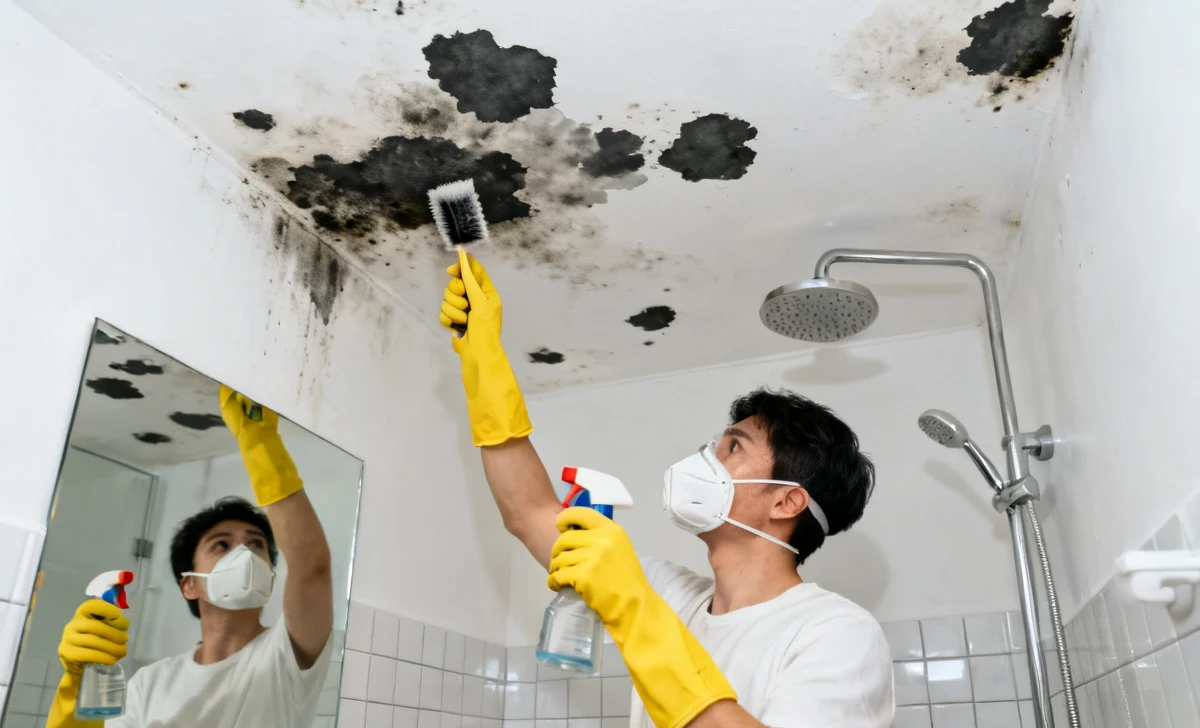
Mold can begin growing on your bathroom ceiling within just 24–48 hours of moisture exposure. Most homeowners ignore early signs — and by the time bathroom ceiling mold removal becomes urgent, the problem has already spread across a larger area.
Bathroom ceilings are the perfect breeding ground for mold. Warm steam from showers rises and settles on cold ceiling surfaces, creating the damp conditions in which mold thrives. Without proper ventilation, bathroom ceiling mold removal becomes a recurring task rather than a one-time fix — and left untreated, it damages surfaces and affects your indoor air quality.
The good news? Most small-to-medium mold patches can be handled safely at home. Effective bathroom ceiling mold removal doesn’t require harsh chemicals — natural solutions like white vinegar and hydrogen peroxide work just as well, without the toxic fumes. Knowing the right method makes all the difference.
In this guide, you’ll learn how to handle bathroom ceiling mold removal safely using non-toxic methods, plus prevention tips and expert safety advice — so the mold doesn’t come back.
What Causes Mold on Bathroom Ceilings?
Mold growth on bathroom ceilings comes down to three main factors: humidity, poor ventilation, and moisture leaks.
Every hot shower releases steam that rises directly to the ceiling. Without proper airflow, that moisture sits on the surface for hours. According to the EPA, indoor humidity above 60% creates ideal conditions for mold to grow rapidly.
Common root causes include:
- Exhaust fans that are undersized or broken — most bathrooms need fans rated for at least 1 CFM per square foot
- Leaking pipes or roof damage above the ceiling
- Inadequate insulation that causes cold surface condensation
- Infrequent cleaning that allows spores to settle and colonize
Is Bathroom Ceiling Mold Dangerous?
Yes — bathroom ceiling mold is more than an eyesore. It poses real health risks, especially with prolonged exposure.
The CDC warns that mold exposure can trigger allergic reactions, asthma attacks, eye irritation, and respiratory issues. People with weakened immune systems, children, and the elderly are especially vulnerable.
Take it seriously if you notice:
- Black or dark green patches (possible Stachybotrys — toxic black mold)
- A persistent musty odor even after cleaning
- Family members experiencing unexplained coughing or sneezing indoors
- Mold returning within days of cleaning
What You Need Before Removing Mold (Safety First)
Never start mold removal without protecting yourself first. Disturbing mold releases spores into the air — and you don’t want to breathe those in.
Protective Gear Checklist
- Gloves — rubber or nitrile; avoid latex if you have sensitivities
- N95 mask — basic surgical masks don’t filter mold spores effectively
- Safety goggles — closed-side goggles to prevent eye contact with spores or cleaning solution
- Old clothes you can wash immediately after, or disposable coveralls
Tools and Supplies
Natural cleaners (recommended):
- White distilled vinegar (undiluted)
- Baking soda
- Hydrogen peroxide (3% concentration)
- Spray bottle, scrub brush, and microfiber cloths
Commercial options (non-toxic):
- Concrobium Mold Control
- RMR-86 (use in well-ventilated spaces only)
- Benefect Botanical Disinfectant
Open windows and turn on your exhaust fan before you begin. Good ventilation is critical during the cleaning process.
How to Remove Mold from Bathroom Ceiling Safely (Step-by-Step)
Follow these steps carefully. Skipping any step — especially drying — can cause mold to return within days.
Step 1 — Prepare the Area Remove towels, toiletries, and bath mats from the bathroom. Lay old newspapers or plastic sheeting on the floor under the affected ceiling area to catch drips. Open windows and run the exhaust fan.
Step 2 — Apply Your Cleaning Solution Fill a spray bottle with undiluted white vinegar (or your chosen solution). Spray directly onto the mold-affected area and let it sit for 10–15 minutes. Don’t wipe immediately — the solution needs time to penetrate and kill the mold at its root.
Step 3 — Scrub Gently Using a stiff-bristle scrub brush or an old toothbrush for tight spots, scrub the mold in circular motions. Don’t press too hard — aggressive scrubbing on drywall or plaster can damage the surface and spread spores further.
Step 4 — Rinse and Dry Wipe the area clean with a damp microfiber cloth. Then immediately dry the surface with a clean dry cloth. Leaving moisture on the ceiling is the #1 reason mold comes back.
Step 5 — Dispose of Materials Safely. Seal used cloths, sponges, and gloves in a plastic bag before throwing them away. Do not reuse them. Wash your clothes on a hot cycle immediately after finishing.
Safety Warning: If the mold area is directly above a light fixture or you see staining from above, stop and call a professional. There may be a leak inside the ceiling structure.
Best Natural Solutions for Mold Removal
Vinegar Method
White vinegar kills approximately 82% of mold species, according to research on its acetic acid properties. Use it undiluted — diluting reduces its effectiveness. Spray, wait 15 minutes, scrub, and dry.
Baking Soda Method
Mix 1 teaspoon of baking soda with 2 cups of water in a spray bottle. Shake well. Spray onto mold, scrub, then rinse with clean water. Baking soda also deodorizes, eliminating that musty smell. It’s safe for all ceiling surfaces.
Hydrogen Peroxide Method
Use 3% hydrogen peroxide (the standard drugstore bottle). Spray directly onto the mold, leave for 10 minutes, then scrub and wipe clean. Hydrogen peroxide is antifungal and antibacterial — and it won’t leave harmful residues.
Pro tip: Combine hydrogen peroxide and baking soda for a stronger cleaning paste on stubborn patches. Apply, let sit, then scrub.
When Should You Avoid DIY Mold Removal?
DIY mold removal works well for small patches — but there are situations where you must call a certified mold remediation specialist.
Stop DIY and call a professional if:
- The mold covers more than 10 square feet (roughly a 3×3 ft area) — this is the EPA’s official threshold for professional intervention
- You suspect mold inside the walls or above the ceiling due to leaks or water damage
- Mold keeps returning within 2–3 weeks despite repeated cleaning — this signals an unresolved moisture source
- Anyone in your home has a compromised immune system, a chronic respiratory condition, or a mold allergy
- You see structural softening or bubbling of the ceiling material
Just like you’d seal window gaps without damage to prevent drafts and moisture entry, addressing mold professionally ensures it’s eliminated at the source — not just on the surface.
How to Prevent Mold from Coming Back
Cleaning mold once isn’t enough. Without fixing the underlying conditions, it will return. Here’s how to break the cycle.
Improve Ventilation
Run your exhaust fan during and for 30 minutes after every shower. If your fan is old or weak, upgrade to one rated for your bathroom’s square footage. Consider a humidity-sensing fan that turns on automatically when moisture rises.
Control Moisture
- Squeegee or wipe down ceiling tiles or painted surfaces after steamy showers
- Keep the bathroom door open when not in use to allow airflow
- Fix dripping faucets and leaking pipes promptly
- Use a small dehumidifier if your bathroom has no window
Use Mold-Resistant Paint
After removing mold and letting the surface dry completely (48+ hours), repaint with a mold-resistant primer and paint. Brands like Zinsser Mold Killing Primer or Kilz are widely available and create a barrier that makes future mold growth much harder.
[EXPERT TIP: Mold often grows back if moisture isn’t fixed — cleaning alone is not enough. Address the source of dampness first, or you’ll be cleaning the same patch every few weeks.]
Common Mistakes to Avoid When Cleaning Mold
Using bleach incorrectly — Bleach is often the first thing people reach for. But on porous surfaces like drywall and grout, bleach only kills surface mold. It doesn’t penetrate to the root. The water in bleach can actually feed deeper mold growth. Use vinegar or hydrogen peroxide instead.
Skipping protective gear — Even a small mold patch releases thousands of spores when disturbed. Breathing these in during cleaning is a common cause of post-cleaning respiratory symptoms.
Not fixing the moisture source — This is the single biggest mistake. Cleaning mold without improving ventilation or fixing a leak is like bailing out a boat without plugging the hole.
Scrubbing dry mold — Always wet the mold first with your cleaning solution. Dry scrubbing sends spores airborne immediately.
Key Takeaways — Safe Mold Removal Checklist
- Always wear an N95 mask, goggles, and gloves before starting
- Use natural cleaners (vinegar, baking soda, hydrogen peroxide) for small patches
- Let the cleaning solution sit for 10–15 minutes before scrubbing
- Dry the ceiling completely after cleaning — moisture left behind invites mold back
- Dispose of all used materials in sealed plastic bags
- Run the exhaust fan for 30 minutes after every shower
- Call a professional for patches larger than 10 sq ft or recurring mold
- Repaint with mold-resistant paint after removal for long-term protection
- Fix the moisture source — cleaning without this step is temporary
Conclusion
Bathroom maintenance is home maintenance — and mold is one of the earliest signs that something needs attention. Catching it early and treating it correctly protects both your home’s structure and your family’s health.
The most important thing to remember: clean the mold and fix the moisture. One without the other is a short-term fix at best.