
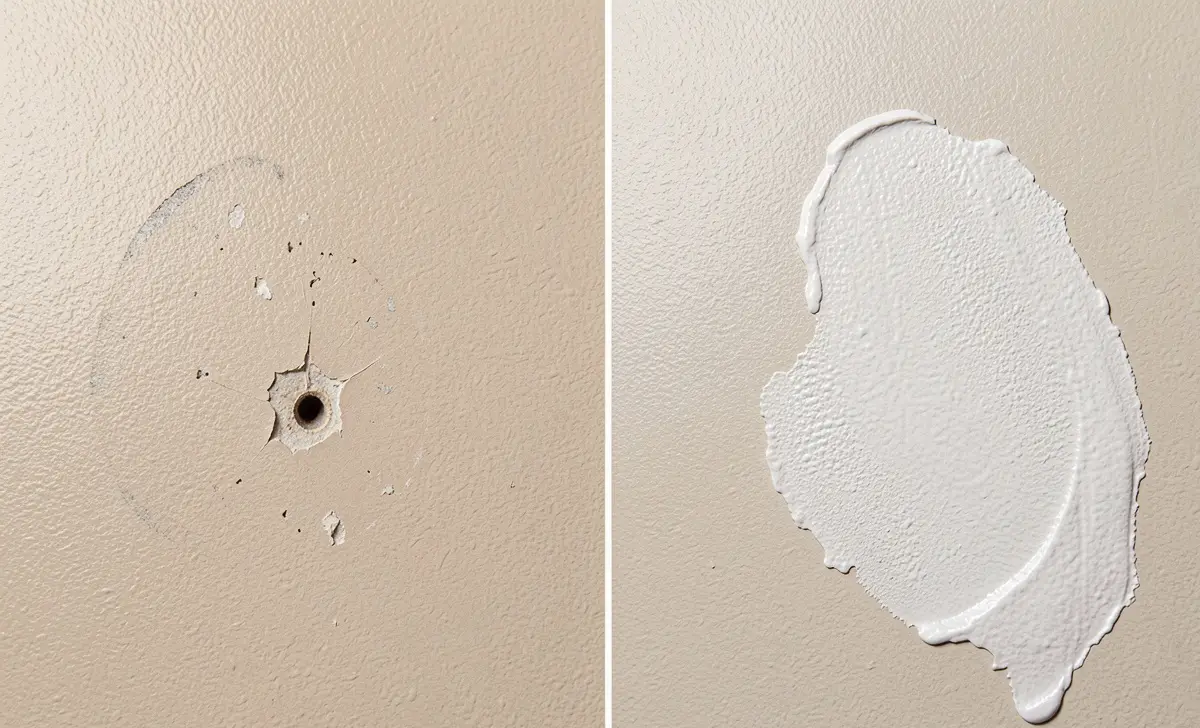
You know that moment. You’re moving out, or maybe you just pulled a nail out to hang a new shelf, and—bam—there’s a hole in your wall. Not a huge one, but definitely noticeable. And if you’re renting? That little ding could cost you part of your security deposit.
What You’ll Need: Tools & Materials for an Invisible Patch
Before you start, grab these basics. Nothing fancy, and most of it costs under $20:
- Lightweight spackle or pre-mixed joint compound (small tub is fine)
- Putty knife or flexible taping knife (2–4 inches works great)
- Fine-grit sandpaper (120–150 grit) or a sanding sponge
- Damp cloth or sponge
- Primer (small sample size works)
- Paint that matches your wall (more on matching below)
- Optional but helpful: mesh tape for holes bigger than a nail, a small paintbrush, and a clean rag
If you’re renting, skip the heavy-duty drywall screws or permanent anchors. We’re keeping this reversible.
Step 1: Prep the Hole for a Seamless Repair
Here’s where most people rush—and that’s why patches end up visible. Take two extra minutes here.
Clean & Square the Edges
First, gently clean out any loose drywall dust or paint chips around the hole. If the edges are jagged, use your putty knife to lightly scrape them smooth.
When to Use Mesh Tape vs. Paper Tape
For holes bigger than about ½ inch, press a small piece of mesh tape over the opening. It gives the compound something to grip so it won’t crack later.
Now, dampen the area slightly with your cloth. Why? Dry drywall sucks moisture out of spackle too fast, which can cause shrinkage or cracking. A barely-damp surface helps the compound cure evenly.
Step 2: Apply Compound Like a Pro (The Feathering Secret)
That’s the real trick behind pulling off an invisible drywall patch technique. Scoop a small amount of spackle onto your knife—less than you think you need. Press it firmly into the hole, then drag the knife across in one smooth motion to level it.
Now, here’s the trick nobody tells you: feather the edges. After filling the hole, use very light pressure to drag the compound 1–2 inches beyond the hole’s edge, thinning it out like a soft gradient. Think of it like blending eyeshadow—you want no hard lines.
Let it dry completely (check the label, usually 1–2 hours for small patches). Then lightly sand with your fine-grit paper. Wipe away dust with a damp cloth. If the patch still dips slightly, apply a second thin coat and repeat. Patience beats piling on thick globs every time.
If you’re specifically looking at how to patch a small hole in drywall without texture, just skip the sponging step in the next section and focus entirely on feathering those edges.
Step 3: Match Your Wall Texture (No Spray Gun Needed)
Smooth walls are easy. But what if yours has that bumpy “orange peel” or knockdown texture? Don’t panic—you can mimic it with stuff you already have.
- For light orange peel: Dab a slightly damp sponge over the wet compound in a light, random pattern.
- For a heavier texture: Use a crumpled plastic bag, a stiff brush, or even an old toothbrush to flick tiny bits of compound.
- For knockdown: After applying texture, wait 5–10 minutes, then gently drag your knife flat across the surface to “knock down” the peaks.
Practice on cardboard first if you’re nervous. The goal isn’t perfection—it’s close enough that your eye doesn’t catch the difference. This drywall patch texture matching hack has saved me (and dozens of readers) from repainting entire walls.
Step 4: Prime & Paint So the Patch Disappears
The final step for a drywall repair that doesn’t show after painting is all about sealing and blending correctly. You’ve done the hard part—now don’t skip priming.
The new compound absorbs paint differently from your existing wall. If you paint straight over it, you’ll get a dull spot—a “ghost patch”—that screams repair. A quick coat of primer seals the patch so your topcoat looks uniform.
When it’s time to paint, use the smallest brush you have and feather the paint outward from the patch. If you don’t have the exact original paint, take a chip (from behind a switch plate or closet) to your hardware store for a match. And remember: sheen matters. Eggshell won’t blend with semi-gloss. If you’re unsure, test in an inconspicuous spot first.
Pro tip: Paint a slightly larger area than the patch—about the size of your hand—and blend the edges. Your eye won’t spot the transition, but it will spot a tiny, perfect circle of new paint.
Troubleshooting: Why Your Patch Still Shows (And How to Fix It)
Even with careful work, sometimes a patch sticks out. Here’s why—and how to fix it fast:
- It looks shiny or dull: Likely a sheen mismatch. Lightly sand the area and apply a thin coat of matching-sheen paint over a slightly wider zone.
- You see a faint outline: The edges weren’t feathered enough. Lightly sand the transition zone and re-prime before repainting.
- The patch cracked: Usually means the compound dried too fast or was applied too thickly. Scrape out the crack, dampen lightly, and apply a thinner second coat.
- Texture doesn’t match: Don’t repaint the whole wall. Try lightly misting the area with water and re-texturing just the patch while the paint is still wet.
Had a repair go sideways before? You’re not alone. Most “failed” patches come from rushing the drying or skipping primer—not from lack of skill.
Renter’s Checklist: Reversible Repairs That Won’t Cost Your Deposit
Since we’re focusing on how to patch drywall holes with renter-friendly methods, keep this quick checklist handy:
Use lightweight spackle (easier to sand, less shrinkage)
Avoid permanent anchors or screws in the patch area
Save leftover paint in a small, labeled jar for future touch-ups
Take before/after photos for your move-out documentation
Keep receipts for supplies—some landlords reimburse minor repairs
And if you’re ever unsure, ask your landlord first. A quick text like, “Hey, I’m fixing a small nail hole—any preference on materials?” can save headaches later. Most appreciate tenants who maintain the place.
FAQs
How long does a drywall patch take to dry?
Small holes with lightweight spackle? Usually 1–2 hours. Larger repairs with joint compound can take 24 hours. When in doubt, wait longer—rushing leads to cracks.
Can I patch a hole without sanding?
For tiny nail holes, some “no-sand” spackles work okay. But for anything visible, light sanding is the only way to get that seamless blend. A sanding sponge takes seconds and makes a huge difference.
What if I don’t have the original paint?
Take a chip (from behind an outlet cover or inside a closet) to a paint store for a match. Or, if the wall is faded, paint the entire corner or wall section from edge to edge so the transition isn’t noticeable.
Is this really renter-safe?
Yes—if you stick to spackle (not foam fillers), avoid permanent modifications, and document your work. This method is designed to be reversible and deposit-friendly.