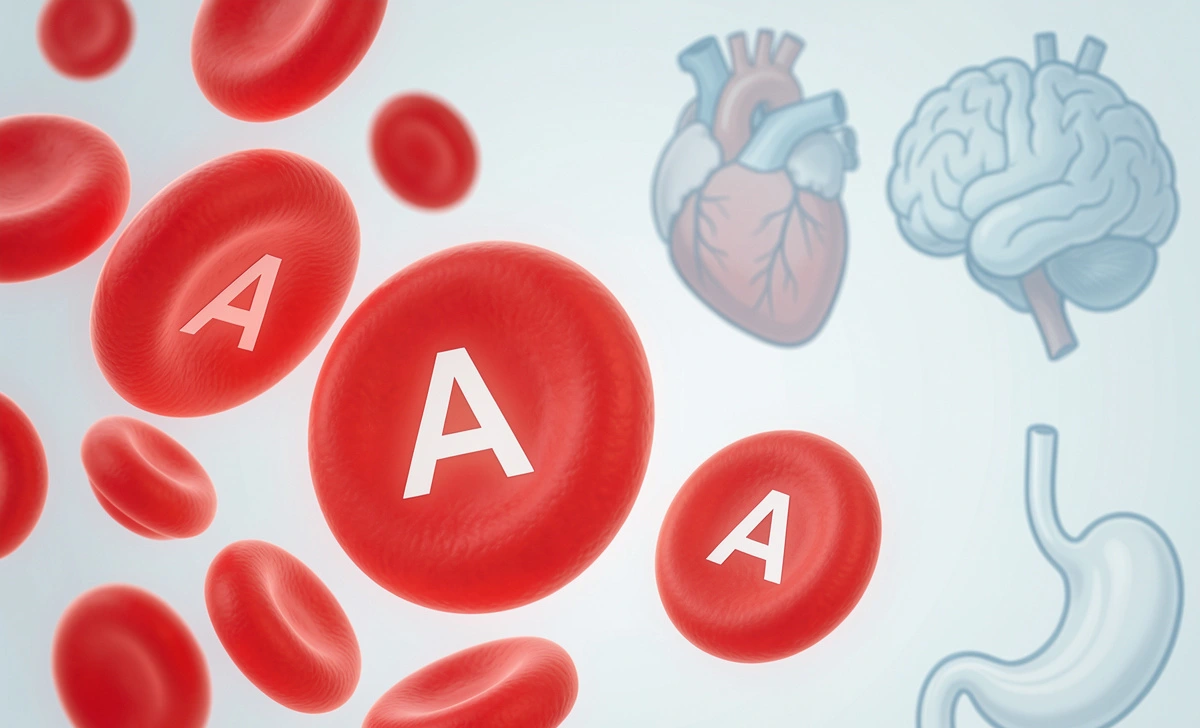
People with type O blood are up to 33% less likely to develop dangerous blood clots compared to those with other blood types — a fact most people have never heard from their doctor.
Blood types are determined by antigens on the surface of red blood cells. Researchers study them because these antigens interact with proteins, hormones, and pathogens in ways that may raise or lower disease risk.
In this guide, you’ll learn how blood type health risks vary across ABO types — covering blood clots, stomach issues, memory decline, and other conditions — backed by current research.
What Are Blood Types and Why Do They Matter?
Blood types classify human blood based on the presence or absence of specific antigens. The two most important systems are ABO (types A, B, AB, and O) and Rh factor (positive or negative). Together, these determine your full blood type, such as A+ or O−.
The Four Main Blood Types
| Blood Type | Population % (Approx.) |
|---|---|
| O+ | 38% |
| A+ | 34% |
| B+ | 9% |
| AB+ | 3% |
Type O is the most common globally. Type AB is the rarest. Rh-positive blood types are far more common than Rh-negative across all populations.
How Blood Types Affect the Body
Blood type antigens are not limited to red blood cells. They appear on the lining of blood vessels, in saliva, and in the digestive tract. This wide distribution is one reason researchers suspect blood type can influence conditions beyond transfusion compatibility — from clotting to lower blood pressure naturally and cardiovascular risk factors.
Does Blood Type Affect Health Risks?
The short answer: possibly, for certain conditions. Blood type is not a strong standalone predictor of disease, but studies consistently find statistical associations between ABO type and specific health outcomes.
What Scientists Have Found
Research published in journals including Arteriosclerosis, Thrombosis, and Vascular Biology and PLOS Medicine has identified links between ABO blood type and risks for venous thromboembolism, gastric cancer, and cognitive decline. A 2022 meta-analysis found non-O blood types carry a 1.5–2x higher risk of venous blood clots compared to type O.
Why Researchers Still Debate the Evidence
Most studies in this area are observational — they find correlations, not causes. Confounding factors like diet, geography, and genetics make it difficult to isolate blood type as an independent variable. The Mayo Clinic notes that more large-scale controlled trials are needed before clinical recommendations can be made based on blood type alone.
Blood Type and Blood Clot Risk
Of all the associations studied, the link between blood type and clotting risk is the most consistent and well-replicated finding in the literature.
Which Blood Types Have Higher Clotting Risk?
Type O blood is consistently associated with a lower risk of venous thromboembolism (VTE). Types A, B, and AB all carry a higher clotting risk, with type AB showing the highest in several studies. The mechanism involves von Willebrand factor (vWF), a clotting protein that is cleared faster in people with type O blood.
What the Research Says in 2026
A 2023 study from the European Journal of Preventive Cardiology confirmed that non-O blood types have significantly higher plasma levels of vWF and Factor VIII — both key drivers of clot formation. Researchers estimated this accounts for roughly 25–30% of the blood type-clotting association. If you already have risk factors for clotting, this is worth discussing with your physician.
Can Blood Type Affect Stomach Problems?
The digestive system is one of the most studied areas in blood type research, largely because ABO antigens are expressed throughout the gastrointestinal lining.
Blood Type and Stomach Cancer Risk
Multiple studies, including a large cohort study published in Gut (2010, replicated in 2020), found that type A individuals have a higher risk of gastric (stomach) cancer compared to type O. The association is modest but consistent across different populations and geographic regions. One possible reason: the type A antigen may facilitate the adhesion of H. pylori bacteria to stomach cells.
Blood Type and Ulcers
Here, the data flips. Type O individuals have a higher risk of peptic ulcers, particularly those caused by H. pylori infection. Research suggests that H. pylori binds more readily to type O antigens in the stomach lining, increasing bacterial colonization. Understanding your food allergy vs intolerance triggers alongside blood type risk can help guide early symptom evaluation.
Blood Type and Memory Decline
A notable 2014 study from the University of Vermont, published in Neurology, found that people with type AB blood had a 82% higher odds of developing cognitive impairment compared to other blood types. This was a large, prospective study with over 30,000 participants.
What Studies Suggest About Brain Health
Researchers hypothesize that higher vWF levels in non-O types may contribute to small vessel disease in the brain, a known risk factor for vascular dementia. Additionally, the same clotting mechanisms that increase cardiovascular risk may reduce cerebral blood flow over time, affecting memory and cognitive function.
Important Limits of Current Research
The University of Vermont study, while significant, was observational. Blood type alone does not determine dementia risk. Lifestyle factors — sleep quality, physical activity, and chronic inflammation — have far stronger and more consistent evidence. Addressing chronic fatigue, physical or mental symptoms, early may be more actionable than focusing on blood type for brain health protection.
Other Health Conditions Linked to Blood Type
Heart Disease
The Harvard T.H. Chan School of Public Health published a 2012 study in Arteriosclerosis, Thrombosis, and Vascular Biology showing that people with type AB blood had a 23% higher risk of heart disease compared to type O. Types A and B also showed elevated risk (11% and 10%, respectively). The mechanism likely involves cholesterol metabolism and vWF-driven clotting activity.
Diabetes and Metabolism
A French cohort study published in Diabetologia (2015) found that type A individuals had a modestly higher risk of type 2 diabetes compared to type O. Type B also showed elevated risk. The reasons are unclear but may relate to differences in gut microbiome composition associated with ABO blood type antigens.
Infection Risk
Type O individuals appear less susceptible to severe malaria — a finding that has been replicated across African and Southeast Asian populations. However, type O is associated with higher susceptibility to cholera and norovirus. Blood type likely influences how pathogens bind to cell surfaces rather than affecting immune strength overall.
EXPERT PERSPECTIVE: Dr. Mary Cushman, hematologist at the University of Vermont and lead author of the 2014 cognitive decline study, stated: Blood type is just one small piece of the puzzle. It should not overshadow the major risk factors we know are modifiable — blood pressure, cholesterol, and physical activity.
Should You Change Your Lifestyle Based on Your Blood Type?
What Doctors Recommend
Current medical consensus, including guidance from the American Heart Association, does not recommend tailoring lifestyle changes to blood type. The evidence for blood type as a clinical risk modifier is not strong enough to change standard prevention strategies. Focus on proven risk reducers: regular exercise, balanced nutrition, and not smoking.
Myths About Blood Type Diets
The “Blood Type Diet,” popularized by Peter D’Adamo in the 1990s, claims each blood type requires a specific diet for health. A 2013 systematic review in the American Journal of Clinical Nutrition found no evidence that this diet produces blood-type-specific benefits. Any results people experience are likely due to general improvements in eating patterns — not blood type compatibility.
Lesser-known fact most articles miss: Secretor status — whether you secrete ABO antigens into body fluids — may matter more than blood type alone for certain infection risks. Roughly 20% of people are “non-secretors,” and this trait is independent of ABO type.
What Is the Healthiest Blood Type?
No single blood type is universally “the healthiest.” Type O has advantages in clotting risk and certain infection scenarios. Type A and AB blood types face higher risks for some cancers and heart conditions. But the differences are small in absolute terms, and individual lifestyle factors consistently outweigh blood type in determining health outcomes.
Key Takeaways About Blood Type Health Risks
- Non-O blood types (especially AB) carry a higher risk of blood clots due to elevated vWF and Factor VIII levels.
- Type A is linked to modestly higher gastric cancer and type 2 diabetes risk.
- Type O has a higher peptic ulcer risk but a lower cardiovascular clotting risk.
- Type AB shows the strongest association with cognitive impairment in observational studies.
- No clinical guidelines currently recommend changing treatment or lifestyle based on blood type alone.
- Blood type diets have no credible scientific backing.
Final Thoughts
Blood type research is pushing medicine toward a more individualized understanding of disease risk — one where biological markers, genetics, and environment interact in ways that one-size-fits-all guidelines cannot fully capture. That direction is worth following, even if the current evidence on blood type is still preliminary.
What the research does confirm is this: knowing your blood type is a useful context, but it is not a destiny. The habits you build around sleep, nutrition, and stress management carry more weight than any antigen on your red blood cells.