
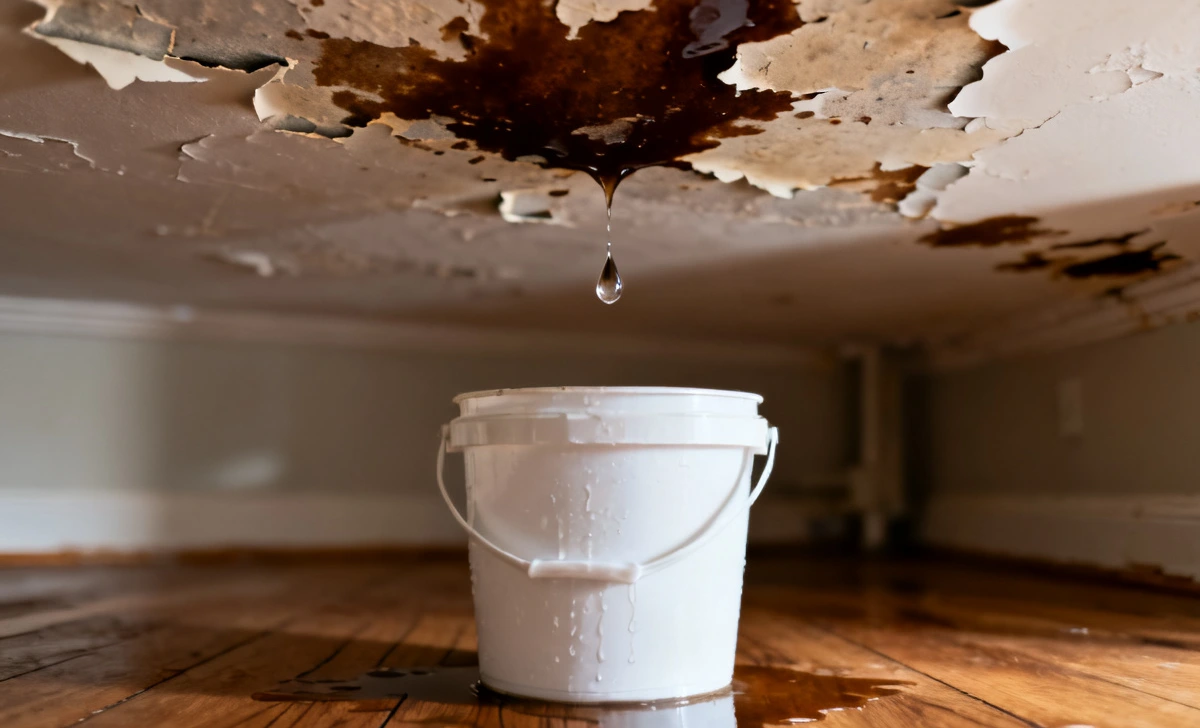
Mold can begin growing on a wet ceiling within just 24 to 48 hours of water exposure — long before you even notice the stain spreading across your plaster. What looks like a minor drip can silently destroy your home’s structure and your family’s health in days.
A Leaking Ceiling Mold Repair is never just a cosmetic problem. It signals a serious underlying issue — roof damage, a burst pipe, AC condensation, or bathroom plumbing failure — each capable of causing thousands in structural repairs if ignored.
In this guide, you will learn how to identify, fix, and prevent a leaking ceiling before it leads to mold, structural damage, and costly repairs — everything step by step.
What Is a Leaking Ceiling and Why Is It Dangerous?
A leaking ceiling occurs when water penetrates from above — through a damaged roof, faulty plumbing, condensation buildup, or bathroom overflow — and saturates your ceiling material. The danger is not just cosmetic.
Left untreated, water damage weakens drywall, plaster, and wooden joists, eventually causing ceiling collapse. Mold spores — invisible to the naked eye — begin forming colonies within 24–48 hours on wet surfaces, releasing allergens and toxins that affect respiratory health.
According to the Insurance Information Institute, water damage and freezing account for nearly 29% of all home insurance claims in the United States — making it one of the most common and costly home disasters homeowners face.
How to Identify the Source of a Ceiling Leak
Signs of Water Damage on the Ceiling
Before you fix anything, you need to confirm what you are dealing with. Look for these warning signs:
- Yellow or brown water stains — ring-shaped discoloration from slow, recurring leaks
- Bubbling or peeling paint — moisture trapped beneath the surface layer
- Sagging or soft ceiling areas — waterlogged drywall or plaster ready to collapse
- Visible mold or musty odor — fungal growth already active
- Dripping water — active leak requiring immediate action
Common Leak Sources (Roof, Pipes, AC, Bathroom)
Here is a critical insight most homeowners miss: the majority of ceiling leaks are misdiagnosed — they originate from bathroom pipe joints or wax ring failures, not the roof. Always check the floor above before assuming roof damage.
The four most common leak sources are:
- Roof damage — cracked shingles, damaged flashing, or clogged gutters allow rainwater in
- Plumbing leaks — burst pipes, loose joints, or corroded supply lines in the floor above
- AC condensation — a blocked drain line causes your air handler to overflow into the ceiling cavity
- Bathroom overflow — toilet wax ring failure or shower grout breakdown lets water seep through
Step-by-Step Guide to Fix a Leaking Ceiling
Step 1 — Stop the Water Source
This is the single most important action. Until the water source is stopped, all repair work is pointless. If it is a plumbing leak, shut off the main water supply valve immediately. If it is roof-related and raining, place a bucket below the drip and use a roofing tarp or emergency sealant tape on the roof surface as a temporary fix.
If you cannot locate the exact pipe causing the leak, turn off the water supply to the entire floor above the damaged ceiling.
Step 2 — Dry the Affected Area
Once the water source is stopped, drying must begin within hours to prevent mold. Use a dehumidifier and industrial fans directed at the wet ceiling and surrounding walls. For severe saturation, carefully pierce the lowest point of the sagging ceiling with a screwdriver to drain pooled water in a controlled manner — this prevents full ceiling collapse.
Complete drying of ceiling materials typically takes 48 to 72 hours under good airflow conditions. Do not rush this step — painting or patching over damp material causes bubbling and traps mold underneath.
Step 3 — Repair the Leak (Roof or Plumbing Fixes)
Once dry, repair the actual source of the leak:
- Roof repair: Replace cracked or missing shingles, reseal flashing around chimneys and vents with roofing cement, and clear blocked gutters.
- Plumbing repair: Replace damaged pipe sections, tighten loose fittings, or replace the toilet wax ring if the bathroom overflow was the cause.
- AC condensation fix: Flush the drain line with a wet-dry vacuum and pour a cup of distilled vinegar monthly to prevent future blockages.
For this step, consider also checking your bathroom tiles for grout or sealant failure — removing rust stains from bathroom tiles is one part of keeping your bathroom surfaces sealed and watertight, which directly reduces the risk of future ceiling leaks from above.
Step 4 — Repair Ceiling Damage (Plaster, Paint, Drywall)
With the leak fixed and the area fully dry, you can now restore the ceiling surface:
- Cut out damaged drywall sections using a utility knife and replace with new panels
- Apply joint compound (also called “mud”) in two or three thin coats, sanding between each coat
- Prime the repaired area with a stain-blocking primer (such as Zinsser BIN) before painting — this prevents water stains from bleeding through the new paint
- Finish with a ceiling paint matched to the existing color
How to Prevent Mold After a Ceiling Leak
Proper Drying Techniques
Run a dehumidifier continuously in the affected room until the relative humidity drops below 50%. Pair it with box fans or an air mover pointed directly at the ceiling. Open windows when outdoor humidity is lower than indoor levels to accelerate evaporation.
Avoid sealing or painting the ceiling until a moisture meter confirms the material has dropped below 15% moisture content — this is the safe threshold before applying any finish.
Mold Prevention Products and Treatments
After drying, apply a mold-inhibiting primer such as Zinsser Mold Killing Primer before painting. For visible mold on surfaces, scrub with a solution of one cup of bleach per gallon of water, let it sit for 10 minutes, then rinse. Always wear gloves and an N95 respirator during mold treatment.
When to Call a Professional
Call a certified mold remediation specialist if:
- Mold covers an area larger than 10 square feet
- You detect a strong musty odor even after drying
- Any household member has respiratory symptoms or allergies worsening
- Mold appears black — possible Stachybotrys chartarum (toxic black mold), which requires professional containment
[EXPERT PERSPECTIVE] “The biggest mistake homeowners make is painting over a water stain without confirming the leak is fully stopped, and the ceiling is completely dry. You are just hiding the problem — and within weeks, the mold beneath will push through the fresh paint again. Always fix the source first, dry for 72 hours, test moisture, then repair.”
Tools and Materials Needed for Ceiling Repair
- Dehumidifier — for accelerated drying
- Moisture meter — confirms dryness before patching
- Utility knife — cutting out damaged drywall
- Drywall panels and screws — replacement material
- Joint compound (mud) — filling seams and surface imperfections
- Sanding sponge or sandpaper (120-grit) — smoothing compound layers
- Stain-blocking primer (Zinsser BIN or similar) — sealing stains before paint
- Mold-killing primer — preventing future mold growth
- Ceiling paint and roller — finishing coat
- Roofing cement or flashing tape — for temporary or minor roof sealing
- Rubber gloves and N95 respirator — personal protection during mold treatment
- Bucket and tarp — containing active drips
Cost of Fixing a Leaking Ceiling in 2026
DIY vs Professional Repair Costs
For a straightforward ceiling patch (no mold, no structural damage), a confident DIYer can complete repairs for $50 to $200 in materials — drywall panels, compound, primer, and paint.
Hiring a professional contractor for the same patch typically costs $300 to $800, depending on the region and ceiling size. If mold remediation is needed, expect an additional $500 to $3,000+, depending on the scope of infestation.
Factors That Affect Repair Cost
- Size of damage — small stain vs. collapsed ceiling section
- Source of leak — roof repairs are significantly more expensive than plumbing fixes
- Mold presence — remediation multiplies costs dramatically
- Ceiling type — textured, plaster, or coffered ceilings cost more to match and restore
- Access difficulty — two-story or vaulted ceilings require scaffolding or lifts
Common Mistakes to Avoid When Fixing Ceiling Leaks
- Painting over wet surfaces — traps moisture and creates ideal mold conditions
- Ignoring the source — cosmetic ceiling repairs fail within weeks if the leak continues
- Using regular primer instead of stain-blocking primer — water stains bleed through standard paint in weeks
- Skipping the moisture meter test — surfaces can feel dry to the touch while still holding 30%+ moisture internally
- Misidentifying the leak source — assuming it is the roof when the problem is a bathroom pipe joint directly above
- Delaying action — every hour of delay past 24 hours increases mold risk exponentially
When Should You Call a Professional Plumber or Roofer?
Some ceiling leaks are confidently handled with DIY skills. Others require licensed professionals. Call a licensed plumber if the leak comes from inside the wall cavity, if pipes are corroded or inaccessible, or if you have recurring leaks after self-repair attempts.
Call a licensed roofer if there is widespread shingle damage, flashing failure around chimneys or skylights, or if your roof is over 20 years old. Never attempt to repair a steep-pitch roof without proper safety equipment — falls from roofs account for a significant percentage of home improvement fatalities each year.
A licensed contractor is always the right call when structural ceiling joists or beams show signs of rot, warping, or insect damage uncovered during the repair process.
Key Takeaways — How to Protect Your Home from Ceiling Leaks
- Mold can begin forming within 24 to 48 hours — act immediately when you spot a leak
- Always identify and stop the water source first before any repair work begins
- Dry the area completely — a minimum of 48 to 72 hours — and confirm with a moisture meter
- Use stain-blocking and mold-killing primers before painting repaired areas
- Most ceiling leaks originate from bathroom plumbing joints, not the roof — always check the floor above first
- Annual roof inspections and gutter cleanings prevent the majority of leak scenarios
- When mold exceeds 10 square feet or involves black mold, call a certified remediation specialist
Final Thoughts
Fixing a leaking ceiling promptly is one of the highest-return actions a homeowner can take — protecting both structural integrity and long-term property value. Addressing a $200 ceiling repair today prevents a $5,000 mold remediation or $15,000 structural repair tomorrow.
Early detection is everything: catching a ceiling leak in its first 24 hours can literally save thousands of dollars and months of repair work.
What was the most helpful step in fixing a leaking ceiling for you? Share your experience in the comments below — your insight could help another homeowner act before the damage spreads.