
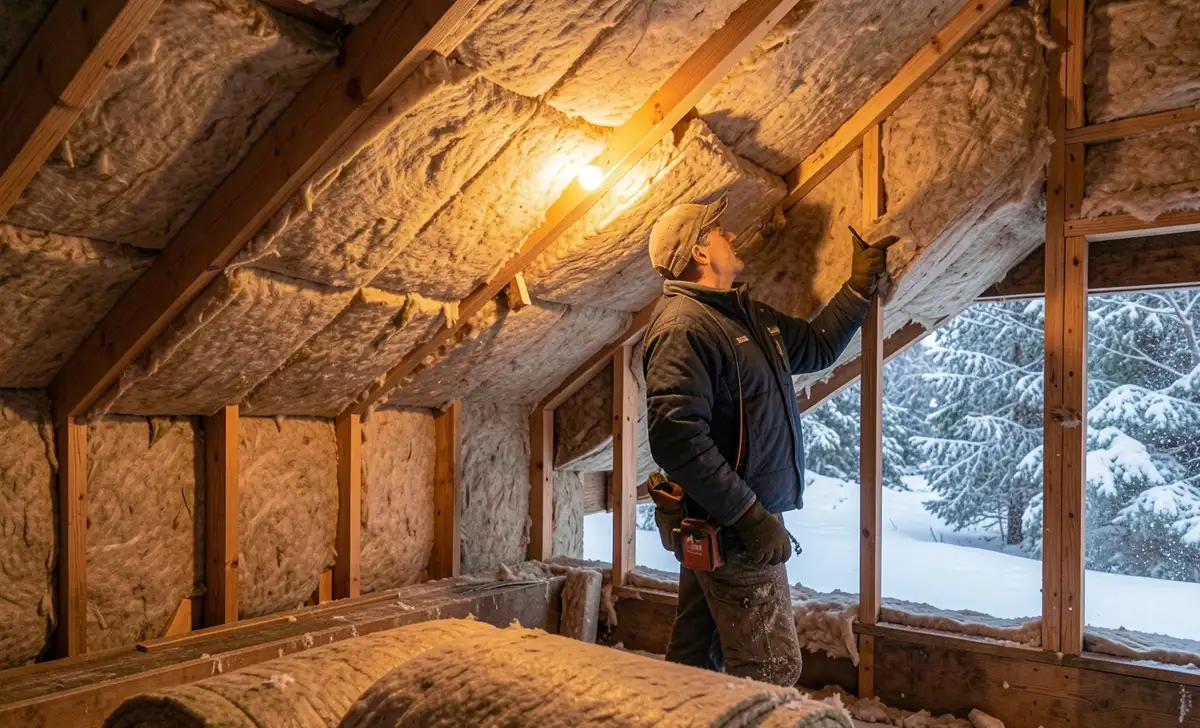
A poorly insulated attic can cause up to 25% of a home’s heat loss during winter. In hot climates, it can also trap heat and force air conditioners to work much harder than necessary. Many homeowners continue paying higher energy bills without ever realizing that the attic is the main problem. Choosing the right insulation is one of the smartest investments you can make for your home.
Understanding attic insulation by climate is the key to controlling indoor temperature, lowering energy costs, and improving comfort throughout the year. The best insulation depends on your climate, attic design, and budget. Some materials work better in freezing regions, while others perform well in hot and humid areas. In this guide, you will learn how to choose the right attic insulation based on your climate, compare insulation materials and R-values, and find the best option for long-term energy savings.
What Is Attic Insulation and Why Does It Matter?
Attic insulation slows heat transfer between your home and the outside environment. It keeps warm air inside during winter and blocks excessive heat during summer. The U.S. Department of Energy states that proper insulation can reduce heating and cooling costs by 10% to 20%. Homes with poor attic insulation often experience uneven room temperatures and increased HVAC usage, which results in unnecessarily high utility bills.
The benefits of proper attic insulation go beyond just energy savings. A well-insulated attic also reduces moisture buildup, which is important for maintaining healthy indoor air quality. It extends the lifespan of your HVAC system by reducing workload. It improves overall home value and makes every room in the house more comfortable, regardless of the season. For homeowners planning any kind of home improvement, attic insulation is often one of the highest-return upgrades available.
What Does R-Value Mean in Insulation?
R-value measures insulation’s resistance to heat flow. A higher R-value means stronger thermal performance. Different climates require different R-values because colder areas experience more heat loss and therefore demand higher insulation levels to maintain comfortable indoor temperatures.
The U.S. Department of Energy divides regions into climate zones to guide insulation choices. As a general reference, hot climates require R-30 to R-49, mixed climates require R-38 to R-60, and cold climates require R-49 to R-60. Understanding your local climate zone is the first step before purchasing any insulation material. Many local hardware stores and insulation contractors can help you identify the right R-value for your specific region.
How Climate Affects Attic Insulation Choices
Climate changes how insulation performs over time. Moisture, humidity, and temperature swings all affect material durability and thermal effectiveness. Choosing the wrong material for your climate can reduce performance significantly over just a few years.
Cold Climates
Cold regions need insulation with high thermal resistance. Air sealing also becomes critically important because warm indoor air naturally escapes through gaps, cracks, and poorly sealed areas. The best choices for cold climates include spray foam, blown-in cellulose, and fiberglass batts combined with vapor barriers. Properly sealing window gaps and air leaks before installing insulation makes a significant difference in overall performance and energy efficiency.
Hot Climates
Hot regions focus more on blocking radiant heat and reducing overall attic temperatures rather than retaining warmth. The best choices for hot climates include radiant barriers, fiberglass insulation, and reflective insulation systems. These materials work by reflecting sunlight before heat can penetrate living spaces below. Many homeowners in hot climates also benefit from insulating the roof deck rather than just the attic floor, which can reduce attic temperatures by 20°F or more.
Humid Climates
Moisture-resistant insulation performs best in humid areas. Wet insulation loses its effectiveness quickly and can become a breeding ground for mold and structural damage. Spray foam often works well in humid climates because it resists moisture absorption and seals air leaks simultaneously.
Best Types of Attic Insulation Materials
Choosing the right material matters as much as choosing the correct R-value. Each type has its own strengths, weaknesses, and ideal use cases.
Fiberglass Insulation
Fiberglass is the most common attic insulation in North America. It is affordable, easy to install, fire-resistant, and widely available at most hardware stores. However, it loses performance if compressed, can irritate skin and lungs during installation, and is less effective in areas with significant air leaks. Fiberglass performs best in mixed and hot climates where extreme cold is not a major concern.
Cellulose Insulation
Cellulose uses recycled paper treated with fire-resistant chemicals. It is an eco-friendly option that provides good sound control and fills small gaps well due to its blown-in application method. On the downside, cellulose can settle over time, which reduces its effective R-value. It is also sensitive to moisture. However, for cold-climate homeowners on a budget, blown-in cellulose provides excellent coverage at a lower price than spray foam.
Spray Foam Insulation
Spray foam expands and seals cracks during installation, making it the top choice for both air sealing and thermal performance. It offers the highest air sealing capability, strong moisture resistance, and a long lifespan of 30 years or more. The main drawbacks are its higher cost and the requirement for professional installation. Despite the upfront expense, spray foam often delivers the best long-term return on investment across all climate types.
Which Insulation Works Best for Cold Climates?
Cold climates require high R-values and airtight sealing to prevent heat loss. The best overall choice is closed-cell spray foam, which offers strong insulation alongside excellent moisture control. It also helps prevent ice dams caused by heat escaping through the attic roof. For homeowners on a budget, blown-in cellulose provides high coverage and good thermal resistance at a more accessible price point.
According to the U.S. Department of Energy, attic insulation upgrades deliver some of the fastest energy savings for homeowners in colder regions. Even modest improvements to attic insulation can reduce monthly heating bills noticeably within the first winter season.
Which Insulation Works Best for Hot Climates?
Hot climates focus primarily on reducing solar heat gain rather than retaining warmth. The best overall choice is fiberglass combined with a radiant barrier. This setup reflects sunlight before heat enters the living spaces below. For a premium solution, open-cell spray foam seals air leaks and significantly improves cooling efficiency throughout the summer months.
Many homeowners in hot climates only insulate attic floors without considering the roof deck. Insulating the roof deck as well can reduce attic temperatures dramatically, making the cooling system far more efficient and reducing monthly electricity costs.
Common Attic Insulation Mistakes
Many insulation problems come from poor installation rather than poor material choices. One of the most common mistakes is blocking attic vents. Attic vents allow moisture and heat to escape naturally. Blocking them can create serious mold and moisture damage over time, which is far more expensive to fix than the original insulation project.
Another common error is ignoring air leaks before installing insulation. Insulation alone does not stop airflow. Sealing gaps around pipes, wiring, and attic hatches before laying insulation is essential for achieving the rated R-value performance. Skipping this step can reduce actual insulation performance by more than 30%. Finally, choosing the wrong R-value for your climate zone is a costly mistake. Too little insulation lowers efficiency, while incorrectly installed insulation can reduce ventilation performance and cause moisture issues.
Cost of Attic Insulation in 2026
Attic insulation costs vary by material and local labor rates. Fiberglass typically costs between $1.50 and $3.50 per square foot installed. Cellulose ranges from $2.00 to $4.00 per square foot. Spray foam is the most expensive option at $4.00 to $8.00 per square foot. A typical attic insulation project costs between $1,500 and $6,000 in 2026, depending on attic size, material choice, and regional labor costs.
Government rebates and energy-efficiency tax credits may significantly reduce total costs. Many utility companies also offer rebates for qualified insulation upgrades, so it is worth researching local programs before beginning your project.
Should You Install Attic Insulation Yourself?
DIY installation works reasonably well for simple fiberglass batt projects in accessible attics. However, professional installation consistently delivers better results because contractors have the tools and experience to seal air leaks properly and achieve consistent coverage. You should hire a professional if your attic has existing moisture damage, if you need spray foam insulation, if old insulation may contain asbestos, or if air sealing is particularly complex.
Completing your attic insulation project often opens the door to other home improvement upgrades. Homeowners frequently follow up attic improvements with updating paint finishes in rooms to complete a full interior refresh that adds both comfort and resale value to the home.
Key Takeaways
- Climate determines the best attic insulation type for your home.
- Cold regions need higher R-values combined with airtight sealing.
- Hot climates benefit most from radiant barriers and reflective insulation systems.
- Spray foam offers the best overall performance but comes at a higher upfront cost.
- Fiberglass remains the most affordable option for most homes in mixed or hot climates.
- Air sealing matters as much as insulation thickness for achieving maximum efficiency.
- Always address existing moisture damage and air leaks before installing new insulation.
Conclusion
Choosing the right attic insulation is about more than staying warm or cool. It is about making your home more energy-efficient, comfortable, and durable for years ahead. A smart attic upgrade can lower utility bills, prevent moisture problems, and improve indoor air quality almost immediately after installation.