
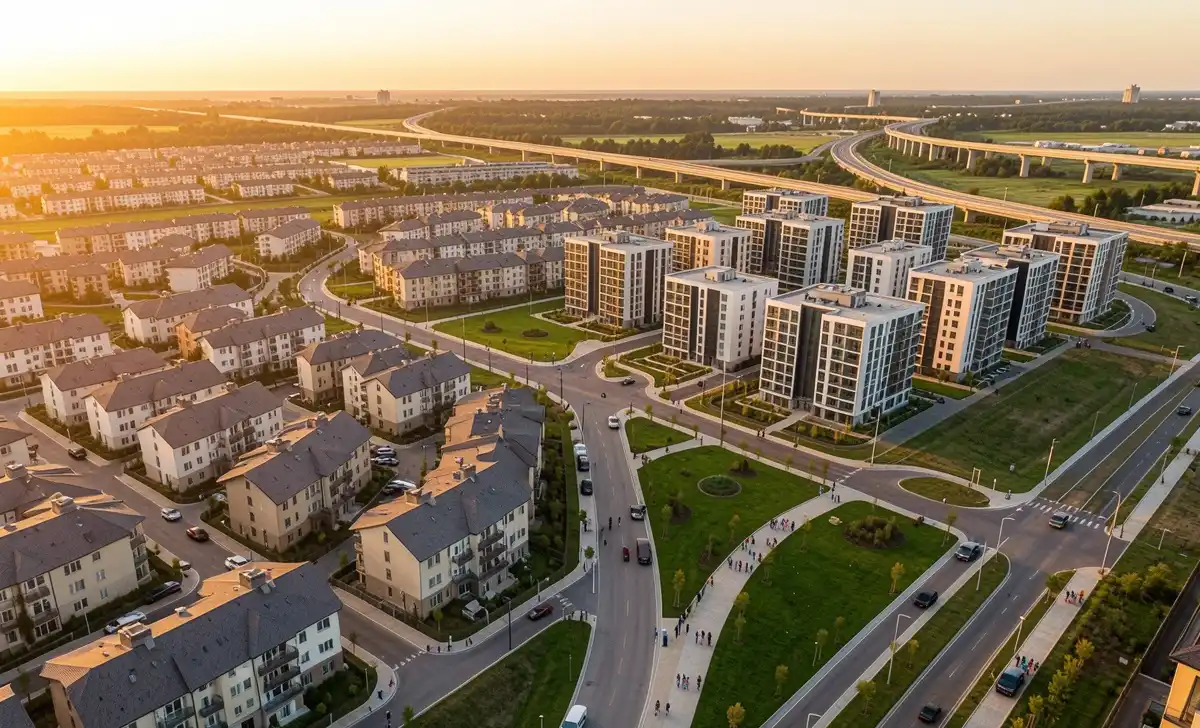
Imagine buying a house today and watching it double in value over the next ten years — not by luck, but because you studied the right signals before anyone else did. That is exactly what smart real estate investors do. They do not guess. They read the property value appreciation neighborhood trends like a book, track the data, and buy at the right moment. Property appreciation is not magic. It is a pattern — and once you understand the pattern, you can predict where prices are heading before the market catches up.
Most people make the same mistake when buying property: they look at what a home costs today and forget to ask what it will be worth tomorrow. They fall in love with a nice kitchen or a fresh coat of paint and completely ignore the economic forces shaping the neighborhood around it. By the time they realize the area is not growing, they are stuck with a property that barely keeps up with inflation. Real estate investing without understanding appreciation trends is like driving with your eyes closed — you might get somewhere, but the risk is enormous.
In this article, you will find a complete guide to estimating future property value appreciation in any neighborhood. We will walk you through the key factors that drive property prices up, how to analyze a neighborhood like a professional investor, which tools and data sources to use, and how to calculate your potential returns using a simple formula. Whether you are a first-time buyer or a seasoned investor, this guide will give you a data-based framework to make smarter decisions.
What Is Property Value Appreciation?
Property value appreciation means the increase in a property’s price over time.
For example, if you buy a house for $100,000 and sell it for $130,000 after five years, the appreciation is 30%.
This growth is influenced by economic conditions, location, and demand.
Why Do Property Values Increase Over Time?
Real estate prices rise due to a supply and demand imbalance. When more people want to live in an area than there are available homes, prices go up.
According to the Federal Housing Finance Agency (FHFA), U.S. home prices increased by over 40% between 2020 and 2024 due to low supply and high demand. Understanding why prices rise helps you identify the next neighborhood that is ready to grow.
Key Factors That Predict Future Property Value Growth
1. School Quality and Education Access
Homes near top-rated schools often see 10–20% higher value growth. Families prioritize education when choosing where to live, which creates consistent and long-term demand in school districts with strong reputations.
2. Planned Infrastructure Projects
New roads, metro systems, and airports boost property values significantly. When a government announces a new highway, shopping mall, or public transport line, nearby property prices often spike before the project even breaks ground.
Key infrastructure indicators to watch:
- Highways and public transport expansions
- New shopping malls and commercial hubs
- Smart city developments and utility upgrades
Areas with upcoming infrastructure often see early investment spikes — meaning the best time to buy is before the announcement becomes mainstream news.
3. Employment Growth and Job Opportunities
Strong local economies drive housing demand. Cities with growing industries — particularly tech, healthcare, and finance — experience faster appreciation because workers relocate to be near their jobs.
According to World Bank urban data, employment growth directly correlates with property demand. Before investing, always check whether a city is attracting new businesses or losing them.
4. Population Growth Trends
More people moving into an area means more housing demand. Watch for migration patterns, urban expansion, and rising rental demand. If a neighborhood is welcoming more residents every year, property prices will follow.
5. Crime Rate and Safety
Low-crime areas attract long-term residents and stable families. Safer neighborhoods consistently maintain rising property values, while high-crime areas often stagnate regardless of other positive factors.
6. Supply vs. Demand Imbalance
Limited housing supply leads to price increases. Signs of a strong seller’s market include low inventory levels, high buyer competition, and rising rental prices. When demand outpaces supply, appreciation accelerates.
How to Analyze a Neighborhood Before Investing
Step 1: Check Historical Price Trends
Look at 5–10 years of property price data in the area. Consistent growth over time indicates a stable, healthy market. A sudden spike without economic backing could be a bubble.
Step 2: Visit the Area Physically
Online data is not enough on its own. Walk through the neighborhood and observe cleanliness, ongoing construction activity, road quality, and proximity to essential services. Your eyes will catch things algorithms miss.
Step 3: Study Rental Yields
High rental demand is one of the strongest signals of future appreciation. If landlords are getting high rental income and properties are rarely vacant, it means people want to live there — and where people want to live, prices go up. Understanding how to negotiate a lower price when buying a home in a high-demand area becomes even more important in these markets.
Step 4: Observe Development Activity
Construction cranes are one of the most reliable indicators of future growth. New housing projects, commercial developments, and infrastructure improvements all signal that developers and businesses believe in the area’s future.
Common Mistakes Investors Make
Avoid these costly errors that trip up beginner investors:
- Buying based on hype instead of verified data
- Ignoring infrastructure and development plans
- Overlooking local job markets and employment trends
- Focusing only on the current price rather than the future growth potential
- Investing in oversupplied areas where demand cannot keep up
Before making any offer, make sure you have done your homework — including a thorough home inspection checklist to avoid hidden costs that can eat into your appreciation gains.
How to Calculate Potential Property Appreciation
Use this simple formula to estimate long-term growth:
Future Value = Current Value × (1 + Growth Rate)^Years
Example:
- Property price = $100,000
- Growth rate = 5% annually
- Time period = 5 years
Future Value = 100,000 × (1.05)^5 = $127,628
This formula gives you a realistic baseline for estimating long-term gains. Always use conservative growth rates when planning — it is better to be pleasantly surprised than disappointed.
What Is the Average Property Appreciation Rate?
Globally, real estate appreciates at 3% to 8% annually under normal market conditions. However, high-growth areas — especially in emerging markets and rapidly urbanizing cities — can exceed 10% per year.
Emerging markets often offer higher returns but carry more risk. Always balance potential appreciation against market stability before committing capital.
Key Takeaways
- Location is the #1 factor in property appreciation — everything else flows from it
- Infrastructure projects drive early price growth — buy before the announcement is public
- Job markets and population trends matter more than surface-level aesthetics
- Data-based decisions reduce risk — never invest based on emotion or hype
- Long-term investment yields the best results — patience compounds gains
Final Thoughts
Smart investors understand one simple truth: property value growth is predictable if you follow the right signals. You do not need to be a financial genius to estimate appreciation — you need to be disciplined, data-driven, and willing to do the research that most buyers skip.
The biggest insight from every experienced investor is this: you do not make money when you sell — you make money when you buy in the right area. Before closing any deal, make sure you also understand your closing costs for buyers so you are not caught off guard by expenses that reduce your actual returns.
Study the neighborhood. Follow the infrastructure. Watch the jobs. And always buy with the future in mind, not just the present.