
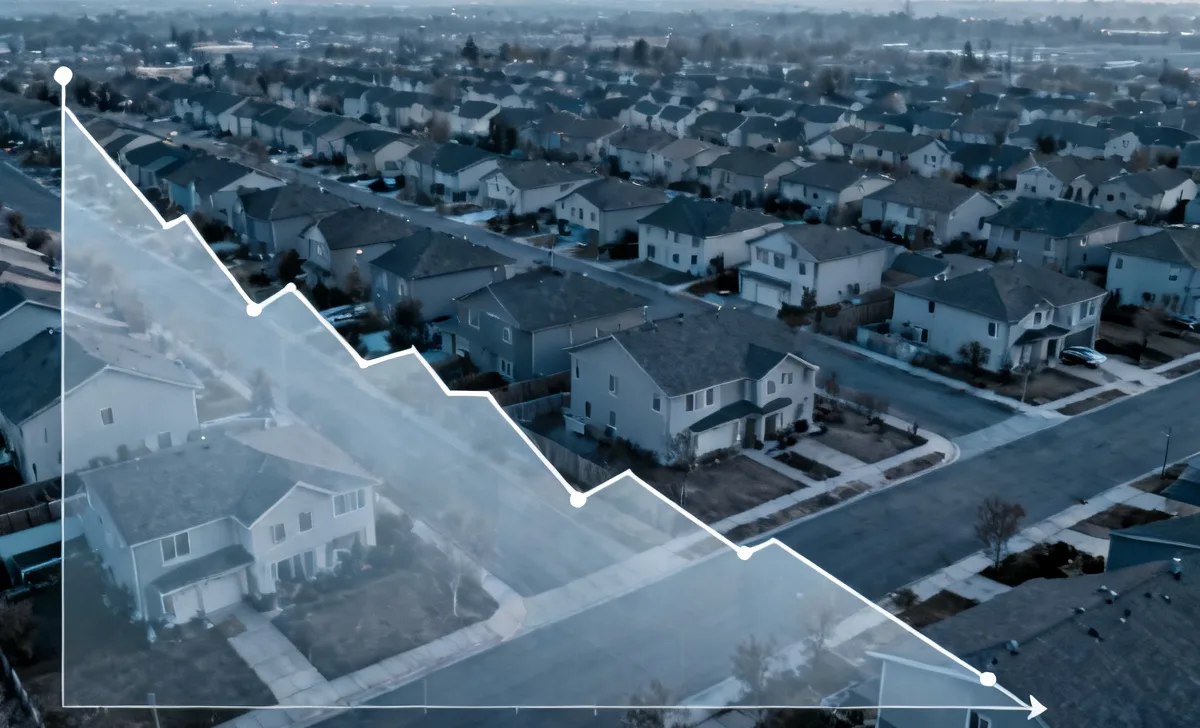
Buying a home used to feel like a goal you could work toward. Save for a few years, get a loan, and move in. That picture has changed. In 2026, millions of people across the world are finding that no matter how hard they save, the numbers simply do not add up. Home prices went up, wages did not keep pace, and mortgage rates stayed high. The dream of homeownership is slipping further away for a growing number of people.
The problem is not limited to one country or one city. From London to Toronto, Sydney to New York, the same pattern is repeating itself. Housing costs now consume 35% to 50% of household income in many major urban centers. First-time buyers have been priced out entirely. Even middle-income families who could comfortably qualify for a loan five years ago are now being turned away. This is not a temporary dip — it is the result of a decade of prices rising two to three times faster than wages.
The trend has a name, and analysts are tracking it closely: global real estate cooling — a broad slowdown across housing markets that is reshaping how people buy, sell, and invest in property. This article breaks down why it is happening in 2026, what is driving the affordability crisis, how central banks and interest rates play a role, and what buyers and investors can expect in the months ahead.
Why Global Real Estate Markets Are Cooling in 2026
The slowdown did not happen overnight. It began after 2022 when inflation surged across the world. Central banks — including the Federal Reserve, the European Central Bank, and the Bank of England — responded by raising interest rates sharply to bring inflation under control.
That decision had a direct and immediate effect on housing. Monthly mortgage payments jumped by 30% to 60% in several regions almost overnight. Buyers who had been approved for loans found themselves no longer eligible. Investors who had relied on cheap borrowing to fund property purchases shifted their money into bonds and other safer assets.
By 2024 and into 2026, these effects had fully worked their way through global housing markets. Demand fell. Unsold inventory started building up. Sellers who had grown used to bidding wars and quick sales found themselves waiting months for offers. The market dynamic flipped — for the first time in years, buyers hold more negotiating power than sellers.
The Affordability Crisis: What the Numbers Show
The affordability problem is not new, but it has reached a breaking point in 2026. Home prices have increased two to three times faster than wages since 2015 in most developed countries. Saving for a down payment — already a challenge — has become near-impossible for younger buyers in expensive cities.
Understanding the full closing costs real estate buyers face is becoming more important than ever, as even those who manage a down payment often get caught off guard by the additional fees at the point of sale.
In cities like Sydney, Toronto, and London, even households earning above-average incomes struggle to qualify for home loans. Mortgage payments in these markets now eat up more than 40% of take-home pay for a standard property. Financial advisors typically recommend keeping housing costs below 30% of income — a threshold that is nearly impossible to hit in these cities without a very large deposit or a very high salary.
Key Market Trends Defining 2026
Several clear patterns are visible across global housing markets right now:
Price stabilization in major cities — After years of rapid increases, prices in cities like New York, London, and Sydney are flattening. Some neighborhoods are seeing modest declines for the first time in a decade.
Rising rental demand — People who cannot afford to buy are staying in the rental market longer. This is pushing rents higher in many cities, creating its own affordability problem for renters.
Slower luxury property sales — High-end properties are sitting on the market longer. Wealthy buyers are less active, partly due to economic uncertainty and partly because returns from other asset classes have improved.
Growth in secondary cities — Smaller cities and suburban areas that offer more affordable housing are attracting buyers who have been priced out of major urban centers. Remote work has made this shift easier for many professionals.
Higher unsold inventory — Builders who continued construction during the high-demand years are now sitting on finished properties with no buyers. In some markets, this inventory overhang is significant enough to push prices down further.
How Buyers Are Responding
Buyers in 2026 are not rushing. The panic-buying behavior that characterized 2020 and 2021 has been replaced by patience and caution. Many potential buyers are deliberately waiting — some for 6 to 18 months — hoping for price corrections before committing.
When buyers do engage, they are comparing multiple mortgage products carefully, negotiating harder on price, and walking away from deals that do not make financial sense. Many are looking at smaller homes or properties further from city centers. A significant number are choosing to rent and invest the money they would have used for a down payment into financial markets instead.
This shift in behavior is itself contributing to the slowdown. Demand drops when buyers stop feeling urgency, and without urgency, sellers have less leverage. The result is a slower, more deliberate market where transactions take longer and prices are harder to hold at previous levels.
The Role of Central Banks and Interest Rates
Central bank policy is the single biggest external factor shaping housing markets right now. When the Federal Reserve or the Bank of England moves interest rates up or down, mortgage costs follow.
In the years leading up to 2022, rates were at historic lows. Borrowing was cheap, and property prices climbed sharply as a result. When rates rose sharply to combat inflation, that cheap-money era ended. Mortgage rates in many countries are still significantly higher than the 2020–2022 period, and central banks have been cautious about cutting them too quickly for fear of reigniting inflation.
Until rates come down meaningfully, the ceiling on what buyers can afford will remain low, and the cooling trend will continue.
Is Real Estate Still Worth Investing In?
The answer depends heavily on the timeframe and strategy. Short-term flipping — buying a property, doing minimal work, and selling quickly for a profit — has become far less reliable. Stagnant or falling prices in many markets mean that the approach carries real risk.
However, long-term real estate investment still has a case. Rental properties in cities with strong rental demand can generate a consistent yield. Secondary cities with growing populations offer appreciation potential. Affordable housing segments — properties priced within reach of working and middle-income households — are seeing more stable demand than luxury or speculative segments.
Investors who entered the market when prices were low are largely protected. Those looking to enter now need to be more selective, focus on cash flow rather than price growth, and plan for a longer hold period.
What to Expect in the Months Ahead
Analysts broadly see three possible paths for global real estate in late 2026 and into 2027.
The most likely scenario is gradual stabilization. If inflation continues to ease and central banks reduce rates modestly, buyer confidence could slowly return, and markets could find a floor. Prices would not spike, but they would stop falling.
A second possibility is further correction in overvalued markets. Cities where prices are furthest from what incomes can support are most at risk. If rates stay high for longer than expected, some of these markets could see meaningful price drops.
The third scenario — a sharp, widespread crash — is considered unlikely by most analysts. Housing supply in many major cities is still constrained. Population growth, immigration, and long-term urbanization trends provide a floor for demand even in difficult conditions.
Conclusion
The global real estate market in 2026 is not in freefall, but it is going through a real and significant correction. Years of prices outpacing wages, combined with sharply higher borrowing costs, have created an affordability wall that is slowing demand across the world’s biggest markets.
For buyers, this moment offers something rare in recent years: time and negotiating power. Rushing is no longer necessary. For sellers, realistic pricing is the difference between selling and waiting indefinitely. For investors, the era of easy returns is over — but long-term, income-focused strategies still have merit.
The market is recalibrating. That process is uncomfortable in the short term, but it is a necessary adjustment after years of prices that few could realistically afford.