
That annoying scrape-scrape sound every time you close your bedroom door? Yeah, we’ve all been there. You push it shut, and instead of a clean click, you get friction, resistance, maybe even a little shimmy to get it to latch. If you’ve noticed your closing interior doors seem to stick more during certain seasons, you’re not alone—temperature and humidity changes affect wood more than most people realize.
Good news: you probably don’t need to call a handyman or spend your Saturday wrestling a door off its hinges. If you need to fix sticking door problems, most can be solved in under 10 minutes with stuff you already have at home. Here’s how—no demo required.
Best part? Every fix below is renter-safe: no drilling, no permanent changes, and nothing that’ll cost you your security deposit.
Why Doors Stick: Quick Diagnosis Guide
Before you grab a tool, spend 30 seconds figuring out where it’s rubbing. Close the door slowly and watch (or listen) for the exact spot it catches.
Try the paper test: slip a sheet of printer paper between the door and frame, then close it gently. Pull the paper. If it tears or sticks, that’s your friction point. Mark it lightly with a pencil.
No tools? No problem. This paper trick costs nothing and tells you exactly where to focus—perfect if you’re renting or just want to avoid guesswork.
Most sticking happens for three reasons:
- Loose hinges are letting the door sag
- Swelling from humidity (especially in summer or after painting)
- Minor misalignment from house settling or a bumped frame
You’ve probably noticed your door sticks more on muggy days, right? Wood expands. It’s not broken—it’s just breathing. If you’ve recently painted walls or doors, that extra layer of latex paint vs oil-based options can add just enough thickness to cause unexpected rubbing.
Fix #1: Tighten Loose Hinges (The 5-Minute Fix)
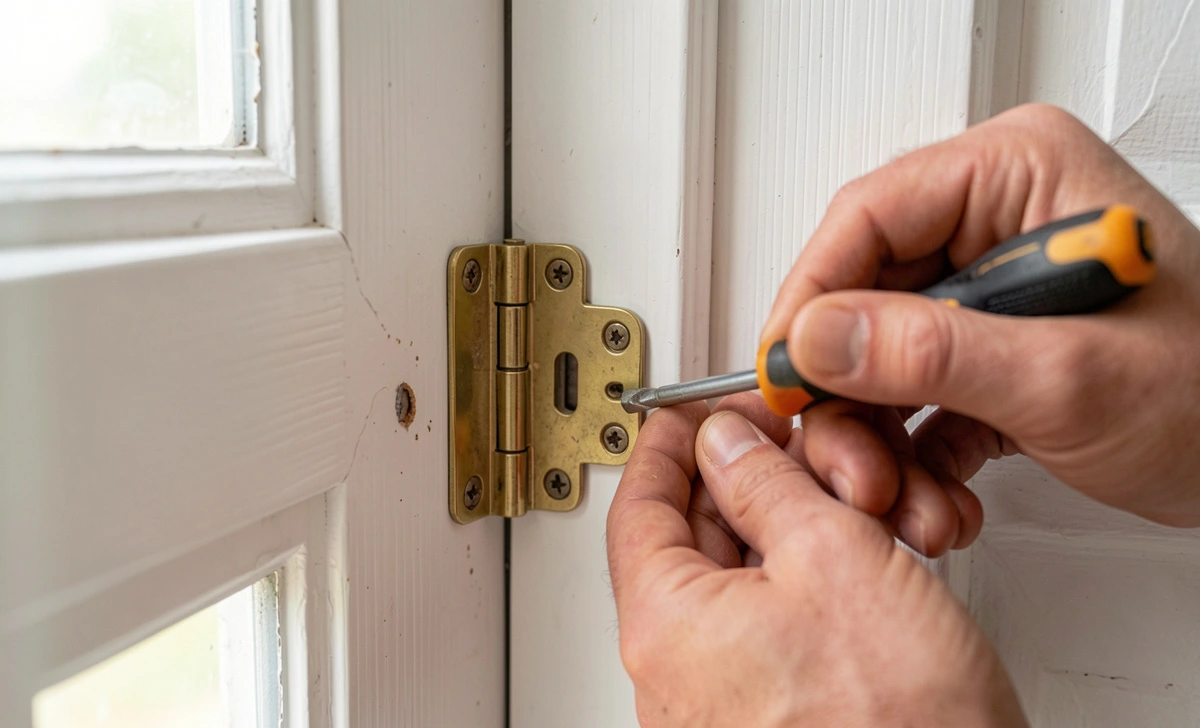
If your door drags at the top corner or won’t latch smoothly, loose hinges are the usual suspect. Here’s how to tighten door hinges to fix sticking—no removal needed.
- Grab a screwdriver (Phillips or flathead, depending on your screws).
- Check each hinge screw on both the door and frame side.
- Tighten any that feel loose. Don’t overtighten—just snug.
- Test the door. Still sticking? Try this pro trick: replace the top hinge’s middle screw with a 3-inch wood screw. It bites deeper into the frame, pulling the door back into alignment.
Why does this work? Over time, hinge screws loosen from daily use. A longer screw anchors into the wall stud behind the frame, correcting that subtle sag that causes rubbing.
Real talk: I fixed my guest room door this way last summer. Took four minutes. The door’s been smooth ever since.
Bonus tip: If the screw holes are stripped, stuff them with wooden matchsticks dipped in wood glue, let them dry, then re-drive the screw. It’s a classic carpenter’s trick that holds surprisingly well.
Fix #2: Sand or Plane the Rubbing Spot
If tightening hinges doesn’t solve it, the door edge itself might be rubbing. If your door catches at the top corner or near the latch, don’t sand the whole edge. Target just the rubbing spot—here’s how.
Top-corner rubbing? Try this
- Use 120-grit sandpaper wrapped around a block.
- Lightly sand the marked spot in the direction of the grain.
- Wipe away dust, test the door, repeat only if needed.
Latch-side drag? Adjust here
- Focus on the edge near the handle—that’s where alignment issues show up most.
- Work in small passes with sandpaper or a file.
- Finish with fine grit and a dab of matching paint or sealant.
For heavier rubbing (but still no removal):
- A handheld door planer works, but if you don’t have one, try a rasp or even a coarse file.
- Work in small passes—remove a little, test, repeat.
- Finish with fine sandpaper and a dab of matching paint or sealant to protect the wood.
Pro tip: When you’re working on a fix door rubbing on the latch side, go slow. That edge handles the most friction, so over-sanding creates gaps fast.
Mini-story: My neighbor tried to “fix” her sticking door by sanding the whole edge. Ended up with a gap you could see light through. Start small. You can always remove more wood, but you can’t add it back.
Fix #3: Humidity & Seasonal Adjustments
Does your door stick only in summer? You’re not imagining it. Wood absorbs moisture and expands. A quick fix for a door sticking in humid weather doesn’t require sanding at all.
Try these first:
- Run a dehumidifier in the room for 24–48 hours. Often, the door shrinks back on its own.
- Use a hairdryer on low heat to gently warm the rubbing area (keep it moving—don’t scorch the finish).
- Apply a thin layer of candle wax or bar soap to the friction point. It reduces drag temporarily while the wood adjusts.
If you live in a place with big seasonal swings, consider adding weatherstripping or adjusting your home’s humidity control long-term. For renters, temporary solutions like sealing gaps without permanent caulk can help manage moisture without violating lease terms.
Prevention: Stop Doors from Sticking Again
Fixing the symptom is great. Avoiding the next stick is better.
- Check hinges seasonally: A quick tighten twice a year prevents sag.
- Paint smart: If you repaint a door, sand the edges lightly before the final coat. Paint adds thickness—enough to cause rubbing.
- Control indoor humidity: Aim for 30–50% relative humidity. A $20 hygrometer helps you monitor.
- Lubricate hinges: A drop of silicone spray (not WD-40) keeps movement smooth and reduces stress on the frame.
- Protect walls during fixes: If you’re sanding near drywall, tape off the area first. If you accidentally nick the wall, there are invisible renter guide methods to patch small holes without losing your deposit.
FAQs
Can I fix a sticking door if I’m renting and can’t make permanent changes?
Absolutely. Stick to non-invasive fixes: tighten screws (you can swap them back later), use wax or soap on rubbing spots, or add a thin cardboard shim behind a hinge. All reversible.
My door sticks after painting. Did I do something wrong?
Not necessarily. Paint adds layers. If you painted both the door and frame, that extra thickness can cause friction. Lightly sand the edges where it sticks, then seal with a clear topcoat to prevent future swelling.
What if I don’t own a planer or sander?
You don’t need one. For minor rubbing, try a nail file, emery board, or even coarse sandpaper wrapped around a credit card. For bigger jobs, most hardware stores lend tools—or grab a $5 hand planer.
How do I know if I need to call a pro?
If the door still sticks after trying hinge adjustments, sanding, and humidity control—or if the frame itself looks warped or damaged—it might be time for a second pair of eyes. But 9 times out of 10, it’s a DIY fix.
Wrapping Up
A sticking door is annoying, but it’s rarely a big deal. Start with the simplest fix—tighten those hinges. If that doesn’t work, sand the rubbing spot or adjust for humidity. Most importantly, you don’t need to remove the door or call in help to get things moving smoothly again.
Next time you hear that scrape, grab a screwdriver and try one of these fixes. Your future self (and your guests) will thank you. Small maintenance tasks like this add up to a more comfortable, quieter home—and honestly, there’s something satisfying about fixing things yourself.