
You’ve tried the serums. The spot treatments. Maybe even the prescription creams. And still, those breakouts keep showing up like clockwork. What if the answer isn’t just on your skin—but deep in your gut? Better sleep supports healing and reduces inflammation, which can help calm breakouts from the inside out. That’s the gut health acne connection in a nutshell—and honestly? The science behind it is way more interesting (and hopeful) than another “just drink more water” tip.
Here’s the thing: your skin and your digestive system are in constant conversation. When that chat goes sideways, your face often pays the price. Let’s break down what’s actually happening—and what you can do about it, without the hype.
What Is the Gut-Skin Axis? (And Why Should You Care?)
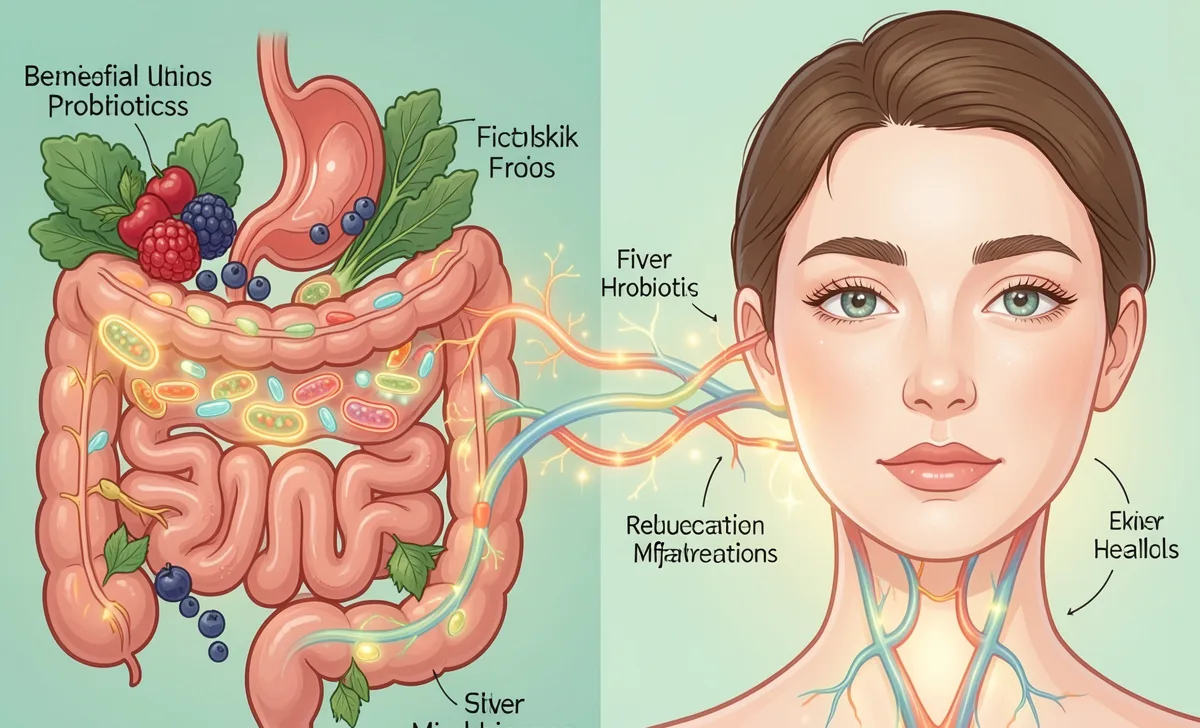
Think of your gut and skin like two friends who text all day. When one’s having a rough time, the other feels it. That group chat between your digestion and your complexion? That’s the gut-skin axis in action.
Before we dive into the science, let’s map out what’s actually driving your breakouts. I use a simple three-pathway framework—inflammation-led, hormone-triggered, or microbiome-imbalanced. By the end, you’ll know exactly which lever to pull.
Your gut houses trillions of microbes—your microbiome. When that community is balanced, it helps calm inflammation, support your immune response, and even regulate hormones. But when it’s off? Those same microbes can trigger signals that ramp up oil production, increase skin sensitivity, and yes—fuel acne.
It’s not magic. It’s biology. And researchers are just starting to map how these signals travel.
Can Fixing Your Gut Clear Acne? What the Evidence Actually Says
Okay, let’s get real. You’re probably wondering: If I clean up my gut, will my acne just… disappear?
I wish I could give you a yes/no answer. But here’s what studies do show: people who address gut imbalances often see fewer breakouts, less redness, and faster healing. It’s not a guarantee—but it’s a powerful piece of the puzzle.
Truth is, acne is multifactorial. Hormones, stress, genetics, and skincare routine—they all play a role. Gut health isn’t the only lever, but for many people, it’s the one that’s been overlooked.
One reader told me she spent years cycling through dermatologists before trying a simple gut-focused protocol. Within 8 weeks, her jawline breakouts (the stubborn, hormonal kind) started calming down. Was it just the gut work? Probably not. But it was the missing piece.
So can fixing your gut clear acne? For some, absolutely. For others, it reduces severity or frequency. Either way—it’s worth exploring.
Leaky Gut and Acne Breakouts: What’s the Real Link?
You’ve probably seen the term floating around wellness feeds. It sounds dramatic, but the mechanism is surprisingly straightforward.
Leaky gut (or increased intestinal permeability) happens when the lining of your intestine gets compromised. Tiny gaps let undigested food particles, toxins, or bacteria slip into your bloodstream. Your immune system notices—and responds with inflammation.
And where does that inflammation often show up? Yep—your skin.
Signs your gut barrier might need support:
- Bloating or gas after meals
- Food sensitivities that seem to pop up randomly
- Fatigue or brain fog alongside breakouts
- Acne that flares after eating certain triggers (dairy, sugar, processed foods)
Now, “leaky gut” isn’t a formal medical diagnosis yet—but the mechanism is real, and it matters for skin health.
The good news? Your gut lining can heal. And when it does, many people notice their skin follows suit.
Gut Dysbiosis Acne Symptoms: What to Watch For
You’ve probably noticed breakouts that don’t quite fit the usual patterns. That’s often your microbiome waving a flag.
Gut dysbiosis just means your microbiome is out of balance—too many “not-so-helpful” microbes, not enough of the good guys.
How do you know if it’s affecting your acne? Look for patterns:
- Breakouts that cluster around your jawline or chin (often linked to inflammation)
- Skin that feels reactive or inflamed, even with gentle products
- Digestive issues that flare at the same time as your skin
- Acne that doesn’t fully respond to topical treatments alone
When Gut Testing Actually Makes Sense
If you’ve tried basic swaps for 8+ weeks with zero shift, a comprehensive stool or SIBO test might be worth the investment. But skip this if you’re just starting—food tracking usually gives clearer, faster answers.
It’s not about self-diagnosing. It’s about connecting dots. If your gut’s off, your skin might be waving a flag.
One quick note: not everyone with acne has gut issues. But if you’ve tried the usual routes and still feel stuck? This angle could be your next step.
Gut Health Diet for Clear Skin Acne: Your Action Plan
Alright—let’s get practical. What can you actually eat to support both your gut and your skin?
Forget restrictive “acne diets.” This isn’t about cutting out entire food groups forever. It’s about adding in what helps:
Start here:
- Fiber-rich plants (aim for 30+ different plants per week—yes, really). Think oats, berries, lentils, leafy greens. Fiber feeds good gut bacteria.
- Fermented foods: plain yogurt, kefir, sauerkraut, kimchi. Even a small daily serving can shift your microbiome.
- Omega-3s: fatty fish, walnuts, chia seeds. They help calm the inflammation that fuels breakouts.
Tweak, don’t eliminate:
- If dairy seems to trigger you, try a 3-week pause. Not forever—just long enough to notice a pattern. Understanding the difference between food allergy vs intolerance can help you personalize elimination trials without unnecessary restriction.
- Swap ultra-processed snacks for whole-food options a few times a week. Small shifts add up.
Probiotics? Some strains show promise for acne (like Lactobacillus rhamnosus and Bifidobacterium lactis), but results vary. If you try one, give it 8–12 weeks and track changes. If you want to go deeper on strain selection, check out this review of clinical data.
This isn’t about perfection. It’s about progress. What’s one swap you could make this week?
Your 4-Week Gut-Skin Reset: Track Progress Without Obsessing
Healing takes time. And watching your skin day-to-day can feel frustrating. That’s why I love a simple tracker—it takes the guesswork out.
Week 1: Focus on adding, not subtracting. Add one gut-friendly food daily. Note any digestive changes. Week 2: Introduce a fermented food. Start a 2-minute daily stress reset (deep breathing counts). Week 3: Review your week. What felt easy? What felt hard? Adjust—no guilt. Week 4: Look for patterns. Are breakouts less inflamed? Healing faster? Gut feeling more settled?
Download our free [Acne-Gut Matchmaker Tracker] to log gut symptoms, skin changes, and wins—without the pressure. Because progress isn’t linear. And you’re not starting from zero.
FAQs
How long does it take for gut healing to improve acne?
Most people notice subtle shifts in 4–6 weeks, with clearer changes around 8–12 weeks. Skin cycles take time—be patient with the process.
Can probiotics make acne worse at first?
Rarely, but some people report a short “purge” as their microbiome adjusts. If breakouts worsen after 2–3 weeks, pause and reassess. Everyone’s gut is different.
Does dairy affect gut health and acne?
For some, yes. Dairy can trigger inflammation or hormonal shifts in sensitive individuals. Try a short elimination trial to see if it’s a trigger for you—not everyone needs to avoid it.
Is this approach safe for teens with hormonal acne?
Absolutely—with guidance. Gut-supportive habits (fiber, sleep, stress management) help at any age. For persistent hormonal acne, pair gut work with a dermatologist’s advice for the best results.