
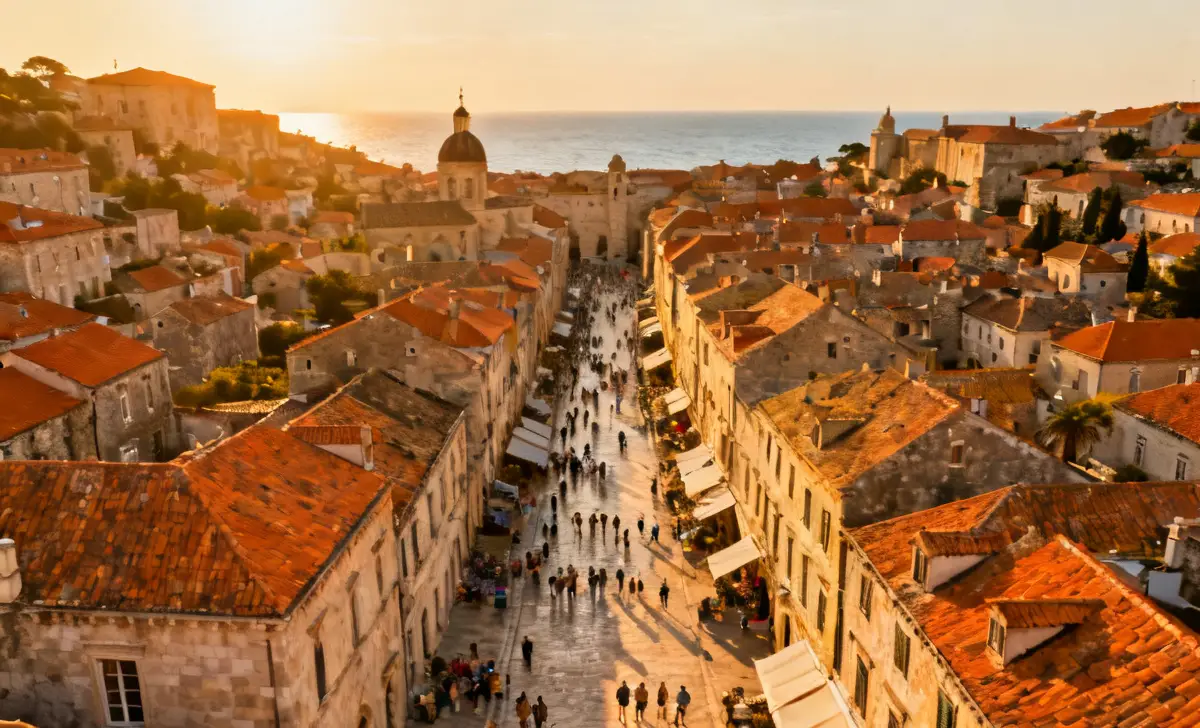
Venice once threatened to fine tourists €500 for sitting on its famous steps or eating near its canals. Amsterdam launched a bold campaign in 2024, urging certain tourists — particularly rowdy groups — to simply stay away. Barcelona residents marched through the streets holding signs that read “Tourists Go Home.” These are not isolated incidents. They are signals that global travel has crossed a tipping point.
Overtourism happens when the number of visitors to a destination far exceeds what its infrastructure, environment, or local communities can handle. It strains housing, damages ecosystems, raises living costs, and erodes the cultural fabric that made those places worth visiting in the first place. For modern travelers, the overtourism effects on travelers are no longer ignorable — from entry fees and behavioral fines to degraded experiences at sites they spent months planning to visit.
In this guide, you will learn what overtourism is, why it happens, how it affects destinations, and what it means for your future travel plans — everything in one place.
What Is Overtourism?
Overtourism is a condition in which tourist numbers at a destination exceed its sustainable capacity, leading to harm for residents, the environment, and the visitor experience itself. The term gained widespread use after 2017, when the UNWTO (United Nations World Tourism Organization) formally recognized it as a global challenge. According to UNWTO reports, international tourist arrivals reached 1.5 billion in 2019 before the pandemic — a figure that is rapidly being approached again.
The problem is not simply about crowds. It is about a mismatch between tourism demand and a destination’s ability to absorb that demand without long-term damage.
Why Does Overtourism Happen?
Rise of Cheap Flights and Travel Platforms
Budget airlines and online booking platforms made international travel accessible to hundreds of millions of new travelers. Between 2000 and 2019, the cost of air travel dropped by nearly 60% in real terms, according to IATA data. Platforms like Airbnb further removed traditional barriers by converting residential homes into short-term rental accommodation, shrinking housing supply for locals.
Social Media Influence and Viral Destinations
A single Instagram post or TikTok video can transform a quiet village into a tourist hotspot overnight. Trolltunga in Norway saw visitors jump from around 800 per year in 2010 to over 80,000 by 2016 — driven almost entirely by social media exposure. Travelers chasing “the perfect shot” often converge on the same narrow windows of time and location.
Cruise Tourism and Mass Travel Groups
Cruise ships deliver thousands of passengers to a single port within hours, often without those visitors spending significantly in the local economy. Dubrovnik, Croatia, received over 800,000 cruise passengers annually at its peak, in a city with fewer than 40,000 permanent residents. Mass group tour packages create similar concentration effects, routing travelers through identical routes and checkpoints.
What Are the Effects of Overtourism on Destinations?
Environmental Damage and Pollution
Coral reefs near Thailand’s Maya Bay — made famous by the film The Beach — were so severely damaged by tourist boat traffic that authorities closed the bay entirely from 2018 to 2022. Litter, physical damage from foot traffic, water contamination, and carbon emissions from transport all accumulate rapidly at popular sites. UNESCO has warned multiple World Heritage Sites about tourism-related degradation.
Pressure on Local Housing and Cost of Living
When short-term rentals dominate residential neighborhoods, rents rise, and longtime residents are priced out. In Lisbon, Portugal, average rents increased by over 60% between 2015 and 2023, with tourism widely cited as a primary driver. Cities including Barcelona, Amsterdam, and Florence have introduced strict caps on short-term rental licenses in response.
Loss of Cultural Identity
When tourism becomes the dominant economic force in a community, local businesses, traditions, and languages give way to souvenir shops and English-language menus. Residents of Hallstatt, Austria — a village of roughly 800 people receiving over 10,000 daily visitors at peak times — have described feeling like exhibits in a living museum rather than members of a functioning community.
Real Examples of Overtourism Around the World
Cities Limiting Visitor Numbers
- Venice, Italy, introduced a day-tripper access fee of €5 in 2024, with plans to increase it and expand its application to additional peak dates
- Bhutan maintains a mandatory Sustainable Development Fee of $100 per day for most international visitors
- Machu Picchu, Peru, enforces timed entry slots and a strict daily cap of 4,500 visitors
Tourist Taxes and Entry Restrictions
- The Balearic Islands (Mallorca, Ibiza) charge a tourist tax of up to €4 per night, reinvested into environmental restoration
- New Zealand implemented an International Visitor Conservation and Tourism Levy of NZD $35
- Japan introduced a ¥1,000 fee to climb Mount Fuji in 2024, alongside a daily summit cap of 4,000 hikers
Famous Overcrowded Destinations
- Santorini, Greece — cruise ship arrivals capped at 8,000 per day after resident protests
- Amsterdam, Netherlands — banned new hotel construction in the city center and introduced strict tourist conduct rules
- Bali, Indonesia, introduced a foreign visitor levy of $10 per arrival in 2024 to fund conservation
How Does Overtourism Affect Travelers?
Higher Costs and Travel Restrictions
Entry fees, tourist taxes, and booking lotteries are now standard at many top destinations. Travelers must plan further in advance, navigate permit systems, and budget for charges that did not exist five years ago. When planning visits to unfamiliar places, understanding local restrictions is now as important as booking accommodation.
Reduced Travel Experience Quality
Overcrowded sites deliver a diminished experience. Visitors to the Louvre in Paris often wait three or more hours to spend seconds near the Mona Lisa, surrounded by hundreds of other phones held overhead. The authenticity and tranquility that travelers seek are frequently the first casualties of mass tourism.
New Rules Tourists Must Follow
Behavioral codes are increasingly enforced. Florence has banned eating on the steps near historic monuments. Barcelona prohibits shirtless walking in non-beach areas. Singapore, Dubrovnik, and others have introduced fines for disruptive or disrespectful tourist conduct, with penalties reaching into the hundreds of euros.
What Are Governments Doing to Control Overtourism?
Visitor Caps and Permits
Daily and annual visitor caps are expanding worldwide. The Galápagos Islands limit total annual visitors and require licensed guides for all excursions. Wave Rock in Australia and Iceland’s Fjaðrárgljúfur canyon have introduced seasonal access controls following social media-driven surges in visitor numbers.
Cruise Ship Regulations
Amsterdam banned large cruise ships from docking in the city center from 2026. Alaska has passed legislation allowing communities to limit cruise ship calls. Dubrovnik capped daily cruise passengers at 4,000 — down from highs of over 8,000 — following a sustained campaign by residents and city planners.
Sustainable Tourism Policies
The UNWTO’s 2025 Global Tourism Resilience Index calls on destinations to adopt demand-management strategies, redirect visitor flows, and invest in rural tourism infrastructure. The EU’s European Tourism Indicator System now tracks sustainability metrics, including resident quality of life, not just revenue figures.
How Can Tourists Travel Responsibly?
Choosing Less Crowded Destinations
Travelers can intentionally select alternatives to saturated hotspots. Instead of Dubrovnik, consider Kotor in Montenegro. Instead of Santorini, explore Milos or Naxos. Instead of Barcelona, try Valencia or Bilbao. These choices distribute tourism revenue more equitably and deliver a richer, less crowded experience.
Traveling in Off-Seasons
Visiting popular destinations outside of peak months reduces strain on infrastructure and often provides a more authentic experience. Prague in January, Kyoto in November, or Iceland in March offer dramatically different experiences from their summer equivalents — at lower cost and with far fewer crowds.
Supporting Local Communities
- Book locally owned accommodation rather than international chain hotels
- Eat at family-run restaurants, not tourist-strip chains
- Buy handicrafts directly from artisans
- Hire local guides certified by regional tourism boards
- Follow all posted environmental guidelines without exception
What Is the Future of Travel in an Era of Overtourism? (2026 Trends)
2026 marks a critical point for global tourism. International arrivals are forecast to surpass 2019 highs, while sustainable capacity at top destinations remains unchanged or reduced due to environmental damage. Several clear trends are reshaping how travel will work:
- Permit-based access will expand from natural sites to urban historic centers
- Dynamic pricing for attractions will redistribute visitors across time slots
- Carbon-linked travel costs are under discussion at the EU and UNWTO level
- AI-powered visitor flow tools are being tested in cities including Amsterdam and Kyoto to monitor and redirect crowds in real time
- “Slow travel” — longer stays in fewer destinations — is being actively promoted as both a sustainability strategy and a richer travel model
Expert Insight Box: Tourism researchers at the World Tourism Organization and institutions, including Cornell’s School of Hotel Administration, note that overtourism is fundamentally a governance problem, not a volume problem. “The issue is not that too many people want to travel,” noted a 2025 UNWTO working paper. “It is that destinations lack the regulatory tools, political will, and infrastructure to manage demand spatially and temporally.” Experts broadly agree that blanket visitor caps alone are insufficient — and that redistributing tourism through pricing, marketing, and infrastructure investment is the more durable solution.
Key Takeaways — Why Overtourism Matters for Every Traveler
- Overtourism occurs when visitor numbers exceed a destination’s sustainable capacity, harming residents, ecosystems, and the travel experience
- Primary drivers include cheap air travel, social media influence, and mass cruise tourism
- Effects include environmental destruction, housing crises, cultural erosion, and resident displacement
- Destinations worldwide are responding with visitor caps, tourist taxes, cruise restrictions, and behavioral codes
- Responsible travelers can help by choosing alternatives, traveling off-season, and spending locally
- By 2026, permit systems, dynamic pricing, and AI-based crowd management will be standard tools
Final Thoughts
Overtourism is not simply about popular places becoming too crowded. It reflects a fundamental tension between the global desire to travel and the finite capacity of the places people most want to visit. As tourism volumes continue to rise, destinations are being forced to choose between short-term revenue and long-term survival.
The most important shift travelers can make is recognizing that their choices carry real consequences — for the places they visit and the people who live there.