
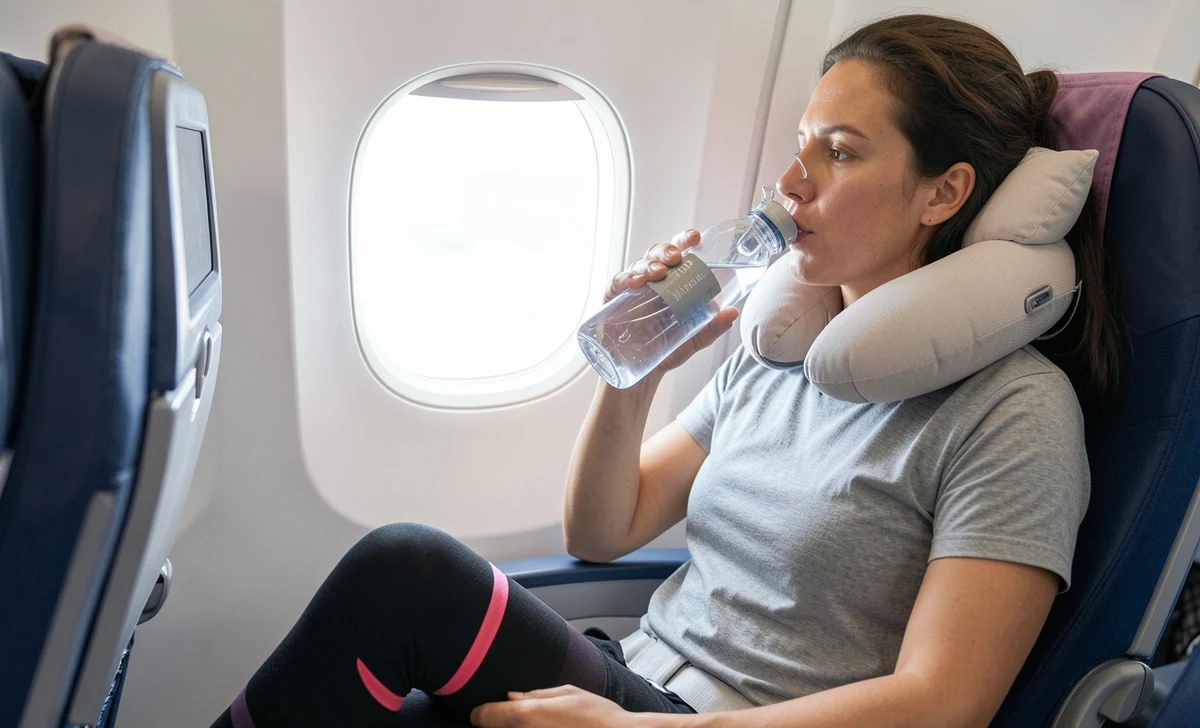
Your legs are swollen. Your head is pounding. You’ve been sitting for nine hours and feel worse than when you boarded. Long-distance travel — whether by plane, train, or car — puts real stress on your body.
Small habits before and during travel can cut fatigue, improve circulation, and help you recover faster after arrival. If you learn them before your next trip, you’ll land feeling like a person, not a luggage item.
In this guide, you’ll learn how to stay healthy while traveling long distances with practical tips for hydration, movement, sleep, nutrition, and recovery.
Why Long-Distance Travel Affects Your Health
What Happens to Your Body During Long Trips
Sitting still for hours slows blood flow in your legs. Cabin pressure on commercial flights drops to the equivalent of 6,000–8,000 feet altitude, which lowers blood oxygen slightly and increases fatigue. Cabin humidity falls below 20% — far lower than the 30–60% most people live in — which speeds up dehydration even if you don’t feel thirsty.
On road trips, posture tends to collapse after the first hour. The lower back flattens, hip flexors tighten, and the neck creeps forward. None of this is dramatic on its own, but across eight or twelve hours, the cumulative effect is significant.
Common Travel Health Problems
- Deep vein thrombosis (DVT): Blood clots in the legs, more likely after 4+ hours of sitting
- Dehydration: Often mistaken for jet lag
- Jet lag: Caused by circadian rhythm disruption when crossing time zones
- Muscle stiffness and back pain: From static posture and poor seating
- Motion sickness: Common on winding roads or turbulent flights
How to Prepare Before a Long Trip
Sleep and Rest Before Departure
Sleep deprivation before a long trip makes everything worse — jet lag hits harder, dehydration symptoms feel more intense, and your immune system is already below normal. Aim for 7–8 hours in the two nights before departure.
If you’re flying east, go to bed one hour earlier for two nights beforehand. If you’re flying west, stay up slightly later. This small adjustment shortens the adjustment window at your destination. If you’re unsure how to plan your airport lounge sleep and fatigue recovery during layovers, that matters too.
What to Pack for Healthy Travel
A short list beats a long one you’ll ignore:
- Reusable water bottle (at least 1 liter)
- Compression socks (Class 1, 15–20 mmHg for most travelers)
- Healthy snacks — nuts, dried fruit, whole grain crackers
- Lip balm and nasal saline spray — dry cabin air dries out mucous membranes fast
- Neck pillow — supports the cervical spine during sleep
- Noise-canceling earphones or earplugs — poor sleep on flights is partly noise-related
How to Stay Hydrated While Traveling
Signs of Travel Dehydration
Thirst is a late signal. By the time you feel thirsty in a dry airplane cabin, you’re already mildly dehydrated. Other signs include:
- Dark yellow urine
- Headache or light-headedness
- Dry mouth and chapped lips
- Difficulty concentrating
Cabin air at altitude removes moisture from your respiratory tract at a higher rate than normal air. A 10-hour flight without adequate hydration can leave you significantly dehydrated on arrival, which mimics jet lag symptoms.
Best Drinks for Long Flights and Road Trips
Drink water consistently — about 250ml (one cup) every hour of flight. Electrolyte tablets dissolved in water work better than plain water alone for very long trips, since they replace sodium and potassium lost through respiration.
Avoid:
- Alcohol — it’s a diuretic and suppresses sleep quality
- Coffee and tea in excess — one cup is fine; three is a problem
- Sugary sodas — spike blood sugar and increase thirst
If you’re traveling somewhere where water quality is uncertain, review guidance on safe drinking water when traveling abroad before you go.
Best Foods to Eat During Long-Distance Travel
Foods That Help Energy Levels
The goal on a long trip is stable blood sugar — not a spike-and-crash cycle from airport fast food.
Good options:
- Nuts and seeds — high fat, moderate protein, no blood sugar spike
- Whole-grain crackers or oat bars
- Fresh fruit — high water content helps hydration
- Boiled eggs or string cheese — portable protein
Foods and Drinks to Avoid
- Fried or greasy food — digests slowly, causes bloating at altitude (gas expands at lower cabin pressure)
- Cruciferous vegetables before flying — broccoli, cabbage, and beans increase gas
- Salty packaged snacks — accelerate dehydration
- Large meals right before a long flight — increases drowsiness and discomfort
How to Prevent Muscle Pain and Stiffness While Traveling
Simple In-Seat Exercises
Sitting for 8 hours slows circulation significantly. The CDC recommends moving every 1–2 hours on long flights to reduce DVT risk. In-seat options that actually work:
- Ankle circles — rotate each foot 10 times in each direction
- Calf raises — lift heels while seated, 15 reps
- Knee lifts — alternate raising each knee toward your chest, 10 reps
- Shoulder rolls — forward and backward, 10 reps
- Neck side stretches — ear toward shoulder, hold 10 seconds each side
Set a phone timer to remind you every 60–90 minutes.
Stretching Tips During Layovers and Stops
Layovers are free physical therapy if you use them. Walk the terminal instead of sitting at the gate. Find a quiet corner and do:
- Standing quad stretch — hold ankle behind you, 30 seconds each leg
- Hip flexor lunge — one knee on the floor, lean forward gently
- Forward fold — standing, fold at the hips, let your upper body hang
On road trips, stop every 2 hours minimum. Walk for at least 5 minutes at each stop. Driving without breaks is the single biggest cause of lower back pain on long drives.
How to Avoid Jet Lag While Traveling Across Time Zones
Adjusting Your Sleep Schedule
Jet lag is a mismatch between your internal clock and the local time at your destination. The body adjusts roughly one time zone per day on its own — but you can accelerate that.
- Set your watch to the destination time the moment you board
- Sleep on the plane only if it’s nighttime at your destination
- Stay awake until local bedtime on arrival day, even if exhausted
Light Exposure and Melatonin Tips
Light is the strongest signal to your circadian clock. On arrival:
- Flying east: Get bright light in the morning, avoid it in the evening
- Flying west: Get light in the afternoon and evening
Melatonin (0.5–1mg) taken 30 minutes before target sleep time can shorten jet lag by 1–2 days, according to the Sleep Foundation. Higher doses (5mg) don’t work better and often cause grogginess.
“The biggest mistake travelers make is trying to sleep through their first day at the destination. Light exposure and social timing — meals, movement — reset the body clock faster than sleep alone.” — Dr. Amal Abdullah, travel medicine specialist
Healthy Habits for Long Flights, Trains, and Road Trips
Hygiene and Germ Protection
Airplane tray tables carry more bacteria per square inch than a toilet seat, according to a study by Travelmath. Simple habits cut exposure significantly:
- Wash your hands before eating and after using the restroom
- Use an alcohol-based hand sanitizer (at least 60% alcohol)
- Avoid touching your face, especially your eyes, nose, and mouth
- Wipe down tray tables and armrests with antibacterial wipes
Posture and Circulation Tips
Economy seats are not designed for lumbar support. Roll up a jacket or small pillow and place it in the curve of your lower back. Keep feet flat on the floor — not crossed at the knees, which cuts off circulation.
On road trips, adjust the seat so your knees are slightly bent and your back is fully supported. Reclining the seat 100–110 degrees (slightly back from upright) reduces spinal pressure.
Travel Wellness Products That Actually Help
Compression Socks
Compression socks apply graduated pressure — tightest at the ankle, lighter at the calf — which pushes blood upward against gravity. Class 1 compression (15–20 mmHg) is effective for most healthy travelers on flights over 4 hours. The British Journal of Surgery found compression stockings reduced symptomless DVT by 90% in air travelers.
Put them on before you board, not mid-flight.
Neck Pillows, Eye Masks, and Water Bottles
- Neck pillow: U-shaped memory foam supports the cervical spine during sleep. Without it, the head drops forward and the neck muscles for hours.
- Eye mask: Blocks cabin lighting that suppresses melatonin, helping you sleep on overnight flights
- Insulated water bottle: Keeps water cold, acts as a visual reminder to drink, and reduces plastic waste
Mistakes Travelers Make That Hurt Their Health
- Skipping water to avoid bathroom trips — this leads to significant dehydration on long flights
- Drinking alcohol to sleep — alcohol reduces REM sleep quality and worsens jet lag
- Eating a large meal before flying — gas expands at altitude and causes bloating
- Wearing tight clothing restricts circulation, especially in the legs
- Not moving for the entire flight — dramatically increases DVT risk and stiffness
- Relying on caffeine to push through arrival day disrupts the new sleep schedule
FAQs
How much water should you drink during a long flight?
Aim for 250ml (about one cup) per hour of flight. On a 10-hour flight, that’s roughly 2.5 liters. More if you’ve had caffeine or alcohol.
What is the best exercise during long flights?
Ankle circles, calf raises, and knee lifts are the most effective in-seat exercises. Walk the aisle every 60–90 minutes if possible.
How do you avoid jet lag naturally?
Adjust your sleep schedule 1–2 days before departure, use light exposure strategically on arrival, eat meals on local time, and take low-dose melatonin (0.5–1mg) before target sleep time.
Are compression socks useful for travel?
Yes, for flights over 4 hours. Class 1 compression (15–20 mmHg) reduces the risk of DVT and leg swelling in most healthy adults.
What foods should you avoid before flying?
Avoid cruciferous vegetables (broccoli, cabbage), beans, fried food, salty snacks, and alcohol. All of these either increase bloating, accelerate dehydration, or disrupt sleep.
Key Takeaways
Staying healthy while traveling long distances doesn’t require a complicated routine. Drink water consistently. Move your legs every hour. Sleep on the destination time. Eat light, stable foods. Wear compression socks on long flights.
The travelers who arrive feeling good aren’t doing anything exotic — they’re just doing the basics with intention.