
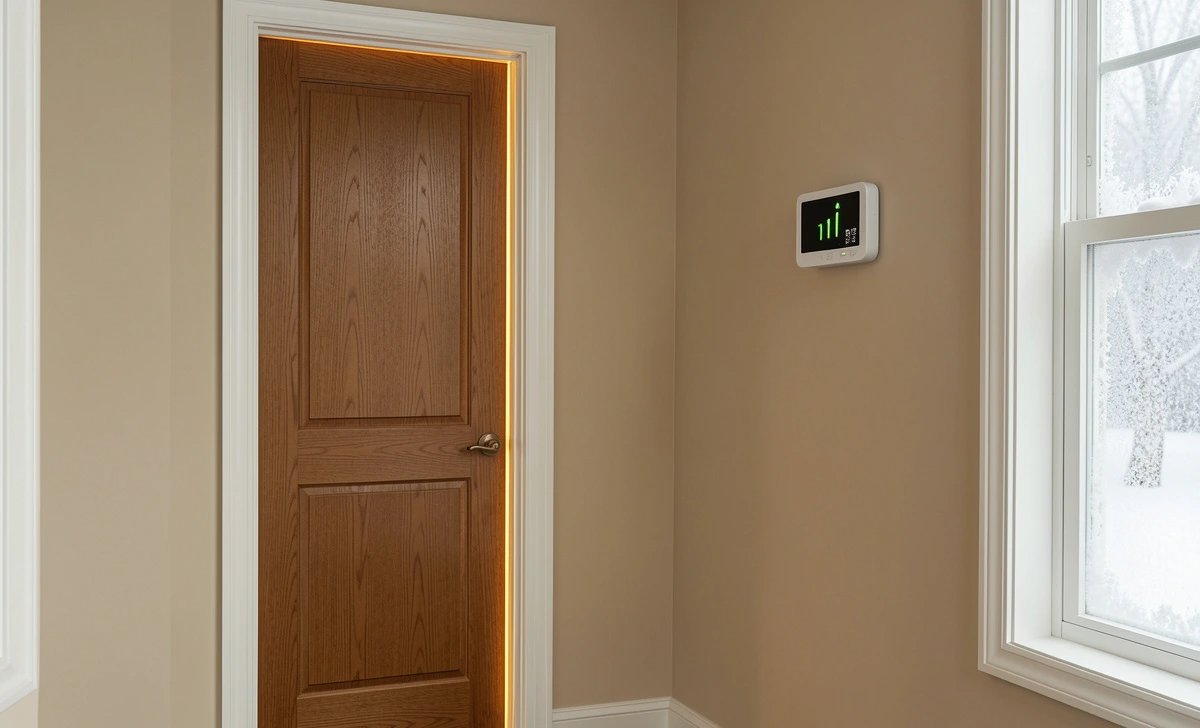
Many homeowners close unused rooms during winter, thinking it will concentrate heat where it’s needed most. In homes with forced-air heating systems, that habit can backfire and raise energy costs instead.
Modern HVAC systems are designed around balanced airflow. Every supply vent that pushes warm air into a room needs a return path to bring that air back. Closing doors breaks that loop and forces the system to work harder.
In this guide, you’ll learn exactly how closing interior doors heating bills, why HVAC airflow matters, and what to do instead to heat your home efficiently.
Why Do Homeowners Close Interior Doors in Winter?
The logic seems sound: if you’re not using a room, why heat it? Closing the door feels like redirecting warmth to occupied spaces.
Common reasons people try this:
- They believe unused rooms waste heat
- They want to concentrate warmth in high-traffic areas
- They assume less heated space means lower energy use
- They’ve heard it as a money-saving tip from family or friends
The problem is that this reasoning applies to older, simpler heating systems — not the sealed window gaps and forced-air setups found in most homes built after the 1970s.
How Does a Forced-Air Heating System Actually Work?
Forced-air systems — the most common type in North American homes — heat air at a central furnace and push it through a network of ducts.
Supply Vents and Return Vents
Supply vents push conditioned air into each room. Return vents pull air back to the furnace to be reheated.
These two sides of the system must stay in balance. When supply air enters a room, it needs somewhere to go. Without a return path, pressure builds up inside that room.
Why Balanced Airflow Matters
The Air Conditioning Contractors of America (ACCA) identifies balanced airflow as a core requirement for efficient HVAC operation. When air cannot circulate freely, the system loses efficiency, runs longer cycles, and uses more energy to maintain the same temperature.
Why Closing Interior Doors Increases Heating Bills
Pressure Imbalances Inside the Home
When you close a bedroom door with a supply vent inside, warm air continues flowing in but has no exit. Positive pressure builds in that room. Meanwhile, the rest of the house develops negative pressure as the return system keeps pulling air back.
This pressure difference forces conditioned air out through any gap it can find — wall outlets, light fixtures, and ceiling penetrations.
Reduced HVAC Efficiency
The U.S. Department of Energy notes that restricted airflow causes HVAC systems to work harder and can shorten equipment lifespan. A furnace fighting against blocked ducts consumes more fuel to deliver the same heat output.
Reduced HVAC efficiency translates directly to higher monthly utility bills — the opposite of the intended result.
Air Leakage and Heat Loss
Lawrence Berkeley National Laboratory research has found that duct systems in average homes leak 20–30% of conditioned air before it reaches living spaces. Pressure imbalances caused by closed doors push that percentage higher. Warm air that escapes into attics and wall cavities is energy you’ve already paid for and lost.
What Happens When a Room Has No Return Air Path?
Most bedrooms have a supply vent but no dedicated return vent. The return path relies on the gap under the door — typically about half an inch.
Positive Pressure vs Negative Pressure
Close that door, and the gap disappears. The room pressurizes. The hallway depressurizes. The pressure difference across the door can reach 5–10 Pascals — enough to noticeably affect airflow throughout the whole system.
How Conditioned Air Escapes
Lesser-known fact: A closed bedroom door can create enough pressure to push heated air through attic leaks and wall gaps. That air travels into unconditioned spaces, and cold outside air infiltrates to replace it — making your furnace run longer to compensate.
Proper attic insulation by climate zone reduces how much of this escaped heat is permanently lost, but it doesn’t fix the underlying pressure problem.
Does Closing Vents Save Energy?
A related habit is closing supply registers in unused rooms. The thinking is identical — stop heating spaces you don’t use.
The Truth About Closing Supply Registers
Closing a register doesn’t eliminate airflow demand from that branch of ductwork. It increases static pressure throughout the entire duct system. The furnace blower strains against higher resistance, the motor draws more power, and ducts are more likely to leak at seams and joints.
Myth: Closing unused rooms always saves money. Fact: In most forced-air systems, closing doors and vents increases energy use by creating pressure imbalances that reduce efficiency and drive air leakage.
Why Modern HVAC Systems Need Open Airflow
HVAC equipment is sized to the total square footage of the home. Blocking part of that area doesn’t reduce the system’s load proportionally — it just disrupts the airflow the equipment was calibrated to handle.
Signs Your HVAC Airflow Is Unbalanced
Watch for these indicators that your system is working against pressure problems:
- Uneven room temperatures — some rooms are too hot or too cold despite similar vent counts
- Whistling doors — air pushing through gaps under closed doors
- Drafts near outlets and light switches — pressurized air escaping through wall penetrations
- Higher utility bills — rising costs without a clear change in usage habits
- HVAC short cycling — the system turns on and off more frequently than normal
How to Improve Home Heating Efficiency Without Closing Doors
Use Smart Thermostats
A programmable or smart thermostat reduces heating output during low-occupancy hours across the whole home — without disrupting airflow. The U.S. Department of Energy estimates savings of up to 10% annually from proper thermostat use.
Seal Air Leaks
Air sealing addresses the actual source of heat loss. Focus on attic hatches, rim joists, and penetrations around pipes and wires. Compared to closing doors, home sealing for radon and air quality also improves indoor air quality as a secondary benefit.
Improve Insulation
Better insulation reduces how quickly a room loses heat, regardless of whether the door is open. This is especially important in rooms above unconditioned garages or against exterior walls.
Keep Return Air Paths Open
If certain rooms feel stuffy or uncomfortable with doors closed, the simplest fix is to undercut interior doors by 1–1.5 inches to restore airflow. Transfer grilles installed between rooms serve the same purpose. Both allow the system to balance pressure without requiring open doors.
What HVAC Experts Say About Closing Interior Doors
HVAC technicians frequently trace comfort complaints and rising utility bills back to closed interior doors and blocked registers. Restoring airflow often resolves both problems without any equipment changes.
The ACCA’s Manual D standard for residential duct design assumes all interior doors remain open. Designs calculated on that assumption lose accuracy when homeowners begin closing rooms off.
Energy Star guidance for new construction requires adequate return air pathways from every bedroom — a recognition that single-point returns at hallways are insufficient when doors are shut.
The Building Performance Institute (BPI) similarly flags closed-door pressure imbalances as a common contributor to comfort problems and envelope air leakage during home energy audits.
Key Takeaways About Closing Doors and Heating Costs
- Forced-air systems require balanced supply and return airflow to operate efficiently
- Closing interior doors creates pressure imbalances that reduce efficiency and increase air leakage
- Closing supply registers increases static pressure and strains blower motors
- Warm air pushed out of pressurized rooms escapes through attic leaks and wall gaps — energy already paid for
- Smart thermostats, air sealing, and open return paths are more effective than closing rooms off
- Undercutting interior doors or installing transfer grilles restores airflow without sacrificing privacy
Conclusion
Modern homes are tighter and more mechanically complex than they were 50 years ago. HVAC systems are designed to treat the whole house as one connected air volume — not a collection of isolated rooms.
Your heating system performs best when air can move freely throughout the home. Closing doors doesn’t contain heat — it traps pressure, drives leakage, and makes your furnace work harder for the same result.