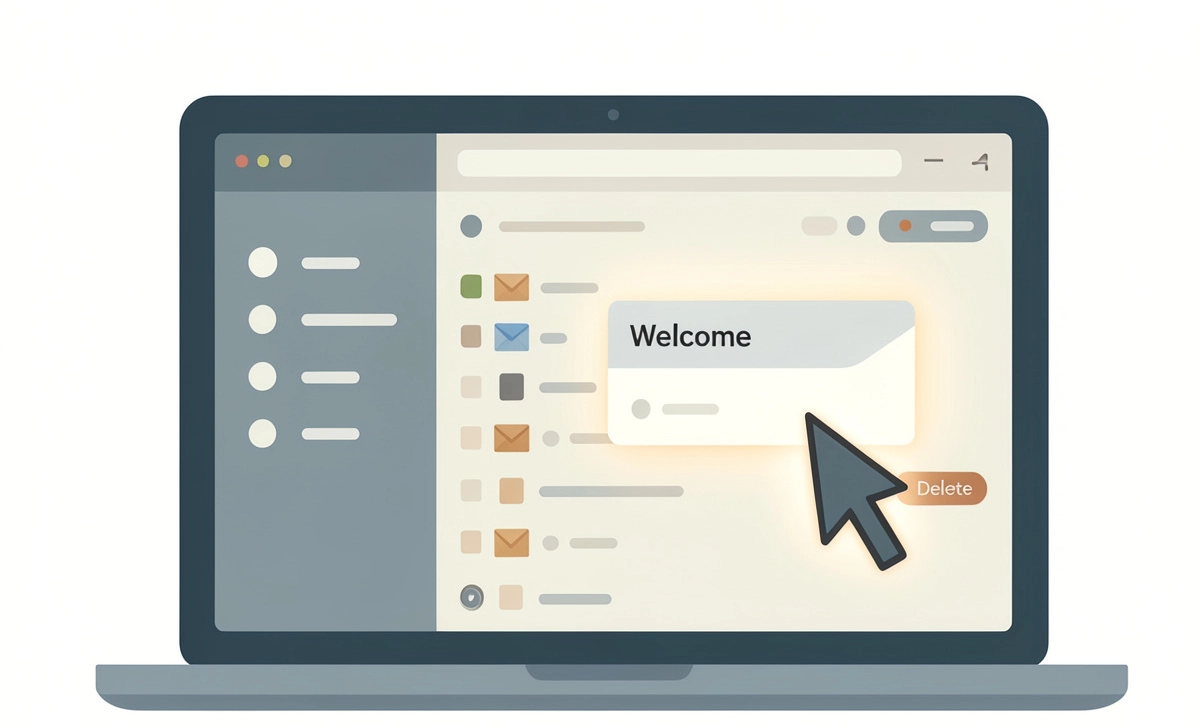
The average person receives 121 emails per day and spends fewer than 3 seconds deciding whether to read or delete each one. That decision happens before a single sentence is read — it happens at the subject line, the sender name, and the first visible word in the preview pane.
Email welcome sequences are the first automated series a subscriber receives after joining a list. They carry the highest open rates of any campaign type — often 50–80% — yet an email welcome sequence ignored by subscribers is far more common than the open rate suggests. High open rates are not engagement. They are just proof that the door opened.
In this guide, you will learn why email welcome sequences get ignored within seconds, the psychology behind it, and proven fixes to improve engagement, clicks, and retention — everything in one place.
Why Do Email Welcome Sequences Get Ignored So Quickly? (Quick Data Snapshot)
Before diagnosing the problem, the data tells the story clearly.
| Metric | Benchmark (2025–2026) |
|---|---|
| Average inbox attention span | 2.7 seconds per email |
| Welcome email open rate | 50–86% |
| Welcome email click-through rate | 14–25% |
| Time to delete decision | Under 3 seconds |
| Mobile email opens | 61% of all opens |
| Desktop vs mobile click gap | Mobile CTR 30% lower |
The open-to-click gap is the critical number. An email with a 70% open rate but a 12% CTR means 58 out of every 100 subscribers opened and then ignored the content entirely. That is the email engagement drop-off pattern destroying sender reputation scores in 2026.
What Happens in the First 3 Seconds of Email Open?
Inbox Scanning Behavior and Attention Triggers
Subscribers do not read emails — they scan for reasons to stop scanning. Eye-tracking research from Nielsen Norman Group shows that readers follow an F-pattern: they read the first line, skim left edges, and skip most of the body. Welcome emails written as paragraphs of text are processed the same way a newsletter is: skipped.
The three elements a reader processes in under 3 seconds are the sender name, the subject line retained in memory, and the first 6–8 words of visible body text. If those words do not deliver instant relevance, the tab closes.
Why Users Mentally Filter Emails Instantly
The brain applies a fast filter called relevance gating — a quick comparison between what was expected at signup and what the email actually delivers. When a subscriber signs up for a discount code and receives a brand story instead, the filter triggers rejection immediately.
This mismatch is not about the quality of writing. It is about promise fulfillment in the first visible line. Most welcome sequences fail this test because marketers write what they want to say, not what the subscriber expected to receive.
Why Email Welcome Sequences Fail Even With High Open Rates
Misaligned Expectations vs Subject Line Promise
A subject line is a contract. If it says “Your free guide is here” and the email opens with three paragraphs about company history, the contract is broken. 68% of users report unsubscribing because emails do not match the content they signed up for (Mailchimp, 2024).
The fix is not a better subject line — it is alignment between the opt-in offer, the subject line, and the first sentence of the email body.
Lack of Instant Value Delivery
Most welcome sequences delay value. Email 1 introduces the brand. Email 2 shares the founder’s story. Email 3 finally delivers something useful. By email 3, 40–60% of subscribers have already disengaged (Campaign Monitor, 2025).
Value must arrive in email 1, within the first scroll. A checklist, a key insight, a single actionable tip — anything that makes the reader think “I needed this.” Delayed value trains subscribers to ignore the sequence.
Design Overload and Mobile Readability Issues
Heavy HTML templates with multiple images, columns, and CTAs perform well on desktop and poorly everywhere else. With 61% of opens on mobile, a three-column layout renders as a broken stack. Large images block content behind slow load times on mobile data.
The result: the subscriber sees a broken email, closes it, and the engagement signal sent to inbox providers is negative. Over time, this pushes future emails toward the promotions tab or spam.
The Psychology Behind Ignored Emails
Cognitive Overload in Modern Inboxes
The modern inbox is not a communication channel — it is a task queue people actively avoid. Behavioral research from the American Psychological Association shows that decision-making quality drops after processing more than 10 decisions in a row. Most people open email after 10+ other digital interactions.
A welcome email that requires the reader to process multiple options, navigate a menu of links, or make a choice between three CTAs arrives at the worst possible cognitive moment.
Preference Signals and User Intent Mismatch
Subscribers arrive with a specific intent — get the offer, learn about the topic, solve a problem. Welcome sequences that ignore this intent and default to brand onboarding are misread as irrelevant by both the subscriber and the inbox algorithm.
Email providers track engagement signals: opens, clicks, scroll depth, time-in-email, and replies. An email that gets opened but generates no positive signal teaches the algorithm that future emails from that sender belong in low-priority folders.
Decision Fatigue in Email Consumption
Every CTA in an email is a decision. Every link is a decision. A welcome email with 5 links and 2 buttons forces 7 decisions on a reader who arrived with attention for 1. Research on choice architecture (Schwartz, The Paradox of Choice) consistently shows that more options lead to fewer actions taken.
The highest-performing welcome emails have one clear action. One link. One ask. One next step.
How to Fix Email Welcome Sequence Engagement Issues
Improve First-Line Value Clarity
Rewrite the first sentence of every email in the sequence to answer: “What does the reader get from the next 60 seconds?” Lead with the benefit, not the context. “Here is your 3-step onboarding checklist” outperforms “Welcome to our community — we are so glad you are here.”
Test first-line variations using A/B split tools. A single first-line change can move CTR by 15–30% in a single send.
Optimize Preview Text and Hook Strategy
Preview text is the second subject line. Most email clients show 35–90 characters of preview text next to the subject line. Leaving it blank causes the client to pull in the first text from the email — often “View in browser” or an unsubscribe footer.
Write a preview text that continues the subject line’s promise. Subject: “Your free template is ready” → Preview: “Open it now — takes 2 minutes to set up.” This two-line hook increases open-to-read rate measurably.
Reduce Friction With Single-Action Emails
Each email in a welcome sequence should have one job. Email 1: Confirm value and deliver the opt-in offer. Email 2: Send one insight that proves expertise. Email 3: present one next step (book a call, start a trial, read a post). This structure aligns with how attention works and tracks cleanly in analytics.
Understanding blog post ranking factors for your linked content also matters here — the pages you drive traffic to from email should load fast and match the email’s promise.
Timing Optimization Based on Behavioral Data
The first email should arrive within 5 minutes of signup, while the subscriber’s intent is still active. Sequences that send the first email hours later lose the moment entirely. According to HubSpot (2025), welcome emails sent within 1 hour of signup generate 3x the transaction rate of those sent later.
Space subsequent emails based on engagement behavior, not a fixed calendar. Subscribers who click email 1 should receive email 2 sooner. Those who do not open email 1 should receive a different subject line before email 2 is sent.
Email Welcome Sequence Best Practices That Work in 2026
Personalization Beyond First Name
First-name personalization is table stakes. In 2026, behavioral personalization is the differentiator. Tag subscribers by the page they opted in from, the offer they requested, or the content category they browsed. Use those tags to send different emails to different segments.
A subscriber who opted in for a pricing guide has a different intent than one who downloaded a beginner checklist. Sending both the same sequence treats them identically — and both notice.
Behavioral-Triggered Onboarding Flows
Replace time-based sequences with behavior-based triggers. If a subscriber clicks the product link in email 1, trigger an email about social proof or pricing — not the generic email 3 about features. If they do not open email 1, trigger a re-subject-line version before moving forward.
This approach requires marketing automation but pays back in engagement rates. Klaviyo and ActiveCampaign both support conditional branching with minimal setup.
Micro-Value Delivery Strategy
Each email should deliver one small, complete win — a stat the reader did not know, a template they can use today, a shortcut that saves time. These micro-wins build Pavlovian conditioning: opening your emails becomes associated with getting something useful.
Contrast this with emails that tease value (“In our next email, we will share…”) — those train subscribers to wait, not to open.
Real-World Case Study (Before vs After Optimization)
Brand: B2B SaaS onboarding sequence (anonymized, 2025 data)
Before optimization:
- Welcome email: 600-word brand story, 4 CTAs, sent 2 hours after signup
- Open rate: 62% | CTR: 8% | Unsubscribe rate after sequence: 19%
After optimization:
- Email 1 rewritten with a single CTA, value delivered in line 1, sent within 5 minutes
- Preview text rewritten to continue the subject line promise
- Sequence restructured to behavior-triggered, not time-based
Results after 60 days:
- Open rate: 58% (slight drop — inactive addresses removed)
- CTR: 23% (188% increase)
- Unsubscribe rate after sequence: 7%
- Trial-to-paid conversion from sequence: up 34%
The open rate dropped because list hygiene removed non-engagers. Every other metric improved because the sequence matched what subscribers actually wanted.
Expert Insight on Email Engagement Drop-Off
“The biggest mistake I see in welcome sequences is writing for the brand’s goals instead of the subscriber’s immediate need. The subscriber just made a micro-commitment by giving you their email. The job of email 1 is to immediately confirm that it was a smart decision — not to tell your brand story.”
— Val Geisler, Email Conversion Strategist and former VP of Customer Success, known for work with Klaviyo and ConvertKit clients
This matches what the data shows consistently: the sequences with the highest long-term engagement are those that treat email 1 as a value confirmation, not an introduction.
Key Takeaways — What Actually Improves Email Engagement?
- Subscribers decide to engage or ignore in under 3 seconds — the first visible line determines the outcome
- High open rates do not equal engagement; the open-to-click gap is the real performance metric
- Misaligned expectations between the opt-in offer and the email content cause immediate disengagement
- Single-action emails outperform multi-CTA emails in every benchmark studied
- Behavioral triggers outperform time-based sequences for click rates and retention
- Personalization beyond first name — segment by intent and opt-in source — is the 2026 standard
- Send email 1 within 5 minutes of signup while intent is highest
If your sequence is losing subscribers despite strong open rates, the problem is not the subject line — it is what happens in the first 3 seconds after the open.
Final Thoughts
Email engagement decline is not a technical problem — it is a reflection of how attention works under information overload. The inbox is one of the most competitive environments in digital marketing, and welcome sequences are often where trust is won or permanently lost.
The one insight worth keeping from everything above: an email that gets opened but ignored is more damaging than one that never gets opened. It trains both the subscriber and the inbox algorithm that your emails are not worth engaging with. Fix that signal early in the sequence, and everything downstream — repurposing content across channels, retention, referrals — gets easier.