
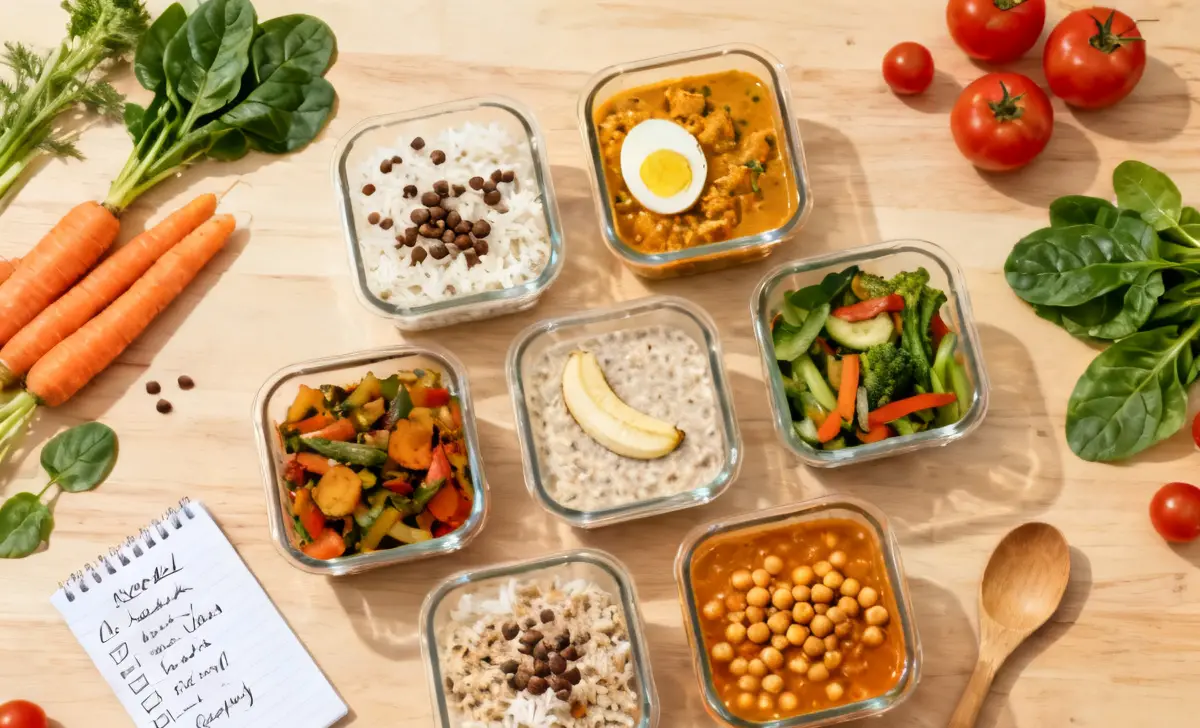
Most people believe that eating healthy is expensive — but that’s one of the biggest food myths out there. Studies show that home-cooked meals can cut food costs by up to 40% compared to eating out regularly. The real secret to eating well without overspending is not about spending more money — it’s about planning smarter.
Creating a balanced weekly meal plan on a budget is one of the most powerful habits you can build for your health and finances. It gives you full control over what goes into your meals, helps you cut down on food waste, and keeps your nutrition goals on track throughout the week.
In this guide, you will learn exactly how to create a balanced weekly meal plan on a budget — including the best affordable foods to include, smart grocery shopping strategies, practical meal prep tips, and a ready-to-use 7-day sample plan to get you started right away.
What Is a Balanced Weekly Meal Plan?
A balanced weekly meal plan is a structured schedule of meals planned for each day of the week that covers all the essential nutrients your body needs to function well. This includes proteins, carbohydrates, healthy fats, vitamins, and minerals — spread consistently across breakfast, lunch, and dinner.
A good meal plan is not about eating fancy or expensive food. It is about making sure your body gets the right fuel from a variety of simple, whole ingredients. For example, a balanced plate might include a protein like eggs or lentils, a carbohydrate like rice or whole wheat bread, a healthy fat like a small amount of cooking oil or seeds, and a generous serving of vegetables.
When these meals are planned for the full week, you avoid last-minute decisions that often lead to unhealthy and costly food choices.
Why Is Meal Planning Important for Budget and Health?
Meal planning is one of the most underused tools for improving both your health and your financial well-being at the same time. According to data from the Food and Agriculture Organization (FAO), planned shopping and cooking can reduce food waste by up to 30%. Less waste means less money thrown away every month.
Beyond saving money, meal planning helps you avoid impulse eating, unnecessary grocery purchases, and the temptation of ordering takeout when you don’t know what to cook. It also supports better energy levels, weight management, and consistent nutrition throughout the week.
According to a 2024 nutrition study, people who plan their meals are twice as likely to maintain a healthy and balanced diet compared to those who don’t. This is because planning removes the decision fatigue that leads to poor food choices when you are tired or hungry.
How to Create a Weekly Meal Plan on a Budget: Step-by-Step
Building your own meal plan does not have to be complicated. Follow this simple system, and you will have a working plan ready in less than 30 minutes.
Step 1: Set a Realistic Weekly Budget
Before anything else, decide how much you can comfortably spend on food each week. A low budget might be $20 to $40 per week, while a moderate budget typically falls between $50 and $80. Once you have a number, stick to it. Your meal plan should be built around this limit, not the other way around.
Step 2: Check What You Already Have
Before writing your grocery list, look through your pantry, fridge, and freezer. Use up what is already there first. This prevents duplicate purchases and reduces the chance of food going to waste. Many people are surprised to find they already have enough staples to build two or three meals without buying anything new.
Step 3: Plan Meals Around Affordable Staples
The foundation of any budget meal plan should be low-cost, high-nutrition staples. Think rice, lentils, eggs, oats, and seasonal vegetables. These ingredients are widely available, long-lasting, and packed with the nutrients your body needs. Build your weekly meals around these core items and add variety through spices, cooking methods, and different combinations.
Step 4: Keep Your Recipes Simple
Complex recipes with many different ingredients quickly add up in cost. Stick to meals with five to seven ingredients maximum. Simple meals are not only cheaper — they are also easier to prepare on busy days, which means you are more likely to actually cook at home instead of ordering food.
Step 5: Repeat Ingredients Across Multiple Meals
One of the smartest budget strategies is using the same ingredient in different meals throughout the week. For example, if you buy a bag of lentils, you can make lentil curry on Monday, lentil soup on Wednesday, and lentil rice on Friday. This approach reduces both cost and waste significantly.
Best Budget-Friendly Healthy Foods to Include
Not all healthy foods are expensive. In fact, some of the most nutritious foods in the world are also the most affordable. Here are the top budget-friendly options you should always keep in your kitchen:
- Eggs — An excellent source of high-quality protein and healthy fats at a very low price per serving.
- Lentils (Daal) — Rich in plant-based protein and dietary fiber, lentils are filling, versatile, and extremely cheap.
- Rice — A reliable source of energy-giving carbohydrates that pairs well with almost any dish.
- Oats — A nutritious and filling breakfast option that costs very little per serving.
- Seasonal vegetables — Whatever is in season locally will always be fresher and cheaper than out-of-season produce.
- Bananas — One of the most affordable and energy-rich fruits available year-round.
- Chickpeas and beans — High in protein and fiber, and very cheap when bought dried or canned in bulk.
A useful tip: always buy local and seasonal produce. This simple habit can save you up to 25% on your total grocery bill every week.
Smart Grocery Shopping Strategies
The grocery store is where most budget meal plans succeed or fail. Without a strategy, it is easy to overspend or buy things you don’t actually need. These practical shopping habits will help you stay on budget every time.
Always make a strict shopping list before you leave home and commit to buying only what is on it. Never shop when you are hungry — studies consistently show that hungry shoppers buy more impulsively and spend more than planned. When buying pantry staples like rice, lentils, oats, or cooking oil, buy in bulk. According to retail data from 2025, buying in bulk reduces your cost per unit by 15 to 20% compared to buying smaller quantities.
Another effective strategy is choosing store brands over premium branded products. In most cases, the quality is identical or very similar, but the price can be significantly lower. Also, always compare the price per unit or per 100 grams rather than the total price — a larger package is often cheaper per serving even if it costs more upfront.
Batch Cooking and Meal Prep Tips
Batch cooking — preparing large amounts of food at once to eat across multiple meals — is one of the most effective strategies for saving both time and money. When you cook once and eat multiple times, you reduce energy costs, save hours of daily kitchen time, and always have a healthy meal ready when you need it.
Start simple: cook one large pot of rice that you can use for three different meals throughout the week. Do the same with lentils or chicken. Prepare your vegetables in advance by washing, chopping, and storing them in containers so they are ready to use on busy days. Store prepared meals in the fridge for up to three days, or freeze portions for later in the week.
For example, one big pot of lentils can become lentil curry on Day 1, a warm lentil soup on Day 2, and a simple lentil-and-rice bowl on Day 3 — all from a single cooking session that takes about 30 minutes.
Sample 7-Day Budget Meal Plan
Here is a simple, low-cost weekly plan you can start using this week:
- Day 1: Breakfast — Oats with banana | Lunch — Rice with lentil curry | Dinner — Egg curry with roti
- Day 2: Breakfast — Boiled eggs with bread | Lunch — Vegetable fried rice | Dinner — Small portion chicken curry with rice
- Day 3: Breakfast — Oats with honey | Lunch — Lentil soup with bread | Dinner — Mixed vegetable curry with rice
- Day 4: Breakfast — Banana and boiled egg | Lunch — Chickpea curry with roti | Dinner — Rice and leftover vegetable curry
- Day 5: Breakfast — Oats | Lunch — Lentils with rice | Dinner — Egg stir fry with vegetables
- Day 6: Breakfast — Bread with peanut butter | Lunch — Vegetable rice | Dinner — Chicken and lentil soup
- Day 7: Breakfast — Oats with banana | Lunch — Leftover curry with roti | Dinner — Simple egg and vegetable rice
Depending on your location, this type of plan can cost well under $30 per week. The key is repeating ingredients intelligently and relying on simple, filling meals.
Common Mistakes to Avoid
Many people start meal planning with good intentions but give up within a week or two. Usually, it comes down to a few avoidable mistakes. Buying too many different ingredients for a single week is one of the most common errors — it increases both cost and the chance of food going bad before you use it. Ignoring leftovers is another expensive habit. Leftovers are free meals and should always be incorporated into your plan.
Choosing expensive “health” branded foods is also a budget killer. Marketing often makes these products seem necessary, but whole, unprocessed foods like eggs, lentils, and vegetables are almost always more nutritious and far cheaper. Finally, don’t overcomplicate your meals. Simple food is sustainable food, and sustainability is what creates long-term healthy habits.
What Experts Are Saying About Budget Meal Planning
Nutrition experts increasingly agree that the quality of your diet has far more to do with planning and consistency than with the price of your food. According to a 2025 report by global diet researchers, healthy eating is not about accessing premium products — it is about balance, appropriate portion sizes, and making thoughtful choices in advance.
Most people focus on what to eat, but research consistently shows that success in maintaining a healthy diet depends more on how you plan and prepare your meals. The structure provided by a weekly meal plan removes the daily guesswork that leads most people to make poor food decisions. This is why two people with identical budgets can have completely different health outcomes based solely on whether or not they plan their meals ahead of time. If you want to build better overall wellness habits alongside your meal planning, combining it with quality sleep can also significantly support your energy levels and food choices throughout the day — developing a consistent bedtime routine is one of the most effective ways to start.
Key Takeaways
- Meal planning reduces food waste and helps you save significant money every month.
- Simple, repeatable meals built around affordable staples are the foundation of budget eating.
- Batch cooking saves both time and effort while ensuring you always have healthy food ready.
- Smart grocery shopping — with a list, in bulk, and without hunger — prevents overspending.
- Healthy eating does not require expensive ingredients. It requires a consistent, well-thought-out plan.
Final Thoughts
The most important lesson from budget meal planning is this: eating well is not about spending more — it is about planning better. A structured weekly meal plan puts you in control of both your health and your finances, and it costs nothing to create one.
Start small. Pick three or four simple meals for next week, write a shopping list, and commit to cooking at home. Within a few weeks, you will notice the difference — not just in your grocery bill, but in your energy, your mood, and your overall wellbeing. So, what’s stopping you from planning your next week’s meals today?