
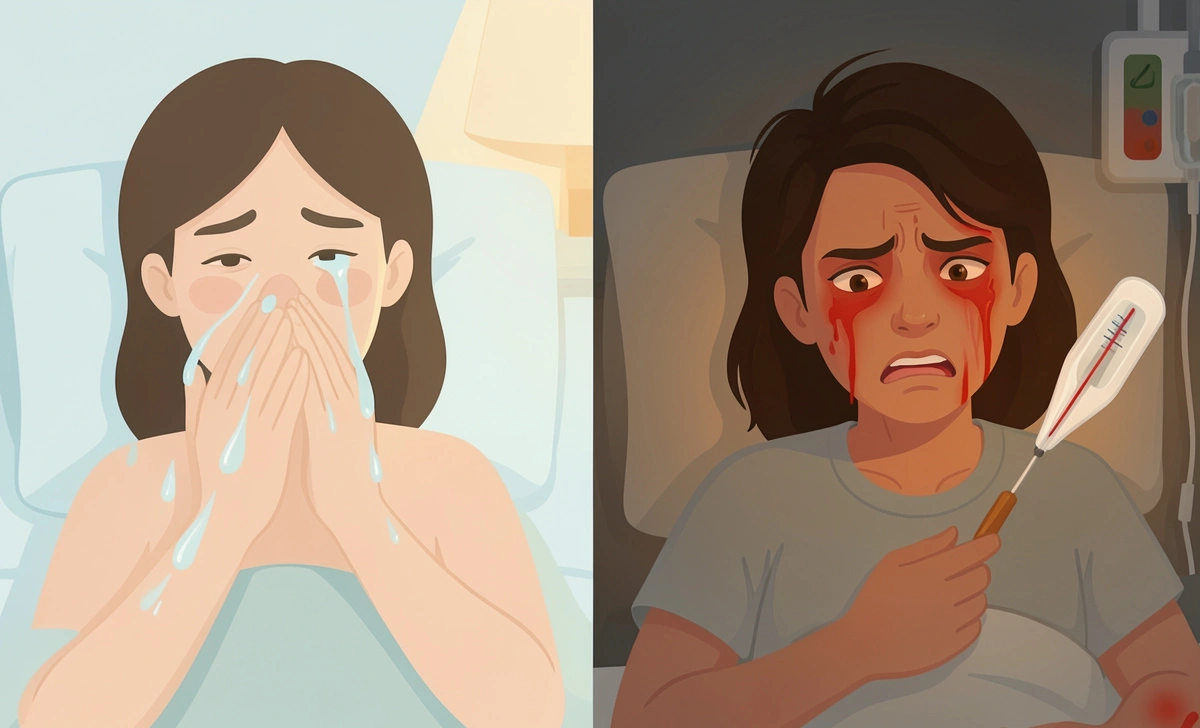
Every year, millions of people wake up feeling terrible and ask the same question: Is this a cold or the flu? You feel tired, your throat hurts, and your body does not want to move. Most people brush it off and say, “It’s just a cold,” but that assumption can sometimes be dangerous.
The problem is that a cold and the flu share many of the same symptoms. Both cause a sore throat, runny nose, and general tiredness. But beneath those similarities lie important differences that shape how you should treat yourself and when you should see a doctor. Ignoring the flu when it is actually serious can lead to complications like pneumonia or hospitalization — especially for older adults, young children, and people with existing health conditions. In fact, chronic fatigue that lingers after illness could sometimes be a sign that your body is still recovering from something stronger than a simple cold.
In this article, you will find a complete breakdown of Cold vs Flu Symptoms, what causes each illness, how fast they appear, which one is more dangerous, when to call a doctor, and the best ways to treat and prevent both. By the end, you will know exactly what your body is trying to tell you.
What Is the Difference Between a Cold and the Flu?
The common cold and the flu are both viral infections that affect your respiratory system — your nose, throat, and lungs. However, they are caused by completely different viruses and behave very differently in your body.
A cold is usually mild. Most people keep going through their day with some discomfort but can still function. The flu is a different story. It can hit you hard within just a few hours — causing sudden exhaustion, high fever, chills, and severe body aches.
The biggest difference comes down to two things: how fast symptoms appear and how bad they get. Cold symptoms build up slowly over a day or two. Flu symptoms often strike out of nowhere and feel much more intense right away.
Cold vs Flu Symptoms Comparison Table
| Symptom | Common Cold | Flu |
|---|---|---|
| Fever | Rare or mild | Common and high |
| Body aches | Mild | Strong and widespread |
| Fatigue | Mild | Severe |
| Runny nose | Common | Sometimes |
| Sneezing | Common | Less common |
| Chills | Rare | Common |
| Headache | Rare | Common |
| Sore throat | Common | Sometimes |
| Cough | Mild to moderate | Often severe |
| Symptom onset | Gradual | Sudden |
| Recovery time | 5–10 days | 1–2 weeks |
According to the Centers for Disease Control and Prevention, flu symptoms often appear suddenly and may lead to complications like pneumonia.
What Causes a Cold and the Flu?
More than 200 different viruses can cause the common cold. Rhinoviruses are responsible for most cases.
The flu, on the other hand, comes specifically from influenza viruses. The two main types are Influenza A and Influenza B. These viruses change slightly each year, which is why a new flu vaccine is made every season.
Both illnesses spread in the same basic ways:
- Coughing and sneezing
- Touching infected surfaces and then touching your face
- Being in close contact with a sick person
Cold viruses are active all year round, but flu cases spike during the winter months when people spend more time indoors together.
How Fast Do Symptoms Start?
This is one of the easiest ways to tell the difference between a cold and the flu.
A cold develops slowly. You might first notice a slightly scratchy throat or start sneezing a little more than usual. A runny nose usually follows. Symptoms gradually get worse over two or three days before they peak.
The flu comes on fast. Many people can actually remember the exact hour they started feeling sick. One moment you feel fine, and a few hours later you have a high fever, muscle pain, and extreme tiredness all at once.
Common early signs of the flu include:
- Sudden high fever
- Muscle and joint pain
- Extreme tiredness
- Chills and sweating
If your symptoms hit like a wave rather than creeping up slowly, there is a good chance you have the flu.
Which Illness Is More Serious?
The flu is generally much more serious than a cold.
Most colds go away on their own without any medical treatment. They are uncomfortable, but serious complications are rare in healthy adults.
The flu can lead to:
- Pneumonia
- Sinus infections
- Worsening of asthma or other lung conditions
- Hospitalization in severe cases
The World Health Organization estimates that seasonal flu causes millions of severe illnesses every year around the world. It can be life-threatening for certain groups of people.
People at higher risk of serious flu complications include:
- Adults over 65 years old
- Young children under 5
- Pregnant women
- People with diabetes, heart disease, or weak immune systems
When Should You See a Doctor?
You should contact a doctor if your symptoms become severe or if you belong to a high-risk group.
Warning signs in adults:
- Difficulty breathing or shortness of breath
- Chest pain or pressure
- Confusion or altered mental state
- High fever that lasts several days
- Signs of severe dehydration — no urination, dizziness, dry mouth
Warning signs in children:
- Fast or labored breathing
- Bluish lips or face
- Not drinking any fluids
- Extreme sleepiness or unresponsiveness
- Fever with a rash
Doctors may prescribe antiviral medicines like Oseltamivir (Tamiflu) for the flu. These medicines work best when taken within the first 48 hours of symptoms starting, so early action matters. Staying well hydrated is especially important during illness — dehydration can make recovery much harder and may itself require medical attention.
How to Treat a Cold at Home
There is no cure for the common cold. All you can do is manage your symptoms while your immune system does its job.
Helpful home remedies:
- Drink warm fluids like herbal tea, broth, or warm water with honey and lemon
- Rest as much as possible — your body heals faster when you sleep
- Use saline nasal sprays to relieve congestion
- Gargle with salt water to soothe a sore throat
- Use a humidifier to add moisture to the air
Over-the-counter medicines can help with congestion, cough, and discomfort. Always follow the dosage instructions on the label.
One important thing to remember: antibiotics do not work against viral infections like the cold or the flu. Taking them unnecessarily can cause more harm than good.
How to Treat the Flu
Flu treatment depends on how severe your symptoms are.
Common flu treatments:
- Rest — this is the most important thing you can do
- Stay hydrated with water, broth, and electrolyte drinks
- Take fever reducers like ibuprofen or acetaminophen as needed
- Ask your doctor about antiviral drugs if you are in a high-risk group
According to the Mayo Clinic, antiviral treatment may shorten the illness by about one day if started early enough.
Foods that may help recovery:
- Chicken soup and broth
- Fruits rich in vitamin C, like oranges and kiwi
- Herbal tea with honey
- Soft, easy-to-digest foods
Avoid alcohol and smoking during your recovery. Both can slow down healing and put extra stress on your immune system. Also, try to maintain a balanced diet during recovery, as good nutrition helps your body fight off infection and rebuild strength faster.
How Long Does Recovery Take?
Most colds clear up within 7 to 10 days. You might have a lingering cough for a little longer, but the worst of it is usually over within a week.
The flu tends to last longer. The main symptoms usually improve within 5 to 7 days, but fatigue and weakness can continue for two weeks or more. Some people feel worn out for several weeks after a bad bout of flu.
Children and older adults may need more recovery time than healthy young adults.
You should stay home from work or school until you have been fever-free for at least 24 hours — without using fever-reducing medicine. This helps protect other people from getting sick.
How to Prevent Colds and Flu
Prevention is always better than treatment. A few simple habits can significantly lower your risk of getting sick.
Best prevention tips:
- Wash your hands frequently with soap and water for at least 20 seconds
- Avoid touching your eyes, nose, and mouth with unwashed hands
- Cover your mouth and nose when you cough or sneeze
- Stay home when you are sick to avoid spreading the illness
- Clean and disinfect frequently touched surfaces like doorknobs and phones
The annual flu vaccine remains the single best protection against influenza. The Centers for Disease Control and Prevention recommends yearly vaccination for most people older than six months. Getting vaccinated not only protects you — it also protects the people around you, especially those who are most vulnerable.
A strong immune system also helps. Getting enough sleep, eating well, exercising regularly, and managing stress all support your body’s ability to fight off illness. A consistent bedtime routine for better sleep can make a real difference in how well your immune system functions throughout cold and flu season.
Key Takeaways
Here are the most important points to remember:
- Colds are milder and develop slowly over a few days
- The flu causes sudden and stronger symptoms, often within hours
- Fever and body aches are much more common with the flu
- Flu complications can become serious, especially for high-risk groups
- Rest, hydration, and early treatment help you recover faster
- The flu vaccine is the best way to prevent influenza
Knowing these differences helps you make smarter decisions about your health — whether to rest at home, take medicine, or call a doctor.
Final Thoughts
The cold-versus-flu question teaches us that symptom timing and intensity matter more than most people realize. A mild, slowly building runny nose usually points to a cold. Sudden fever, body aches, and crushing fatigue are the signs that point clearly to the flu.
The most important step is to pay attention to your body early. Do not wait until symptoms become severe. Rest properly, stay hydrated, and get medical help when warning signs appear. Fast action combined with proper care can prevent serious complications and help you get back on your feet much sooner.