Did you know that slow background music can increase retail sales by up to 38% in some store settings? That single playlist decision can quietly reshape how much you spend — without you ever noticing.
Background music tempo shopping research shows it directly affects how fast you walk, how long you stay, and how freely you open your wallet. It is one of the most studied yet least talked-about tools in retail psychology. Just like stores use scent and lighting, they engineer sound with precision. If you enjoy discovering music naturally, retail soundscapes work in a very similar way.
In this guide, you will learn how background music tempo affects shopping behavior, why retailers use it strategically, and what it means for your spending habits.
What Is Background Music Tempo in Retail?
Tempo is the speed of music measured in beats per minute (BPM). It is the foundation of how music feels — energetic or relaxed, urgent or calm.
- Slow tempo: Below 72 BPM. Think easy jazz, ambient sounds, or soft classical pieces.
- Fast tempo: Above 94 BPM. Think upbeat pop, dance tracks, or energetic electronic music.
Retailers do not play music for entertainment. They select specific tempos to trigger specific behaviors. Every BPM choice is intentional.
How Does Music Tempo Influence Shopping Behavior?
Slow Tempo and Longer Browsing Time
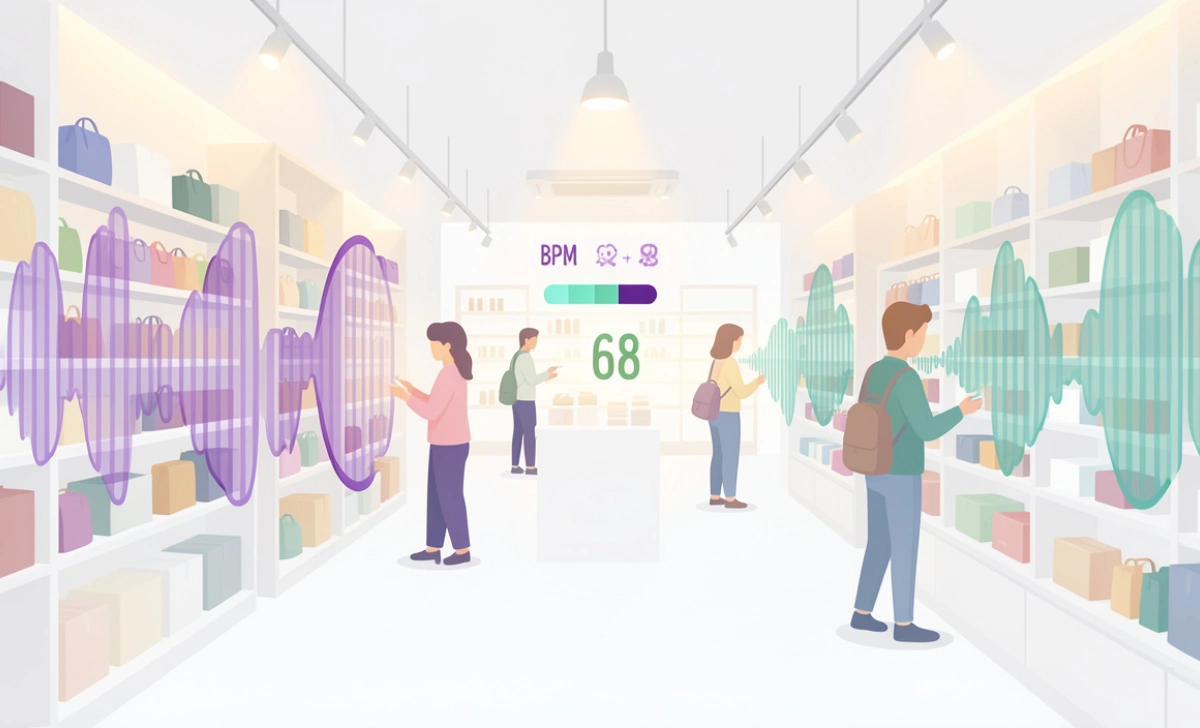
When the background music tempo drops below 72 BPM, shoppers physically slow down. Studies show people spend more time in aisles, pick up more products, and read labels more carefully.
Slow music lowers the perceived urgency of the environment. Customers feel relaxed, less rushed, and more comfortable exploring. That extra time almost always translates to a larger basket size.
Fast Tempo and Quick Decision-Making
Fast-paced music above 94 BPM creates a sense of energy and mild urgency. Shoppers move faster, decide quicker, and spend less time comparing options.
This is useful in high-turnover environments like fast food counters, gyms, or convenience stores. The goal is throughput — get customers in, sold, and out efficiently.
What Does Research Say About Music Tempo and Spending?
Key Studies and Data Insights
The most referenced work in this field comes from Ronald Milliman’s 1982 study published in the Journal of Marketing. His findings were clear:
- Shoppers in supermarkets exposed to slow music spent 38% more than those exposed to fast music.
- Sales volume increased significantly with a slower background tempo.
- Time spent in-store was measurably longer with slow music conditions.
A 1993 follow-up study in restaurant settings confirmed similar results. Diners stayed longer and ordered more drinks when the tempo was slow. Much like how viewers follow complex content by picking up on emotional cues, shoppers follow music cues without realizing it.
Real Retail Experiments and Results
Modern neuromarketing studies using eye-tracking and biometric data have reinforced Milliman’s early findings:
- Grocery chains in Europe reported a 16–20% increase in dwell time using curated slow-tempo playlists.
- Wine retailers found that customers selected more expensive bottles when classical music played versus pop music at the same volume.
- One UK supermarket experiment showed slow music increased total sales by £1,000 per day compared to fast-music days.
Why Do Stores Use Music as a Marketing Tool?
Psychological Triggers Behind Music
Music affects the brain’s limbic system — the region responsible for emotion and memory. Tempo, in particular, synchronizes with the human heartbeat, which hovers around 60–100 BPM at rest.
When store music matches or slightly undercuts resting heart rate, customers feel at ease. That calm state reduces decision fatigue and increases willingness to spend.
EXPERT PERSPECTIVE: Retail psychologists suggest that slower music lowers stress levels, making customers more open to exploration and higher spending. Dr. Charles Spence of Oxford University, a leading expert in sensory marketing, notes that “the pace of music directly governs the pace of human movement in commercial spaces.”
How Brands Align Music With Products
Luxury brands play slow, classical, or ambient music to signal exclusivity and encourage careful consideration of expensive items.
Budget and fast-fashion retailers often use upbeat pop tracks to create excitement and drive impulse buying at lower price points. The music reinforces the brand’s identity.
Does Music Genre Matter as Much as Tempo?
Classical vs Pop vs Ambient Music
Genre matters — but tempo within the genre matters more. A slow hip-hop track can have the same behavioral effect as slow classical music in terms of dwell time.
- Classical music signals sophistication. Customers spend more in wine shops and luxury stores when it plays.
- Pop music creates familiarity and energy. Works well in fashion retail targeting younger demographics.
- Ambient/electronic music reduces cognitive load. Shoppers feel less overwhelmed in complex environments.
Matching Genre With Customer Demographics
Age, cultural background, and personal taste affect how shoppers respond to genre. A 60-year-old shopper may relax to Frank Sinatra, while a 25-year-old might feel that same music creates urgency to leave.
Retailers increasingly use customer demographic data to match genres to their core audience. Tempo remains the constant lever; genre fine-tunes the experience. This is similar to how finding entertainment preferences relies on matching mood and taste to the right content.
How Different Industries Use Music Tempo
Supermarkets and Grocery Stores
Supermarkets use slow background music — typically 60–72 BPM — during peak shopping hours. The goal is to slow movement through aisles, increase product exposure, and grow basket size.
Weekend mornings often feature slightly faster tracks to manage crowd flow during high-traffic windows.
Fashion and Luxury Retail
High-end fashion stores favor 60–75 BPM instrumental or classical pieces. The slower pace encourages shoppers to try on more items and spend more time with each product.
Budget fashion chains often play 90–110 BPM pop to drive volume and energy. The music matches the vibe: affordable, fun, and fast.
Restaurants and Cafes
Restaurants use tempo to control table turnover. Slow music during dinner service encourages lingering and more drink orders. Fast music at lunch pushes customers through quickly.
One insight rarely discussed: tempo affects perceived waiting time. Slow music makes a 10-minute wait feel shorter. Fast music makes it feel longer — which is why busy fast-food counters avoid slow playlists entirely.
Much like how the sitcom sound history shows us that media has always used sound to guide audience emotion, restaurants and stores use music tempo to guide customer behavior in real time.
Can You Use This Knowledge to Shop Smarter?
Recognizing Manipulation Tactics
The first step is awareness. When you walk into a store and feel unusually relaxed or strangely rushed, notice the music. Is it slow and soft? Fast and loud?
That feeling is engineered. In the same way road trip playlists create a collective mood among passengers, store playlists are designed to create a collective spending mood.
Ask yourself:
- Am I browsing longer than I planned?
- Do I feel rushed to decide?
- Is the music making me feel emotionally comfortable with this purchase?
Tips to Avoid Impulse Spending
- Use a shopping list and stick to it regardless of how relaxed you feel.
- Set a timer on your phone. Knowing you have 20 minutes prevents tempo-induced drift.
- Wear headphones with your own playlist. It breaks the store’s auditory influence completely.
- Shop during off-hours when stores may use default or faster playlists rather than peak-hour slow music strategies.
What Are Retailers Doing in 2026 With Music Strategy?
AI-Driven Playlists
In 2026, AI-powered music curation tools like Soundtrack Your Brand and Rockbot are being used by thousands of retailers globally. These systems analyze:
- Time of day and foot traffic data
- Average basket size by hour
- Weather and seasonal mood data
The AI then automatically adjusts tempo in real time to maximize dwell time or throughput based on the store’s goal for that hour.
Personalized In-Store Sound Experiences
Some flagship retail stores are testing zone-based audio systems. The tempo in the entrance differs from the fitting room area, which differs from the checkout lane.
Checkout zones increasingly use faster music to reduce perceived wait time and prevent cart abandonment. Fitting rooms use slower, more relaxing tempos to encourage trying on more items.
This level of precision — matched with loyalty app data — means retailers may soon serve personalized music based on a shopper’s purchase history and demographic profile. Just as virtual watch parties sync shared experiences across screens, future stores will sync personalized audio across shoppers in the same aisle.
Key Takeaways
- Slow music (below 72 BPM) increases time in store, browsing depth, and total spend.
- Fast music (above 94 BPM) accelerates decisions and improves throughput in high-volume settings.
- Ronald Milliman’s 1982 study remains the landmark reference: slow music boosted supermarket sales by 38%.
- Genre matters less than tempo — the BPM is the primary behavioral lever.
- AI tools in 2026 are making music strategy real-time, dynamic, and increasingly personalized.
- Awareness is your best defense. Recognizing the tactic is the first step to shopping on your own terms.
Conclusion
Music in retail is never random. Every track, every beat, every BPM is chosen to guide your behavior — where you walk, how long you stay, and how much you spend. Even when you travel, live entertainment abroad uses the same principle — sound shapes your experience and spending. The next time you feel oddly comfortable lingering in a store, look up and listen. The playlist is doing its job. The most powerful salesperson in any store has no face — it has a tempo.