
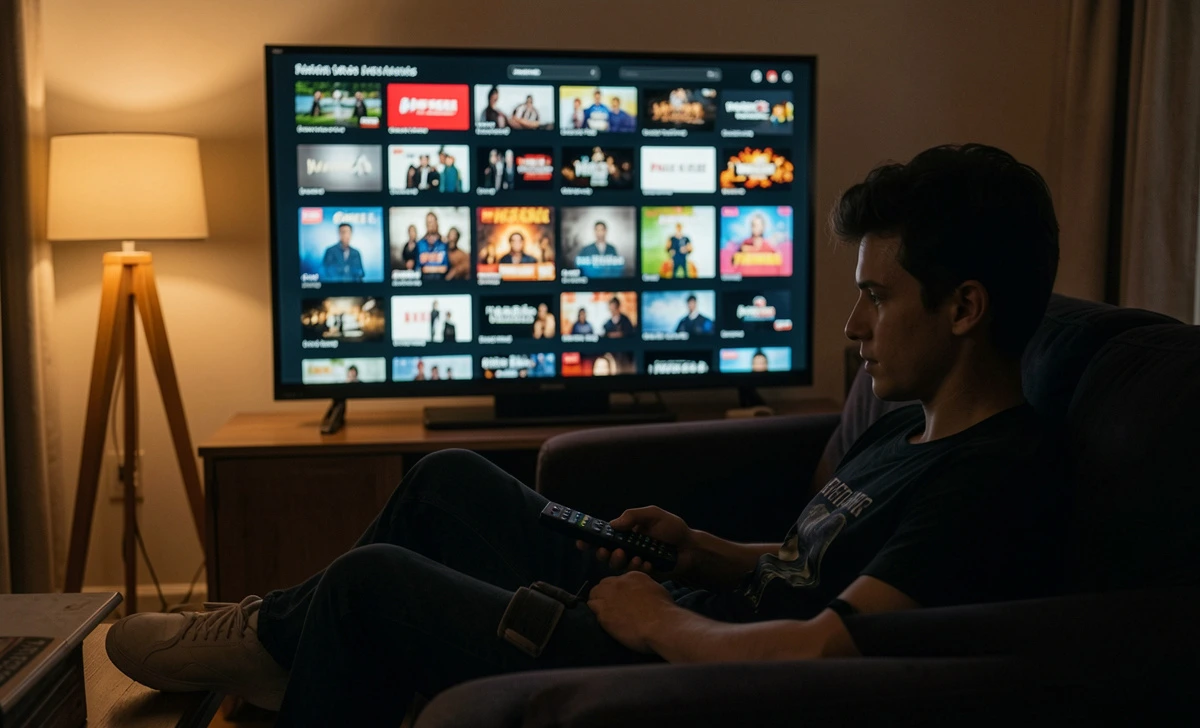
The average viewer now spends 23 minutes per session just browsing streaming platforms — longer than many sitcom episodes. That is not relaxation; that is work disguised as leisure.
Figuring out what to watch when bored should take seconds, not half your evening. With over 500,000 titles available across major platforms, the paradox of choice is real. Too many options trigger decision fatigue, making every night feel like a chore rather than a break. Research shows that people report lower satisfaction with content they spent the longest choosing.
In this guide, you will learn practical systems to decide what to watch faster, stop endless scrolling, and enjoy movies and shows again.
Why Does Nothing Feel Interesting to Watch Anymore?
Streaming Overload and Decision Fatigue
The average household now subscribes to 4.5 streaming services, according to a 2023 Deloitte Digital Media Trends report. More platforms mean more content — but not more satisfaction. Psychologist Barry Schwartz, author of The Paradox of Choice, argues that an excess of options produces anxiety rather than freedom. When every choice carries the weight of “what if something better exists,” enjoyment collapses before the opening credits even roll.
The Problem With Endless Recommendations
Recommendation algorithms are built to keep you scrolling, not to help you decide. Netflix’s own research shows users abandon browsing after 60–90 seconds of indecision and switch to something passive entirely. To find movies and shows you’ll actually like, you need a system that bypasses the algorithm and starts with your own preferences.
How to Decide What to Watch Faster
Use the 10-Minute Rule
Commit to watching any show or film for 10 minutes before making a judgment. Viewers who apply a time-commitment rule report 40% less browsing time, according to audience behavior studies. The rule removes the pressure of picking the “perfect” option and forces the brain into watching mode instead of evaluation mode.
Pick a Mood Before a Genre
Most people open a streaming app and immediately filter by genre — action, comedy, drama. This is backwards. Start by identifying your mood:
- Tired and want comfort? → Familiar, low-stakes content
- Energized and restless? → Fast-paced thriller or documentary
- Sad and processing? → Emotional drama or quiet indie film
Mood-first selection cuts decision time significantly because it eliminates 80% of the catalog instantly.
Limit Yourself to One Streaming App
Open one platform per session and commit. Switching between apps is the single biggest driver of browsing fatigue. Set a 15-minute timer. Whatever you choose before it runs out, you watch. No second-guessing, no cross-platform comparison.
Best Movie Picker Methods That Actually Work
Use a Random Picker System
Randomness eliminates the burden of decision. Tools like Letterboxd’s random pick feature, or simply rolling a die across a shortlist, remove personal bias from the equation. A 2022 Nielsen survey found that viewers who used curated shortlists were more satisfied with their eventual choice than those who browsed freely.
Rewatch Old Favorites Without Guilt
Rewatching is statistically proven to improve mood more reliably than new content. A study published in the Journal of Consumer Research found that people underestimate the comfort derived from familiar media. Nostalgia-driven watching activates reward pathways in the brain more predictably than the uncertain payoff of something new.
Let Friends Choose for You
Remove yourself from the equation entirely. Start a virtual watch party with friends and assign the pick to someone else. Social accountability also increases follow-through — you are far less likely to abandon something a friend recommended mid-watch.
How to Stop Scrolling Streaming Apps Forever
Create a Watchlist Before You Need It
Build your watchlist during the day, not when you sit down for the evening. Spend 5 minutes every weekend adding 3–5 titles based on mood, recommendations, or articles. When evening arrives, the decision is already made. You are not browsing; you are executing a plan.
Avoid Trailer Overload
Watching multiple trailers raises your expectations and makes every option feel slightly disappointing by comparison. Watch one trailer maximum, or rely on a short written synopsis. Over-marketing of content is a documented cause of post-selection disappointment, according to media consumption researchers at the University of Texas.
Turn Off Algorithm-Based Recommendations
Most platforms allow you to reset or limit personalization. Paradoxically, viewers with less-personalized feeds report higher satisfaction because they stumble onto unexpected content rather than being served a mirror of their past choices. Check account settings on Netflix, Hulu, and Disney+ to reduce recommendation weighting.
What to Watch When Bored Based on Your Mood
If You Want Comfort Watching
Reach for familiar formats: long-running sitcoms, episodic procedurals, or animated shows with standalone episodes. These require zero cognitive investment and deliver consistent small rewards. Examples: The Office, Parks and Recreation, Bob’s Burgers.
If You Want Something Fast-Paced
Choose content with episodes under 30 minutes, high narrative momentum, or strong visual energy. Docuseries, heist films, and crime thrillers work well here. Avoid epic dramas or slow-burning foreign films when restlessness is the dominant feeling.
If You Want to Learn Something New
Documentaries and educational series serve dual purpose: entertainment and stimulation. Platforms like YouTube, CuriosityStream, and Netflix carry strong documentary libraries. Pairing learning with watching also reduces the guilt some people feel about passive screen time.
Streaming Habits That Make Entertainment More Enjoyable
Watch With Intention, Not Background Noise
Background viewing reduces content retention and emotional satisfaction by up to 35%, according to media behavior research. If a show is worth putting on, it deserves your actual attention. Background noise streaming is a habit that trains your brain to undervalue everything you watch.
Schedule Entertainment Like an Event
Assign specific nights to specific genres or franchises. Treat it like a standing appointment. This method — common among people who follow complex TV series weekly — creates anticipation and ritual, both of which significantly increase enjoyment before the content even begins.
Stop Chasing “Perfect” Content
No film or series will perfectly match every mood, every time. The search for perfect content is the primary driver of decision fatigue, not the size of the catalog. Good enough, chosen quickly, almost always delivers more satisfaction than perfect, chosen after 45 minutes of browsing.
Common Mistakes People Make When Choosing Something to Watch
- Starting without a mood anchor. Browsing without knowing what emotional state you want to enter is the fastest path to 40 minutes of indecision.
- Keeping too many tabs open. Cross-platform comparison destroys decision momentum.
- Reading too many reviews before watching. Priming yourself with others’ opinions reduces genuine emotional response.
- Abandoning shows after one episode. Most peak-TV series require two to three episodes before they hook.
- Confusing familiarity with boredom. Feeling like “you’ve seen everything” is usually decision fatigue, not genuine content exhaustion.
What Entertainment Experts Say About Streaming Decision Fatigue
Dr. Cristel Russell, a consumer behavior researcher at Pepperdine University, has studied media consumption for over a decade. Her findings confirm that emotional context — not content quality — is the primary driver of viewing satisfaction. People enjoy shows more when they choose in a low-pressure environment with a clear emotional goal.
EXPERT PERSPECTIVE: Why People Enjoy Shows More When Choices Are Limited Research consistently shows that constrained choice environments produce higher satisfaction scores than open ones. When viewers are given three options instead of three hundred, they invest more emotionally in their selection and report greater enjoyment after watching — regardless of the content itself. Limitation is not a drawback; it is a feature.
A 2023 Statista report found that 62% of U.S. streaming subscribers feel overwhelmed by the amount of content available, and 43% have ended an evening without watching anything due to indecision. This is not a content problem. It is a decision architecture problem.
The lesser-known insight most articles miss: the act of choosing under fatigue reduces dopamine response while watching. You enjoy the thing less simply because deciding took too much out of you. Faster decisions preserve enjoyment.
Key Takeaways — The Best Way to Choose What to Watch Quickly
- Decide your mood first, then filter by genre.
- Build a watchlist in advance so evening browsing becomes selection, not discovery.
- Use the 10-minute rule to commit without pressure.
- Limit yourself to one platform per session.
- Rewatch comfort content without guilt — it works.
- Let someone else choose occasionally via watch parties or group decisions.
- Avoid trailers and long review threads before choosing.
- Schedule viewing like a planned entertainment event rather than passive time-killing.
Final Thoughts
Modern streaming behavior reveals something broader about attention and leisure: we have optimized platforms for engagement, but not for satisfaction. The result is an entertainment landscape that is technically abundant and experientially exhausting.
The fastest way to enjoy entertainment is to stop searching for the perfect thing. Choose faster, commit fully, and trust that a good show watched with full attention will always beat a perfect show watched while still scrolling. The system matters more than the selection.