
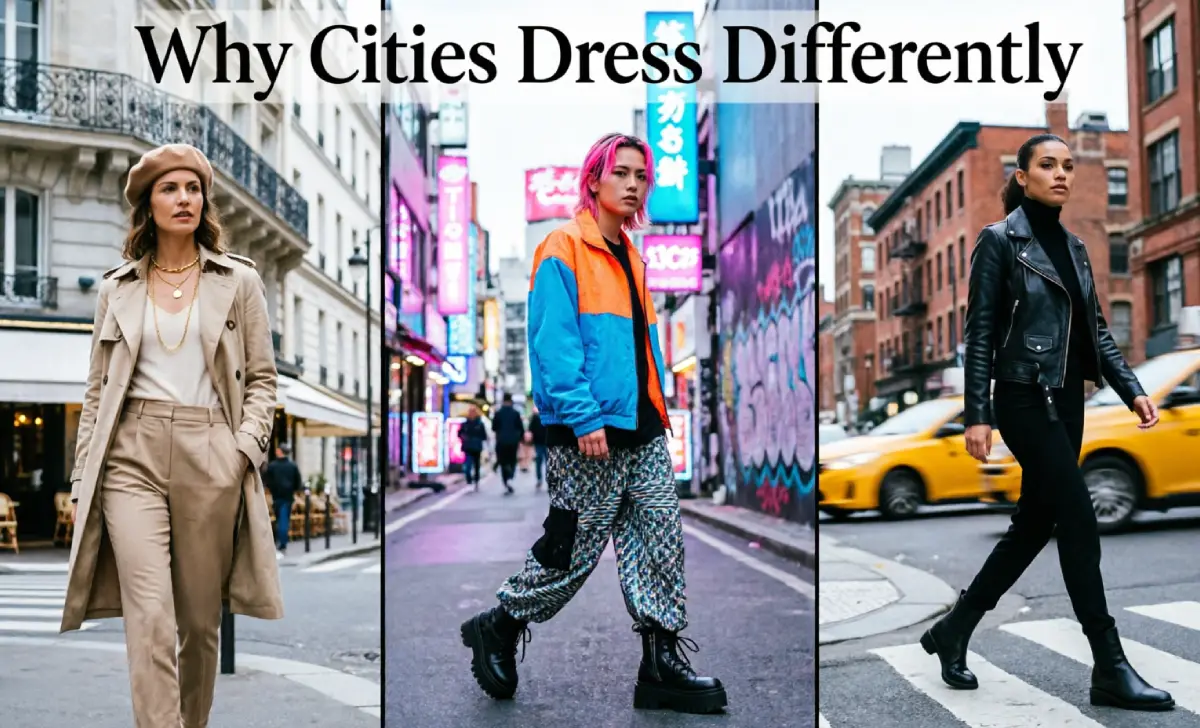
You step off the train in a new city, and within minutes you feel it. The cut of people’s coats, the shoes everyone seems to favor — your own outfit suddenly reads like a message from another country. You didn’t pack wrong; you crossed an invisible style border.
These differences aren’t random. Every major city builds its own fashion language over decades, shaped by forces most visitors never consider. Weather and money play a role, but the real answer sits at the intersection of psychology, culture, and the streets you walk every day.
This guide unpacks why cities dress differently — and why some seem to dress better. By the end, you’ll read unspoken dress codes like a local and understand the logic behind Parisian polish, Tokyo’s fearless creativity, and New York’s sharp edge.
Why Does Your City’s Fashion Feel So Different When You Travel?
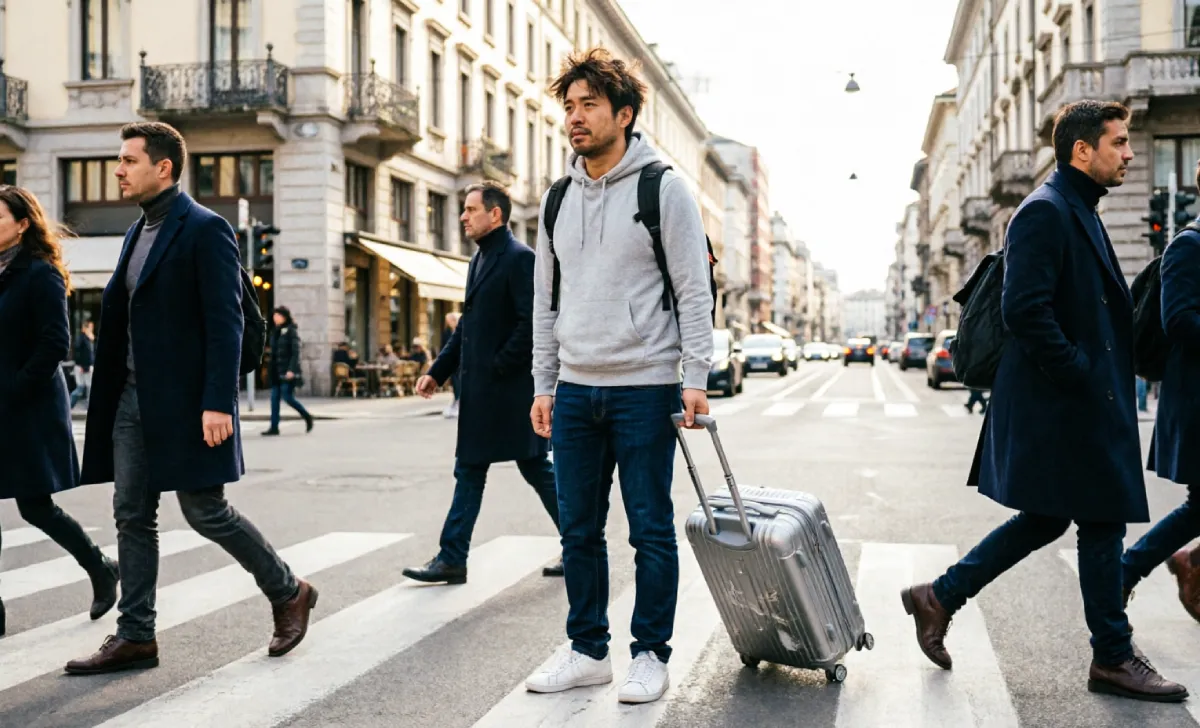
That jolt of noticing a shared clothing language among strangers has a name: social comparison. Leaving your familiar urban bubble makes your brain hunt for cues about what’s normal, and clothing is the loudest signal available.
Central Milan’s uniform of sharp tailoring and immaculate shoes can feel intimidating on arrival. Tokyo’s Harajuku district does the opposite, hitting you with an explosion of individuality that makes your suitcase feel dull. Neither city means to unsettle you — each is simply broadcasting identity in its own dialect.
Nothing about the feeling means you did something wrong. It’s your brain’s automatic attempt to locate itself. Once you see that, style shock shifts from anxiety to curiosity: you’re not underdressed, just reading unfamiliar vocabulary.
What Does Psychology Tell Us About the Way Cities Dress?
Clothing signals who you are, who you want to be, and which group you belong to. Social identity theory holds that people shape their appearance to match a community, and cities are enormous communities with sharply defined markers.
Enclothed cognition adds another layer: what you wear changes how you think and perform. Where tailored blazers dominate, the blazer itself carries psychological weight, priming formality and competence across an entire population.
Conformity does the rest. Few people want to stand out on a crowded subway platform, so the pressure to match a general aesthetic stays subtle but constant — building the shared baseline visitors recognize instantly.
How Does Culture and History Shape a City’s Signature Look?
A city’s fashion never starts from zero; it inherits values baked into decades of history. Parisian style traces back to centuries of haute couture tradition and a national reverence for craftsmanship.
Tokyo’s story runs differently. Post-war youth movements and an aesthetic philosophy that treats imperfection as beauty produced a scene built on rule-breaking — oversized silhouettes, vintage mash-ups, colors that clash on purpose.
London splits the difference. Savile Row tailoring and punk rebellion coexist in tension, and somehow the friction reads as chic. Once you spot these cultural undercurrents, a street scene becomes a story instead of noise.
Why Do Climate and Commute Secretly Decide What Everyone Wears?
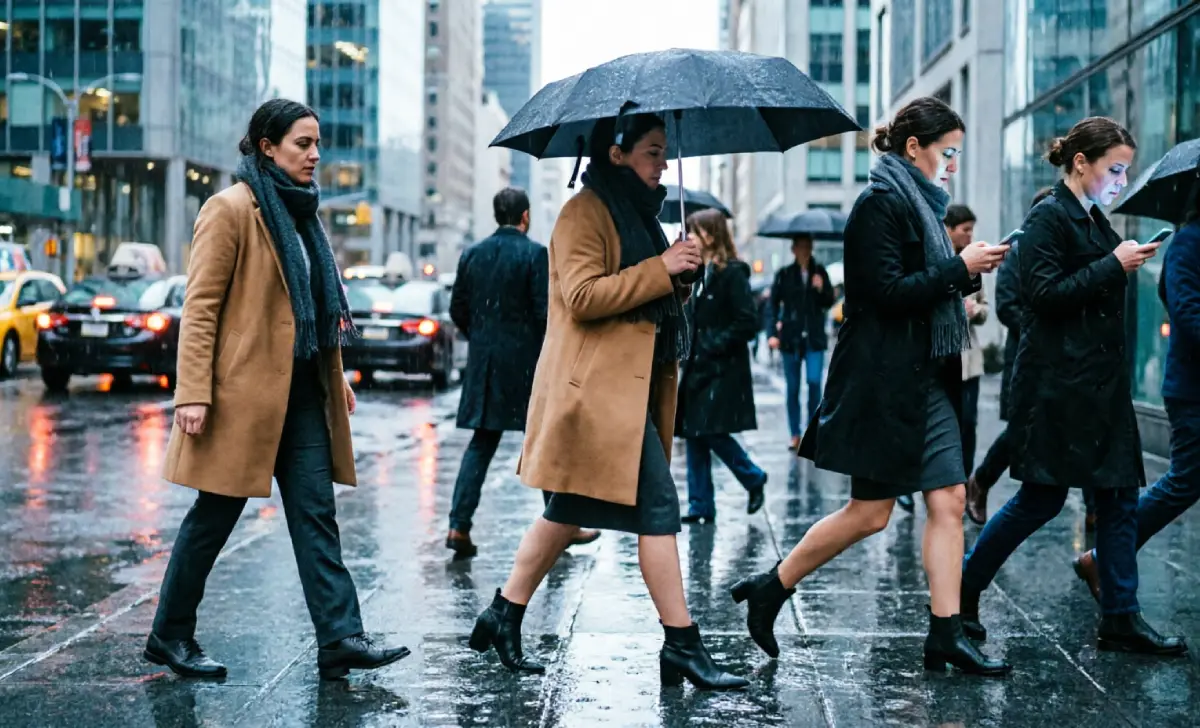
Weather’s influence is obvious, but how a city moves matters just as much. Walkability shapes an entire neighborhood’s footwear landscape: in New York and London, where people walk miles daily, comfortable-yet-polished shoes become the unspoken rule.
Once you cover ground on foot, clothes turn into equipment as much as expression. Copenhagen’s bike commuters face shifting Scandinavian weather, and layering becomes an art form rather than an afterthought.
Climate filters everything further. Humid cities favor loose, breathable fabrics out of necessity, while cooler ones support structured coats, tailored trousers, and heavier textiles that read as “dressed up.” Half of what feels like a style choice was actually decided by geography.
The Role of Local Fashion Industries and Fashion Weeks in Setting the Tone
A city housing major design houses breathes that creative energy into daily life. Generations of Milanese families have worked in fashion, and that insider knowledge quietly shapes how ordinary residents put themselves together.
Fashion weeks extend the effect to people who never approach a runway. The spectacle sets a visible standard for “current,” and street photographers export a curated version of that look worldwide, raising local expectations in return.
Fast fashion retailers add their own rhythm. New collections landing weekly in shop windows accelerate the trend cycle, turning what you wear into part of an ongoing exchange between industry output and the need to belong.
Are Some Cities Just Dressed Better? The Status and Style Myth
“Parisians just dress better” is a common claim, usually meaning something narrower: alignment with a European elegance standard that fashion media has promoted for decades. That’s cultural authority, not objective taste.
Perceived style tracks closely with wealth signaling and exclusivity. A look that appears expensive and hard to replicate earns the label “sophisticated” — Copenhagen’s minimalism reflects strong design infrastructure and disposable income as much as raw aesthetics.
No city holds a monopoly on good style. Different places prioritize different values, and what reads as “better” to one observer can feel stiff or soulless to another.
New York and Los Angeles: A Tale of Two Style Icons
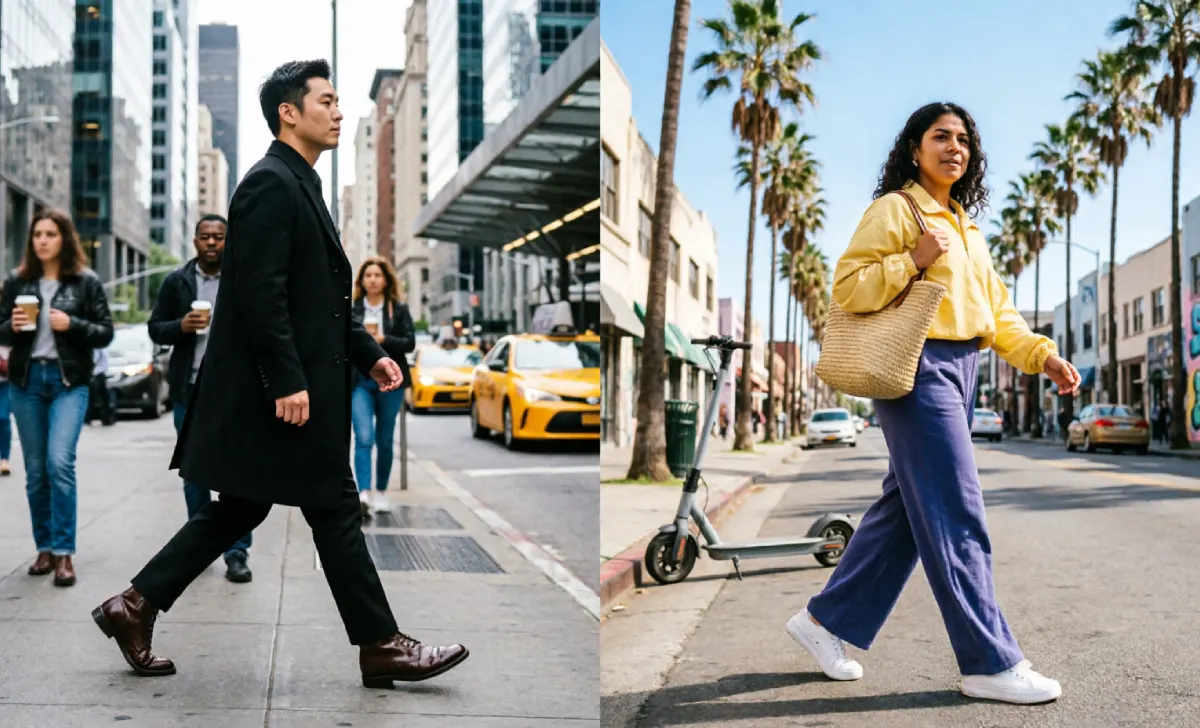
Few comparisons capture city style like New York versus Los Angeles. Both are American fashion powerhouses, yet the street-level contrast feels like two different planets. New York runs on black, sharp tailoring, and unapologetic urgency.
That look isn’t an accident — density and a grinding professional culture reward clothing built to perform. Black hides subway grime, transitions from day to night, and communicates a no-nonsense attitude in one shade.
Los Angeles answers with a car-centric layout, sunnier skies, and an image-driven industry. Expect more color, joggers and sweatpants, and a wellness-influenced ease. Each city is simply optimized for its own environment.
How Street Style Tribes Give Each City Its Own Flavor
No metropolis is uniform. Smaller tribes form around music, art, and alternative lifestyles, and their clothing often ends up defining the wider city’s global image. Berlin’s techno scene birthed a dark, utilitarian minimalism now synonymous with the city itself.
Seoul’s hyperconnected youth culture moves faster still: coordinated streetwear collectives spread new looks globally within hours through social media.
Harajuku remains the clearest example — decades of self-expression tribes proving fashion can be pure play. Spotting these micro-communities keeps you from flattening a whole city into one stereotype.
Is Globalization and Fast Fashion Killing City Style Differences?
The fear is reasonable. Shopping districts in London, Shanghai, and Mexico City increasingly stock the same fast fashion items, and global supply chains have blurred plenty of edges.
Yet something counterintuitive is unfolding underneath. As the mainstream converges, local distinctiveness gains value rather than losing it — designers are reviving traditional crafts and silhouettes specifically to push back against sameness.
Practical, climate-adaptive styles still resist full replication by global chains. Homogenization is real, but it’s fueling a countermovement that keeps city style interesting rather than erasing it.
How Can You Read a City’s Dress Code and Still Be Yourself?
Understanding why cities dress differently hands you a genuine advantage: difference stops reading as judgment and starts reading as information. Spend your first afternoon in a new place simply watching what people wear.
Adaptation is smart editing, not surrender. If a city favors polished footwear, swap your beat-up sneakers for a cleaner pair — small adjustments signal respect for local norms without erasing your identity.
Real confidence comes from treating each city as inspiration rather than instruction. Borrow Milan’s fabric sense, Tokyo’s color bravery, or New York’s layering skill, and remix them into something that’s still yours.
Frequently Asked Questions About Why Cities Dress Differently
Why do some cities seem more stylish than others?
It’s rarely an inborn sense of taste. A strong local fashion industry, persistent media storytelling, and visible wealth combine to create the perception of superior style.
Can you tell where someone is from by their clothing?
Often, yes, in cities with distinct dress cultures — footwear, fit, and color palette all offer clues. Global trends have made this less reliable than it once was, though.
How can I adapt my style when visiting a fashion-forward city?
Identify what makes the local look cohesive, then borrow one or two elements — even trying different types of pants suited to local norms can help you blend in without a full wardrobe overhaul.
Is fast fashion making all city styles the same?
It’s increasing surface-level similarity, but climate, infrastructure, and cultural values keep real differences alive, and resistance to sameness is strengthening local pride in many places.
Conclusion
City style is a language, and you now know how to listen. Psychology, history, climate, and daily commutes quietly shape what people wear from Paris to Tokyo to New York. There’s no single right way to dress — only variations that reveal something true about a place. Next time you travel, you’ll see a city speaking through fabric and silhouette, and you’ll know how to join the conversation.