
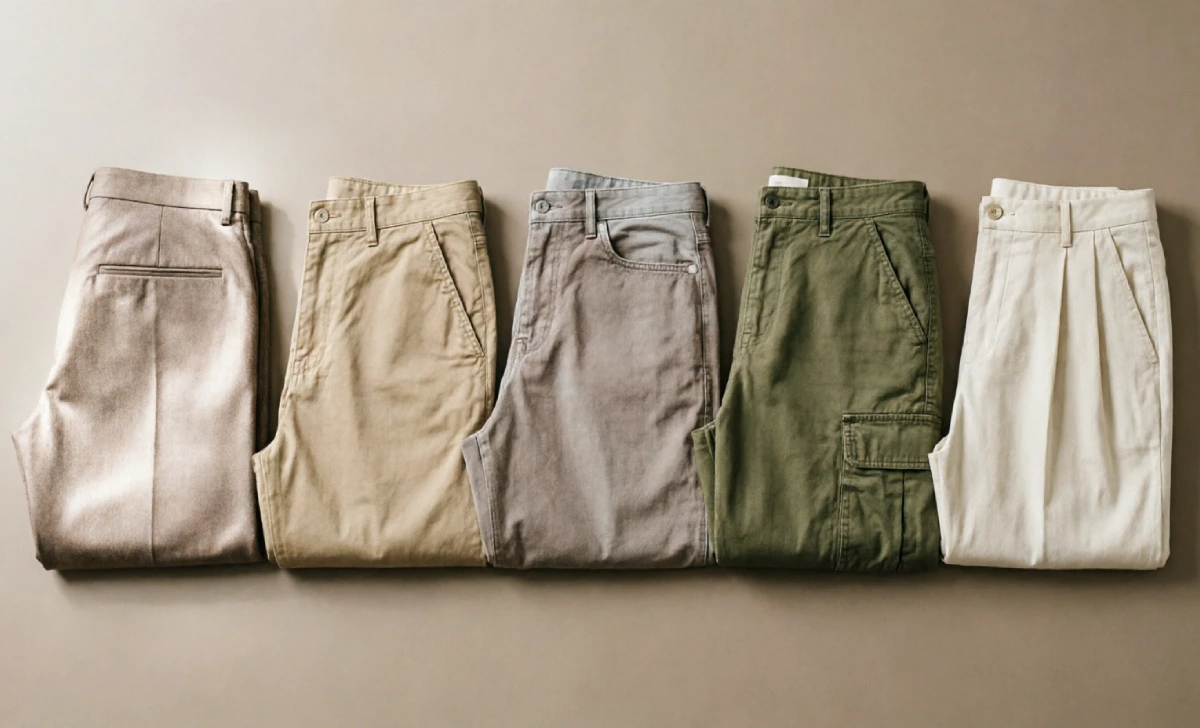
Ever paused mid-sentence wondering whether to call them trousers or pants? You’re not alone, and if you’ve ever typed what are trousers into Google mid-shopping trip, this guide is exactly what you need. Legwear terminology shifts depending on where you live, and the confusion is real, especially once you start browsing everything from tailored wool pairs to breezy olive green chinos.
Trousers rank among the most worn garments on earth, yet few people can explain what separates them from jeans, slacks, or chinos. A handful of simple principles clear that up fast. Soon you’ll walk into any store and know exactly what’s on the rack.
This guide covers what trousers are, the main types, and how to style them for any occasion, in plain language, no jargon.
A trouser, at its core, covers your body from waist to ankle using a separate tube of fabric for each leg. Simple enough, but the word itself carries different meanings depending on geography. In the UK, trousers is just the everyday term for what Americans call pants; in the US, it often signals something dressier, non-denim, office-appropriate rather than gym wear.
Picture trousers as an umbrella term. Beneath it sit crisp dress pairs, rugged cargos, and floaty wide-leg cuts. The common thread is separate-leg construction and structured fabric, unlike the stretchy ease of loungewear.
How Do Trousers Differ from Pants, Slacks, and Jeans?
Denim reads casual; trousers read tailored. That instinct is mostly correct. Construction, fabric weight, and finish are what actually separate the categories, even when a pair leans casual.
Slacks are a dressier subtype of trouser, marked by a crease down each leg and built for business or formal wear. Jeans, meanwhile, are denim through and through, with rivets and contrast stitching that keep them casual no matter how you dress them up. For a closer look at how different cuts suit different lifestyles, this breakdown of types of pants for men is worth a read.
Chinos sit in the middle: cotton twill that swings smart or relaxed depending on styling. A sharp pair can absolutely count as trousers in its own right.
None of these categories are rigid boxes. Modern trousers regularly borrow denim’s fabric technology, and the boundaries blur further every season. Skip the perfect labeling and focus instead on what you’ll actually want to wear.
What Are the Most Common Types of Trousers?
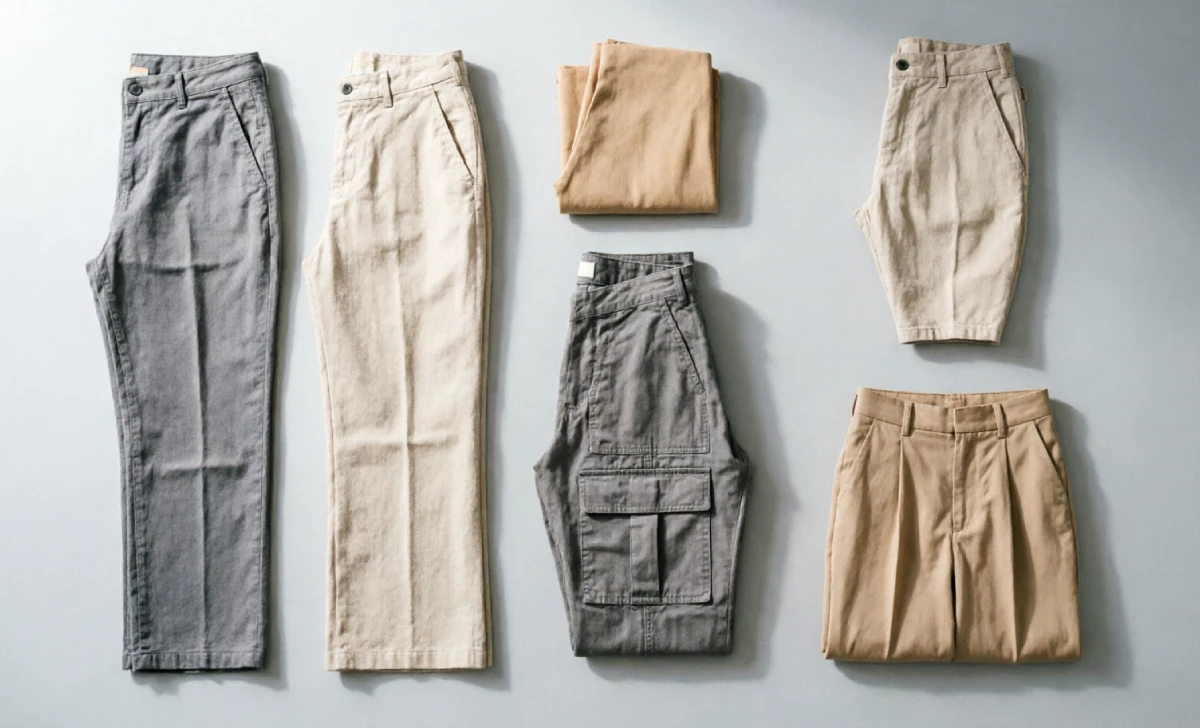
Store racks full of unfamiliar labels can feel like a lot. Straight-leg trousers solve that problem as the wardrobe backbone, falling cleanly from hip to hem with no taper or flare. Sneakers, loafers, boots- nothing clashes.
Wide-leg cuts trade that neutrality for a relaxed, fashion-forward drape with room to move. Slim-fit trousers pull the opposite direction, hugging the leg for smart-casual offices or nights out. Cropped styles split the difference, stopping an inch or two above the ankle to spotlight your shoes.
Utility shows up in cargo trousers, with oversized side pockets and heavy cotton built for wear and tear. Joggers swap that durability for stretch fabric and elasticated cuffs, landing somewhere between loungewear and streetwear. Pleats, meanwhile, bring back a heritage look by adding folded fabric near the waistband for extra room.
Smooth wool dress trousers finish sharp with a defined crease; linen versions do the opposite, staying airy and pleasantly rumpled through summer. Between all these options, there’s a trouser suited to nearly any body, mood, or occasion.
Key Features That Define a Quality Pair of Trousers
Shape aside, small construction choices change everything about fit and feel. Rise, the distance between crotch seam and waistband, dictates where trousers sit on your body: high rises add coverage, low rises feel modern and relaxed.
Pleats intimidate people more than they should. These small folds near the front pockets create extra room, letting the fabric drape rather than cling. Flat-front styles drop the pleats entirely for a leaner, cleaner silhouette.
Then there’s the break, the small fold where hem meets shoe, and it’s easy to overlook until you know to look for it. A full break reads traditional, a half break feels balanced, and no break at all gives a cropped, sharp finish.
Pockets and closures matter more than they seem to. Slanted pockets lie flatter against the hip; welt pockets look tidier than patch pockets. A hook-and-bar closure usually signals formality, while a plain button suits chinos and cargos just fine.
How Should Trousers Fit? A Complete Fit Guide
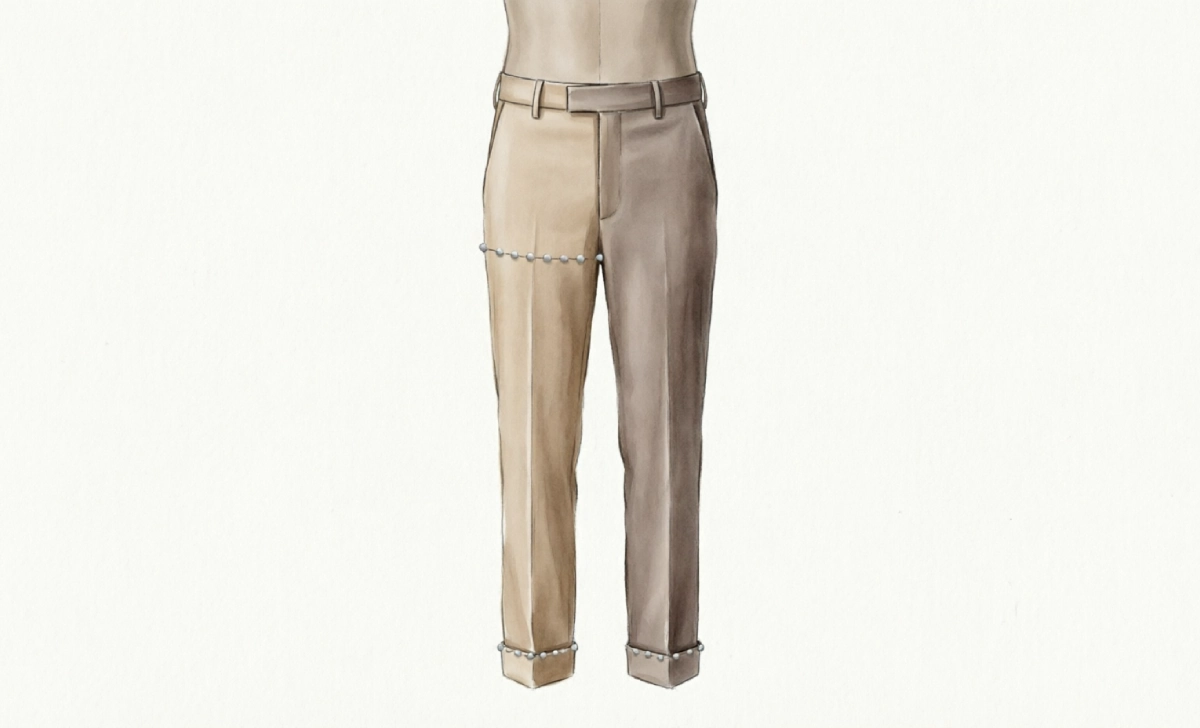
Start with the seat. Fabric should skim your body cleanly, no pulling across the fullest part, no sagging underneath.
Thigh and knee room comes next. You need enough space to sit, walk, and climb stairs without strain, but not so much that the trousers lose shape. A slight drape is ideal; avoid anything that clings like a second skin.
At the waist, the fit should hold on its own. No digging in, no constant hiking up, no reliance on a belt just to keep them in place.
Length trips up more people than any other measurement. A half break, where fabric meets the shoe and folds once, works for nearly every body and occasion. Prefer something sharper? No break at all gives a cleaner, more modern line.
Bodies vary, and so should fit expectations. Brands like Uniqlo and Bonobos offer different rises and thigh room precisely for that reason. Let the mirror decide, not the number on the tag.
How to Style Trousers for Casual, Business, and Formal Occasions
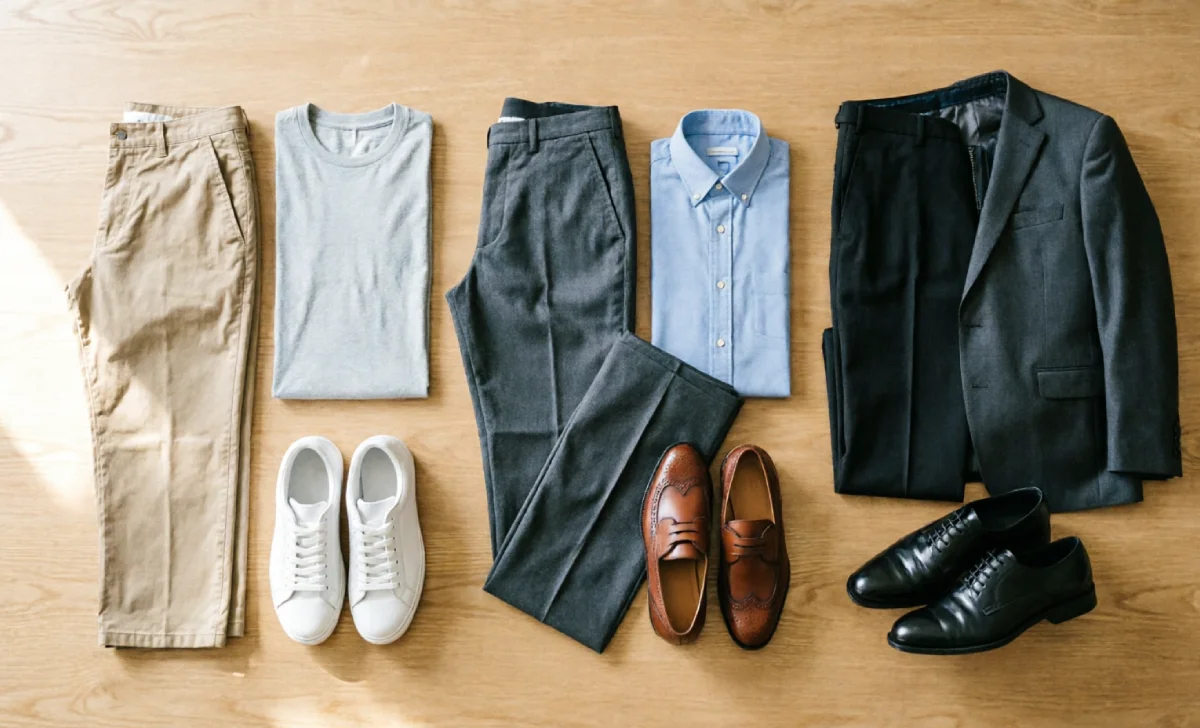
Versatility is the real selling point here. Weekend outfits call for cotton chinos or straight-leg trousers, paired with a plain tee and minimal sneakers for something effortless.
Business-casual settings favor wool-blend trousers or pressed chinos, tucked shirt, loafers or derbies included. Stick to cohesive colors; navy trousers with a soft grey top rarely misses.
Choosing between tailored trousers and a tea-length dress is a common dilemma for formal events, and either can land the same polished note depending on the venue and your comfort with structure.
Sharper occasions demand dress trousers with a defined crease, ideally in charcoal or midnight-blue wool, paired with a fitted blazer and polished oxfords. A properly tailored pair does more for your posture than you’d expect.
Top-half choices matter just as much. Knits and lightweight sweaters complement the silhouette; bulky hoodies fight it. Experiment with texture until the combination feels distinctly yours.
Common Trouser Mistakes and How to Avoid Them
Length is the most frequent misstep. A break that’s too long pools fabric around the ankle and shortens your leg line visually, an easy fix with a proper hem.
Socks cause the next problem. Athletic socks peeking out beneath formal wool trousers instantly undercut the outfit’s polish; a longer dress sock in a matching tone fixes it in seconds.
Fabric-to-season mismatches round out the list. Heavy wool in summer heat looks and feels wrong, while lightweight cotton or linen was made for exactly those months.
Frequently Asked Questions About Trousers
Are jeans considered trousers?
Technically no, since denim construction and rivets set jeans apart. Casually, though, almost nobody calls jeans trousers.
What is the difference between chinos and trousers?
Chinos are a cotton-twill trouser with a relaxed, workwear-adjacent feel. All chinos qualify as trousers; not every trouser qualifies as chinos.
Can you wear trousers without a belt?
Yes, provided the waist fit holds on its own without slipping. Many dress trousers include side adjusters designed for exactly this.
Once fit and occasion feel settled, browsing the wider range of types of pants helps place trousers alongside denim, joggers, and other wardrobe staples.
Conclusion
You came here wondering what trousers actually are, and now the picture is clear. They’re the most adaptable two-legged garment around, spanning polished wool dress pairs to relaxed weekend chinos. Understanding the types, the fit details, and the occasion-matching removes the guesswork entirely.
Walk into any store, size up any pair, and know instantly whether it suits your body and your life. Trust your eye, prioritize fit, and remember: the right trousers make you stand a little taller.