

In this article
- Understanding the Apple Shape: Five Myths, Five Truths
- The V-Neck Wrap Dress
- The Empire-Waist Dress With a Floaty Skirt
- The Shift Dress in a Structured Fabric
- The Swing Dress
- The Dress With Ruching at the Side
- The Tunic Dress With Leggings or Slim Trousers
- The Maxi Dress With Vertical Detail
- The Cowl-Neck Dress
- The Coat Dress
- The Belted-Under-the-Bust Midi
- What to Skip (and What to Choose Instead)
- Conclusion
At Linda’s retirement party, everyone wanted a photo with her. Forty-one years at the same school, three generations of students, and a cake shaped like a stack of books. Linda smiled through every picture, but she kept one hand resting over her middle in nearly all of them. She’d worn a long, loose tunic over leggings “because it hides everything,” and by the end of the night she felt like she’d been wearing a tent to her own celebration.
A few weeks later, her daughter sent her the photos — and one stood out. In it, Linda had taken off the tunic’s matching cardigan, and her V-neckline and slim arms were finally visible. “Mum, you look ten years younger in this one,” her daughter wrote. Linda zoomed in. She did.
That’s the moment many apple-shaped women recognise: the clothes chosen to hide often end up adding volume, while the right neckline, fabric, and line can make you look taller, lighter, and more like yourself. If you carry more of your weight through the middle and you’re over 50, the ten dress styles below are designed to flatter rather than cover — each with practical advice on what to look for and how to wear it.
Understanding the Apple Shape: Five Myths, Five Truths
An apple body shape (sometimes called round or “O”) carries more weight through the midsection, with a less defined waist. The bust is often fuller, while the legs, arms, and hips tend to be comparatively slim. After 50, hormonal changes make this shape more common, even for women who were never apple-shaped before.
Much of the advice aimed at apple shapes is outdated or simply wrong. Here’s what’s worth unlearning:
| The Myth | The Truth |
|---|---|
| Big, loose clothes hide your middle. | Oversized shapes hang from the widest point and add volume. Skimming fabric looks slimmer. |
| You should never wear a belt. | A soft belt just under the bust or at an empire seam can create shape without squeezing. |
| Dark colours are your only option. | Colour works beautifully near the face; just keep the busiest prints away from the midsection. |
| Short dresses are off-limits. | Many apple shapes have great legs. A knee-length hem can be one of your best assets. |
| Structured fabrics make you look bigger. | Medium-weight, structured fabric skims your middle more smoothly than thin, clingy knits. |
The real principle is simple: draw the eye up toward your face and neckline, create vertical lines through the torso, and let fabric fall past your middle rather than gripping it.
The V-Neck Wrap Dress
The wrap dress earns its reputation for apple shapes, but the neckline matters as much as the wrap itself. A deep-but-modest V creates a long vertical line from your chin toward your waist, which instantly lengthens the torso.
Choose a true wrap or faux-wrap in matte jersey that ties just under the bust or slightly to the side, rather than at the natural waist. Ankle-strap sandals or slim pumps keep the look light.
Shopping note: Faux-wrap styles with a sewn-down front are often more practical than true wraps, since they never gape or come undone — ideal for long events.

The Empire-Waist Dress With a Floaty Skirt
With the seam sitting right below the bust, an empire-waist dress lets the skirt fall over your middle without touching it. It’s one of the most comfortable silhouettes for an apple figure and one of the most flattering.
Look for an empire dress in a soft fabric such as viscose or crepe de Chine, ending at the knee to show your legs. A long pendant necklace adds an extra vertical line.
Comfort note: Because nothing presses on your stomach, this is a great choice for long lunches, travel days, or any event that involves a lot of sitting.

The Shift Dress in a Structured Fabric
A shift dress falls straight from the shoulders with no waist seam. In the wrong fabric it looks boxy, but in a medium-weight ponte or crepe it skims the body smoothly, creating a clean, column-like line.
Choose one with a slight A-line flare at the hem and a V-neck or scoop neck. Add a long open cardigan or duster for an extra vertical line, especially in cooler weather.
Fit check: The shift should touch your shoulders and bust, then fall away from your stomach by about a finger’s width. If it’s tight across the middle, size up and have the shoulders taken in.

The Swing Dress
A swing dress is fitted only at the shoulders and bust, then flares outward in a soft trapeze shape. It has a playful, relaxed feel and gives your midsection plenty of room.
Pair a knee-length swing dress with block heels or loafers. Solid colours or small, scattered prints look more modern than large, bold patterns on this shape.
Best for: Casual weekends, family gatherings, and warm days when you want to feel cool and comfortable without looking sloppy.
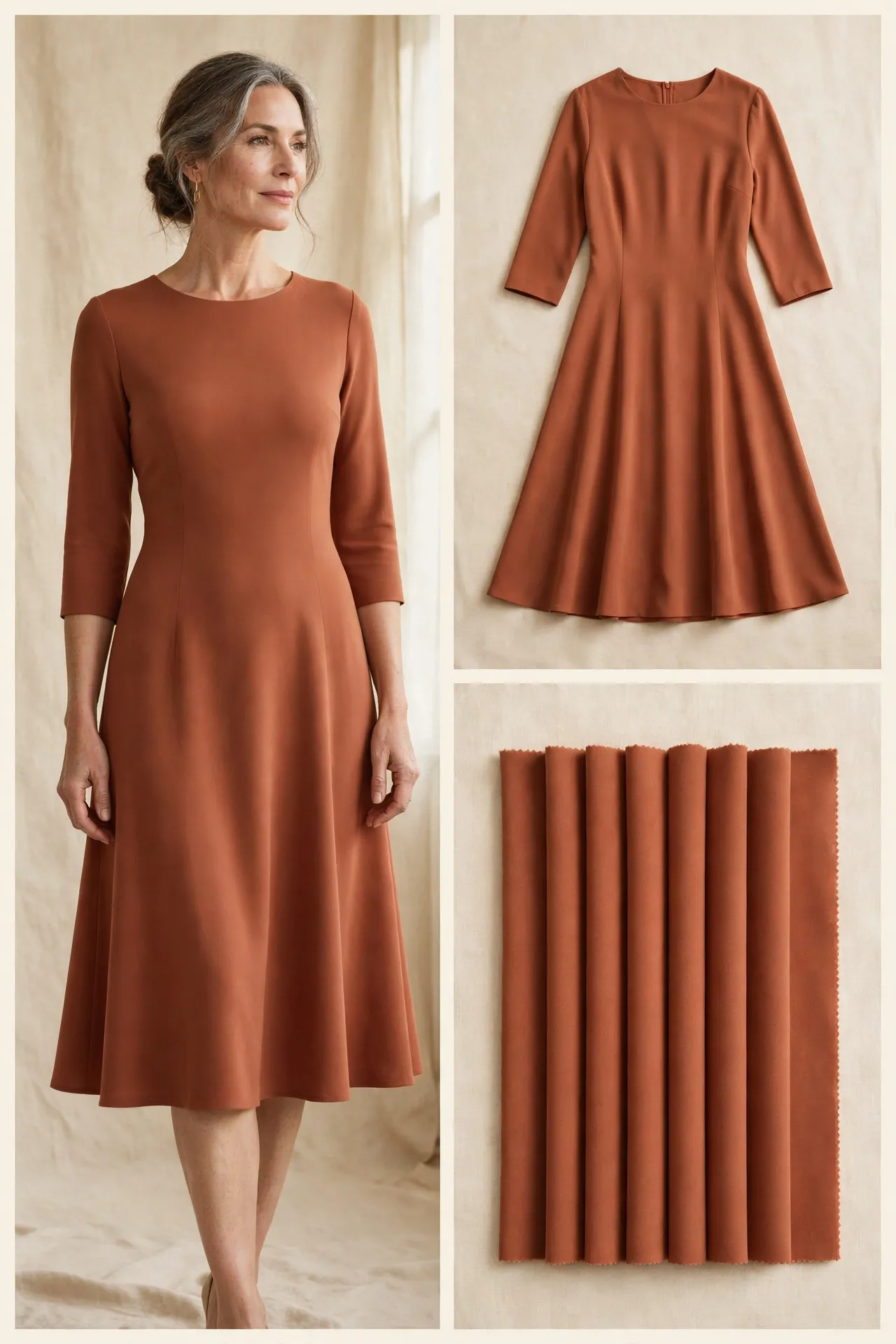
The Dress With Ruching at the Side
Ruching — fabric gathered along a seam — creates soft folds that camouflage the midsection while still following your shape. Side ruching in particular creates diagonal lines that move the eye across rather than straight to your stomach.
Look for jersey or crepe dresses with gathers along one side seam, ideally in a solid, deep colour. Keep accessories simple.
Before you buy: Make sure the gathers are loose and evenly spaced. Ruching that’s stretched tight can do the opposite of what you want.

The Tunic Dress With Leggings or Slim Trousers
A tunic dress is slightly shorter than a regular dress and designed to be worn over leggings or slim trousers. It’s a comfortable, practical option for everyday wear and travel.
This time, choose a tunic with a V-neck and a straight or slightly A-line cut — not a voluminous, oversized one. The slim trousers underneath show off your legs and keep the overall line sleek.
Wardrobe tip: A tunic in a neutral colour works over jeans, leggings, and wide-leg trousers, so one piece covers several outfits.

The Maxi Dress With Vertical Detail
A long maxi dress becomes much more flattering for apple shapes when it has vertical detailing — a button placket, a long V-neck, vertical pleats, or a front panel in a contrasting tone.
These lines lead the eye up and down rather than across. A maxi in a soft fabric with an empire seam and short sleeves is ideal for holidays and summer weddings.
Alternative: If you find maxis overwhelming, a midi-length shirt dress with a long button placket gives the same vertical effect with less fabric.

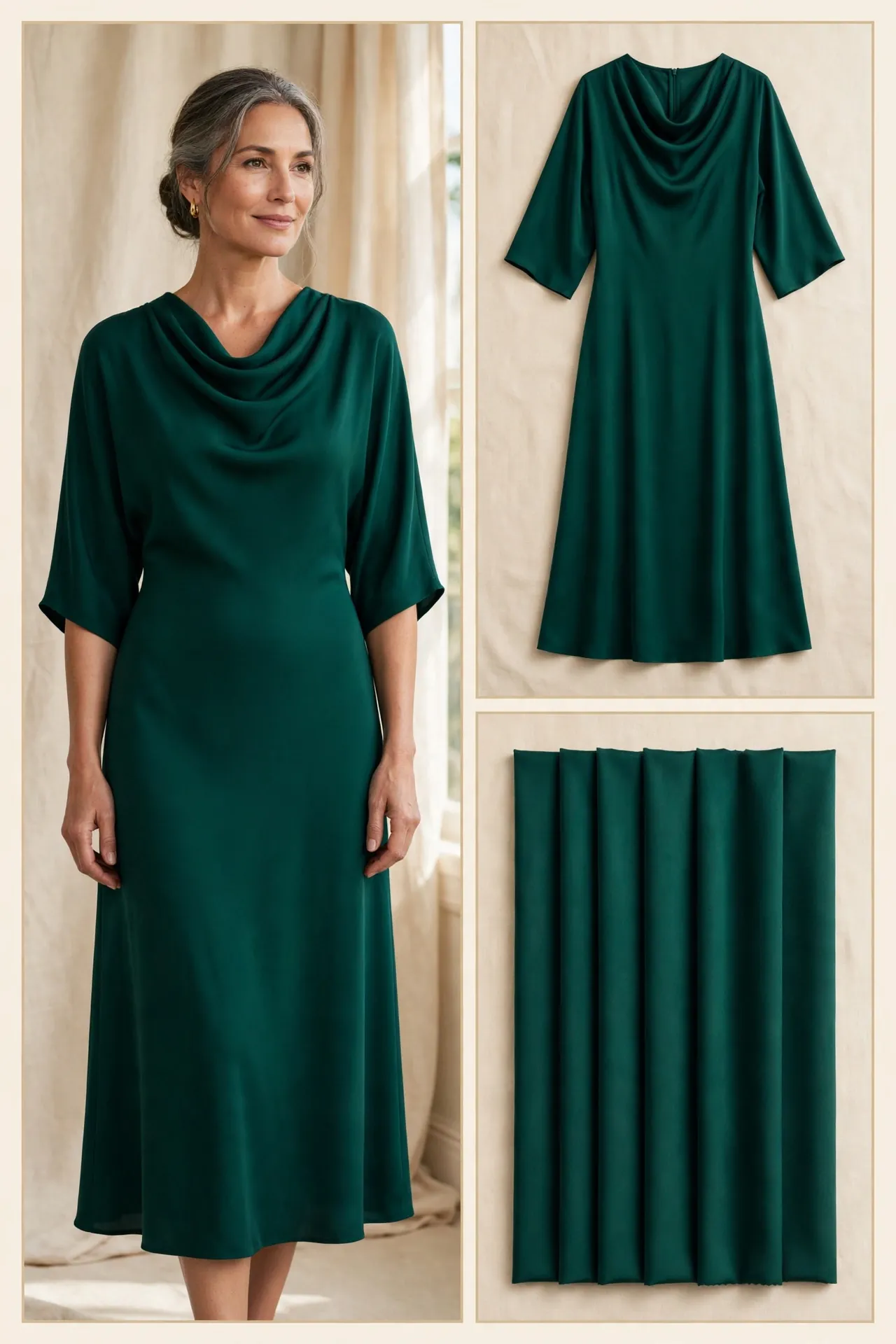
The Cowl-Neck Dress
A cowl neckline drapes in soft folds across the chest, adding gentle volume and interest at the top of the body. It draws attention up toward your face and collarbones while softening a fuller bust.
Cowl-neck dresses look elegant in satin-backed crepe or jersey. Pair with simple earrings and avoid a necklace that competes with the drape.
Styling idea: A cowl-neck midi in a jewel tone is a beautiful choice for evening events when you want something softer than a classic sheath.
The Coat Dress
A coat dress is structured like a tailored coat, often with buttons, lapels, and a V-shaped front. The tailoring creates a long, clean line from shoulder to hem.
For apple shapes, look for a single-breasted coat dress with buttons that start just below the bust and a slight flare at the skirt. A double-breasted style can add bulk at the middle.
Season note: A wool-blend coat dress is a perfect autumn and winter piece, worn with opaque tights and knee boots.

The Belted-Under-the-Bust Midi
This midi dress uses a thin belt or tie just under the bust, rather than at the natural waist, to create shape in the most flattering spot.
It gives a hint of definition while letting the skirt fall freely. Choose a dress in a soft fabric with a V-neck and elbow-length sleeves.
Styling trick: Pick a belt in the same colour as the dress, or one shade darker, so it shapes without cutting you in half visually.

What to Skip (and What to Choose Instead)
Very thin, clingy knits tend to highlight the midsection, so a medium-weight jersey or ponte usually feels more confident. Wide belts cinched at the natural waist can push fabric out above and below. And bold horizontal patterns right across the stomach draw attention there — save prints for skirts, sleeves, or scarves. If you’re looking for more ideas, our guide to dresses that hide a tummy goes deeper into fabrics and silhouettes.
Conclusion
An apple shape after 50 doesn’t call for hiding under layers of loose fabric. With the right neckline, fabric weight, and vertical line, you can wear dresses that feel lighter, look more polished, and let your best features — your face, arms, and legs — take centre stage. Start with one or two of these styles, and notice how differently you feel in the photos next time.