

You know that feeling. Friday night hits, you crash early, then Saturday morning rolls around, and you sleep until noon. You wake up groggy, maybe with a headache, and wonder: Did that actually help? Or did I just mess up my schedule even more?
If you’ve ever asked yourself, ” Does sleeping in on Saturday help sleep debt, you’re not alone. Millions of us try to bank rest on the weekends after a week of late nights and early alarms, hoping for effective sleep debt recovery. But here’s the thing: sleep doesn’t work like a savings account. And pretending it does can leave you feeling worse, not better.
Let’s break down what the science actually says—no fluff, no judgment—so you can make a plan that works for your real life.
What Is Sleep Debt, Really? (And Why You Can’t Treat It Like a Bank)
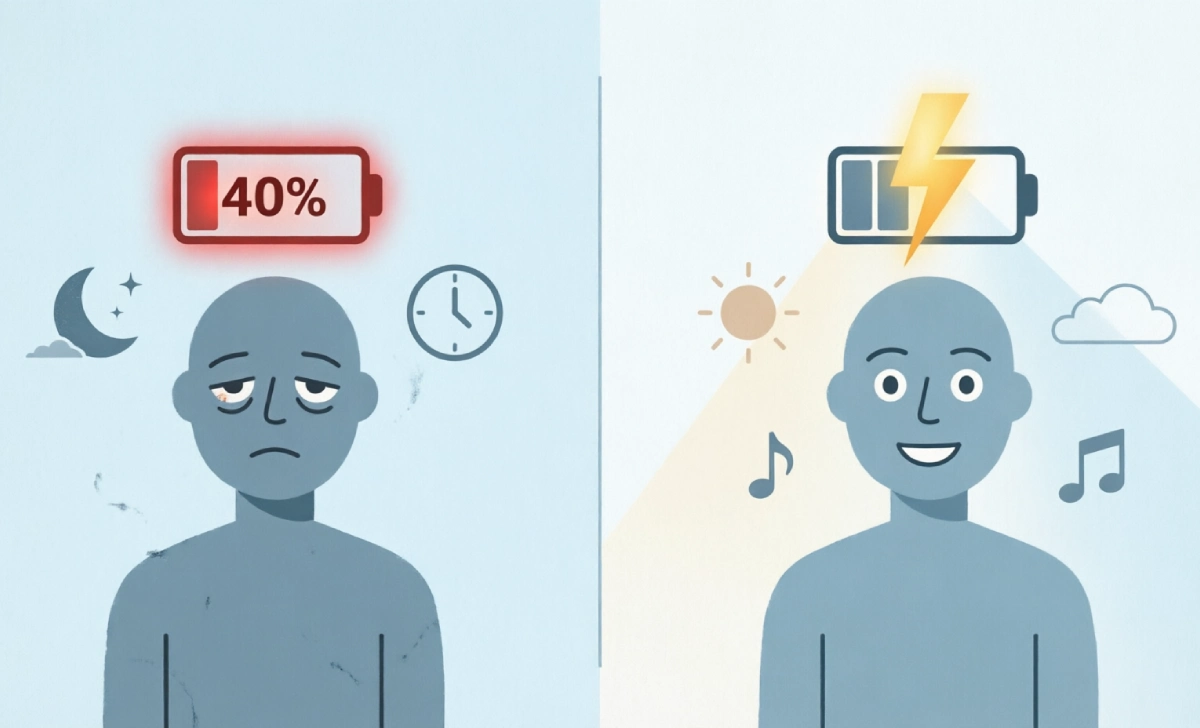
First, let’s get clear on terms. Sleep debt isn’t a formal medical diagnosis. It’s a way to describe the gap between the sleep your body needs and the sleep you actually get. Miss an hour a night for five nights? That’s roughly five hours “owed.”
But here’s where it gets tricky: you can’t just deposit seven hours of Saturday sleep and expect your body to balance the books. Sleep isn’t cumulative in a simple, linear way. Your brain prioritizes different deep sleep stages at different times, and cramming rest into one long block doesn’t replicate the quality of consistent, nightly sleep.
Think of it like hydration. If you skip water all week and chug a gallon on Saturday, you won’t suddenly be “caught up.” Your body processes what it can, and the rest… well, it just makes you feel bloated. Sleep works similarly.
The Weekend Recovery Trap: Why One Long Sleep Isn’t Enough
What Happens to Your Body When You “Catch Up”
When you finally sleep in, your body does try to recover. You’ll likely get more deep sleep (the physically restorative stage) and some REM (the mentally restorative stage). That’s good news.
But there’s a catch. Overshooting your usual wake time by several hours can shift your internal clock—your circadian rhythm. Suddenly, Sunday night feels impossible to fall asleep for, and Monday morning hits like a ton of bricks. That groggy, disoriented feeling has a name: social jet lag. And it’s a big reason why debates around weekend sleep recovery (myth or fact?) get so messy.
The Social Jet Lag Factor
Social jet lag is the mismatch between your body’s natural rhythm and your social schedule. Sleep in late Saturday? You’ve essentially given yourself a mini time-zone shift. Research shows this pattern is linked to higher risks of mood issues, metabolic problems, and even cardiovascular strain over time.
So while that extra sleep might feel good in the moment, the ripple effects can undermine the very recovery you’re chasing.
How Long Does It Actually Take to Recover From Sleep Debt?
The 4-to-9-Day Rule (Research Breakdown)
If you’re wondering how long to recover from sleep debt, the answer isn’t one-size-fits-all. A well-cited study in the journal Sleep found that after five nights of restricted sleep (5 hours/night), it took participants at least three nights of extended recovery sleep to return to baseline alertness—and even then, some cognitive measures lagged.
More recent work suggests full recovery can take 4 to 9 days of consistent, adequate sleep, depending on how severe the debt was and your individual biology. If you’re noticing early burnout signs alongside sleep struggles, it might be time to reassess your overall load.
Individual Factors That Change Your Timeline
Age matters. Younger adults often bounce back faster. Genetics plays a role too—some people are just more resilient to sleep loss. And let’s be real: your stress levels, diet, and activity all influence how quickly you rebound.
The takeaway? Don’t expect a single weekend to erase weeks of short nights. But don’t get discouraged either. Small, consistent improvements add up.
Sleep Debt Myths vs. Facts: What the Latest Studies Show
Myth: “I Can Bank Sleep Before a Busy Week”
You’ve probably heard you can “pre-sleep” before a hectic stretch. Unfortunately, your body doesn’t store sleep like a battery. While being well-rested before a stressful period helps you cope better, you can’t stockpile extra Z’s for later use.
Fact: Consistent Sleep > Occasional Catch-Up
This is the core truth behind the real question: can you repay sleep debt on weekends? Occasional catch-up sleep is better than nothing—it can reduce some immediate sleepiness and improve mood. But it doesn’t fully reverse the cognitive or metabolic impacts of chronic short sleep.
The gold standard remains consistency: going to bed and waking up around the same time every day, even on weekends. I know, I know—that’s not always realistic. Which is why the next section is all about practical, flexible strategies.
Your Action Plan: Smart Strategies to Reduce Sleep Debt

The 15-Minute Increment Method
Instead of swinging for a 3-hour Saturday sleep-in, try this: shift your bedtime or wake time by just 15–30 minutes earlier or later. Small adjustments are easier for your body to adapt to and less likely to trigger social jet lag.
For example, if you usually wake at 6:30 a.m. on weekdays, aim for 7:15 a.m. on Saturday—not 10 a.m. You still get extra rest, but you keep your rhythm intact.
Strategic Napping That Actually Helps
A short nap (20–30 minutes) early in the afternoon can boost alertness without interfering with nighttime sleep. If you’re really behind, a 90-minute nap allows a full sleep cycle, including REM. Just avoid napping after 3 p.m., or you might struggle to fall asleep later. A small snack with protein before bed—like cottage cheese or a handful of almonds—can also support overnight recovery.
When to Seek Professional Help
If you’re consistently exhausted despite giving yourself time to rest, or if you snore loudly, gasp for air at night, or can’t stay awake during the day, talk to a doctor. These can be signs of sleep apnea or other disorders that need targeted treatment.
Quick Sleep Debt Reality Check
(A simple way to estimate your recovery)
- Count how many hours you’ve missed over the past week (e.g., 1 hour x 5 nights = 5 hours).
- Divide by 2. That’s roughly how many extra hours of quality sleep you’ll need, spread over several days, to feel significantly better.
- Add those hours in 30–60 minute chunks across your next 3–4 nights.
No app needed. Just a pen and a little honesty. If you want to keep this framework handy, jot it down or save it somewhere you’ll actually see it—like your nightstand.
FAQs
Is one night of extra sleep enough to recover?
Usually not for significant debt. One long night can help you feel less sleepy tomorrow, but full cognitive and metabolic recovery typically takes several days of consistent sleep.
What if I can only sleep in on Sunday, not Saturday?
The same principles apply. Just try not to push your wake time more than 1–2 hours past your weekday schedule. And prioritize an earlier bedtime Sunday night to ease the Monday transition.
Does coffee cancel out sleep debt?
Caffeine can mask sleepiness temporarily, but it doesn’t replace the restorative functions of sleep. Think of it as a short-term patch, not a solution.
How many hours to pay back sleep debt?
There’s no universal math, but a useful rule of thumb: for every hour of sleep you’ve missed, aim to add about 30 minutes of quality rest over the next few days—not all at once.
Conclusion
Truth is, perfect sleep isn’t the goal. Progress is. If you walked away with one idea today, let it be this: small, consistent tweaks beat heroic weekend catch-ups every time.
Start tonight. Pick one thing—maybe moving your bedtime 15 minutes earlier, or learning to block blue light from evening screens. See how you feel in three days. Then adjust.
Your body isn’t keeping score. It’s just asking for a little more consistency. And honestly? That’s a request we can all work with.