
You open a full closet and still can’t find anything to wear. That’s rarely a shopping problem. It’s a style problem — you haven’t named the look that actually fits your life yet, whether that turns out to be polished classics or something closer to coquette outfit ideas.
This guide breaks down 17 types of clothing styles, shows you how color and body type change the way each one reads, and gives you a five-step process to land on the style (or mix of styles) that feels like you.
What Is a Clothing Style, and Why Does It Matter?
A clothing style is a repeated set of choices — colors, cuts, fabrics, and pieces — that show up across your outfits, whether that pattern lands closer to soft gamine outfits or something more relaxed. Once you know your style, getting dressed takes less time and less guesswork. You stop buying random pieces and start choosing from options that already work together.
Most people never learn the vocabulary for this. They know what they like but can’t name it, so they keep buying things that don’t connect to anything else in their closet. The 17 styles below give you that vocabulary.
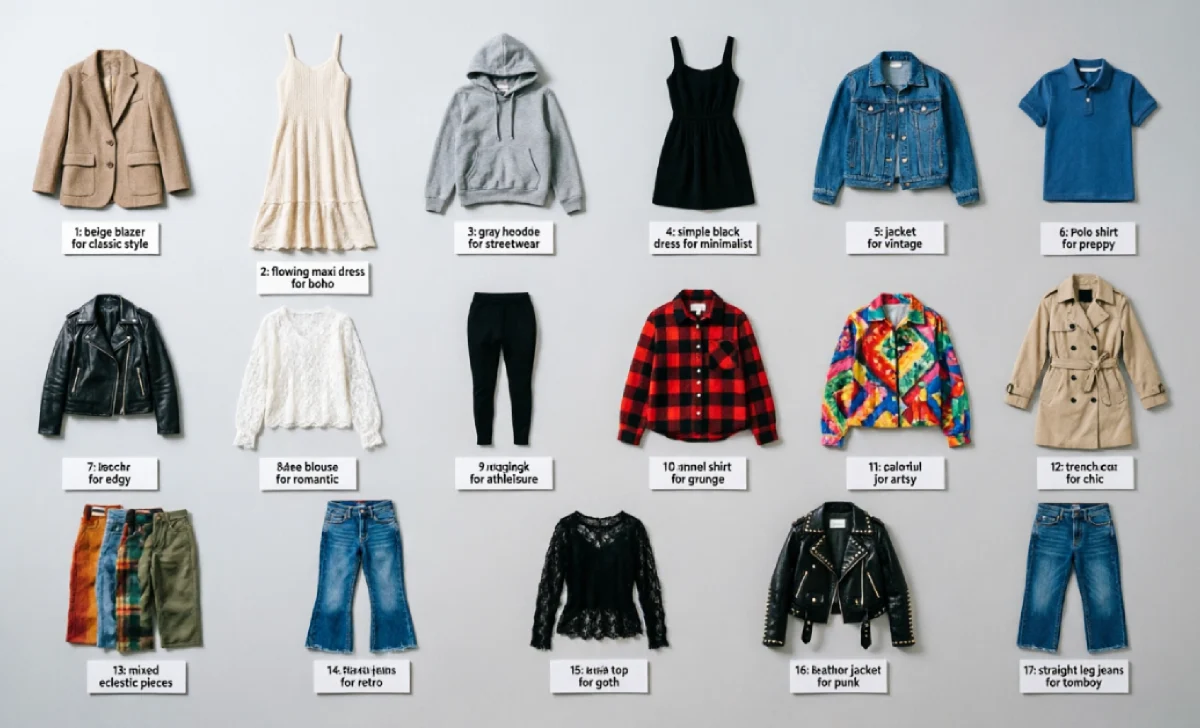
The 17 Clothing Styles You Should Know
1. Classic Style
Tailored blazers, white button-downs, trench coats, and well-fitted trousers, mostly in navy, black, cream, and camel. This style reads as polished without chasing trends, which is why it works well for offices with a dress code.
2. Bohemian Style
Flowy maxi dresses, embroidered tunics, fringe bags, and layered jewelry. Earthy tones mix with jewel colors, and natural fabrics like cotton and linen do most of the work.
3. Streetwear
Streetwear grew out of skate culture and hip-hop. Oversized hoodies, graphic tees, statement sneakers, and baseball caps define it, and the overall energy stays bold and current.
4. Minimalist Style
Minimalist dressing cuts anything unnecessary. Think wide-leg trousers, one well-cut black dress, and simple leather accessories in a tight neutral palette — three or four colors, maximum.
5. Vintage Style
Vintage borrows shapes from earlier decades — 1950s silhouettes, 1970s flow, 1980s tailoring. Thrifted jackets and worn leather belts give outfits a sense of history that new clothes don’t have.
6. Preppy Style
Preppy pulls from collegiate and East Coast leisure wear: polo shirts, cable-knit sweaters, chinos, and boat shoes, often finished with nautical stripes and pastel colors.
7. Edgy Style
Darker colors and rougher textures define edgy dressing. Leather jackets, ripped jeans, studded accessories, and combat boots build a look meant to stand out, not blend in. A single edgy piece — like a moto jacket — can also sharpen a softer outfit without going full rocker.
8. Romantic Style
Lace, ruffles, and pastel shades carry the romantic look. A blouse with a soft neckline, a blush midi skirt, and floral prints all point toward the same gentle mood.
9. Athleisure
Athleisure merges gym wear with everyday clothes — leggings, clean sneakers, and performance fabrics that take you from errands to a workout without a wardrobe change.
10. Grunge Style
Grunge came out of ’90s music culture. Oversized flannel shirts, band tees, distressed denim, and chunky boots create a deliberately undone look, usually in charcoal, olive, and faded black.
11. Artsy Style
Artsy dressing favors bold prints, unusual color pairings, and handmade jewelry. There aren’t many rules here — outfits tend to reflect a person’s creative interests directly, whether that’s painting, music, or design.
12. Chic Style
Chic style, especially the Parisian version, pairs relaxed pieces with structured ones — a striped top with tailored trousers, or jeans with a silk blouse. The contrast is what makes it work, not any single piece.
13. Eclectic Style
Eclectic dressing mixes eras, patterns, and textures on purpose. A boho skirt might sit next to a band tee and pearl earrings, held together by a confident eye rather than one clear theme.
14. Retro Style
Retro commits to one specific decade instead of blending several — 1970s flares, or a 1960s mod dress. The result feels nostalgic and specific rather than generally “old.”
15. Goth Style
Goth style leans on black, velvet, lace, and silver jewelry, sometimes accented with deep purple or red. Long coats and heavy boots build dramatic, deliberate shapes.
16. Punk Style
Punk includes safety pins, patched leather jackets, ripped fishnets, and combat boots. It started as a statement against conformity, and that attitude is still the point.
17. Tomboy Style
Tomboy style uses relaxed button-ups, straight-leg jeans, loafers, and oversized blazers. It shows that clothing choices don’t need to follow gender lines to feel authentic.
How Do You Know Which Clothing Style Suits You?
Most people don’t fit neatly into one category, and that’s normal. Start with your current wardrobe: pick the three pieces you’d grab first if you had to leave in a hurry. Those choices tell you more than any style quiz.
Your daily routine matters just as much. A style only works if it fits how you actually spend your time — commuting, working at a desk, staying active, or some mix of all three. Match your clothing to real needs: comfort, movement, and the impression you want to give.
A Step-by-Step Process to Find Your Personal Style

You don’t need a full wardrobe overhaul to find your style. A slower, five-step process works better and costs less money.
Step 1: Audit your closet. Try on what you already wear most, and set aside anything that feels wrong, regardless of price or brand. This step is about noticing patterns, not judging past purchases.
Step 2: Collect outfit photos. Save looks that catch your eye without worrying about which category they belong to. After a week, review them together — repeated colors or shapes point straight at your preferences.
Step 3: Test one new piece at a time. Try a borrowed jacket or a thrifted scarf with clothes you already own. Small experiments cost less and teach you more than a full new wardrobe.
Step 4: Name the pattern. Look at the outfits that worked and pick three words that describe them — sharp, relaxed, bold, whatever fits. Those three words become your filter for every future purchase.
Step 5: Revisit every few months. Your preferences shift as your life changes — a new job, a move, a season — and that’s expected, not a failure.
Common Mistakes People Make When Choosing a Style
- Copying an influencer’s exact wardrobe. Their body, budget, and lifestyle aren’t yours, so the same clothes often won’t feel right on you.
- Buying full outfits instead of building on basics. A style built entirely on matching sets falls apart the moment you need to mix pieces.
- Ignoring your actual daily routine. A wardrobe full of tailored blazers doesn’t help if you spend most days in a car or on your feet.
- Chasing every trend. Trends fade fast, and a closet built only on trends stops feeling like “you” within a year.
- Skipping fit for the sake of a look. Oversized streetwear or a fitted minimalist dress both fail if the proportions are wrong for your frame.
Why Should You Consider Your Body Type When Choosing a Style?
Any style can work on any body with the right adjustments — the goal is fit and proportion, not restriction. If you’re not sure where your proportions naturally lean, a framework like the soft dramatic body type can help you spot which cuts already work for you. A curvier figure can wear minimalist lines with a stretch fabric and a wrap top that defines the waist. A petite frame can wear oversized edgy jackets with cropped or rolled sleeves so the proportions stay balanced.
The fix is usually small: a hem taken up an inch, a belt added at the waist, a sleeve rolled once. Don’t rule out a style before trying that adjustment first.
How Do Colors Change the Way a Clothing Style Feels?
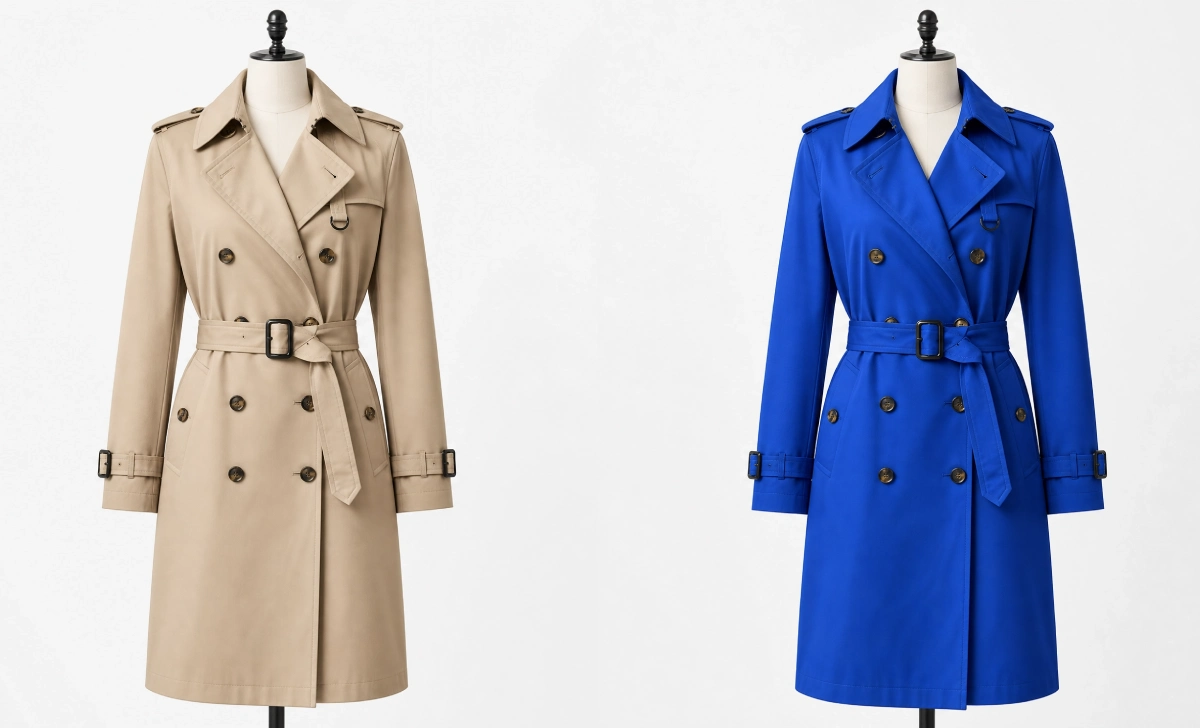
The same outfit shifts completely depending on color. A trench coat in beige reads as understated and classic. The same coat in cobalt blue reads as bold and modern.
Notice which shades earn you compliments, then lean into them. Muted tones tend to soften a look, while saturated colors add energy — useful to know when you’re deciding whether an outfit needs to blend in or stand out.
What Is a Capsule Wardrobe, and Can It Help You Define Your Style?
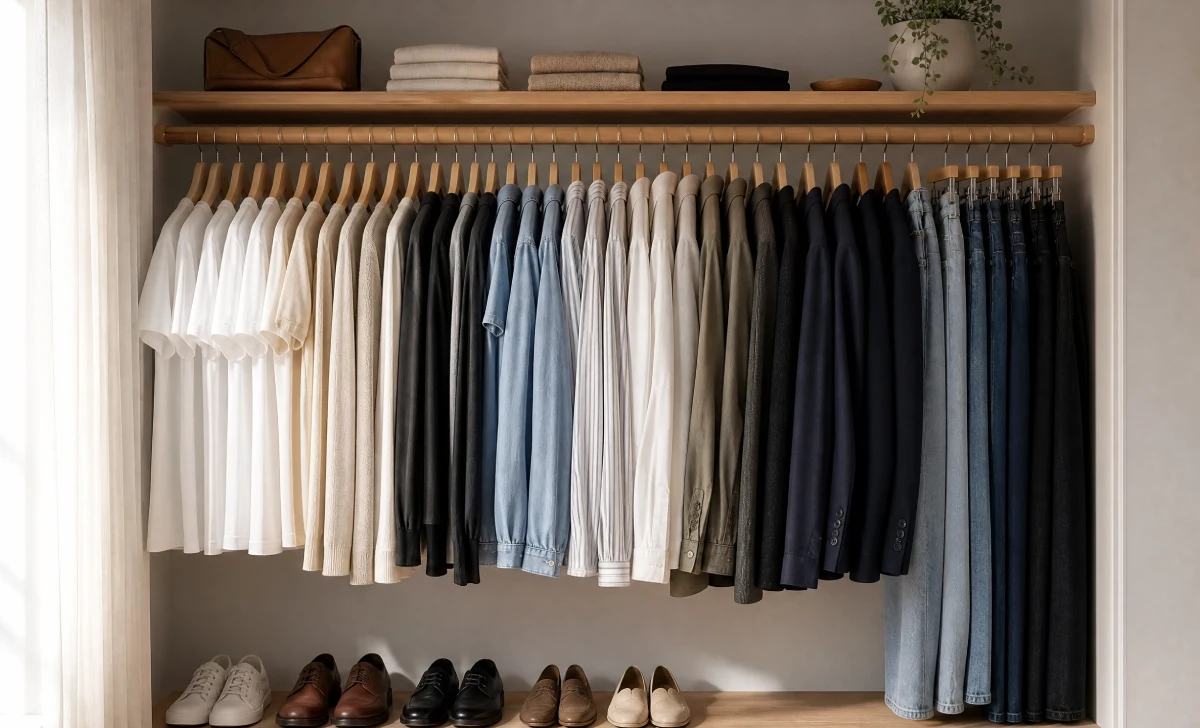
A capsule wardrobe is a small set of 25 to 40 pieces designed to mix and match. Limiting your options forces you to notice what you actually reach for, instead of hiding indecision behind a full closet.
Build it from basics — jeans, a white tee, a blazer, shoes you’ll wear on repeat — then add one or two pieces that hint at your emerging style. If you’re drawn to edgy dressing, that might be a leather jacket. If you lean romantic, it might be one blouse with a soft, ruffled neckline.
Can You Mix Different Clothing Styles?
Yes, and combining styles often produces more distinctive outfits than sticking to one category. Pick a dominant style as your base, then add one element from another — a trench coat over a streetwear hoodie, or chunky boots with a romantic floral dress.
Keep colors coordinated so the mix reads as intentional rather than accidental. Two or three styles working together, tied by a consistent palette, almost always looks more deliberate than a single style worn without variation.
How Do You Build a Wardrobe That Reflects Your New Style?
Replace items gradually as they wear out instead of buying everything new at once. Before any purchase, check it against two things: does it match your three style words, and does it work with at least three pieces you already own?
This filter cuts down on impulse buys and wasted money, including basics like jeans or joggers you’ll actually wear on repeat rather than pieces that only work for one outfit.
Why Finding Your Style Boosts Confidence
When your clothes match your personality, you spend less time second-guessing your outfit and more time on everything else. This isn’t about spending more money — it’s about consistency between how you dress and who you are, and that consistency shows in how people respond to you.
Frequently Asked Questions About Clothing Styles
What if I like more than one clothing style?
That’s common. Combine two or three styles and use a consistent color palette or a repeated accessory to keep the mix cohesive.
Can my clothing style change as I get older?
Yes. Your body, routine, and taste shift over time, and your wardrobe should shift with them.
How do I know if a trend fits my personal style?
Check it against your three style words. If it clashes with your existing wardrobe, skip it.
Is it possible to find my style on a tight budget?
Yes. Thrift stores and clothing swaps let you test styles without spending much. A few well-chosen pieces outperform a full closet of items you don’t wear.
What’s the fastest way to start if I feel overwhelmed?
Skip the theory and do Step 1 today: try on the clothes you already wear most, and set aside everything else. That alone usually reveals more than reading about all 17 styles at once.