
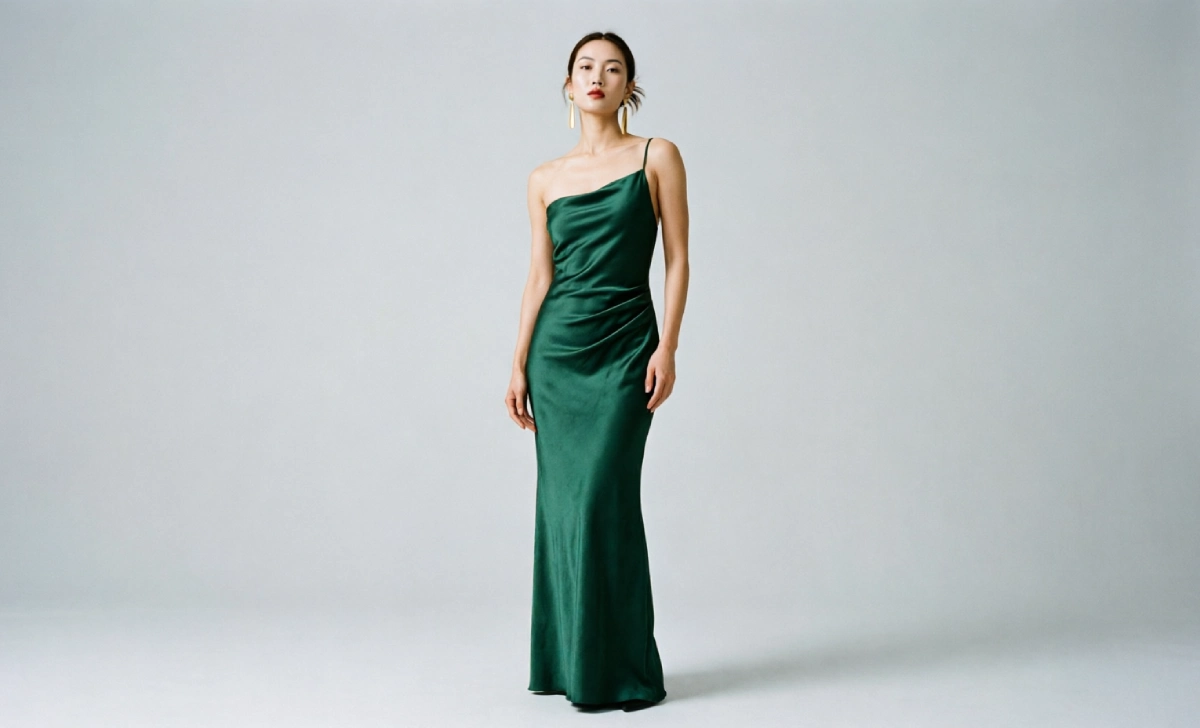
You’ve read the Kibbe descriptions, maybe taken a quiz, and one name keeps coming back: Soft Dramatic. The blend of strong bones and soft curves feels right, but most advice online drowns you in jargon. Here’s a clear answer: what the soft dramatic body type looks like, how it relates to different clothing styles, and how to dress it without guesswork.
Kibbe’s system isn’t about boxing you in. It highlights the natural lines of your body so clothing can work with them instead of against them. Soft Dramatic sits at the point where a tall, dramatic frame meets lush, romantic softness.
This guide covers the full picture: your features, your best silhouettes, and which types of pants actually suit your frame. No stiff rules — just outfit logic you can use today.
What Is the Soft Dramatic Body Type in Kibbe’s System?
Seeing both sharpness and fullness in the mirror is the core of Soft Dramatic. In David Kibbe’s system, this type sits in the Dramatic family with a strong Romantic undercurrent — a yang skeleton wrapped in yin flesh.
Yang means a prominent bone structure: long limbs, angular shoulders, and a vertical line that reads tall. Yin adds obvious curves. Your bust and hips carry real roundness, your arms and thighs stay fleshy even when lean, and your waist stays defined.
That combination shapes every outfit decision. Your frame calls for length and structure. Your curves call for drape and room. Once you separate the two needs, dressing gets easier.
What Are the Defining Physical Features of a Soft Dramatic?
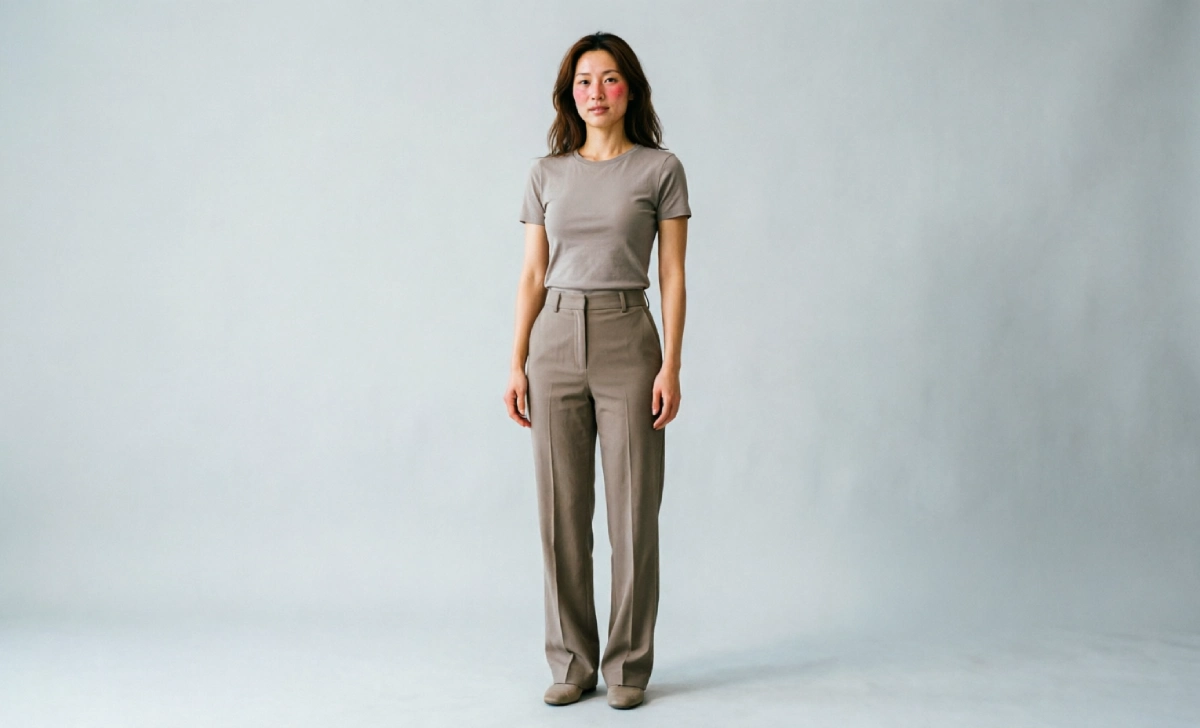
Certain patterns repeat across most Soft Dramatics. Broad or sharp shoulders, larger hands and feet relative to frame, and a vertical line that reads tall regardless of actual height.
Soft, rounded flesh sits over that frame. A full bust, curved hips, and fleshy arms and thighs stay visible at any weight — this is structural, not a matter of size.
Facial features often follow suit: strong cheekbones or a defined nose paired with large eyes and full lips. Together, shoulders and bust dominate the top, the waist tapers in, and the hip curves back out — the classic T-shape.
How Do You Know If You Are a Soft Dramatic?
Some doubt at this stage is normal. Start by checking whether your vertical line is the first thing people notice, followed by a clear need for waist definition in clothing.
Watch how fabric behaves on you. Shapeless, unconstructed pieces tend to swallow you whole even in the correct size. A draped jersey dress with a defined waist, by contrast, instantly looks intentional. That reaction is a strong signal.
Compare yourself against the neighbors: pure Dramatics wear sharp, straight lines without needing curve room, while Theatrical Romantics are small-boned and delicate. Needing both length and real curve support points to Soft Dramatic.
How Does Soft Dramatic Compare to Dramatic and Theatrical Romantic?
Small markers separate these three types, and tall, curvy women often get misdirected toward one of the wrong two for months.
Pure Dramatic runs all yang: long, narrow bones, minimal curves, and an angular silhouette top to bottom. A padded-shoulder jacket suits a Dramatic perfectly. On a Soft Dramatic, the same jacket strains against the chest and hips, asking for more drape.
Theatrical Romantic sits at the opposite scale — tiny, yin-dominant, with delicate bones and pronounced hourglass curves but no real vertical line. Stand next to one and the difference is obvious: your presence reads longer, bolder, more substantial.
Which Celebrities Are Soft Dramatics?
Sofia Vergara is the most cited Soft Dramatic celebrity. Her wardrobe leans on waist-defining looks that respect her vertical line — a template worth studying.
Rachel Weisz and Monica Bellucci get mentioned just as often, both carrying that same mix of strong bone structure and obvious lushness. Even in casual off-duty looks, elongation and curve accommodation rarely disappear.
Adele also comes up frequently, especially in floor-length gowns with bold draping. None of this is about copying outfits exactly — it’s about training your eye to spot the pattern: vertical honored, waist marked, curves gently held.
Your Core Soft Dramatic Outfit Guidelines
Vertical line comes first in every outfit decision. This doesn’t mean wearing one solid color daily — it means letting the eye travel smoothly from head to toe without jarring breaks.
Draping does the heavy lifting. Fabric that skims your curves without pinching or clinging makes the difference between comfortable and constricted. Medium-weight knits, georgette, crepe, and soft suiting all hold shape without fighting your flesh.
Waist definition matters, though it doesn’t require a tight belt. A draped cross-front, a subtle internal tie, or a garment that simply follows your natural indentation gets the job done.
Keep details bold but rounded. Chunky earrings with soft edges outperform tiny studs; a generous scarf reads better than a thin one. Scale everything to match your frame’s presence.
What Should a Soft Dramatic Never Wear?
Stiff, boxy garments cause the most damage. A rigid-fabric, sharp-shouldered blazer creates an armored look that fights your body. A softly tailored version with a draped lapel solves this without giving up the blazer.
Oversized, shapeless sweaters and sack dresses bury your structure under bulk. Relaxed pieces still work, but they need intentional draping or a defined shoulder line to keep your frame present.
Overly delicate details also backfire — tiny florals, spaghetti straps, and fine jewelry all get lost against your bone structure. Cropped trousers and jackets cut your vertical line at awkward points too.
Outfit Ideas for Casual, Work, and Evening Looks
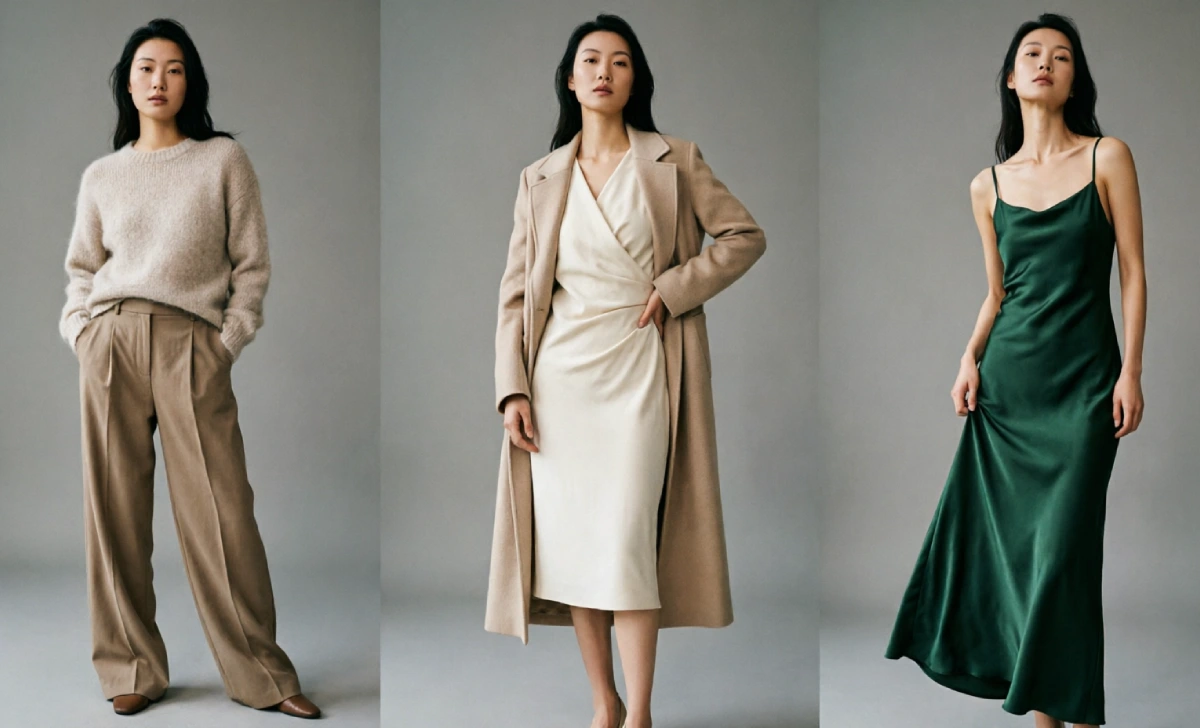
For casual days, pair a soft V-neck knit top with wide-leg trousers that pool at the floor, then add a long fluid cardigan in a matching tone.
For work, a draped wrap dress in one solid color under a knee-length duster coat covers both waist definition and structure at once. Keep the bag structured but not rigid.
For evening, a bias-cut slip dress in liquid satin needs little else. Add an earring with real presence and a heel that carries the vertical line all the way down.
What Hairstyles, Makeup, and Accessories Work Best for Soft Dramatics?
Controlled volume with sleekness works best for hair — a deliberate long wave, a glossy blowout, or an updo with soft face-framing pieces all fit.
Makeup needs one clear focal point: a smoky eye or a bold lip, not both at full intensity. Satin-finish foundation lets natural skin tone show through.
Accessories should match your T-shape rather than disappear against it. A structured tote or a large, softly slouchy hobo bag reads better on your scale than a tiny crossbody.
What Are the Most Common Myths About Dressing a Soft Dramatic?
One myth claims Soft Dramatics must dress formally at all times. Fluid joggers with a draped tee create a casual look that still respects your lines.
Another myth says separates are off-limits. They aren’t — keep the color story connected top to bottom, and give each piece at least one Soft Dramatic element like draping or a deep neckline.
A third myth insists on dresses and skirts only. Wide-leg, bias-cut, or softly tailored trousers with a matching long top create the same elegant line.
Your Quick-Start Soft Dramatic Outfit Formula
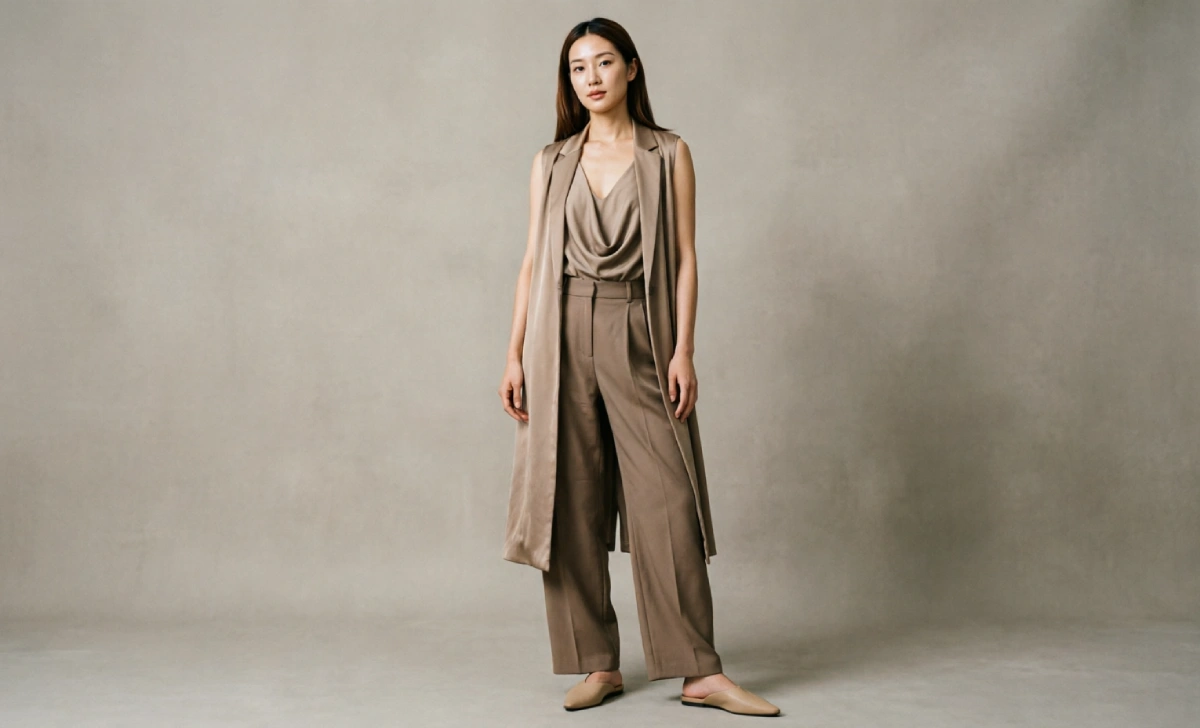
Start with an elongated base layer for an unbroken vertical line from shoulder to ankle. Add a waist-defining moment through a wrap, tuck, or internal shaping. Add one bold or draped detail, then finish with a vertical-keeping accessory like a pointed shoe.
A fluid, full-length sleeveless vest over a draped V-neck bodysuit, tucked lightly into high-waisted wide-leg trousers, finished with tonal pointed mules — that’s the formula in action.
Frequently Asked Questions About the Soft Dramatic Body Type
Can a Soft Dramatic be short?
Yes. Vertical line describes how elongated you appear, not literal height. A shorter woman can still be Soft Dramatic if her silhouette reads long and needs curve accommodation with waist emphasis.
Does Soft Dramatic mean I can’t wear casual clothes?
No. Fluid joggers, draped tees, longline cardigans, and soft jumpsuits all work as long as the shapes honor vertical and curve.
What is the difference between Soft Dramatic and Flamboyant Natural?
Both carry a strong frame and vertical line, but Flamboyant Natural has a broad, blunt bone structure with width through the upper back and ribcage. Soft Dramatic stays narrow at the skeleton, with flesh providing the curve instead.
Are there any plus-size Soft Dramatic style examples?
Yes. Many Soft Dramatic women carry full, lush figures, and the same rules apply regardless of size. Whether it’s joggers vs sweatpants for a relaxed day or a flowing gown for evening, vertical and curve principles hold, celebrating the shape rather than hiding it.
Conclusion
Your Soft Dramatic body pairs striking bone structure with soft, lush curves — a balance fashion doesn’t always cater to but one you can now dress with intention. Respecting your vertical line and gently framing your curves turns getting dressed from guesswork into instinct. Open your closet and start building looks that actually fit who you are.