

In this article
- Core Documents Required in Most Countries
- Step 1: Verify Your Business Name Is Available Globally
- Step 2: Gather Your Registration Documents by Business Type
- Step 3: Country-Specific Rules Simplified
- Step 4: Registering the Same Name in Multiple Countries
- DBA vs. Formal Business Name Registration: Which Do You Need?
- Next Steps: After Your Business Name Is Registered
- FAQs
You’ve got a killer business name picked out. Now you just need to register business name documents to make it official. But every time you search “what documents do I need to register a business name,” you get a different answer depending on the country, the business structure, or whether you’re a resident. Sound familiar?
Here’s the truth: while rules vary, most countries ask for the same core set of documents. This guide cuts through the noise. We’ll walk you through exactly what you’ll need, how to check availability globally, and what to do if you’re planning to operate across borders. No fluff. Just what works.
Core Documents Required in Most Countries
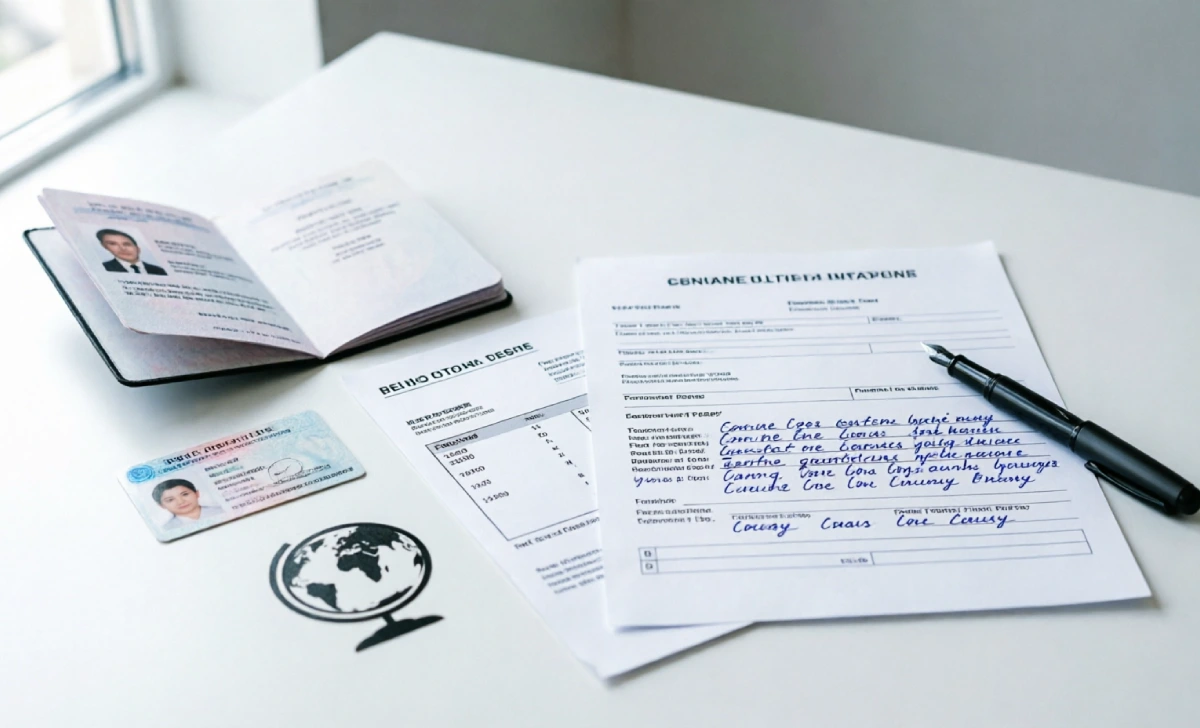
Before you go digging through government portals, here’s your starter pack. In nearly every jurisdiction, you’ll need:
- Proof of identity: Passport or government-issued ID (sometimes notarized)
- Proof of address: Utility bill, bank statement, or lease agreement (usually <3 months old)
- Business name application form: Completed and signed (often available online)
- Name reservation confirmation: If the country requires pre-approval
- Payment for filing fees: Typically $20–$150 USD equivalent
That’s it for the basics. If you’re registering as a sole proprietor or filing a DBA (“Doing Business As”), you might not need much more. But if you’re forming an LLC, corporation, or registering as a non-resident? Expect a few extra steps. We’ll get to those.
Step 1: Verify Your Business Name Is Available Globally
You don’t want to fall in love with a name only to find it’s taken—or worse, trademarked—in a market you care about. So before you gather documents, do this:
How to Check If a Business Name Is Available Globally (Free Tools)
Start with these (all free, no signup required):
- US: Secretary of State business search by state
- UK: Companies House register
- Canada: Corporations Canada database
- Australia: ASIC Connect
- EU: European e-Justice Portal for cross-border checks
Pro tip: Search variations. “Bloom Studio,” “Bloom Studios,” and “BloomStudio” could all be registered separately. If you plan to scale, check spelling, plurals, and common typos.
Trademark vs. Business Name: Critical Differences
Here’s where people get tripped up. Registering a business name doesn’t automatically give you trademark rights.
Think of it this way: business registration lets you operate legally under that name in a specific jurisdiction. A trademark protects your brand identity—logo, name, slogan—across categories and borders. You can have one without the other, but if you’re serious about your brand, you’ll want both eventually.
Step 2: Gather Your Registration Documents by Business Type
Not all businesses are created equal—and neither are their paperwork requirements.
Sole Proprietorship/DBA Requirements
If you’re flying solo or using a trade name different from your legal name, you’re likely filing a DBA. Typical asks:
- Completed DBA application (county or state level)
- Copy of your ID
- Filing fee ($10–$100)
- Sometimes: a published notice in a local newspaper (yes, really—still a thing in places like California and Ontario)
LLC/Corporation Documentation Checklist
Forming a formal entity? Add these to your pile:
- Articles of Organization (LLC) or Incorporation (Corp)
- Operating Agreement or Bylaws (not always filed, but often required internally)
- Registered Agent consent form (if using a third-party agent)
- Employer Identification Number (EIN) or local tax ID application
- Initial report or statement of information (due shortly after formation)
Before locking in your structure, sketch your business model canvas to clarify whether a DBA or formal entity actually fits your goals.
Non-Resident/International Founder Requirements
This is where it gets tricky. If you’re not a citizen or resident of the country where you’re registering, expect:
- Notarized or apostilled copies of your passport
- Proof of foreign address (sometimes translated)
- Local registered agent or business address requirement
- Additional tax forms (like a W-8BEN for the US)
Some countries—like Estonia with its e-Residency program or the UK—make this surprisingly smooth. Others? Not so much. If you’re unsure, a quick call to the local business registry can save you weeks.
Quick Decision Tip: Local founder + simple entity? You can probably file yourself. Non-resident + LLC/Corp? Strongly consider a registered agent or brief consultant chat. Saves headaches later.
Step 3: Country-Specific Rules Simplified
Let’s keep this practical. Here’s how requirements stack up in popular startup hubs:
Common Requirements: US, UK, Canada, Australia, EU
| Country | Key Document Quirk | Avg. Processing Time |
|---|---|---|
| USA | Varies by state; some require publication for LLCs | 1–10 business days |
| UK | Must provide SIC code (business activity classification) | 24 hours online |
| Canada | Federal vs. provincial registration—choose wisely | 1–5 days |
| AustraliaAn | ABN application is often bundled with name registration | Instant to 2 days |
| Germany | Notarization required for GmbH formation | 1–3 weeks |
When You Need a Local Address or Registered Agent
You’ve probably noticed: many countries won’t let you register without a local address. That doesn’t always mean you need an office. Services exist that can act as your official point of contact for legal mail, for $50–$300/year. Just make sure they forward documents promptly. You don’t want to miss a compliance deadline because your agent’s inbox is full.
Step 4: Registering the Same Name in Multiple Countries
So you love your name. You want it everywhere. Can you just register it globally and call it a day? Not quite.
Madrid Protocol & International Trademark Options
If brand protection is your goal, look into the Madrid System. It lets you file one trademark application to seek protection in 130+ countries. But—and this is key—it doesn’t replace local business name registration. You’d still need to register your entity separately in each country where you operate.
When Separate Registrations Are Required
Here’s the reality: if you’re legally operating in France, you register under French rules. If you’re also selling in Japan, you’ll likely need a separate Japanese registration.
Which brings us to a question we hear a lot: Can I register the same business name in multiple countries? Yes—but each registration is independent. And if someone else already owns the name locally? You might need to tweak it or negotiate. That paradox of choice is real—too many options can paralyze your decision. That’s why checking availability early (Step 1!) matters so much.
DBA vs. Formal Business Name Registration: Which Do You Need?
This trips up so many new founders. Let’s clear it up.
Legal Protection Differences
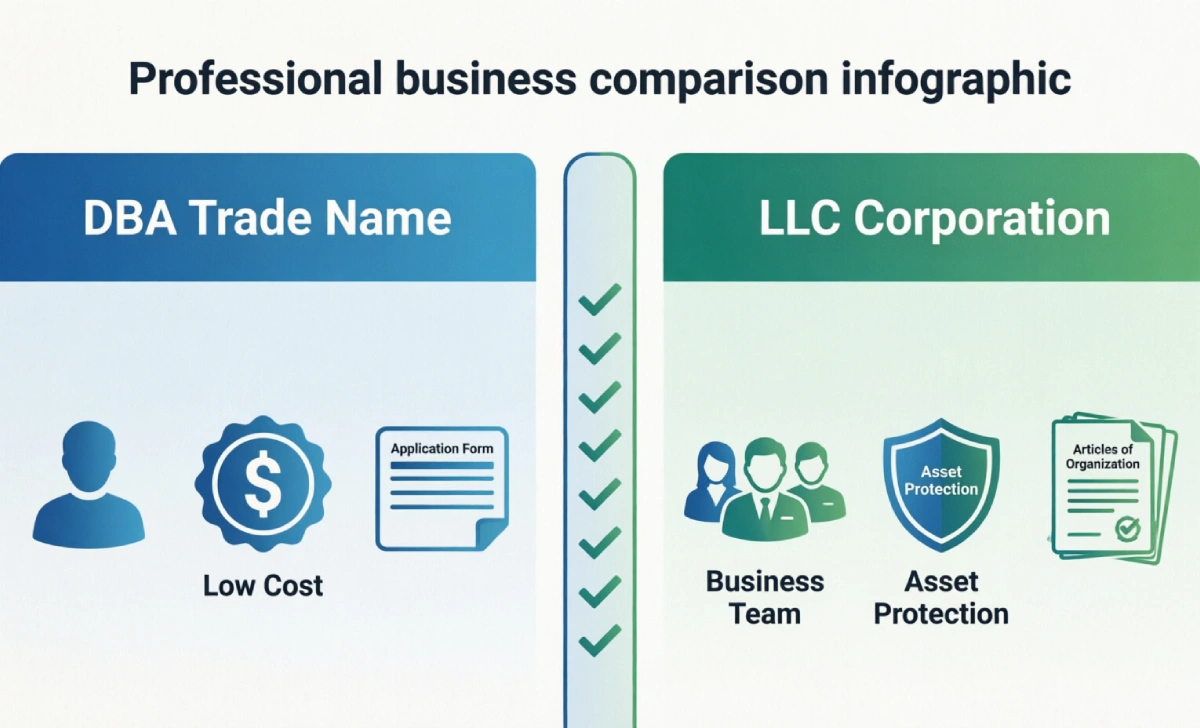
A DBA (Doing Business As) just tells the public, “Hey, John Smith is operating as ‘Sunset Coffee Co.'” It doesn’t create a separate legal entity. If someone sues Sunset Coffee, they’re suing you, personally.
Formal registration (like an LLC or Ltd.) creates a legal “person” separate from you. That separation can protect your personal assets if things go sideways. Not a guarantee—but a meaningful layer of protection.
Cost & Renewal Comparison Table
| Type | Avg. Initial Cost | Renewal Frequency | Legal Separation? |
|---|---|---|---|
| DBA / Trade Name | $10–$100 | 1–5 years (varies) | No |
| LLC / Ltd. | $50–$500+ | Annual/Biennial + fees | Yes |
| Corporation | $100–$1,000+ | Annual + complex filings | Yes |
If you’re testing an idea or freelancing, a DBA might be enough. If you’re taking on clients, hiring, or seeking funding? Lean toward formal registration.
Quick note: The difference between DBA and business name registration by country usually boils down to terminology: the US calls it a DBA, the UK uses “trading name,” and Canada defaults to “proprietorship name.” The legal effect is identical.
Next Steps: After Your Business Name Is Registered
Congrats—you’re officially in business. Now what?
- Open a business bank account (most require your registration docs)
- Set up basic bookkeeping (even a simple spreadsheet beats nothing)
- Consider trademark filing if brand protection matters to you
- Download a free checklist to track renewal dates and compliance tasks
Truth is, registering a business name isn’t about jumping through hoops. It’s about laying a clean foundation so you can focus on what actually matters: building your thing. Grab the documents, follow the steps, and don’t overthink the first version. You can always expand or restructure later.
FAQs
Do I need a lawyer to register a business name?
Not usually. Most countries let you file online yourself. But if you’re registering as a non-resident, forming a complex entity, or unsure about trademark conflicts, a 30-minute consult with a local business attorney can prevent costly mistakes.
How long does registration actually take?
Anywhere from instant (UK online) to 3–4 weeks (some EU countries with notarization). Always check the official government site for current processing times—they change.
What if someone else is already using my name?
If they’re registered in your jurisdiction, you likely can’t use the exact name. If they’re unregistered but using it commercially, you could still face trademark claims later. When in doubt, pick a distinct name or add a differentiator (location, service type, etc.).
Can I register a business name without a physical address?
Some countries allow P.O. boxes or virtual offices; others require a street address. If you’re location-independent, look into jurisdictions with flexible rules (like New Zealand or Delaware for US entities) or use a registered agent service.