
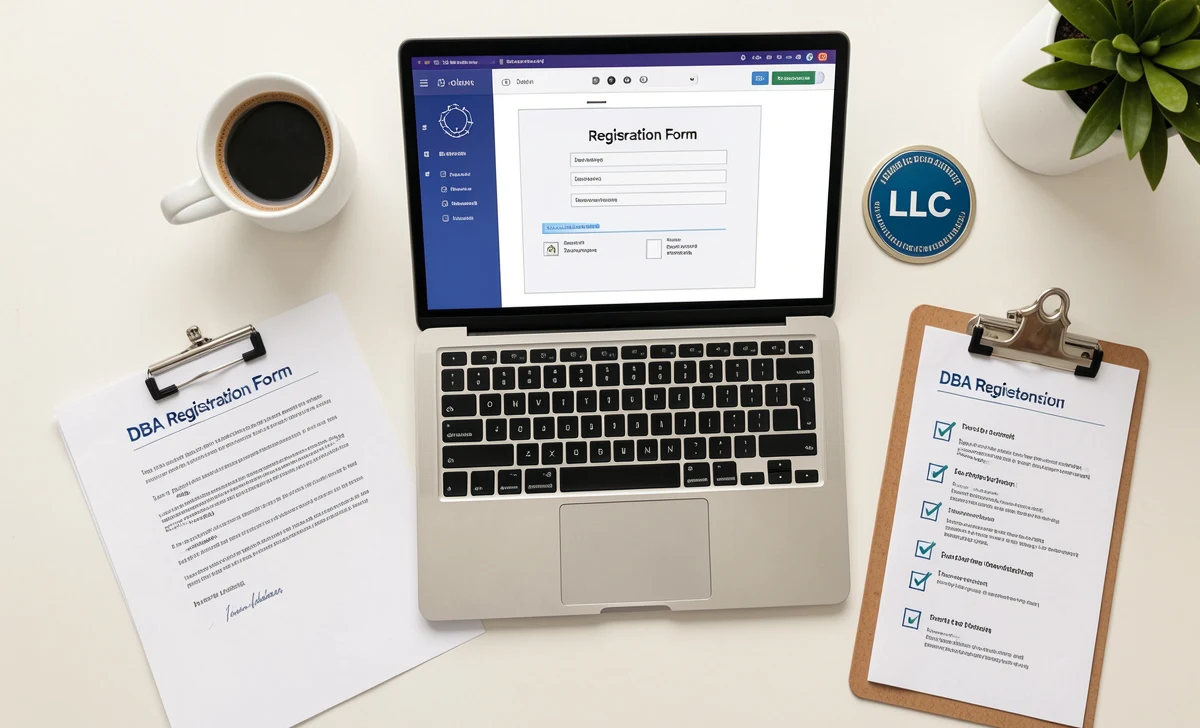
You’ve got a business idea. Maybe you’ve even picked a name you love. But now you’re staring at a Google search, wondering: do I need to register my business name?
Truth is, it depends. And that’s okay. Before you rush to register business name, let me walk you through exactly what applies to you—without the legal jargon or overwhelm. If you’re planning to open a business bank account under your new name, getting the registration right from the start saves you headaches later.
When Registration Is (and Isn’t) Required
Here’s the short version:
If you’re operating as a sole proprietor or general partnership under your own legal name (like “Jane Smith Consulting”), you usually don’t need to register a separate business name.
But if you’re using any other name—”Jane’s Creative Studio,” “Smith & Co.,” even “The Coffee Cart”—then yes, you likely need to file a DBA (“Doing Business As”) or fictitious name registration in your state or county.
LLCs and corporations are different. Your legal business name is locked in when you file formation papers. If you want to operate under a different name than what’s on your LLC docs? You’ll still need a DBA.
Confusing? Totally. That’s why I made this quick flowchart you can sketch on a napkin (or grab the visual version here: [Downloadable Flowchart Link]):
→ Are you using your exact legal name? → Probably no registration needed.
→ Using anything else? → Almost certainly yes.
→ Operating as an LLC/corp, but want a side brand? → DBA time.
Still unsure? Ask yourself: If a customer searched for my business name online, would they find me under my personal name? If not, you probably need to register.
How to Register a Business Name: Step-by-Step by Jurisdiction
Okay, so you’ve decided you do need to register. Now what?
The process changes depending on where you are. In the U.S., business name registration happens at the state or county level—not federal (unless you’re trademarking, which we’ll get to).
Here’s the general playbook for how to register a business name in your state—whether that’s Texas, California, or anywhere else:
- Check name availability first. Search your state’s business registry (usually the Secretary of State website) to make sure your desired name isn’t taken [[8]].
- Find the right form. Most states call it a “Fictitious Business Name,” “Assumed Name,” or “DBA” filing. County clerk offices sometimes handle this, too—especially in CA, TX, and NY.
- File the paperwork. Many states let you do this online now. Fees range from $10 to $100+.
- Publish a notice (if required). A handful of states (like California and Nebraska) ask you to run your DBA in a local newspaper for a few weeks. Annoying? Yes. Necessary? Sadly, also yes.
- Renew on time. DBAs aren’t forever. Most expire every 1–5 years. Set a calendar reminder.
Pro tip for visual learners: I’ve mapped out the exact filing portals for all 50 states in a color-coded reference sheet. Green = online filing under 10 mins. Yellow = county-level quirks. Red = newspaper publication required. Save yourself the tab-hopping.
Outside the U.S.? The logic is similar, but the offices change. In Canada, you’d register through your provincial registry. In the UK, you’d check Companies House. If you’re operating across borders, it’s worth a quick call to a local small business advisor—many offer free 15-minute consults.
DBA vs. Legal Entity Name: What’s the Difference?
This trips up so many new entrepreneurs. Let’s clear it up with a real example:
Say you form an LLC called “Maple Street Holdings, LLC.” That’s your legal entity name—the one on your formation docs, bank account, and tax forms.
But you want to open a bakery called “Rise & Shine Bakes.” That’s your DBA (Doing Business As). It’s not a separate legal entity—it’s just a nickname your LLC can use publicly.
Now, where people get tangled: a DBA does NOT give you trademark rights. It just lets you legally use that name in your jurisdiction. If someone in another state starts using “Rise & Shine Bakes” for their bakery? Your DBA won’t stop them.
This is exactly where understanding the difference between registering a business name and filing a trademark matters. Think of it this way:
- DBA = Permission to use a name locally.
- Trademark = Legal protection to own that name nationally (or even internationally).
If you’re serious about your brand long-term, you’ll want both. But start with the DBA—it’s faster, cheaper, and gets you operating legally now.
How Much Does Business Name Registration Cost?
Let’s talk numbers, because budgets matter.
The cost to register a DBA in my state? Anywhere from $10 to $150, depending on where you live. Here’s a rough snapshot:
- California: ~$40–$100 + newspaper publication ($50–$200)
- Texas: ~$25 per county (yes, you might file in multiple)
- Florida: ~$50–$100, filed with the state
- Wyoming: ~$30, filed online in minutes
And that’s just the filing fee. Don’t forget:
- Newspaper publication costs (if required)
- Renewal fees every few years
- Potential registered agent fees if you’re using a service
Pro tip: Before you pay anything, Google “Secretary of State business name search.” Most states let you check availability and file online for the lowest fee. Skip the middlemen unless you really need hand-holding.
State-by-State DBA Registration Requirements [Downloadable Checklist]
I won’t lie—tracking rules across 50 states is a headache. That’s why I built a simple, scannable table for DBA registration requirements by state. (Grab the free Google Sheet version here: [Downloadable Checklist Link]).
A few highlights to watch for:
- Publication rules: CA, GA, NE, and a few others require newspaper notices. Skip this, and your filing could be void.
- County vs. state filing: In states like Pennsylvania and Ohio, you might file with your county clerk, not the state. Always double-check.
- Name restrictions: Most states ban words like “Bank,” “University,” or “Insurance” unless you’re licensed.
Visual shortcut: If you prefer maps over tables, I’ve plotted these requirements on a color-coded U.S. map. One glance tells you if your state is “file online,” “visit county office,” or “publish in newspaper.”
If you’re operating in multiple states? You’ll likely need to file a DBA in each one where you use that name. It’s tedious, but non-negotiable if you want to stay compliant.
What Happens If You Skip Registration? (Legal Risks)
You’ve probably noticed I keep saying “required” and “compliant.” So… what actually happens if you just… don’t bother?
Short answer: It depends on your luck and your location. But here are real risks I’ve seen:
- You can’t open a business bank account under that name. Banks require proof of DBA filing.
- You lose legal standing to sue under that business name in some states.
- Fines or penalties if your county audits local businesses (yes, this happens).
- Customer trust issues. If someone checks your name and finds nothing official? That’s a red flag.
One Reddit user shared how they skipped DBA filing for their freelance design side hustle—until a client asked for a W-9. They had to scramble to file retroactively, pay late fees, and explain the delay. Not fun.
The good news? Registration is usually quick and affordable. It’s one of the easiest “legal hygiene” tasks you can check off. If you’re worried about handling late-paying clients while getting your paperwork in order, there are simple scripts that help.
Next Steps: Protect Your Name Beyond Registration
Once your DBA is filed, don’t stop there. A registered name is just step one.
Here’s what I’d do next:
- Grab the domain. Even if you don’t build a website yet, secure yourname.com (or .co/.net).
- Claim social handles. Consistency matters for branding.
- Consider a trademark if you plan to scale. The USPTO’s TESS database lets you search for free before filing.
- Add your DBA to contracts and invoices. Keep everything consistent.
And if you’re still weighing business structures—like whether a DBA is enough or if you should form an LLC— DBA vs. LLC: Which Business Structure Is Right for You?] breaks down the pros, cons, and real-world use cases. If you’re juggling multiple priorities while launching, learning how to prioritize tasks can keep you on track.
FAQs
Can I register a business name online?
Most states say yes! Check your Secretary of State’s website. If they don’t offer online filing, you can usually mail forms. Avoid third-party sites that charge 3x the state fee unless you need extra support.
Do sole proprietors need to register a business name?
Only if you’re using a name other than your personal legal name. “John Doe” = no filing. “Doe Digital Marketing” = yes, file a DBA.
How long does business name registration take?
Online filings: often instant or 1–3 business days. Mail-in: 2–6 weeks. If you’re on a tight launch timeline, factor this in early.
Can two businesses have the same DBA in one state?
Sometimes—especially if they’re in different counties or industries. But it’s risky for branding. Always aim for a unique name to avoid confusion (and potential legal headaches).
Conclusion
If you made it this far, you’re already ahead of most people staring at that same Google search. Registration doesn’t have to be scary. Pick your name, check your state’s rules, file the form, and keep the confirmation somewhere safe.
Then get back to what you started this for: building something great. Smart founders also reduce operational costs early on—every dollar saved now fuels growth later.