You’re watching the match. The striker slots it home. The crowd erupts. Then… silence. The ref’s earpiece buzzes. VAR is checking. Two minutes later, the goal was chalked off for a toe offside. Sound familiar?
If FIFA’s latest VAR expansion to offside and handball decisions has you scratching your head, you’re not alone. Here’s the thing: the rules haven’t changed as much as the process has. Understanding the VAR offside rule doesn’t have to be confusing—think of this as your beginner’s guide to 2026 soccer rule changes—no jargon, just clarity on what’s actually new and why it matters when you’re watching the World Cup. If you need a refresher on offside rule basics, that’s a great place to start before diving into the VAR tweaks.
The 2026 VAR Offside Rule in One Paragraph
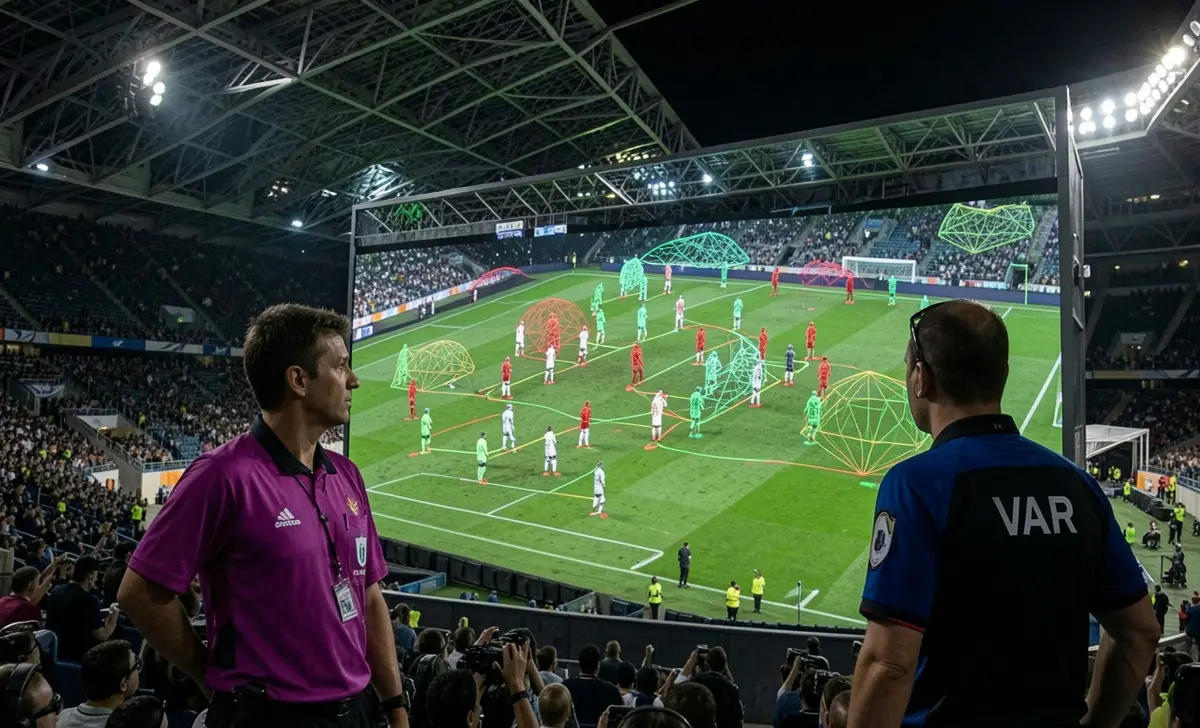
FIFA hasn’t rewritten offside itself. What’s new is how VAR intervenes. Starting in 2026, semi-automated offside technology (SAOT) will be used more consistently across major tournaments, including the World Cup. The system tracks 29 data points on each player 50 times per second, creating a 3D model to spot offside positions faster. But—and this is key—the final call still rests with the on-field referee. VAR only steps in for “clear and obvious errors” or missed incidents in the build-up to a goal. So no, your goal isn’t getting disallowed for a millimeter anymore… unless it’s genuinely offside.
Why FIFA Expanded VAR: Context for the 2026 World Cup
You’ve probably noticed VAR decisions feeling… inconsistent. One week a handball’s a penalty; the next, it’s waved away. FIFA’s 2026 tweaks aim to reduce that guesswork. The expansion isn’t about adding more rules—it’s about applying the existing ones more uniformly, especially for offside and handball calls that happen in split seconds.
Think of it like this: before, VAR was a backup referee watching on a tablet. Now, it’s got tech assist—cameras, sensors, and software working together to give officials a clearer picture. The goal? Fewer “how was that offside?!” moments and more confidence in the call.
How Semi-Automated Offside Technology Actually Works
Step-by-Step: From Kick to Call
Here’s what happens behind the scenes when SAOT is in play:
- Tracking: Special cameras around the stadium monitor every player’s limbs and the ball, 50 times per second.
- Mapping: Software builds a live 3D skeleton of each player, pinpointing exactly where their foot, knee, or shoulder is relative to the last defender.
- Alert: If an attacker is in an offside position when the ball is played, the system flags it instantly.
- Review: The VAR team checks the automated line-drawing. If it confirms offside, they notify the referee.
- Decision: The ref makes the final call—often within 20-30 seconds, not minutes.
Where Humans Still Make the Final Decision
Tech doesn’t replace judgment. SAOT shows where players were. But it can’t decide if a player was actively interfering with play—that’s still up to the referee. So even with all the sensors, football remains a human game. And honestly? That’s how it should be.
Handball Rules Under VAR: What Changed (and What Didn’t)
“Natural Position” Explained With Real Match Examples
This is where fans get tripped up. The handball rule itself hasn’t changed dramatically since 2021. What’s new is how VAR reviews it.
A handball is only penalized if:
- The arm is in an “unnatural” position (making the body bigger)
- The player deliberately moves their hand toward the ball
- The ball touches a hand/arm that’s above shoulder height (unless it’s a deliberate play by the player themselves first)
“Natural position” just means your arm is where it would be for your body’s movement at that moment. Running with arms pumping? Natural. Arms out wide like a T-pose while jumping? Not so much. Quick note: handball decisions need split-second judgment from refs—that’s why VAR review times matter.
Real example: In a 2024 Champions League match, a defender’s arm was by his side as he turned. Ball hit it. No penalty. Why? His arm was in a natural position for that movement. VAR checked, agreed, play on.
Ever watched a replay and thought “That wasn’t deliberate!”? You’re not wrong—and here’s why VAR sometimes agrees.
When VAR Will (and Won’t) Overturn a Handball Call
VAR won’t step in for every soft handball shout. They only intervene if:
- The on-field ref missed a clear handball in the penalty area
- There’s a serious error in interpreting “natural position.”
- The incident directly led to a goal or penalty
Is it a 50/50 call? VAR usually stays out. That’s intentional—football needs flow, not constant stoppages.
Beyond Offside: VAR’s New Powers for Corners & Second Yellows
VAR’s Expanded Scope in 2026
FIFA’s 2026 update also clarifies when VAR can review incidents beyond goals and penalties. Let’s break down the FIFA VAR expansion corner kicks explained question: if a deflection goes out and the ref isn’t sure who last touched it, VAR can now review the footage to get it right.
They can also check second yellow card incidents: if a player receives a second caution, VAR can verify whether the first yellow was a clear error (rare, but possible).
These aren’t game-changers—they’re safety nets. Most fans won’t notice them unless there’s genuine confusion. And that’s the point.
How to Watch & Understand VAR Decisions in Real Time
Next time VAR kicks in, try this:
- Watch the big screen: Most stadiums now show the SAOT line-drawing for offside.
- Listen for keywords: “Checking… complete… no clear error” means play stands. “Review recommended” means the ref is heading to the monitor.
- Don’t assume the worst: Many VAR checks end with “no action.” The silence is a good sign.
And if you’re watching from home? Fun fact: watching sports improves your reaction time, so paying close attention to VAR replays actually sharpens your fan instincts. Keep the IFAB rulebook handy—or bookmark this post.
Final Takeaway: What This Means for Fans, Players, and Bettors
At the end of the day, FIFA’s 2026 VAR updates aren’t about making football perfect. They’re about making it fairer—and more understandable. For fans, that means fewer head-scratching moments. For players, clearer boundaries on what’s allowed. And for anyone following the game closely? A better chance to actually know what’s going on when that red light flashes.
So next time VAR pauses the match, take a breath. The tech is working. The humans are still in charge. And the beautiful game? It’s still beautiful. Just remember: players adapt through repetition and clarity—so as these VAR rules settle in, expect smoother decisions and fewer controversies by mid-season.
FAQs
Is offside now called for any part of the body?
No. Offside is still judged on the head, body, or feet—any part that can legally play the ball. Arms don’t count for offside (but they do for handball—yes, it’s messy).
Will VAR check every handball in the box?
Not automatically. VAR focuses on incidents that directly lead to goals, penalties, or red cards. Soft shouts in open play usually stay with the on-field ref.
Can teams challenge VAR decisions?
Not yet. Unlike tennis or cricket, football doesn’t have player challenges. The VAR team initiates reviews based on what they see.
Does this apply to all leagues or just the World Cup?
SAOT is mandatory for FIFA tournaments (like the 2026 World Cup). Domestic leagues choose whether to adopt it—Premier League, La Liga, and Bundesliga are already using versions of it.