
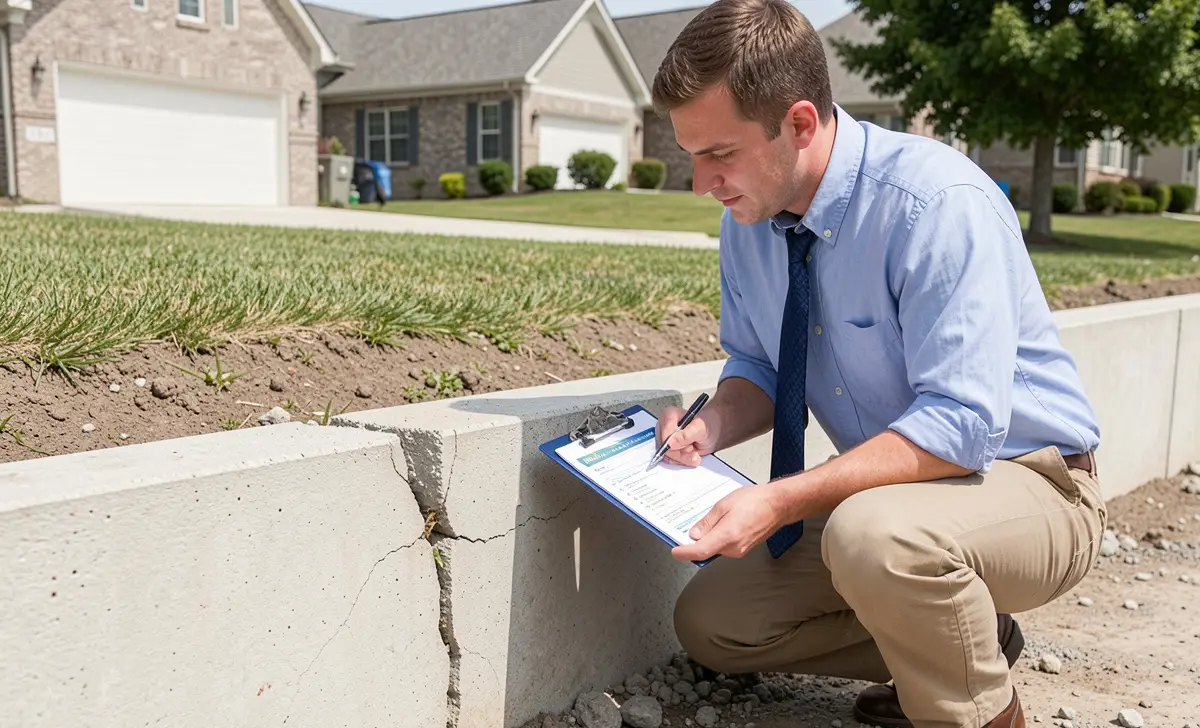
You’re standing in what could be your future home. The kitchen’s cute, the backyard has potential, and the price feels right. But before you get swept up in paint colors and furniture layouts, there’s one thing you absolutely need to check: the foundation. Learning how to inspect house foundation now—before you fall in love with the place—could save you from signing up for a money pit disguised as a dream home. Inspect the property for hidden damage
Truth is, foundation issues don’t always scream for attention. Sometimes they whisper. A slightly sticky door. A hairline crack you’d walk right past. But catching these early—before you make an offer—can save you thousands, or even help you walk away from a bad deal with your deposit intact.
Here’s how to spot the signs, fast.
Why Foundation Checks Matter Before You Submit an Offer
Let’s be real: most first-time buyers aren’t structural engineers. And that’s okay. You don’t need to be. But you do need to know when something’s off.
Foundation repairs can run anywhere from $2,000 for minor crack sealing to $20,000+ for major underpinning, according to the HomeAdvisor Cost Guide. That’s not a “we’ll fix it later” kind of expense. It’s the kind of thing that can derail your budget, delay your move-in, or worse—make the house unsafe.
Checking the foundation before you offer isn’t about being paranoid. It’s about being prepared. You’re not just buying walls and a roof. You’re buying what holds them up.
And honestly? Knowing where to look gives you leverage. Spot a questionable crack? You can ask for a specialist inspection, negotiate the price, or politely walk away. No regrets.
Quick Structural Check Before Making an Offer on a House: 5-Minute Walkthrough
You’ve got 20 minutes at the viewing. Maybe less. Here’s a quick structural check you can run before making an offer on a house, even if you only have five minutes on site.
Start outside. Walk the perimeter. Look for:
- Cracks in the foundation wider than ¼ inch (about the thickness of a pencil)
- Sections that look like they’re sinking or tilting
- Soil pulling away from the foundation, especially after dry spells
- Water stains, efflorescence (that white, chalky residue), or moss growing on concrete
Now step inside. Do this:
- Test the doors and windows. Do they stick or refuse to latch? That’s often a sign of frame shifting.
- Check the floors. Roll a marble across the room. Does it zoom straight to one corner? Could indicate uneven settling.
- Scan the walls and ceilings. Look for diagonal cracks near doorways, or cracks that run stair-step through brick or drywall.
- Sniff for dampness. Musty smells in basements or crawl spaces often point to water intrusion, which weakens concrete and wood over time.
You’re not diagnosing. You’re screening. If anything feels off, that’s your cue to dig deeper—or call in backup.
DIY Property Inspection Checklist Before Offer (Free Download)
Want to feel more confident walking through a property? Keep this used home inspection checklist on your phone. Tick boxes as you go. Pro tip: screenshot it to your lock screen so you can tap through it hands-free while walking the lot.
Exterior Quick Scan
- Foundation cracks wider than ¼ inch?
- Visible bowing, leaning, or separation at corners?
- Gutters/downspouts directing water away from the house?
- Soil grading sloping toward the foundation? (Red flag)
- Tree roots within 10 feet of the foundation?
Interior Red Flags
- Doors/windows that stick or won’t close flush?
- Cracks above door frames or in ceiling corners?
- Floors that feel bouncy, sloped, or uneven?
- Gaps between walls and floors/ceilings?
- Musty odors or visible moisture in basement/crawl space?
Snap photos of anything questionable. Date-stamp them. You’ll thank yourself later when comparing properties or discussing findings with an inspector.
How to Check a House for Structural Damage Before Buying: Foundation Deep Dive
Okay, you’ve done the quick scan. Something caught your eye. Now it’s time to learn how to check a house for structural damage before buying, starting with what those marks actually mean.
Not all cracks are created equal. Here’s the cheat sheet:
Usually harmless:
- Hairline vertical cracks (<1/8 inch) in concrete
- Small shrinkage cracks in new builds (first 1–2 years)
- Isolated cracks are not spreading over time
Get a pro to look:
- Horizontal cracks in foundation walls (pressure from soil/water)
- Stair-step cracks in brick or masonry
- Cracks wider at the top than the bottom (classic settling)
- Multiple cracks radiating from a corner
Likely deal-breakers:
- Foundation walls bowing inward >1 inch
- Active water seepage during dry weather
- Cracks accompanied by sticking doors and sloping floors
- Visible gaps between the foundation and the framing
One trick I swear by: use your phone. Open a free measuring app, snap the crack, and get a rough width estimate. Not perfect, but way better than guessing with your thumb.
And don’t forget context. A crack in a 100-year-old home might be stable. The exact same crack in a 10-year-old build? That’s worth questioning.
When to Call a Pro: Structural Engineer vs. Home Inspector Costs
So you found a few warning signs. Now what?
First, know the difference.
A home inspector checks the whole property—roof, electrical, plumbing, and general structure. Great for baseline due diligence.
A structural engineer specializes in load-bearing elements. They’ll tell you why a crack exists, whether it’s active, and what fixing it actually costs.
Cost-wise? Expect $300–$500 for a standard home inspection. A structural engineer consultation runs $500–$1,000+ but can save you from a $30k mistak. Angi Professional Services Report.
Here’s my rule of thumb:
If your DIY scan raises one mild concern, proceed with a standard inspection. If you spot multiple red flags or anything horizontal/bowing? Skip straight to an engineer.
And ask this before hiring: “Can you provide a written assessment I can use for negotiation?” Some pros will; others won’t. Get that clarity upfront.
Red Flags That Mean “Walk Away” (Not Just “Negotiate”)
Let’s talk exit strategy. Because sometimes, the smartest move is to walk.
These are the structural damage warning signs every first-time buyer needs to treat as absolute deal-breakers:
Horizontal foundation cracks
These usually mean soil pressure is pushing the wall inward. Fixing it often requires underpinning or wall anchors. Big money.
Major differential settlement
If one corner of the house has dropped noticeably—think: visible tilt, doors that won’t stay open—the foundation may be failing. Repairs get invasive fast.
Active water intrusion in the basement/crawl space
A little dampness after heavy rain? Maybe manageable. Standing water or seepage during dry weeks? That’s a systemic drainage issue that’ll keep costing you.
Compromised load-bearing walls
If you see cracks where walls meet ceilings, or beams that look sagged, don’t guess. That’s structural integrity at stake.
You’ve probably noticed I’m not saying “never buy a house with issues.” Some problems are fixable. But if the repair bill could eat 20%+ of your budget? Or if the seller won’t budge on price? Sometimes the best offer is no offer.
If horizontal cracking or active seepage shows up, hand this exact line to your agent: “I want a structural engineer’s evaluation before we proceed, with repair estimates factored into the closing credits.” Most reasonable sellers will negotiate a lower price or concede.
FAQs
Can I really spot foundation problems in one viewing?
You won’t catch everything—but you can spot obvious red flags. Think of it like a health screening: you’re not diagnosing, you’re deciding whether to see a specialist.
What if the seller says, “All houses have cracks”?
They’re not wrong. But context matters. Ask for documentation. Has an engineer evaluated it? Were repairs done? If they can’t provide details, that’s your answer.
Should I waive the inspection contingency in a hot market?
Only if you’re prepared to absorb surprise repair costs. Even in competitive markets, consider a “pre-offer inspection” or at least the 5-minute scan above. Better safe than sorry.
How do I bring up foundation concerns without killing the deal?
Frame it as due diligence, not an accusation. “I noticed a few cracks I’d like a pro to glance at—would you be open to that?” Most sellers expect this.
Wrapping It Up
Looking at houses is exciting. It’s also a little terrifying. But you’ve got this.
Knowing what to look for when inspecting a house foundation isn’t about becoming an expert overnight. It’s about giving yourself enough clarity to make a smart next move—whether that’s moving forward with confidence, asking for repairs, or walking away without regret.
Your action plan:
- Save this post (or grab that free checklist below)
- Do the 5-minute scan at your next viewing
- If anything feels off, pause and call a pro before you offer
And if you’re still nervous about the inspection process overall, we broke down exactly how to handle contingencies without losing your dream home in First-Time Buyer’s Guide to Home Inspection Contingencies.
One last thing: trust your gut. If a house feels wrong—even if you can’t pinpoint why—it’s okay to pass. There will be another one. And next time, you’ll walk in even more prepared. Don’t skip a property survey before buying—it’s the final safety net that catches boundary issues, easements, or land disputes your foundation check won’t reveal.