
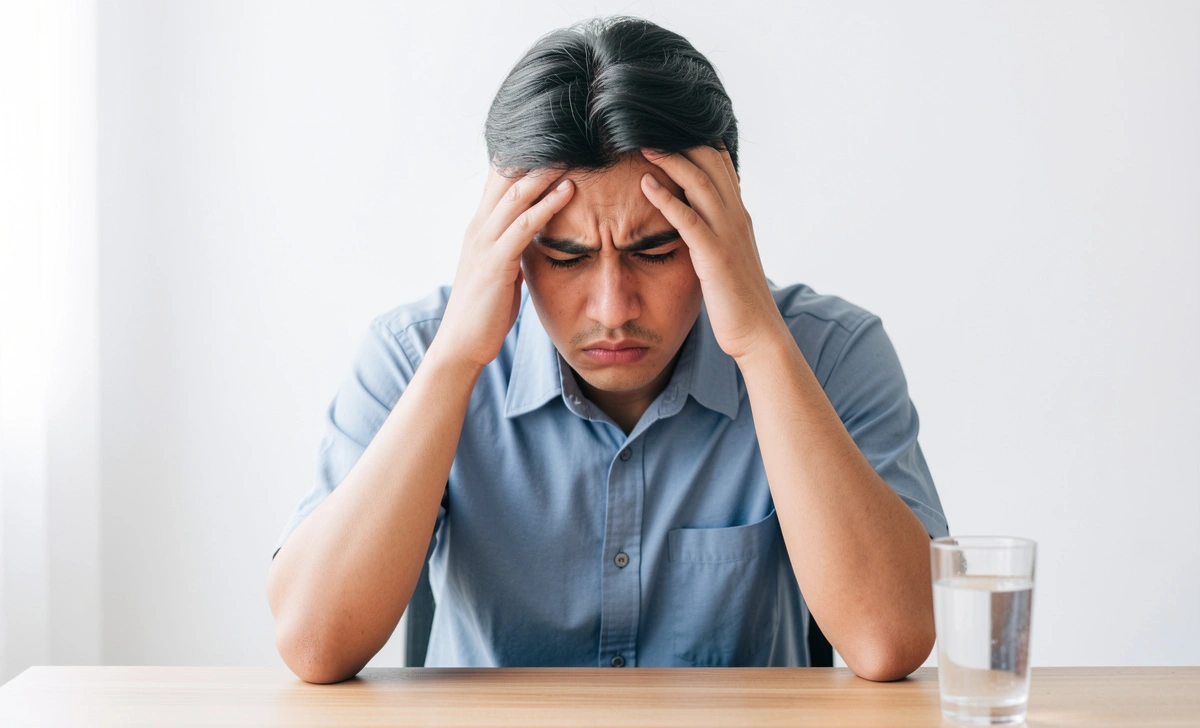
You reach for ibuprofen when a headache hits — but what if the real fix was a glass of water? Many people treat headaches with painkillers when low fluid intake is the actual cause.
Understanding dehydration headache symptoms and relief matters because this type of head pain can closely resemble migraines, tension headaches, or fatigue-related pain. Misreading the signal means delayed relief and a missed chance to address what your body actually needs.
In this guide, you’ll learn how to tell if your headache is from dehydration, what symptoms to watch for, and when it may signal something more serious.
What Is a Headache From Dehydration?
A dehydration headache happens when your body loses more fluid than it takes in, causing a drop in blood volume and pressure. This reduction in fluid affects brain tissue, triggering pain signals.
Why Dehydration Triggers Head Pain
When you’re dehydrated, your brain can temporarily shrink slightly due to fluid loss. This pulls the brain away from the skull, activating pain receptors. At the same time, reduced blood volume means less oxygen reaches the brain, compounding the discomfort.
How Common Are Dehydration Headaches?
According to a study published in the journal Headache, about *1 in 10 headache sufferers identify dehydration as a consistent trigger. The early signs of dehydration are easy to overlook, which means many dehydration headaches go unrecognised until they become moderate or severe.
What Does a Dehydration Headache Feel Like?
The pain from a dehydration headache tends to have a distinct character, though it varies by person. Recognising the pattern is the first step toward faster relief.
Common Dehydration Headache Symptoms
- Dull, throbbing, or pulsating pain
- Worsens when you stand or move
- Accompanied by dry mouth or dark urine
- Fatigue or difficulty concentrating
- Dizziness when changing positions
Where the Pain Usually Appears
Dehydration headaches most often affect the front, back, or sides of the head. Some people experience pain across the entire skull. The pain typically intensifies with physical activity and eases slightly when lying still.
How to Tell If Your Headache Is From Dehydration
The clearest way to identify a dehydration headache is to check for accompanying signs of low fluid levels alongside the head pain.
Signs Your Body Needs More Fluids
- Urine that is dark yellow or amber
- Dry or sticky mouth
- Reduced urination frequency
- Feeling thirsty (though thirst often appears after mild dehydration has already begun — a commonly overlooked fact)
- Mild confusion or low energy
Simple Self-Checks You Can Do at Home
Pinch the skin on the back of your hand and release. If it snaps back quickly, hydration is likely adequate. If it stays raised for a moment, you may be dehydrated. This test (called skin turgor) is imperfect but gives a quick baseline.
Check your urine colour against a hydration chart. Pale straw-yellow is the target. Anything darker than apple juice warrants more fluid intake.
How Fast Symptoms Improve After Drinking Water
This is the most practical diagnostic test available. According to the Cleveland Clinic, dehydration headaches typically improve within 30 minutes to 3 hours after adequate fluid intake. If your headache persists well beyond that window after drinking fluids, it likely has a different cause.
Dehydration Headache vs Migraine vs Tension Headache
These three headache types share overlapping features, but the differences are meaningful.
Key Differences in Symptoms
| Feature | Dehydration | Migraine | Tension |
|---|---|---|---|
| Pain type | Throbbing or dull | Intense pulsating | Pressure, band-like |
| Location | Anywhere on the head | One side (often) | Forehead, temples |
| Nausea | Mild or absent | Common | Rare |
| Light sensitivity | Mild | Pronounced | Rare |
| Aura | No | Sometimes | No |
| Improves with water | Yes, usually within hours | Rarely | No |
Triggers That Point to Dehydration
If your headache follows a hot day, intense exercise, alcohol intake, illness with vomiting, or skipping fluids for several hours, dehydration is the most likely driver. Migraines tend to follow hormonal shifts, certain foods, or sleep disruption. Tension headaches often trace back to stress or poor posture.
What Causes Dehydration Headaches?
Several everyday situations deplete fluid faster than most people realise.
Heat and Sweating
In high temperatures, the body can lose over 1 litre of sweat per hour. Even without vigorous activity, sitting in the sun or a hot environment causes steady fluid loss that adds up quickly.
Exercise and Physical Activity
Physical exertion raises core body temperature and drives sweating. Athletes and regular gym-goers who don’t replace fluids during or after training are at consistent risk. This connects to broader patterns of chronic fatigue, physical or mental — dehydration can blur the line between physical and mental exhaustion.
Illness, Vomiting, or Diarrhoea
Gastrointestinal illness accelerates fluid and electrolyte loss dramatically. Even mild episodes can dehydrate the body enough to trigger a headache within hours.
Too Much Caffeine or Alcohol
Both caffeine and alcohol are diuretics — they increase urine output. Heavy consumption without compensating water intake creates a net fluid deficit. A morning hangover headache is partly a dehydration headache.
Best Ways to Relieve a Dehydration Headache
The fix is straightforward, but how you rehydrate matters.
How Much Water Should You Drink?
Updated guidance from the National Academies of Sciences (2026) recommends approximately 3.7 litres (125 oz) per day for men and 2.7 litres (91 oz) for women, including fluids from food. During illness, heat, or exercise, these targets increase. For an active headache, start with 500–750ml of water over 30 minutes.
Electrolytes vs Plain Water
Plain water works for mild dehydration. For moderate dehydration — particularly after sweating heavily or illness — electrolytes (sodium, potassium, magnesium) help the body absorb and retain fluids faster. Oral rehydration solutions, coconut water, or electrolyte tablets are practical options.
Foods That Help Rehydrate the Body
Several foods have high water content and support recovery:
- Cucumber — 96% water
- Watermelon — 92% water
- Celery, lettuce, strawberries — 90%+ water
- Broth-based soups — water plus sodium for retention
When Should You Worry About a Headache?
Most dehydration headaches are uncomfortable but not dangerous. Some headaches, however, are warning signs of serious conditions.
Warning Signs That Need Medical Attention
Seek immediate care if you experience:
- Sudden, severe “thunderclap” headache — the worst of your life
- Headache with fever, stiff neck, or rash
- Headache following a head injury
- Neurological symptoms: vision changes, slurred speech, weakness
- Headache that steadily worsens over 24–72 hours without improvement
These symptoms can indicate meningitis, stroke, or intracranial bleeding. Do not wait to see if water helps.
Symptoms of Severe Dehydration
Severe dehydration is a medical emergency. Signs include:
- Confusion or disorientation
- Rapid heartbeat with low blood pressure
- Sunken eyes or no urination for 8+ hours
- Fainting or inability to keep fluids down
The WHO defines severe dehydration as fluid loss exceeding 10% of body weight — a threshold requiring intravenous fluids in a clinical setting.
How to Prevent Dehydration Headaches
Consistent habits reduce the risk significantly.
Daily Hydration Habits
- Drink a full glass of water first thing in the morning
- Carry a measured water bottle and track intake
- Eat water-rich foods at each meal
- Set phone reminders if you frequently forget to drink
- Monitor urine colour as a daily check
Poor sleep worsens hydration levels overnight. If you’re working on a bedtime routine for better sleep, add a small glass of water before bed and immediately upon waking.
Tips for Hot Weather and Exercise
- Drink 500ml of water before outdoor activity begins
- Hydrate every 15–20 minutes during sustained exercise
- Add electrolytes for sessions lasting over 60 minutes
- Avoid peak sun hours between 11 am and 3 pm when possible
- Increase fluid intake the day before anticipated heat exposure
Key Takeaways About Dehydration Headaches
- Dehydration headaches are caused by reduced blood volume and brain fluid, triggering pain receptors.
- They feel dull to throbbing and typically affect the whole head rather than one side.
- The clearest diagnostic test: drink 500–750ml of water and see if pain improves within 30 minutes to 3 hours.
- Dark urine, dry mouth, and recent fluid loss are reliable supporting signs.
- Electrolytes improve recovery for moderate dehydration; plain water suffices for mild cases.
- Seek medical attention for sudden, severe headaches, neurological symptoms, or headaches with fever and stiff neck.
Final Thoughts
Headaches are often the body’s early warning system — a signal that something basic is off before a larger problem develops. Dehydration is one of the most correctable triggers, yet it’s routinely overlooked.
One insight worth keeping: by the time you feel thirsty, mild dehydration has already started. That means thirst is a lagging indicator, not an early warning. Drinking consistently throughout the day — rather than waiting for thirst — is the most reliable way to prevent dehydration headaches before they start.
For anyone dealing with recurring unexplained headaches, it’s worth reviewing how to reduce eye strain from screen habits too — screen time often coincides with forgetting to drink water, compounding the effect.