A cheap charging cable caused a house fire in the UK — and the investigation revealed it had no safety certification at all. Most people never think twice about the cable they plug in every night. That single overlooked accessory can destroy a battery, damage a port, or worse.
Counterfeit and low-quality cables skip critical components — proper wire gauge, insulation thickness, and internal protection chips. Modern fast charging pushes 45W, 65W, or even 100W through a single cable. At those power levels, a weak cable is not just ineffective — it is actively dangerous.
This guide explains how to identify a safe smartphone charging cable, what warning signs to avoid, and which certifications actually matter in 2026.
Why Charging Cable Safety Matters More in 2026
Fast Charging Creates Higher Power Loads
Modern smartphones support USB Power Delivery (PD) at 45W to 240W. Standard cables rated for 5W will overheat at these loads. A cable not rated for high wattage creates resistance, which converts excess energy into heat — directly inside your cable and your phone’s battery.
Cheap Cables Can Damage Phones and Batteries
Low-quality cables use undersized copper wiring, often 28 AWG instead of the recommended 24 AWG for charging. Thinner wire means higher resistance. Higher resistance means heat. Repeated heat cycles degrade lithium-ion batteries faster and can trigger thermal runaway in extreme cases. One 2023 report by the Electrical Safety First organization found that counterfeit phone chargers and cables were involved in over 350 UK fire incidents in a single year.
If you want your phone to charge more efficiently, one simple trick is to enable airplane mode while charging — it reduces background power draw and lets the cable deliver full current to the battery.
What Makes a Smartphone Charging Cable Safe?
Proper Wire Thickness and Insulation
A safe cable uses 24 AWG or thicker wire for the power conductors. The outer insulation must be rated for the operating temperature — typically 80°C or higher for fast-charging cables. Better cables use braided nylon or Kevlar reinforcement to prevent internal wire breakage at bend points.
Certified Connectors and Internal Chips
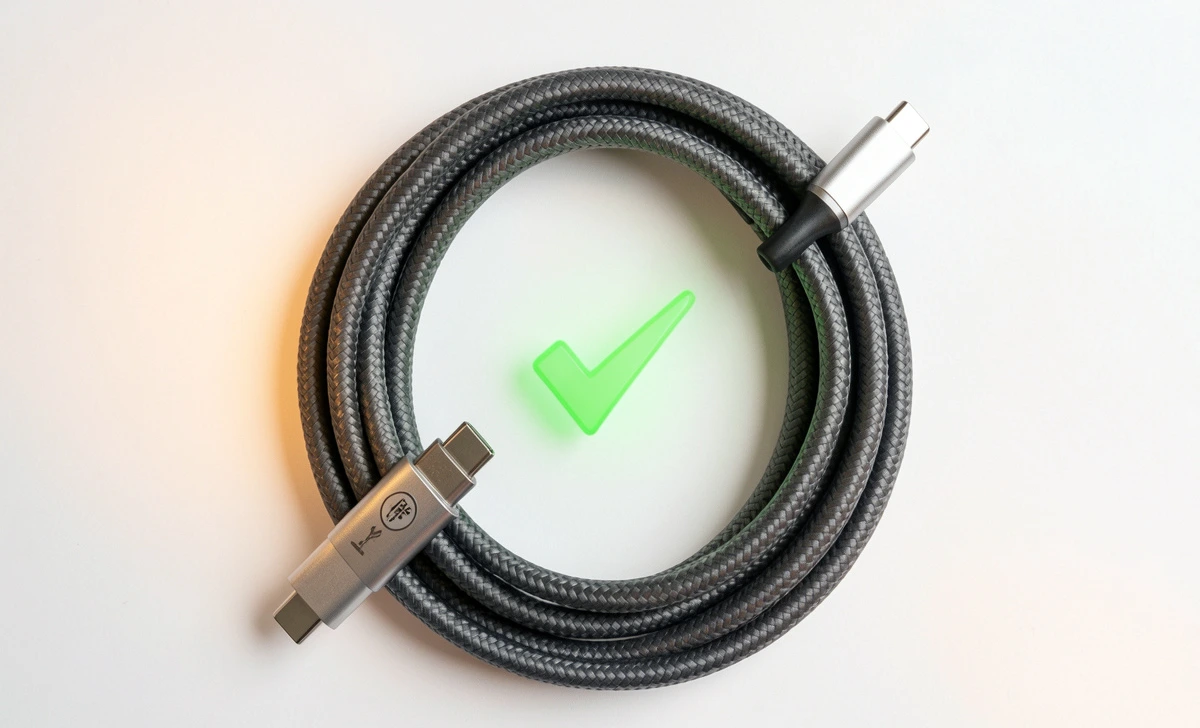
USB-C cables rated for USB 3.2 or USB4 include an E-Marker chip that communicates the cable’s capabilities to the charger. Without this chip, a 100W charger cannot safely deliver full power. Cables without E-Markers are silently limited or, in counterfeit cases, falsely report higher ratings than they support.
Heat Resistance and Fire Protection
Quality cables are manufactured with flame-retardant PVC or TPE insulation. Look for compliance with IEC 62368-1, the international audio/video and IT safety standard that now covers charging accessories. Cables meeting this standard are tested for overload, fault conditions, and flammability.
How to Identify a Safe Charging Cable
Check for USB-IF or MFi Certification
The USB Implementers Forum (USB-IF) certifies cables that meet electrical and safety standards. Look for the USB-IF Certified logo on packaging. Apple’s MFi (Made for iPhone/iPad/Mac) certification ensures cables include the correct authentication chip and meet Apple’s power and data specifications. Neither logo is a guarantee of perfection, but their absence on a USB-C or Lightning cable is a red flag.
Inspect the Build Quality
- Connector housing should be solid metal or reinforced plastic with no wobble
- The strain relief (the rubber or plastic boot near the connector) should be firm and flexible, not stiff or cracked
- Cable jacket should feel uniform — no lumps, kinks, or thin spots
- Printing and branding should be clear and precise, not blurry or misaligned
Test for Excessive Heat During Charging
A safe cable remains warm but never hot during use. If any part of the cable — especially near the connectors — feels hot to the touch, stop using it immediately. Heat above 50°C in a cable indicates dangerous resistance levels. Some USB testers (available for under $15) can measure voltage drop and current draw in real time.
Avoid Fake Branding and Unrealistic Claims
If a cable claims 240W charging for $1.99 with no certification marks, it is counterfeit. Legitimate high-power cables cost between $10–$40 depending on the specification. Check the brand against the USB-IF certified product database at usb.org/certified-products.
Warning Signs of a Dangerous Charging Cable
Loose Connectors
A connector that fits loosely into your phone’s port creates arcing — tiny electrical sparks that damage both the port and the connector. This also means the cable cannot maintain a stable current, causing charging to stall or stop randomly.
Burning Smell or Sparks
Any burning odor during charging is an emergency. Disconnect the cable immediately. This indicates insulation is melting or internal arcing is occurring. Do not reuse the cable.
Slow or Unstable Charging
A cable that charges significantly slower than expected may have undersized wiring or a failing internal chip. If your phone charges at 5W when it supports 45W fast charging, and the charger is confirmed good, the cable is the problem.
Visible Damage Near the Ends
Fraying, cracking, or exposed wire near the connectors is a serious hazard. The highest stress point on any cable is at the strain relief. Damaged insulation here can cause short circuits.
USB-C Cable Safety Standards Explained
USB-C Power Delivery (PD)
USB PD is a negotiation protocol that allows a charger and device to agree on voltage and current. Cables used with USB PD must support the agreed power level — cables not rated for PD can fail silently or overheat under high loads.
E-Marker Chips
Cables rated for 60W or above are required by the USB specification to include an E-Marker chip. This chip stores the cable’s rated current, voltage, and data speed. Counterfeit cables often omit the E-Marker entirely or program false capability data into the chip — making the charger believe the cable supports 100W when it physically cannot.
“We have seen cables with E-Markers programmed to report 5A/20V capability while using wire gauges physically incapable of handling more than 3A safely.” — USB-IF Technical Working Group, 2024 Compliance Report
This is a lesser-known risk: the cable’s chip lies to your charger, and the charger complies — pushing dangerous levels of current through undersized wires.
Data Speed vs Charging Speed
A USB-C cable can be charge-only or data+charge. Charge-only cables often use thinner wiring acceptable for 5W–18W but not for 60W+. Always check whether a cable is rated for USB 3.2, Thunderbolt, or USB4 if you need both high-speed data and fast charging.
Best Practices for Safe Smartphone Charging
Replace Damaged Cables Quickly
A damaged cable does not just charge slowly — it actively risks your device and your safety. Replace any cable showing fraying, kinking, or connector wobble immediately.
Avoid Using Cables Under Pillows or Blankets
Charging under bedding traps heat and increases fire risk dramatically. Always charge on hard, flat surfaces with good airflow. Just as turning off Wi-Fi at night reduces unnecessary radio emissions and saves power, reducing heat buildup during overnight charging is equally good practice.
Use Trusted Brands and Retailers
Buy cables from Anker, Belkin, Apple, Samsung, Ugreen, or Baseus — brands with documented USB-IF compliance records. Avoid unbranded cables from marketplace third-party sellers with no reviews or vague specifications.
Are Expensive Charging Cables Always Safer?
When Price Reflects Quality
Premium cables from reputable brands use thicker copper, better insulation materials, and include proper E-Marker chips. An Anker 140W USB-C cable at $22 includes all required safety features. That cost reflects real materials and real certification testing.
Marketing vs Real Safety Features
Braided cables are not automatically safer. Braiding improves durability against physical wear but does not affect electrical performance. A braided counterfeit cable is still electrically dangerous. Focus on certification marks and verified wattage ratings — not aesthetics.
What Experts Say About Charging Cable Risks
Electrical Engineers: “Cable resistance is the hidden battery killer. A cable with 1Ω of resistance at 3A produces 9W of heat — heat that goes directly into degrading your battery’s cycle life.” — Summary of findings from IEEE Power Electronics Society, 2024.
Consumer Safety Agencies: The U.S. Consumer Product Safety Commission (CPSC) advises consumers to only use chargers and cables that carry recognized safety certification marks and to immediately stop using cables that feel warm to the touch.
Smartphone Manufacturers: Apple’s MFi program states that uncertified Lightning cables may “cause damage not covered under warranty.” Samsung similarly recommends only USB-IF certified cables for Galaxy devices supporting 45W Super Fast Charging.
Key Takeaways — How to Choose a Safe Smartphone Charging Cable
- Look for USB-IF certification or Apple MFi on the packaging
- For cables rated above 60W, confirm the presence of an E-Marker chip
- Check wire gauge — 24 AWG or thicker for fast charging
- Reject any cable that gets hot during use — warm is acceptable, hot is not
- Buy from verified brands and avoid suspiciously cheap cables from unknown sellers
- Replace any cable showing fraying, loose connectors, or visible damage
- Confirm the cable meets IEC 62368-1 for fire and electrical safety compliance
Just as you would securely wipe your smartphone before selling it to protect your data, protecting your device during daily charging requires the same deliberate attention to the tools you trust.
Final Thoughts
Safe charging habits are a small but meaningful part of responsible device ownership. As smartphones become more powerful and charging speeds push into triple-digit wattage territory, the cable connecting your phone to the wall carries more electrical load than ever before. Treating it as an afterthought is no longer a reasonable option.
The safest cable is not the most expensive one — it is the one that carries the right certification for the power level you actually use.