
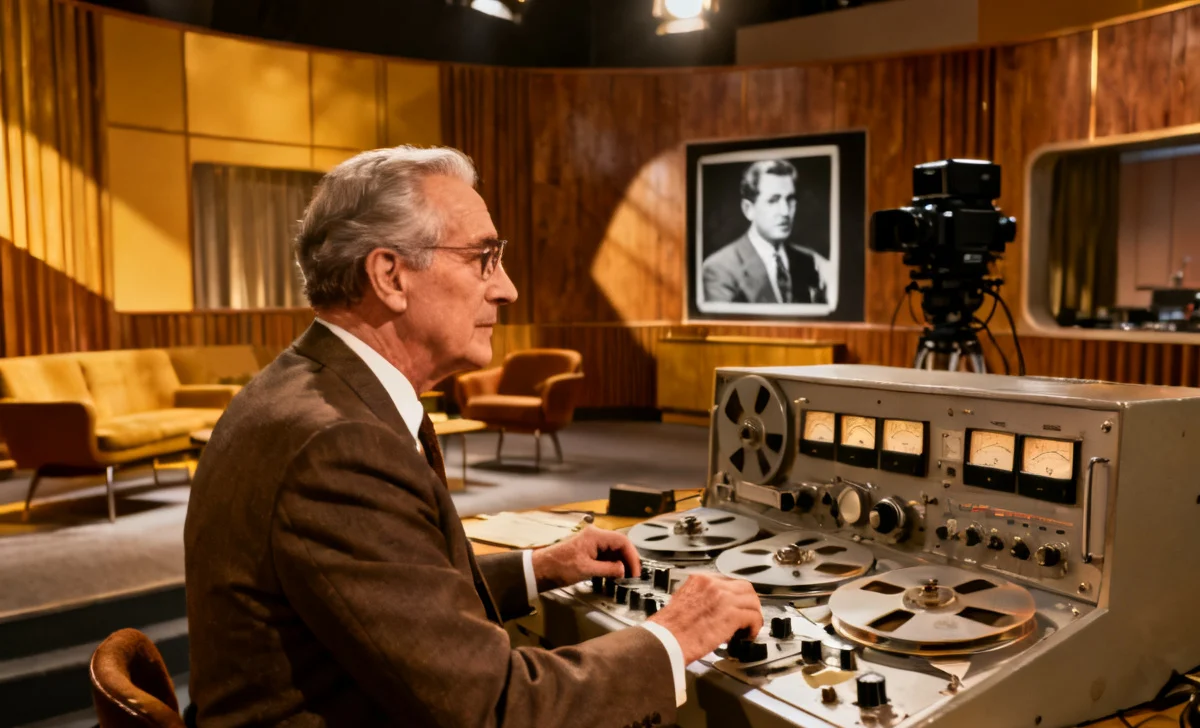
Many of the laugh tracks you hear in classic TV sitcoms today were actually recorded between the 1950s and 1970s — and they’ve been reused across hundreds of shows ever since. The sitcom laugh tracks history goes back further than most viewers realize. That means some of the laughter coming from your television screen belongs to people who may no longer be alive.
Canned laughter, or “laugh tracks,” refers to pre-recorded audience laughter added to sitcoms during post-production. Rather than capturing real reactions from a live audience, producers insert these audio clips to guide viewers’ emotional responses and signal when something is funny.
In this article, you will learn where sitcom laughter comes from, why it sounds repetitive, how it was created, and whether modern shows still use it.
What Is Canned Laughter in Sitcoms?
A laugh track is a recorded set of audience laughter sounds edited into a TV show after filming. It creates the illusion that a live audience is watching and reacting in real time.
There is an important distinction here. Some sitcoms, like Seinfeld or Friends, were filmed in front of a live studio audience — real people laughing at real moments. Canned laughter, by contrast, is entirely pre-recorded and artificially inserted. Many shows blend both: real audience laughter, enhanced or replaced with recorded clips during editing.
Where Did Sitcom Laugh Tracks Come From?
The Invention of Canned Laughter
The laugh track was invented by Charley Douglass, a sound engineer at CBS in the early 1950s. Frustrated with uneven or poorly timed laughter from live studio recordings, he built a device known as the “Laff Box” — a machine that stored dozens of audience laughter clips on tape loops, allowing him to add, adjust, or replace laughter at will during post-production.
Douglass held a near-monopoly on this technology for years and worked on hundreds of shows. His machine could produce chuckles, giggles, belly laughs, and crowd roars — all at the push of a key. According to accounts documented by TV historians, Douglass was so protective of his invention that he never allowed others inside the room while he operated it.
If you want to understand how audience response shapes the way we enjoy entertainment, it helps to find your shows, and understanding laugh tracks is part of that equation.
Early TV Shows That Used It
By the mid-1950s, canned laughter had become a standard tool in American television. Shows like I Love Lucy (1951–1957) and The Honeymooners were among the earliest to use edited audience audio. As TV production scaled rapidly, laugh tracks became a shortcut to manufacturing the feel of a communal viewing experience — even for shows filmed without any audience present.
Why Was Most Sitcom Laughter Recorded Decades Ago?
Limited Sound Libraries
Studios in the 1950s and 1960s recorded a finite number of audience sessions. These recordings became the foundation of every laugh track used for the next several decades. Because the originals were high-quality and carefully curated, there was little incentive to replace them. The same clips were licensed, duplicated, and recycled across networks.
Cost and Production Efficiency
Recording a live audience reaction required booking a studio, managing hundreds of guests, and syncing audio perfectly with each scene. It was expensive and logistically complex. Pre-recorded laughter eliminated all of that. A sound editor could drop in the right laugh at the right moment in minutes.
Standardization in TV Production
Laugh tracks also served as a production standard. Networks and producers understood that certain laugh types — a light chuckle for a mild joke, a roar for a punchline — created predictable emotional cues for viewers. Standardizing these sounds made editing faster and kept the audience experience consistent across episodes.
Why Do Laugh Tracks Sound So Familiar?
Reused Audio Clips Across Shows
The same laugh clips appear in over 100 different TV shows. Audio researchers and enthusiasts have identified identical bursts of laughter in everything from Gilligan’s Island to Diff’rent Strokes to Full House. The laughter you hear in a 1960s comedy and a 1980s sitcom may literally be the same recording.
This is why laugh tracks feel so familiar — because they are. The audience “laughing” at a joke on one show is the same audience that laughed at an entirely different joke on a show filmed 20 years earlier.
Psychological Effect on Viewers
Studies in audience psychology consistently show that laughter is contagious. Research published in behavioral science journals has found that people rate jokes as funnier when accompanied by a laugh track — even when they know the laughter is artificial. The brain interprets the sound of others laughing as a social cue that something is genuinely amusing. Laugh tracks exploit this reflex deliberately.
Do Modern Sitcoms Still Use Canned Laughter?
Traditional Sitcoms
Classic multi-camera sitcoms continued using laugh tracks well into the 2000s. Friends (1994–2004) and The Big Bang Theory (2007–2019) both used live studio audiences — but their laughter was frequently enhanced or supplemented with recorded clips in post-production. The final audio is rarely a “pure” audience reaction.
Modern Single-Camera Shows
A major shift happened in the 2000s with the rise of single-camera sitcoms. Shows like The Office, Arrested Development, and Brooklyn Nine-Nine dropped laugh tracks entirely. These shows trusted audiences to recognize humor without an audio prompt. The absence of laughter became, itself, a stylistic statement — a signal that the show was more grounded, more cinematic, more “real.”
Just as laughter shapes how we experience TV, live performance shapes travel. If you’re curious how live entertainment abroad feels, the communal laughter dynamic applies there too — only it’s entirely unscripted.
Are Sitcom Laughs Real or Fake?
Even shows filmed in front of live audiences use post-production teams to clean up, boost, or replace weak laughter. If a joke didn’t land well during filming, editors can swap in a stronger response from a library. If the audience laughed at the wrong moment, it can be trimmed or timed differently.
What viewers hear is a curated version of reality — part authentic, part engineered. The line between “real” and “fake” in sitcom laughter has always been blurry by design.
Controversy Around Laugh Tracks
Criticism from Viewers
A growing segment of viewers has long found laugh tracks manipulative. The criticism centers on a simple idea: good comedy doesn’t need to be signposted. If a joke is funny, the audience knows it. Adding canned laughter feels like the show is telling you how to react rather than trusting you to respond naturally.
This criticism grew louder in the internet age, when audiences began sharing laugh-track-removed clips of popular sitcoms online — revealing that many scenes felt hollow or awkward without the audio scaffolding.
Industry Debate
Inside the TV industry, the shift away from laugh tracks mirrors a broader move toward realism and auteur storytelling. Showrunners increasingly view laugh tracks as a relic of a different era — one built around broad humor and passive viewing rather than engaged, character-driven comedy.
What Replaced Canned Laughter in Modern TV?
The biggest replacement has been the mockumentary format — shows shot to look like documentary footage, complete with talking-head interviews and handheld cameras. The Office, Parks and Recreation, and Abbott Elementary all use this style.
In this format, the audience’s laughter is internal. The camera catches awkward glances, deadpan expressions, and perfectly timed pauses. The humor lands through performance and editing — no audio cue required.
This evolution reflects a shift in how we consume comedy altogether. Just as following TV series requires active engagement, modern comedy now asks audiences to participate rather than just respond.
How Laugh Tracks Shaped Audience Psychology
Laugh tracks didn’t just change television production — they rewired how audiences process humor. Decades of conditioning have trained viewers to associate that specific sound with the expectation of comedy. Psychologists refer to this as a social proof mechanism: hearing others laugh tells our brain that laughter is the appropriate response.
This effect is so powerful that researchers have found people laugh longer and more frequently at mediocre jokes when accompanied by a laugh track, compared to no track at all. The sound of laughter triggers mirror neurons — the same brain systems involved in empathy and mimicry. TV producers in the 1950s didn’t have this scientific vocabulary, but Charley Douglass understood it intuitively. He wasn’t just filling the silence. He was shaping emotion.
Key Takeaways — Why Sitcom Laughter Still Exists
- Laugh tracks were invented in the early 1950s by Charley Douglass using his “Laff Box” machine
- Most classic laugh track recordings date from the 1950s to the 1970s and were reused for decades
- The same audio clips appear in over 100 different TV shows across multiple eras
- Laugh tracks work psychologically — they genuinely make jokes feel funnier to audiences
- Modern sitcoms are split: multi-camera shows still use enhanced audience laughter; single-camera shows have largely abandoned it
- The mockumentary format became the dominant alternative, relying on performance and editing instead of audio cues
- Most “live audience” laughter in traditional sitcoms is still edited and supplemented in post-production
Final Thoughts
Laugh tracks didn’t just fill the silence between jokes — they fundamentally shaped how television comedy was written, performed, and received for over half a century. The structure of punchlines, the rhythm of scenes, even the length of pauses, were all calibrated around that familiar sound.
Sometimes what makes us laugh isn’t the joke, but the sound of others laughing. That’s not a flaw in our psychology — it’s one of the most human things about us.
Do you find laugh tracks helpful or annoying? Share your perspective — and if you enjoy watching shows together, try a virtual watch party — the perfect way to experience comedy the way it was originally intended: communally.