
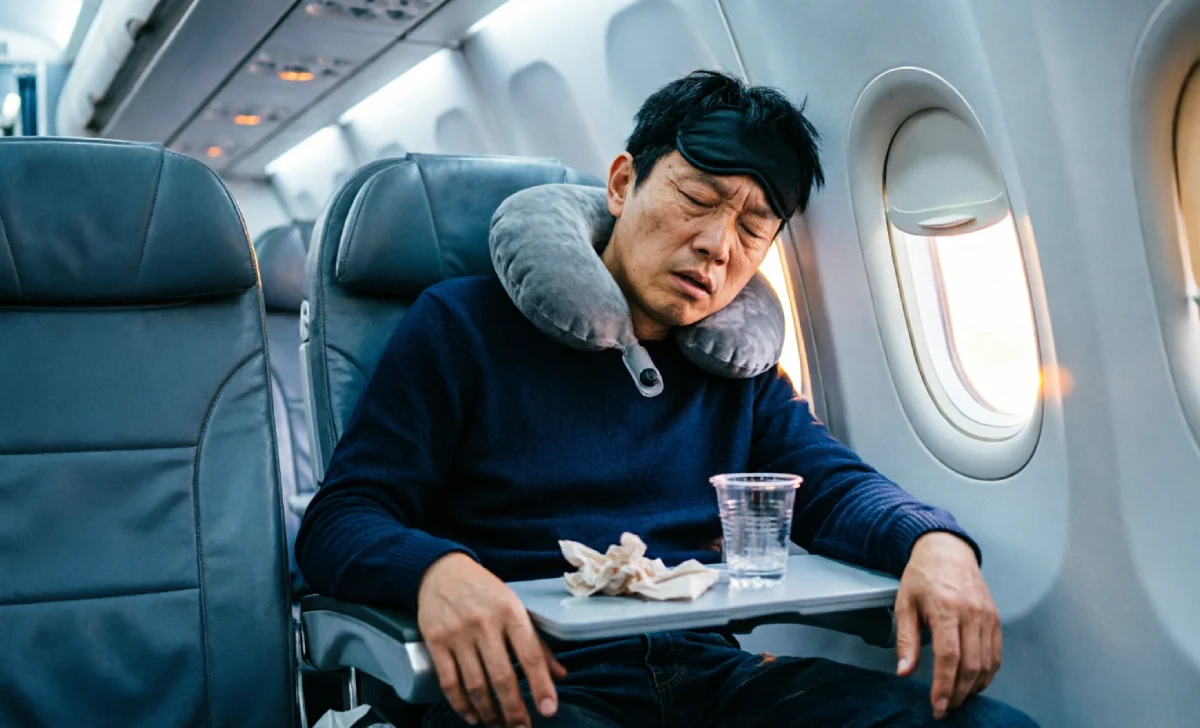
You’ve been there. You snagged the window seat on your 10-hour flight, convinced it was the golden ticket to actual rest. Hours later, you’re stiff, bleary-eyed, and wondering why leaning against the wall felt less like a nap and more like a punishment. Truth is, window seat sleep problems are more common than airlines admit—and that window seat might be working against you. Let’s talk about the real reasons travelers never see coming—and how to actually fix them.
The Real Reasons Window Seats Disrupt Sleep: Science vs. Myth
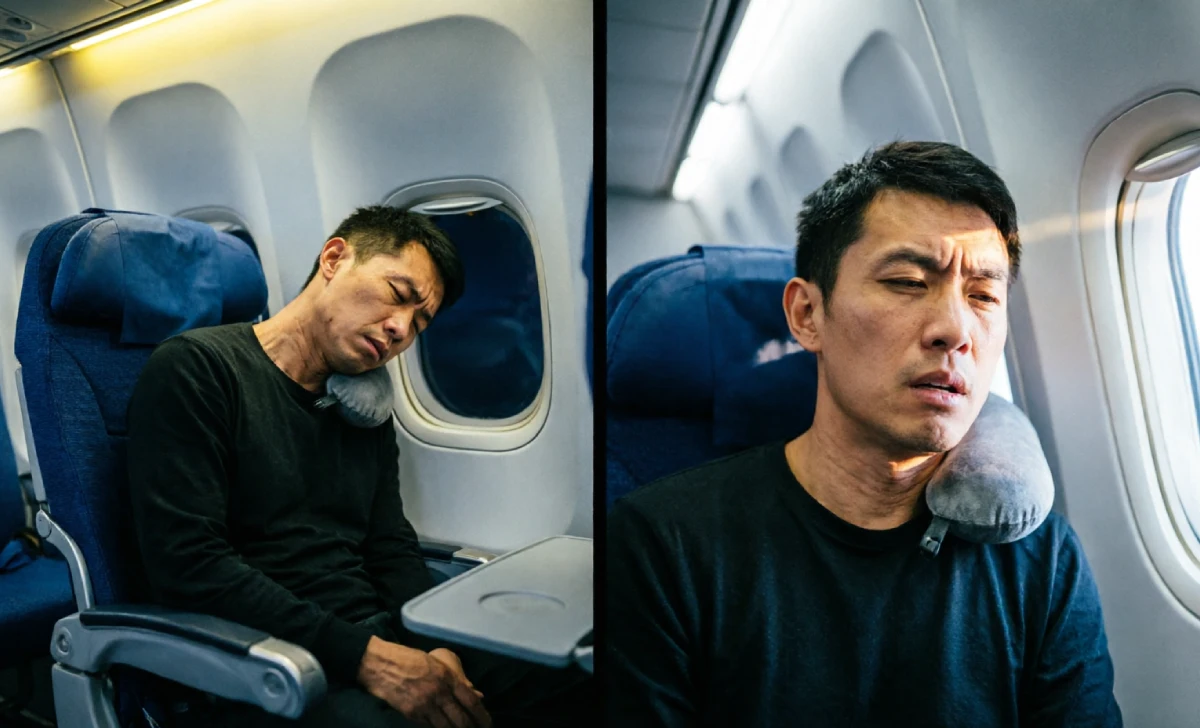
We’ve all heard the advice: “Grab a window seat so you can lean against the wall!” Sounds logical. But here’s the thing—your body doesn’t work like a pillow against a curved, cold, sun-blasting fuselage.
Light Exposure Through the Window = Circadian Rhythm Sabotage
Ever notice how the sun seems to find your eyelids, no matter how you turn? That’s not bad luck. That’s window seat light exposure, sleep airplane science working against you.
Your brain uses light cues to regulate melatonin, the hormone that tells you it’s time to sleep. Even with the shade pulled, light leaks around the edges. On overnight flights crossing time zones, that stray glow can confuse your internal clock just when you need it to shut down.
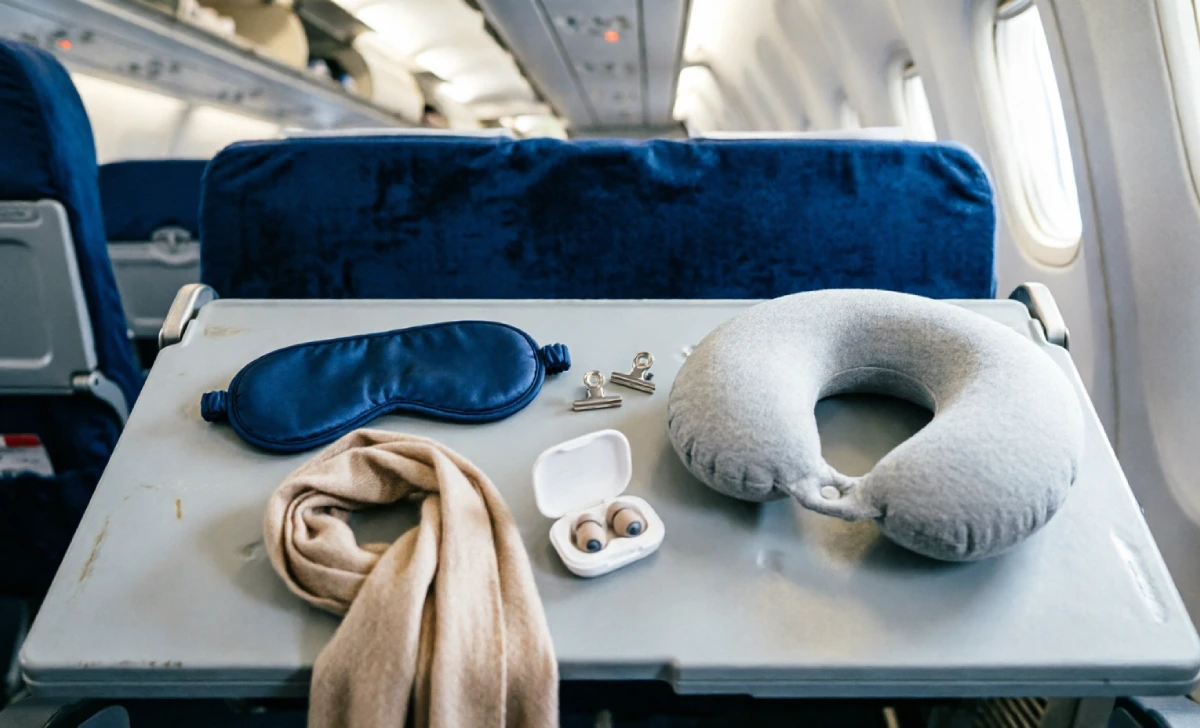
A quick fix? A high-quality, contoured eye mask that seals completely. Not the flimsy airline kind—something with molded cups so you can blink comfortably.
Temperature Drafts Near the Fuselage: The Hidden Sleep Thief
Here’s something flight attendants know but rarely mention: the cabin walls get cold. Really cold. That metal skin at 35,000 feet conducts outside air temperatures, and even with insulation, you’ll feel a subtle chill radiating from your window.
Your body spends energy trying to stay warm instead of sinking into deep sleep. You might not even wake up fully—you’ll just cycle in lighter, less restorative stages.
Try this: pack a lightweight scarf or pashmina. Drape it over your shoulder and the neck side closest to the window. It’s a tiny barrier that makes a surprising difference. Small habits like this help you stay healthy while traveling without overcomplicating your routine.
The “Wall Support” Myth: Why Leaning Causes Neck Strain
This one hurts to admit. That curved wall isn’t ergonomically designed for your head. When you tilt sideways to lean on it, you’re actually cranking your cervical spine into an awkward angle.
That’s a direct path to window seat neck pain flight sleep. You wake up with that familiar “crick,” not because the seat was hard, but because your neck was bent at a 45-degree angle for three hours.
The better move? Support your neck from the front, not the side. More on that in a minute.
“Does Window Seat Affect Sleep Quality?” What Research Actually Shows
Good question—and one sleep researchers have started to tackle. Short answer: yes, does a window seat affects flight sleep quality more than most travelers realize.
The Sleep Judge Study: Leaning Forward > Leaning Sideways
One standout analysis compared common in-flight sleep positions. The verdict? Leaning slightly forward with neck support (think: a pillow hugged to your chest) consistently scored higher for sleep quality than sideways leaning against a wall or window.
Why? Forward support keeps your spine more neutral. Sideways leaning twists it. It’s that simple.
Cabin Pressure & Noise: Why Window ≠ Quieter
Many travelers pick the window, assuming it’s quieter. But on most modern jets, engine noise is fairly consistent across the row. Sometimes, the window side even picks up more wind noise.
Add in the subtle vibration of the fuselage and the fact that you can’t easily adjust overhead vents without asking seatmates to move—and you’ve got a recipe for micro-awakenings you won’t even remember, but your sleep quality will.
“Why Can’t I Sleep in a Window Seat?” — Validating Your Struggle
If you’ve ever thought, “Is it just me?”, the answer is a hard no. You’re not imagining it. There are very real, very human reasons why I can’t sleep in a window seat on an airplane, which feels like such a universal struggle.
Bathroom Access Anxiety: The Unspoken Sleep Killer
Let’s be honest: the mental math of “If I fall asleep now, will I need to pee in 90 minutes, and do I really want to wake two people to get out?” is not conducive to relaxation.
That low-grade anxiety keeps your brain in a light-sleep holding pattern. You might doze, but you won’t truly rest.
Feeling Trapped: How Confinement Triggers Restlessness
For some, the window seat feels cozy. For others, it triggers a subtle sense of confinement. Not full-blown claustrophobia—just enough to keep your nervous system on alert.
If you’re someone who likes to shift positions, stretch a leg, or just glance around without negotiating with neighbors, that restriction adds up. Sleep isn’t just about comfort; it’s about feeling safe and free to move.
How to Sleep Better If You’re Stuck in a Window Seat (Practical Fixes)
Okay, so maybe you’re already booked in 14A. Or maybe you genuinely prefer the view. All is not lost. Here’s how to work with the window, not against it.
Light-Blocking Hacks: Tape, Clips, and Strategic Masking
The shade rarely seals perfectly. Bring two small binder clips or even a few pieces of painter’s tape (the low-residue kind). Gently clip or tape the shade edges to the window frame to block those sneaky light leaks.
Pair that with a contoured eye mask, and you’ve created a personal blackout pod. Pro tip: test your mask at home first. If you can see any light when you look down, it’s not doing its job.
Neck Support That Actually Works: Pillow Positioning Diagrams
Forget wrapping a pillow around your neck like a scarf. Try this instead:
- Place a small, compressible travel pillow between your lower back and the seat. This tilts your pelvis slightly, helping your spine align.
- Use a second, softer pillow or even a rolled-up sweater to support your head from the front. Hug it lightly, letting your forehead rest against it.
- Keep your chin slightly tucked, not jutting forward.
It feels odd for about 60 seconds. Then it clicks. Your neck stays neutral, and you’re not fighting gravity to stay against the wall.
When a Window Seat IS Better: Exceptions & Smart Selection Tips
Let’s keep it real: window seats aren’t always the villain. If you’re a side-sleeper who naturally curls inward, a window can provide a gentle boundary. On daytime flights where you plan to watch movies, the view and control over the shade are huge perks.
The key is intentionality. Pick the window when you want control over light and don’t plan to move much. Choose aisle or middle when you prioritize easy access and flexible positioning for sleep.
Quick Reference: Window Seat Sleep Survival Checklist
- Contoured, light-sealing eye mask
- Two small binder clips or low-residue tape for shade gaps
- Compressible travel pillow for lumbar support
- Soft neck pillow or fleece layer for forward head support
- Lightweight scarf for window-side draft barrier
- Hydration plan (sip water, go easy on caffeine/alcohol)
- Noise-canceling headphones or quality earplugs
- A 5-minute pre-sleep ritual: stretch, breathe, set your space
If you’re wondering how to pack a carry-on bag efficiently, these sleep essentials fit in any personal item without sacrificing space.
FAQs
Is an aisle seat always better for sleep than a window?
Not always—but it’s often more flexible. If you tend to wake up needing to move, stretch, or use the restroom, the aisle saves you the seatmate negotiation. For pure, uninterrupted dozing and you’re a minimal mover, a window can work with the right gear.
What’s the single most effective thing I can do to sleep better in any seat?
A high-quality eye mask and earplugs. Light and noise are the two biggest sleep disruptors on planes, period. Nail those, and you’re 80% there.
How do I stop waking up with neck pain after a flight?
Focus on neutral spine alignment. Support your lower back to tilt your pelvis, and support your head from the front, not the side. Practice the position at home first—it feels unfamiliar until it doesn’t.
Does the time of day change which seat is best for sleep?
Absolutely. On overnight/red-eye flights, controlling light is critical—so a window with a reliable shade can help. On daytime flights, an aisle might be better if you want to move around to stay alert, then catch a nap when it suits you.
The Bottom Line
That window seat isn’t a magic sleep pod. But it doesn’t have to be a sleep trap, either. Once you understand the real window seat sleep disruption causes flight—light leaks, temperature drafts, and that misleading “wall support”—you can work around them.
Next time you’re booking, think about what you need to rest: control over light, easy access to move, or a sense of boundary. Then pack the two or three small items that make the biggest difference. If you’re deciding between carry-on vs checked for your sleep gear, know that keeping essentials nearby makes a difference. Your future, well-rested self will thank you when you step off that plane, actually feeling ready to go.