You know that feeling? It’s day three in a new city. You’ve wandered cobblestone streets, tried food you can’t pronounce, and gotten delightfully lost twice. And when you glance at your phone, you’re shocked: it’s only Wednesday. Feels like you’ve been living a whole other life for a week.
That’s not your imagination. Does traveling make time feel longer? Absolutely—and there’s real science behind why time feel longer traveling. Your brain has a fascinating, totally normal reason for it.
Here’s the thing: time isn’t just ticking away in your head. It’s being constructed, moment by moment, based on what you pay attention to, what surprises you, and how many new memories you’re stacking up. Travel flips a switch in that system. And once you understand how it works? You can actually use it—on your next trip, and even back home.
The short answer: yes, and your brain’s behind it
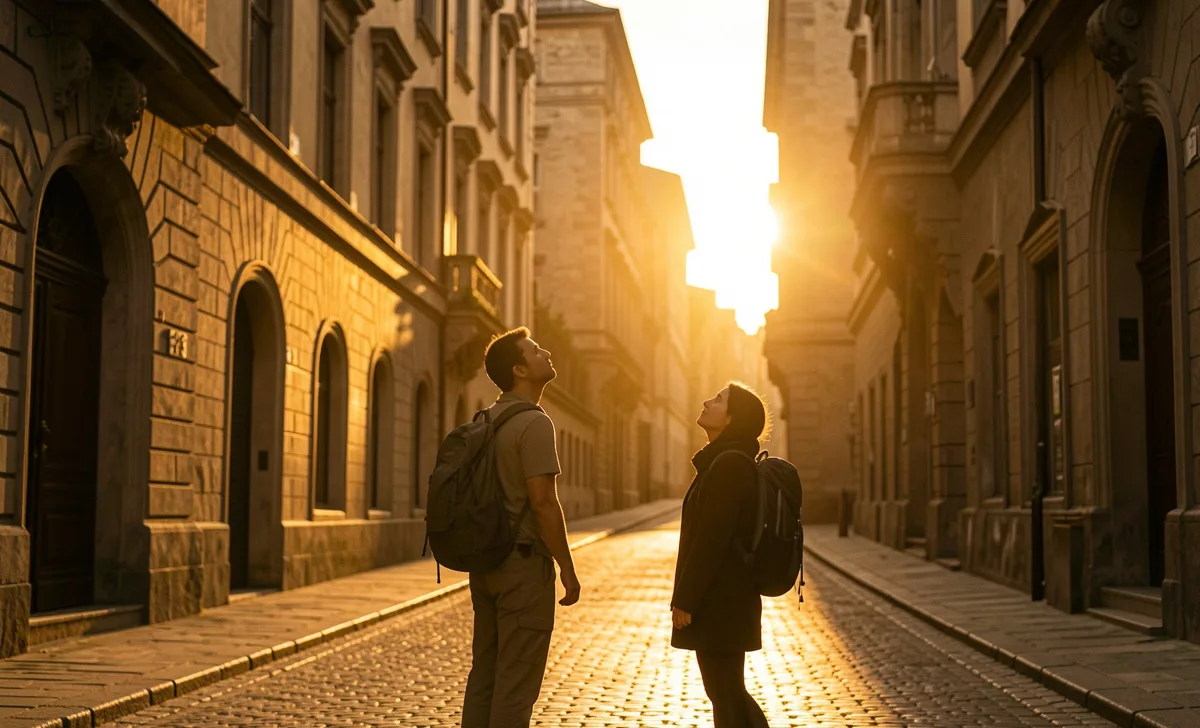
When you’re somewhere new, your brain shifts into high-gear processing mode. Familiar routines? They run on autopilot. But wandering through exploring unfamiliar cities, like a bustling market in Marrakech, the smell of rain on a Kyoto alley, the way light hits a Lisbon tram at golden hour—these are novel. Your brain doesn’t skim them. It leans in, takes notes, and files them away with extra care.
That extra cognitive “work” creates denser memories. And later, when you look back? More memories = the feeling that more time has passed. It’s not that the clock slowed down. It’s that your internal highlight reel got way more footage.
The brain uses the density of memories as a proxy for time elapsed.” — Research on memory and time perception
So when you wonder why time feels slower when traveling, it’s less about the minutes and more about the moments your brain decided were worth keeping.
How novelty rewires your perception of time
Ever notice how your commute home blurs together, but a single afternoon exploring a new neighborhood feels packed with detail? That’s the novelty effect in action.
Your brain has a filter called the “reticular activating system.” When everything’s familiar, it tunes out the background noise—literally and figuratively. But drop that same brain into a place where signs are in another language, the air smells different, and the rhythm of the street is unfamiliar? That filter opens wide. Everything gets flagged as “pay attention.”
This isn’t just poetic. Studies using fMRI scans show heightened activity in the hippocampus (your memory hub) and amygdala (emotion processor) when people experience new environments. More emotional salience + more sensory input = richer encoding. And richer encoding stretches your subjective sense of time.
The “first day” effect—and how to stretch it
You’ve probably noticed: day one of vacation feels epic. Day five? Sometimes it starts to blur. That’s adaptation. Your brain is brilliant at normalizing. What felt overwhelming on Monday becomes baseline by Thursday.
But here’s a trick: you can reset that clock. Not by changing destinations, but by injecting micro-novelties. Take a different route to breakfast. Try ordering food without pointing. Sit in a park and just watch for ten minutes. Small shifts keep your brain in “learning mode” longer—which keeps time feeling expansive.
Here’s the real reason vacation days feel longer than work days
You know how a Tuesday at your desk drags, but a Tuesday in Bali vanishes—yet feels fuller? That’s not a glitch. It’s about depth over distraction.
At work, your focus is often fragmented—emails, meetings, deadlines. You’re multitasking, which actually makes time feel faster in retrospect because your brain isn’t deeply encoding any single moment. On vacation? You’re more likely to be present. That coffee isn’t just caffeine; it’s the steam rising, the local’s smile, the view from the terrace.
Why vacation days feel longer than work days boils down to this: when you give an experience your full attention, your brain tags it as significant. And significant moments take up more “mental real estate” when you look back.
Pro tip: Try a 5-minute “arrival ritual” each morning of your trip. Stand still. Breathe. Notice one sound, one smell, one texture. It signals your brain: This matters. Pay attention.
Practical ways to slow down time on your next trip
Knowing the science is cool. Using it? Even better. Here’s how slowing down time through travel experiences isn’t about adding days—it’s about deepening the ones you have. And when you pack a carry-on light, you free up mental space too.
Think of it as a simple 3-part rhythm: Prepare your mindset, lean into the experience, then preserve the feeling. No jargon—just habits that help time stretch.
Embrace “beginner’s mind” (even for five minutes)
You don’t need to be clueless to benefit from novelty. Just shift your perspective. Instead of snapping a photo and moving on, pause. Ask: What’s one detail here I’d miss if I blinked? The pattern on a tile. The way a vendor wraps your purchase. The rhythm of a conversation you don’t understand.
This isn’t about slowing your pace. It’s about deepening your focus. And that shift alone can make an hour feel like a small adventure.
Swap “checking off” for “checking in.”
It’s tempting to treat a trip like a to-do list: see the monument, eat the dish, get the photo. But that checklist mode puts your brain back on autopilot. Instead, try this: pick one experience per day to fully immerse in. No photos first. No rushing. Just be there.
You’ll still see the sights. But you’ll also create memories that feel substantial—memories that, later, make the trip feel longer and richer.
Build in “buffer time” (yes, really)
This feels counterintuitive. More space = more time? Hear me out. When your schedule is packed back-to-back, your brain shifts into logistics mode: Where do I go next? How long do I have? That mental chatter fragments attention.
Leaving 30–60 minutes unscheduled each day gives your brain room to wander, notice, and absorb. That’s when the unexpected magic happens—the side street you’d have missed, the conversation that starts while you’re waiting for a bus. The same goes for booking open-jaw flights—flexibility creates space for the unexpected. And those unscripted moments? They’re time-stretchers.
Making the “slow time” feeling last after you’re home
Here’s the bittersweet part: you return home, and within days, the “vacation time warp” fades. Routine reasserts itself. But you’re not powerless.
Try the “3-2-1” memory lock-in
Within three days of returning:
- Write down 3 specific sensory details you remember (the crunch of gravel underfoot, the taste of that unexpected fruit, the hum of a distant mosque call).
- Sketch or describe 2 moments that felt “timeless.”
- Share 1 story with a friend—not the highlight reel, but a small, vivid slice.
This isn’t just nostalgia. It’s reinforcing those dense memory pathways. You’re telling your brain: These mattered. Keep them close.
Bring one travel habit home
Pick one small practice from your trip and weave it into daily life. Maybe it’s drinking your morning coffee without scrolling. Or taking a different route on your walk. Or pausing to notice the sky before you start your day.
It won’t make every Tuesday feel like Bali. But it can create little pockets of expanded time—reminders that how travel changes your perception of time isn’t magic. It’s attention. And attention is a skill you can practice anywhere.
FAQs
Does jet lag affect time perception?
Yes—but differently. Jet lag messes with your biological clock (sleep, hunger, energy). Time distortion from travel is about your psychological clock (memory, attention, novelty). They can overlap, but they’re separate systems. If you’re feeling “time weirdness” plus exhaustion, prioritize rest first. The perception shift will still be there once you’re recharged.
Why do holidays feel shorter the longer you stay?
Adaptation. Your brain normalizes. The first few days are packed with novelty; later days blend. That’s why injecting micro-novelties (see above) helps—even on longer trips.
Can solo travel stretch time more than group travel?
Sometimes. Solo travel often means more spontaneous decisions, more moments of quiet observation, fewer compromises on pacing. But group travel can deepen time perception too—if you’re fully present with shared experiences. It’s less about who you’re with and more about how intentionally you’re engaging.
What if I can’t travel right now—can I still “slow time”?
Absolutely. Novelty doesn’t require a passport. Take a new route to work. Cook a recipe from a cuisine you’ve never tried. Visit a museum in your own city and linger on one exhibit. Your brain responds to newness, not mileage.
Conclusion
Truth is, you don’t need to chase more days. You need to deepen the ones you have. Travel gives us a masterclass in that—but the lesson sticks long after you’re home.
Next time you’re planning a trip, try building in one “slow time” practice from this post. And double-check what travel insurance covers—peace of mind helps you stay present. And if you’re curious about resetting your rhythm after you return, we’ve got a practical guide on managing post-travel fatigue (and keeping that vacation mindset alive).