
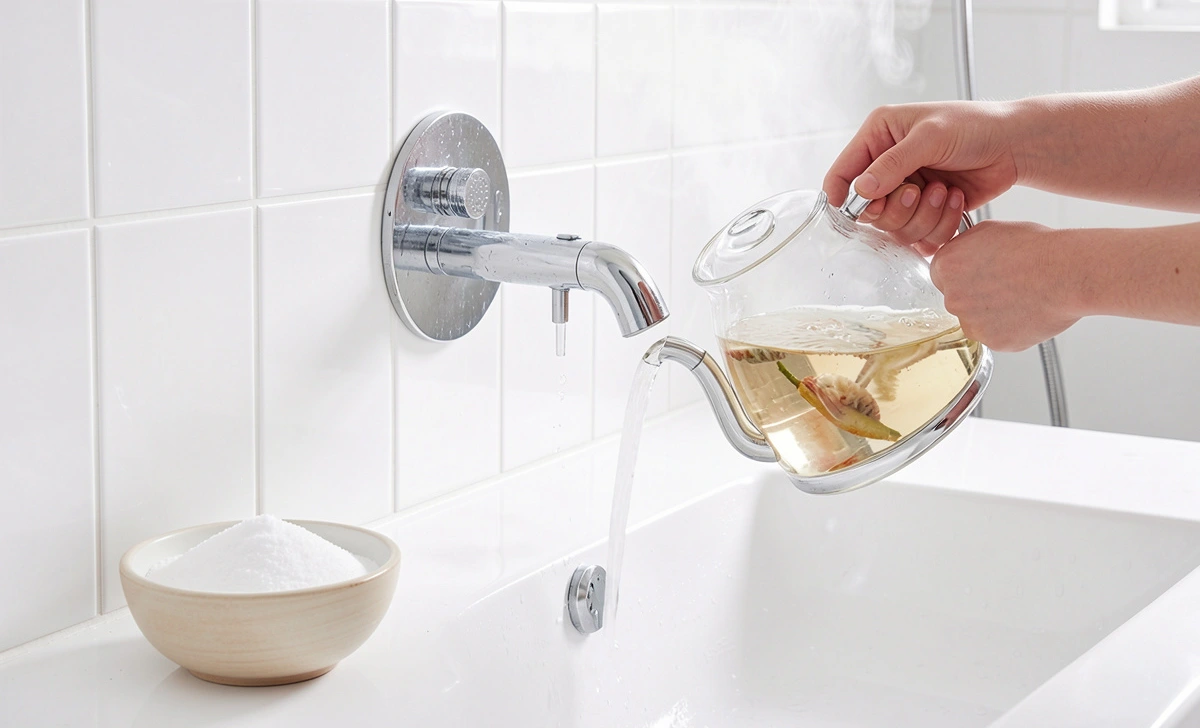
That slow-draining shower? Yeah, we’ve all been there. Standing in ankle-deep water, wondering if you need to call a plumber or just give up on hot showers entirely. Good news: you can unclog shower drain naturally with boiling water and baking soda—two things you already have in your kitchen. No harsh chemicals, no expensive tools, and definitely no waiting around for a service appointment. And if you’re dealing with bathroom mold problems from all that standing water, we’ll get to prevention tips in a bit.
Here’s the thing: most shower clogs aren’t mysterious. They’re just hair, soap scum, and a little bit of life happening. And the good news? They usually don’t need a pro to fix them.
Why This Natural Method Works (And When to Avoid It)
You’ve probably heard the baking soda and vinegar trick before. Maybe you tried it and… nothing happened. Frustrating, right? But here’s what most guides skip: the order matters. And the temperature matters even more.
Boiling water softens grease and soap buildup. Baking soda acts as a gentle abrasive that scrubs the pipe walls as it fizzes. Vinegar creates a bubbling reaction that helps dislodge gunk. Together, they’re a surprisingly effective team for minor to moderate clogs.
But a quick heads-up: if you have PVC pipes, don’t pour rolling boiling water straight in. It can soften the plastic over time. Let the water cool for 30–60 seconds after boiling—still hot enough to work, but safer for your plumbing.
And if water isn’t draining at all? Skip to the troubleshooting section below. This method works best when there’s still some flow. If you suspect leaking pipes under your fixtures, that’s a different issue entirely.
Renter-Safe Tip: This whole approach is apartment-friendly. No harsh chemicals that could damage old pipes, no tools that require landlord approval. Just pantry staples and 20 minutes.
What You’ll Need: 5 Household Items You Already Own
No trip to the hardware store required. Grab these:
- A kettle or pot of hot water (just off the boil)
- ½ cup baking soda
- ½ cup white vinegar
- A microfiber cloth or an old towel (to cover the drain)
- A wire coat hanger (straightened, with a tiny hook bent at one end)
That’s it. Seriously. If you’re looking for a homemade solution for clogged shower drain fixes, this is the minimalist’s dream kit.
Step-by-Step: Unclog Your Shower Drain in 20 Minutes
Step 1: Remove Visible Hair & Debris First
Before you pour anything, take two minutes to pull out what you can see. Shine a flashlight down the drain. See that clump of hair clinging to the strainer? That’s your main suspect.
Use your fingers, tweezers, or that bent coat hanger to fish it out. This step alone solves a ton of “clogs.” If you’re trying to remove a hair clog from the shower drain naturally, mechanical removal is always step one. Chemistry helps, but physics works faster.
Step 2: The Boiling Water + Baking Soda + Vinegar Sequence
Here’s where most people mess up the order. Do this exactly:
- Pour about half a kettle of hot (not scalding) water slowly down the drain. Wait 60 seconds.
- Dump in the ½ cup of baking soda. Let it sit for 2–3 minutes. Don’t rush this.
- Follow with the ½ cup of vinegar. You’ll hear fizzing—that’s the reaction working.
- Immediately cover the drain with your cloth or towel. This traps the pressure and pushes the cleaning action deeper into the pipe.
- Wait 10–15 minutes. Go make a cup of tea. Let the chemistry do its thing.
- Finish by pouring the rest of the hot water down the drain to flush everything out.
This sequence is the core of how to unclog a shower drain without chemicals. It’s gentle, effective, and won’t leave your bathroom smelling like a science lab.
Step 3: Boost Pressure with a DIY Plunger (Coat Hanger Hack)
If the water’s still draining slowly after Step 2, it’s time for a little mechanical help. Straighten a wire coat hanger, but leave a tiny hook at one end—about the size of a paperclip loop.
Gently feed it down the drain past the strainer. Twist and pull slowly. You’re not trying to spear the clog; you’re trying to hook and lift it. Think of it like fishing, but for soap scum.
This trick to clear a shower drain with a coat hanger works shockingly well for hair clogs lodged just below the surface. Just be gentle—you don’t want to scratch porcelain or push debris deeper. If you notice rust stains from old pipes while you’re at it, we’ve got a guide for that too.
Visual Decision Tree: Still stuck? Here’s a quick flowchart for what to try next:
Water barely drains? → Repeat Step 2 once.
Water not moving at all? → Try the coat hanger hack first, then repeat the sequence.
Still blocked after 2 tries? → Likely a deep P-trap clog; time to consider a pro.
(Save this: screenshot or bookmark for next time!)
Troubleshooting: What If It Still Won’t Drain?
Okay, so you tried the whole routine and… your shower’s still acting up. Don’t panic. Here’s what to check next:
- Is the clog deeper? If water backs up only when you run the shower full-blast, the blockage might be further down the line. Try repeating the baking soda/vinegar step twice, waiting 30 minutes between rounds.
- Did you skip the cover step? That cloth isn’t optional—it creates the pressure that makes the fizzing actually do something.
- Could it be the P-trap? That U-shaped pipe under your drain catches debris on purpose. If you’re comfortable with basic DIY, placing a bucket underneath and unscrewing the cleanout plug can let you clear it manually.
And if none of that works? It might be time to call a pro. But honestly, 9 times out of 10, the method above gets things flowing again.
Prevent Future Clogs: 3 Apartment-Friendly Habits
You fixed it. Now let’s keep it fixed—without annoying your landlord or buying fancy gadgets.
- Rinse the drain weekly. Once a week, pour a kettle of hot water down the drain after your shower. Takes 20 seconds, prevents buildup.
- Use a $3 silicone drain cover. They catch hair before it goes down. Empty it after each shower. Game over for clogs.
- Monthly maintenance flush. Once a month, do a mini version of the baking soda/vinegar routine (just ¼ cup each) to keep pipes clear. No need to wait for a problem.
These habits work especially well if you’re in a rental and need an unclog shower drain apartment-friendly approach. No permanent changes, no damage, just smart maintenance. And while you’re at it, consider waterproof bathroom flooring options if you’re renovating—less water damage means fewer plumbing surprises.
FAQs
Will this work on a completely blocked drain?
If water isn’t moving at all, start with the coat hanger trick to break up the surface clog first. Then try the baking soda sequence. If it’s still stuck after two tries, the clog may be deeper than DIY can reach.
Can I use apple cider vinegar instead of white?
You can, but white vinegar is stronger and cheaper. Apple cider vinegar has extra stuff in it that can leave residue. Stick with white for drain cleaning.
Is this safe for older pipes?
Generally, yes. The ingredients are non-corrosive. But if you have very old galvanized steel pipes, test with a small amount of hot water first. When in doubt, check with a plumber.
How often can I repeat this?
Monthly is fine for maintenance. If you’re doing it weekly, you’ve got a bigger buildup issue—time to focus on prevention (see the habits above).