

You want relief from heavy, achy legs without wearing something that looks like a hospital garment. Swelling and fatigue build as pregnancy progresses, and you still want clothes that feel like yours. The right maternity compression socks give you both comfort and style. This guide shows you which pair fits your legs and your closet, from compression level to fabric to fit.
Compression socks work through gentle, graduated pressure that eases the fluid buildup causing that heaviness. You don’t have to trade support for style anymore, and by the end of this guide, you’ll know exactly which pair fits your legs and your closet.
Why Do You Need Compression Socks During Pregnancy?
If you’ve pulled off your shoes at night and barely recognized your own ankles, you know this feeling already. Pregnancy increases your blood volume, and your growing uterus presses on the veins that move fluid back up from your legs. Compression socks give those veins mechanical help they’re not getting on their own.
Graduated compression squeezes tightest at the ankle and loosens gradually up the calf. That gradient pushes blood upward as you move, cutting the swollen, heavy feeling by evening. Many pregnant women feel the difference after a single long day on their feet.
Regular use can also lower your risk of varicose veins and reduce the deep leg fatigue that makes walking harder than it should be. You don’t need a prescription to start. Many OB-GYNs recommend beginning in the second trimester, particularly if you stand often or notice tenderness around your veins.
What Compression Level Is Safest and Most Effective for You?
Labels showing 15–20 mmHg or 20–30 mmHg indicate how much pressure the sock applies. For typical pregnancy swelling, 15–20 mmHg supplies enough support without overdoing it. This range covers most everyday cases.
If your calves ache deeply or spider veins run in your family, 20–30 mmHg may serve you better. It’s still considered safe for most pregnant women, but confirm the choice with your healthcare provider first. Compression should feel snug, never painful, and it shouldn’t leave indentations.
Most stylish maternity socks fall in the 15–20 mmHg range, so style rarely conflicts with function here. You can wear them all day and still feel normal circulation when you remove them at night. If swelling increases in your third trimester, adjust the strength with your doctor’s input.
How Do You Find the Perfect Fit for Your Changing Body?
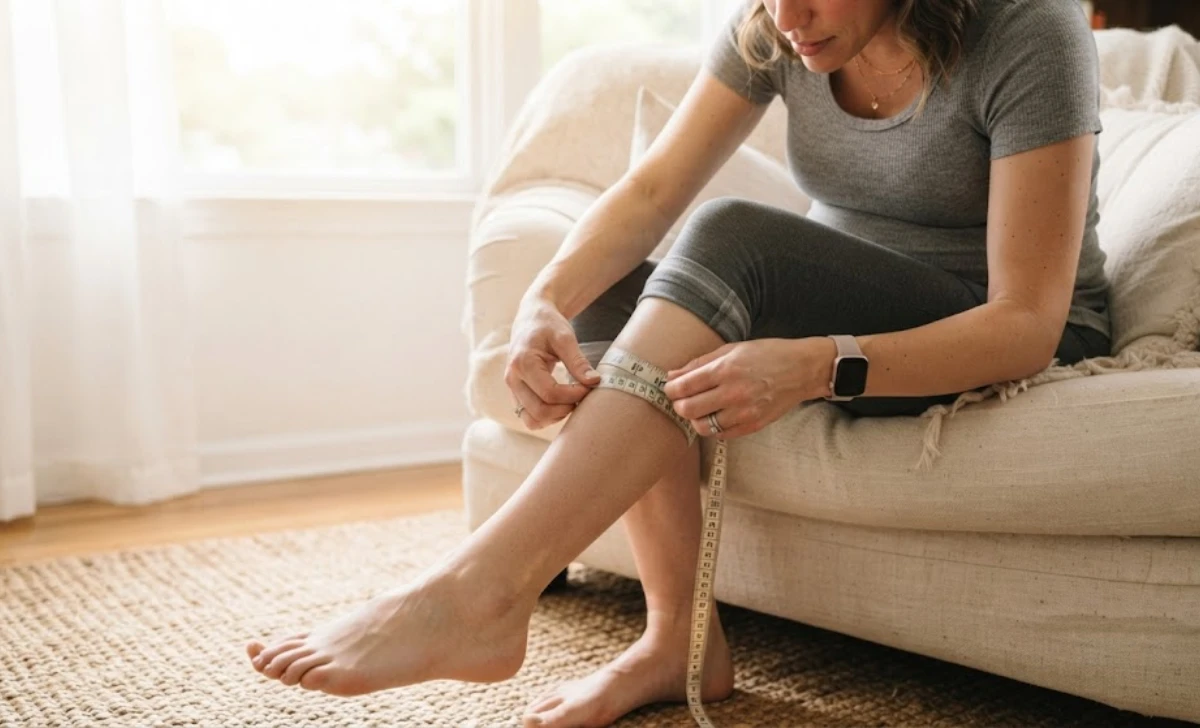
A sock that rolls down or digs into your skin defeats the purpose. Measure in the morning, before daily swelling sets in. Check your ankle at its narrowest point and your calf at its widest using a soft tape measure, since pregnancy can add inches you didn’t expect.
Calf circumference determines fit far more than shoe size does. Many women move into a wider calf range temporarily during pregnancy, which is normal. Brands offering multiple calf sizes give you a better chance of a sock that stays put without slipping behind the knee.
Length matters too. Knee-high styles should sit just below the knee bend without bunching. Wrinkling at the ankle or shin signals the wrong size, and that changes how the compression gradient actually performs.
Can Compression Socks Actually Look Stylish and Feel Like You?
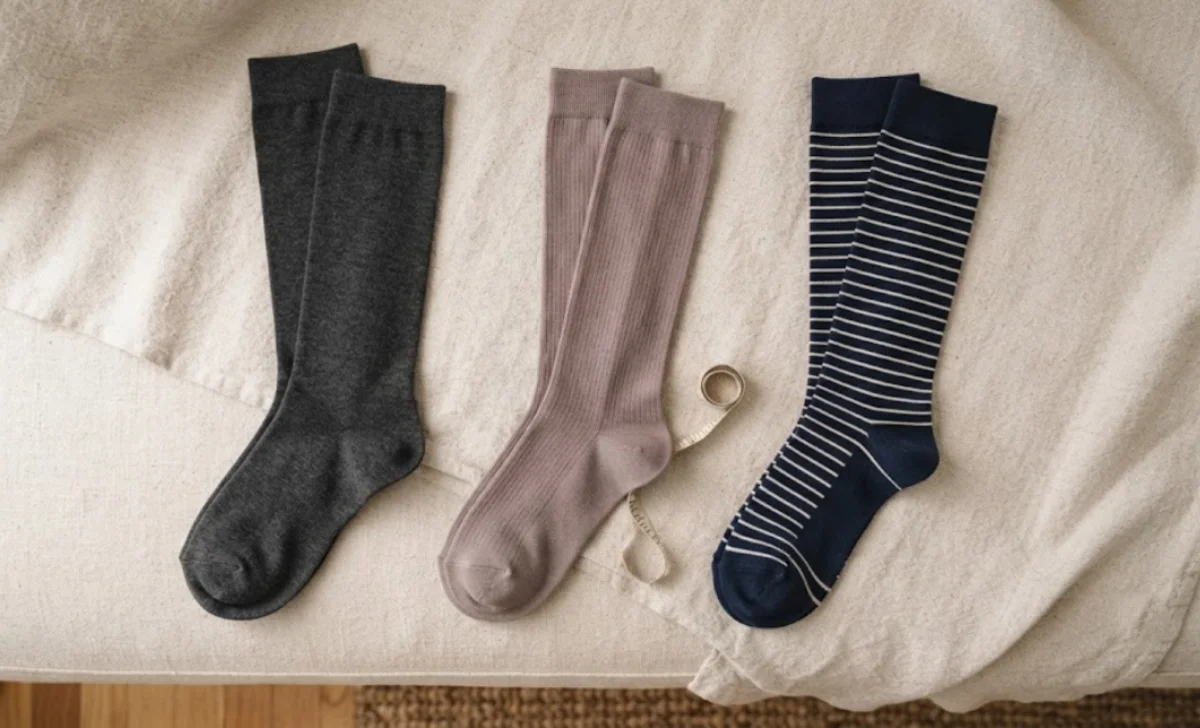
The thick beige stocking image is outdated. Current maternity compression socks come in charcoal, mauve, navy stripes, and heathered blends that resemble any knee-high you’d pick for a regular outfit, with no clinical look involved.
Style here comes down to color, fabric finish, and small details. A matte, opaque texture reads closer to tights than medical gear, while subtle marled yarn or light ribbing adds interest without standing out. A solid color matched to your boots works as well as any printed pattern.
When a sock fits your style, you’ll actually wear it daily, and daily wear is what reduces swelling over time. Support and style aren’t competing goals here.
What Material and Comfort Details Should You Prioritize?
If socks have ever left your skin hot and itchy within minutes, you understand why fabric matters. Pregnancy raises body temperature, so breathable, moisture-wicking fabric prevents that trapped, damp feeling. A cotton blend with some nylon and spandex gives you softness, stretch, and airflow together.
A flat toe closure matters more than it sounds. By the second trimester, any seam pressing on your toes becomes hard to ignore for hours at a time. A smooth, hand-linked toe removes that pressure point, and a soft, non-slip cuff keeps the sock up without leaving red marks.
Pregnancy skin reacts more easily to harsh finishing chemicals, so check for Oeko-Tex certification or a clear note on skin-safe dyes. Fabric labeled hypoallergenic typically skips the chemicals that trigger itching on already sensitive skin.
How to Mix Compression Socks into Your Maternity Wardrobe
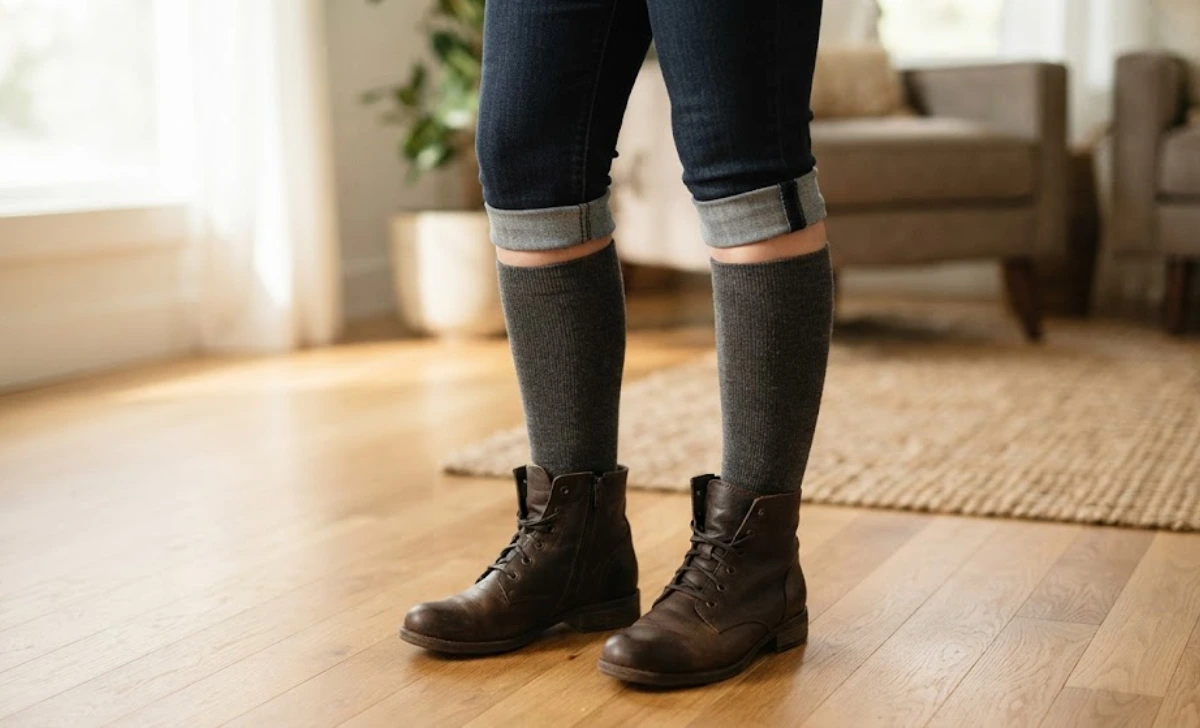
You don’t need to rebuild your wardrobe around a pair of socks. Compression knee-highs tuck under ankle boots and straight-leg jeans without notice, and they disappear entirely under wider maternity trousers.
For a midi dress or skirt, pick a neutral tone close to your shoes or skin tone. Soft oat or deep olive blends in well, and the added texture can look deliberate rather than medical. Letting a sock show just above a short boot keeps your legs warm while looking styled.
For an active day, pair black or charcoal socks with black leggings and a plain sneaker. The line between sock and legging becomes hard to spot, keeping the outfit clean. Style them the way you’d style any other piece of clothing.
Which Stylish Maternity Compression Socks Do We Recommend?
Once you know what to check for, a few options stand out. Comrad’s knee-high socks come in rich colors and offer wide-calf sizing that handles pregnancy swelling without pinching. Their opaque cotton blend looks like an ordinary nice pair of socks.
Sockwell’s merino wool blend suits you if you run warm but still want natural temperature control. The heathered patterns look understated, and the graduated 15–20 mmHg compression eases evening throbbing without feeling tight. VIM & VIGR’s cotton socks bring bold colors that make checking your feet a small daily pleasure.
Kindred Bravely makes a maternity-specific sock with soft bands and gentle pressure, often preferred for long shifts or travel. Each pick meets the same standards: correct mmHg, generous calf sizing, breathable fabric, and a design that doesn’t look medical.
Caring for Your Socks So They Last Through Pregnancy and Beyond
Wash compression socks in cool or lukewarm water with mild detergent. Hot water breaks down the elastic fibers responsible for the pressure gradient, and turning socks inside out before washing protects the fabric and removes sweat more effectively.
Skip the dryer and let socks air dry flat. High heat wears out the fit you depend on faster than anything else. With basic care, a good pair lasts through pregnancy and stays useful during postpartum recovery or later travel.
Common Questions About Maternity Compression Socks
Can I sleep in my maternity compression socks?
Usually not, unless your doctor says otherwise. Lying down removes most of the pressure your legs fight while standing, so overnight wear can sometimes irritate skin. Let your legs rest without them and put them back on in the morning.
How many hours a day should I wear them?
Most women wear them from morning until evening. Put them on before swelling starts, and remove them if you feel tingling, numbness, or discomfort that doesn’t ease within minutes. Consistent daytime wear gives the biggest reduction in puffiness.
Are there compression socks that fit wide calves or plus-size bodies?
Yes. Several brands design wide-calf options specifically for pregnant bodies. Check size charts based on calf circumference rather than shoe size, and choose the wider range if your measurement falls near the edge.
Do I need a prescription for maternity compression socks?
Most 15–20 mmHg and 20–30 mmHg socks sold over the counter don’t require one. Mention your use at a prenatal visit anyway. Compression above 30 mmHg usually needs a doctor’s involvement, though that level is rarely necessary for typical pregnancy swelling.
Conclusion
You don’t have to trade comfort for style during pregnancy. The right compression level, a fit suited to your changing body, and breathable fabric let your socks support your legs and your outfit at once. Treat them with care, since that’s one of the kindest things you can do for yourself right now. You can move through this stage feeling supported and still like yourself.