
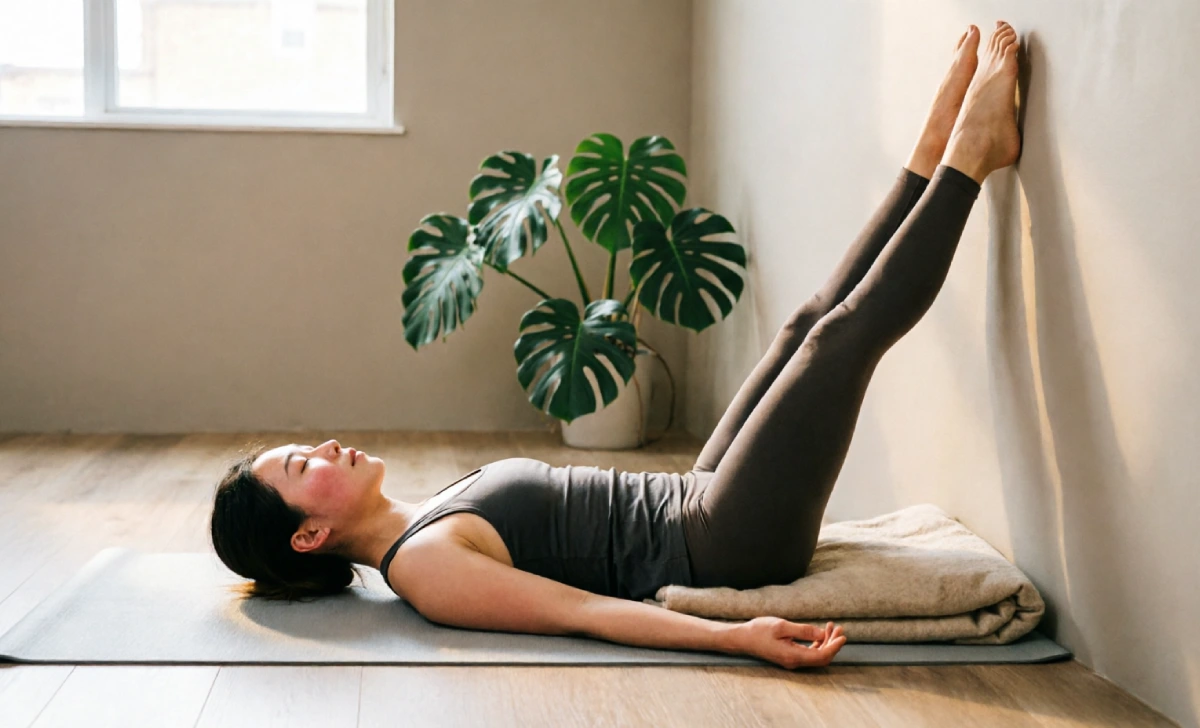
If you have ever climbed into bed with heavy legs and a racing mind, you know how hard it is to rest on command. This habit fits into a daily plan to optimize your physical health with no extra effort. One pose, using just a wall and a few quiet minutes, can shift your nervous system toward real calm tonight.
The pose is called Legs Up the Wall, known in yoga as Viparita Karani. You lie on your back with your hips near a wall and your legs resting straight up, fully supported, and it asks nothing of your strength or flexibility.
You are about to learn the full range of legs up the wall benefits, from nervous system relief to physical recovery that actually feels restful, with the steps and confidence to try it yourself.
What Is the Legs Up the Wall Pose (Viparita Karani)?
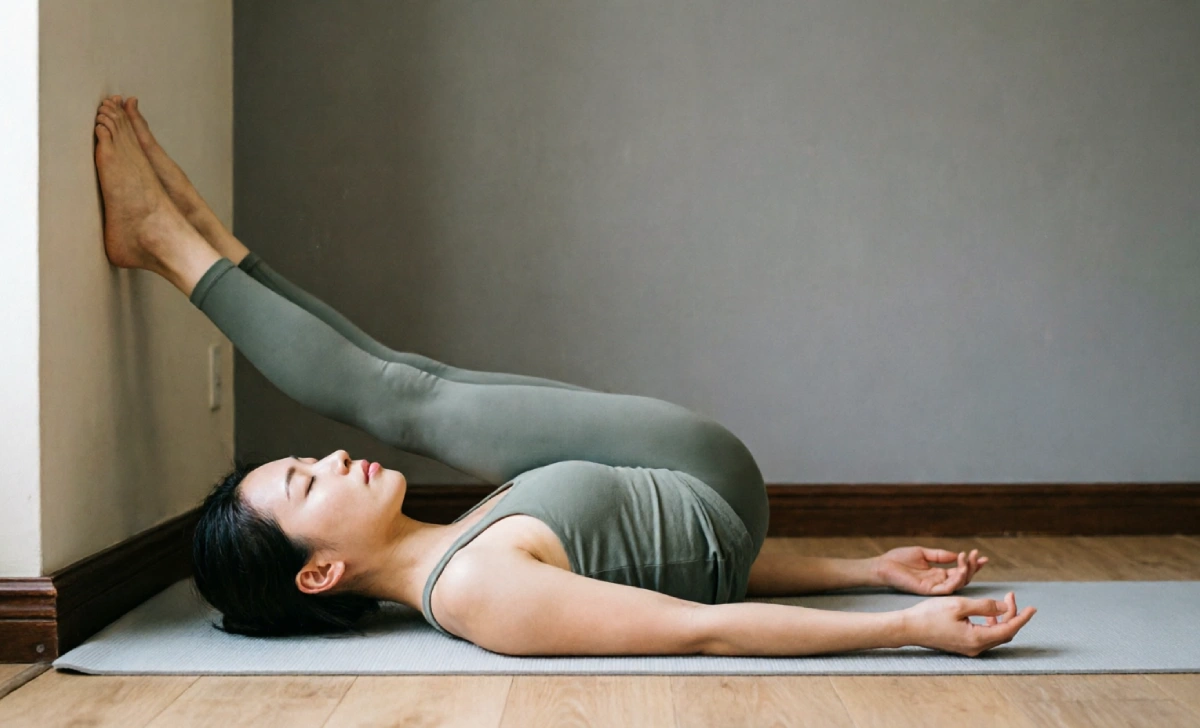
Viparita Karani is a Sanskrit term that roughly means “inverted in action,” describing how the body reverses from its usual upright state. In restorative yoga, this is the gentlest inversion you can practice, since it places your legs above your heart without straining your neck or spine.
When you settle into the shape, your hips rest near the wall while your legs extend upward and your arms relax at your sides, palms open.
This propped alignment, rooted in the Iyengar tradition, quietly shifts blood flow, lymph movement, and the signals reaching your brain. It triggers a relaxation response simply because the setup has changed.
How Does Legs Up the Wall Work to Promote Deep Relaxation?
You have probably heard that putting your feet up helps with stress, and there is real biology behind it. When your legs go vertical, gravity assists blood returning to your heart, easing the load on your circulatory system. Sensors called baroreceptors detect this shift and tell your brain to dial down stress.
What follows is something you can feel. Your heart rate softens, the parasympathetic nervous system takes the lead over fight-or-flight signals, and cortisol begins to drop.
Within a few minutes, you may notice warmth spreading through your belly or your shoulders dropping. Your body is responding to a clear safety signal.
Legs Up the Wall for Leg and Lower Back Recovery
If you spend hours standing or sitting at a desk, you know the dull, congested feeling that builds in your lower legs by evening. That heaviness often comes from fluid pooling because your calf muscles have not pumped it back toward your heart. This pose reverses that buildup without any muscular work.
Your lower back gets relief at the same time. As you lie supported, the natural curve of your lumbar spine can soften into the floor, especially with a thin support under your hips.
There is also simple comfort in feeling the wall hold the weight of your legs instead of your own tired muscles.
Step-by-Step Instructions for Getting Into the Pose
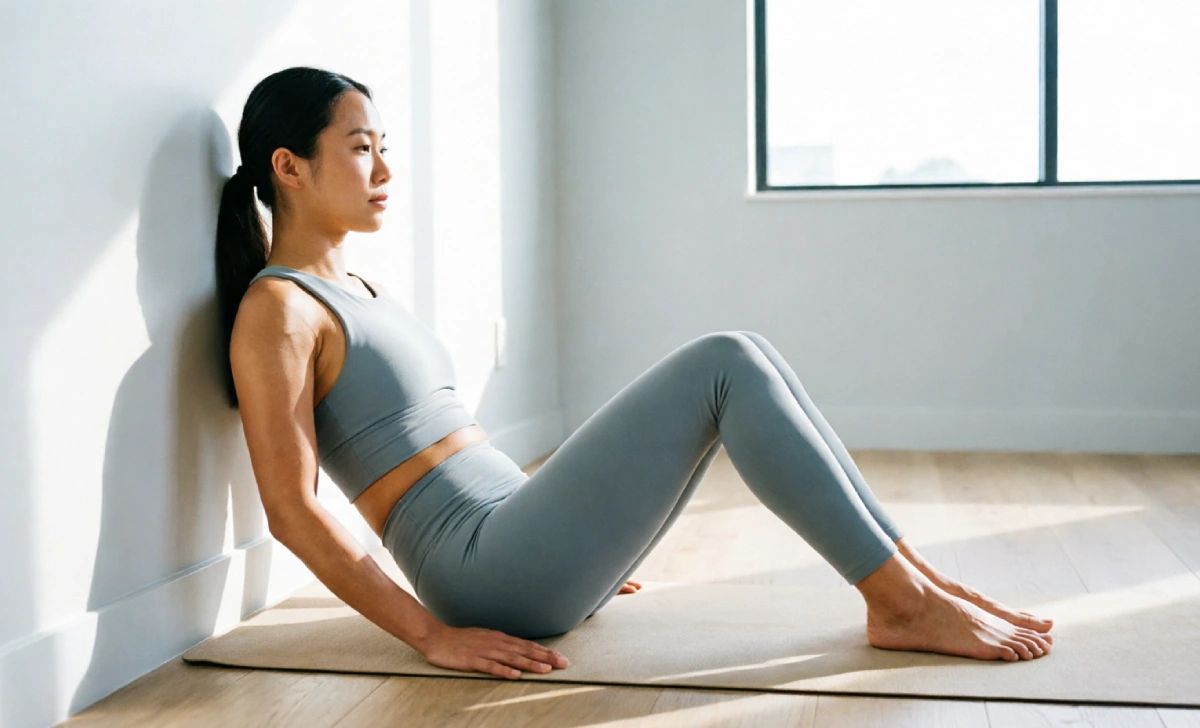
You only need a clear wall and a comfortable surface. Place a yoga mat or folded blanket on the floor, perpendicular to the wall, for cushioning under your back. Sit sideways with one hip touching the wall, knees bent, feet flat.
From this position, lower onto your side, then roll onto your back and swing your legs up the wall in one smooth motion. Bring your sitting bones as close to the wall as feels comfortable, scooting away a few inches if your hamstrings feel tight.
Once settled, let your arms open with palms facing up. If your chin tilts back too far, slide a folded blanket under your head, close your eyes, and let your breath move naturally.
What Are the Best Props and Variations for Tight Hips and Hamstrings?
If your hamstrings feel too tight to stay comfortable against the wall, a small adjustment helps. Sliding a bolster or a couple of firm folded blankets under your pelvis lifts your hips slightly, easing the stretch and creating a gentle, calming slope.
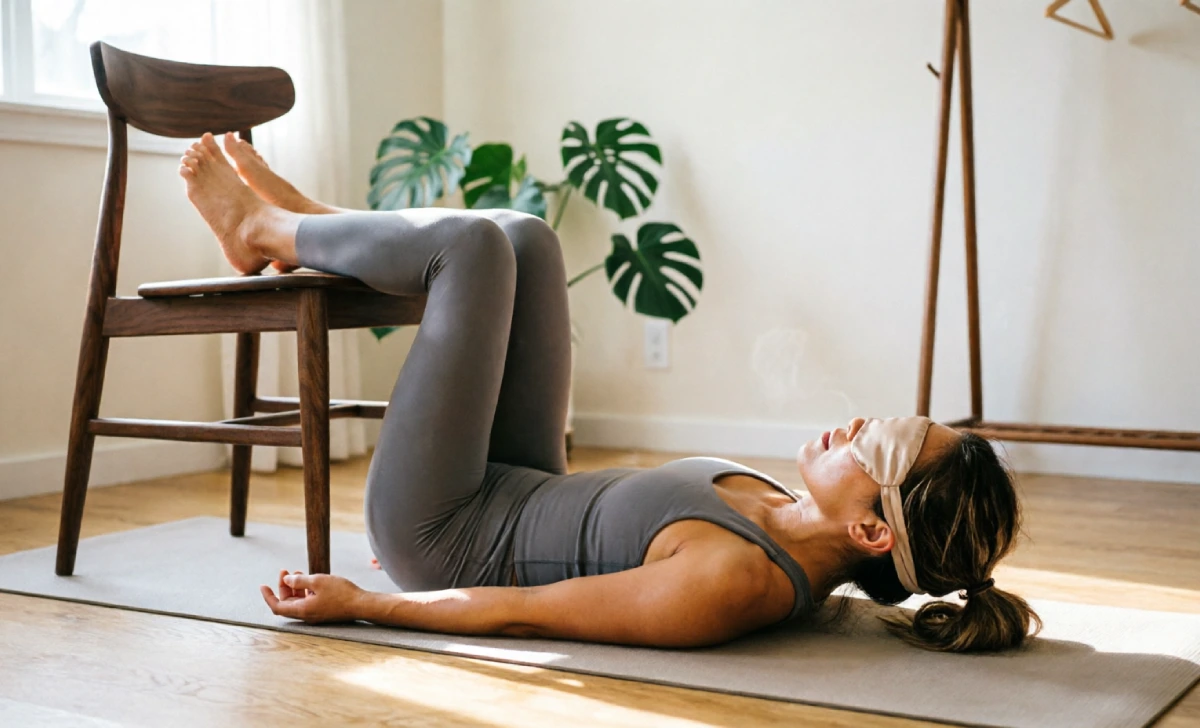
For anyone who finds it hard to get onto the floor, a chair variation offers the same benefits. Lie on your back and rest your calves on a sturdy chair seat, knees bent near ninety degrees, and you still get the same circulatory benefits. An eye pillow or soft cloth over your eyes can deepen the calm further.
How Long and How Often Should You Practice Legs Up the Wall?
You might wonder if a short session is even worth doing. It is. Five to ten minutes gives your body enough time to register the shift in blood flow, while fifteen to twenty minutes deepens the effect further.
Consistency matters more than duration here. A short daily practice, whether right after work or before bed, trains your nervous system to settle more quickly over time, and many people who practice regularly fall asleep faster and wake up less stiff.
It pairs well with other simple habits, like starting your morning with a green juice for an extra nutrient boost.
Is Legs Up the Wall Safe for Everyone? Contraindications and Modifications
For most people, this pose is gentle and completely safe. Still, a few conditions call for caution. If you have uncontrolled high blood pressure, certain eye conditions like glaucoma, or are in late pregnancy, check with your healthcare provider first.
A simple modification keeps the benefits while removing the risk. Instead of going all the way up a wall, rest your calves on a sofa cushion or low chair for a gentler elevation.
If you have neck or back issues, keep your spine neutral with blankets for support. What matters most is that you feel safe throughout.
Can Legs Up the Wall Really Improve Your Sleep and Reduce Anxiety?
If your mind races the moment your head hits the pillow, this pose can change that pattern. By activating your rest-and-digest system before bed, you help your brain associate bedtime with calm instead of a battle against anxious thoughts.
Anxiety relief works through a related pathway. Chronic stress keeps your brain on alert, signaling that it is not safe to relax, while this fully supported position sends a clear physical message that you are held and steady.
What Makes Legs Up the Wall Different from Other Inversions?
You may have seen practitioners in a full Shoulder Stand or Headstand and assumed inversions are only for the strong and confident. Those poses demand muscular effort, while this one asks for none, since you stay fully supported the entire time.
This passive quality is what makes it better for recovery. An active inversion can raise your heart rate, while this pose does the opposite, letting you receive gravity’s help rather than work against it.
Legs Up the Wall After a Workout or Long Day: Recovery Science Made Simple
Your muscles produce metabolic byproducts during exercise or long hours of standing. The lymphatic system handles cleanup, but unlike your heart, it has no pump of its own, so resting with your legs elevated gives it an easier path to move fluid away.
This is not about a dramatic flush of toxins. It is gentle support for a system already working. Many people notice their legs feel lighter after a session, especially after a long flight or a hot day, and this kind of habit is one small piece of a bigger picture, which our guide on the difference between health and wellness explores further.
FAQs
Can legs up the wall improve digestion?
The relaxation response itself can support digestion, since blood flow shifts toward your digestive organs when your body feels calm. This pose is not a direct fix, but regular practice may ease stress-related tension in your gut.
Is legs up the wall good for sciatica?
It can help some people, since gentle traction on the lower back may ease pressure on the sciatic nerve. For others, it may increase sensitivity, so try it with a bolster under your hips and stop if anything sharpens.
Can I do legs up the wall during my period or in early pregnancy?
Many find it soothing for cramping and lower back discomfort during their period. In early pregnancy, short sessions are usually fine, but always follow your provider’s guidance first.
Does legs up the wall help with headaches?
Tension headaches linked to neck and shoulder tightness may ease as your body settles into deep rest. If a headache stems from sinus pressure or high blood pressure, staying upright is the safer choice.
Conclusion
Legs Up the Wall asks very little of you and gives back a real sense of calm and physical relief. You now know how this simple position signals your nervous system to relax, eases tired legs, and supports recovery after a long day. Try it tonight with nothing more than a wall and a few quiet minutes, and if you want another easy reset for your week, a hydromassage session pairs naturally with this kind of routine.