
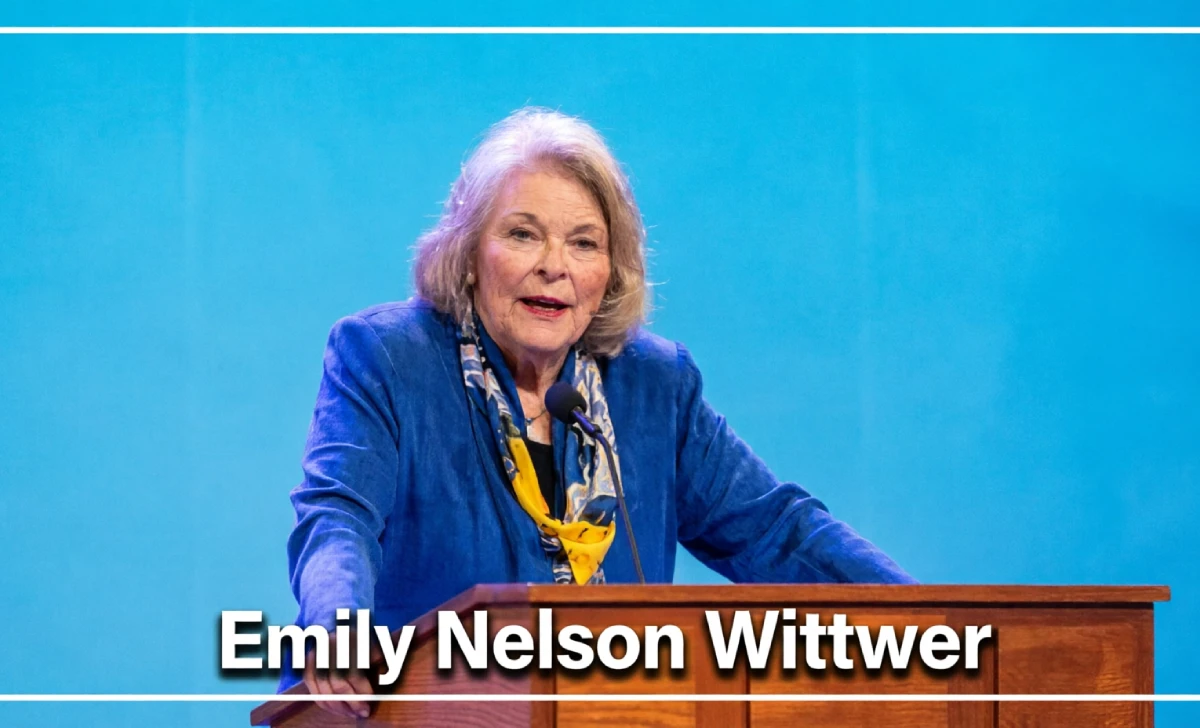
Emily Nelson Wittwer was not a household name in the way of politicians or performers. But the story of her 37 years on earth carries a weight that far outlasts her time. Born into one of the most prominent families in The Church of Jesus Christ of Latter-day Saints, she lived with a depth of faith, artistic talent, and selfless service that left a permanent mark on everyone who crossed her path.
Her father, Dr. Russell M. Nelson, would go on to become the 17th President of the Church. But long before that, he was simply a father who watched his daughter fight cancer with extraordinary grace — and then stood at a General Conference pulpit just three months after her death to speak about hope.
Salt Lake City Roots: Where It All Began
Emily was born in Salt Lake City, Utah, on January 15, 1958, to Dr. Russell M. Nelson and Dantzel White, a committed mother and former professional singer. She was one of eleven children raised in a household where faith and education were not optional — they were the foundation of daily life.
Her father, a renowned heart surgeon before his vocation to full-time Church service, and her mother, Dantzel, encouraged their children’s abilities and goals from an early age. Growing up in that environment meant Emily absorbed a strong sense of purpose before she ever stepped into a classroom or onto a stage.
The Nelson home was not simply religious in a ceremonial sense. Service, sacrifice, and study were practiced daily. That upbringing shaped Emily into someone who, even as a young woman, already knew what she stood for.
Quick Facts
| Detail | Information |
|---|---|
| Born | January 15, 1958 — Salt Lake City, Utah |
| Died | January 29, 1995 — Murray, Utah |
| Cause of Death | Metastatic cancer |
| Father | President Russell M. Nelson |
| Mother | Dantzel White Nelson |
| Spouse | Bradley Earl Wittwer (married May 14, 1980) |
| Children | 5 (Wendy, William, Nelson, Preston, Jordan) |
| Education | BYU (degree 1980), Vienna semester abroad |
| Profession | Teacher, musician, performer |
| Church Callings | Primary teacher, Young Women president, Relief Society leader |
Education and the Making of a Teacher
Emily attended East High School, then Brigham Young University, including a semester abroad based in Vienna, Austria. She received her degree from BYU in April 1980.
That Vienna semester matters more than it might seem. Exposure to European culture, music, and performance during a formative period deepened her already strong artistic sensibilities. She returned to Utah not just with a degree, but with a broader view of what art and education could accomplish in a person’s life.
She became a teacher. And by every account, she was a dedicated one — the kind who treated her students as individuals worth investing in, not just a classroom to manage.
The Performer Behind the Faith
Teaching was one side of Emily. Performance was another.
She sang and danced in the Promised Valley Playhouse production of “A Christmas Carol” and was a member of vocal and dance groups, including East High Dance Company, BYU Theater Ballet, and Viva Voce!
These were not casual hobbies. They reflected a person who approached music and movement with the same seriousness she brought to faith and family. Her involvement in BYU Theater Ballet places her within a tradition of performers who treated their craft as a form of devotion in itself.
She could teach a Sunday School lesson in the morning and perform on a stage in the evening. That range — intellectual, spiritual, artistic — defined her.
Marriage, Family, and a Full Life
Emily married Bradley Earl Wittwer in the Salt Lake Temple on May 14, 1980. The timing speaks to her values: she finished her degree in April and married in May, building her family on a foundation of both education and covenant.
They became the parents of five children: a daughter, Wendy Wittwer, and four sons — William Marion, Nelson Bradley, Preston Haycock, and Jordan White Wittwer — all of Murray, Utah.
Raising five children while maintaining an active Church life and continuing to teach would have been more than enough for most people. Emily did all of it, and she did it with a reputation for warmth that people remembered long after she was gone.
Church Service: More Than Attendance
A faithful member of The Church of Jesus Christ of Latter-day Saints, Emily served in callings as a Primary teacher and chorister, Young Women president, and Relief Society leader in wards and stakes.
Each of those roles required real investment. A young woman president works directly with teenage girls, guiding them through some of the most turbulent years of their lives. A Relief Society leader coordinates care for entire communities — meals for sick families, support for those in grief, practical help for anyone who needs it.
Emily did not hold these positions as titles. She held them as responsibilities, and people noticed the difference.
The Cancer Diagnosis and What Followed
Metastatic cancer arrived without warning and without mercy. What it encountered in Emily Nelson Wittwer was a woman who did not collapse under its weight.
She was strong and resilient despite many treatments and the illness, battling cancer while maintaining her belief in the Gospel and demonstrating her faith through the entire ordeal.
On January 29, 1995, Emily passed away from cancer that had spread to multiple parts of her body. She was 37 years old and a mother of five children.
The grief in the Nelson family was deep and immediate. To add to the heartbreak, Church President Howard W. Hunter had passed away from cancer just 33 days before Emily’s death. It was a period of compounded loss for a community already in mourning.
A Father’s Response: Russell M. Nelson at General Conference
What happened three months later became one of the most talked-about moments in recent Church history.
While addressing Latter-day Saints at General Conference in April 1995, just three months after his daughter’s death, President Nelson shared a profound message of hope — defining what it means to be children of the covenant.
He spoke about Emily by name. He acknowledged the grief directly, then pointed toward the doctrine that gave him the ability to keep standing. He testified that “Jesus Christ holds those keys and will use them for Emily” — and that “great comfort comes from the knowledge that our loved ones are secured to us through the covenants.”
That moment — a grieving father speaking about his daughter in front of thousands — revealed something about both of them. Emily’s life had been substantial enough that her father could hold it up as an example of covenant living. And Russell M. Nelson’s faith had been tested in the most personal way possible, and he held.
The Legacy She Left
Emily Nelson Wittwer did not build a corporation or win a public award. Her legacy lives in the people she taught, the children she raised, and the example she set during the hardest years of her life.
Family, friends, and fellow Church members recall her humility, kindness, and love of the Gospel. Many who face their own hardships have drawn strength from her story of unshakable faith in the face of terminal illness.
She was also survived by an extraordinary family network. Her nine sisters and their husbands, her brother Russell M. Nelson Jr., and her extended family all mourned her passing and continued to carry her memory forward.
Her mother, Dantzel Nelson, passed away on February 12, 2005, noting in her final years that the family had “dealt with disappointment, disease and death among our children,” but that “death cannot divide families sealed in the temple.”
Why Emily Nelson Wittwer Still Matters
Stories like Emily’s have a way of resurfacing precisely because they are rare. She was not famous for fame’s sake. She was known to a relatively small circle — her students, her congregation, her family — and yet the reverberations of her life reached far beyond Murray, Utah.
Her father’s public grief brought her story to a global audience. His willingness to speak her name in moments of doctrine gave her a kind of immortality that neither celebrity nor wealth can manufacture.
Emily Nelson Wittwer lived 37 years. She taught children. She performed on stage. She raised five kids. She led her community. And when illness came for her, she met it without abandoning what she believed.
FAQs
Who was Emily Nelson Wittwer?
Emily Nelson Wittwer was the daughter of Russell M. Nelson, President of The Church of Jesus Christ of Latter-day Saints. She was a teacher, musician, and devoted mother of five who passed away from metastatic cancer in 1995 at age 37.
How did Emily Nelson Wittwer die?
She died on January 29, 1995, at her home in Murray, Utah, after a battle with metastatic cancer. She was 37 years old at the time of her death.
Who were Emily Nelson Wittwer’s children?
She and her husband, Bradley Earl Wittwer, had five children: one daughter, Wendy, and four sons — William Marion, Nelson Bradley, Preston Haycock, and Jordan White Wittwer.
What did Russell M. Nelson say about Emily’s death?
At the April 1995 General Conference, just three months after Emily’s passing, President Nelson spoke about her by name and testified that the covenants of the Gospel would bind families together beyond death. It was one of his most personal and widely remembered public addresses.
What is Emily Nelson Wittwer’s legacy?
Her legacy is one of quiet faithfulness — as a teacher, performer, Church leader, wife, and mother who faced terminal illness without losing her beliefs. Her story continues to be shared in Latter-day Saint communities as an example of grace under suffering.