

You know that exact moment. You’re standing in front of your closet, the weather app reads 70°F, and you’re holding a hoodie in one hand and a light jacket in the other. Deciding between a jacket or hoodie 70 degree weather is a small choice that quietly shapes your whole day. If you’ve ever second-guessed a similar call before, this cooler weather outfit dilemma probably feels familiar too.
Seventy degrees sits in a sneaky sweet spot. It’s not cool enough to demand a heavy coat, yet not warm enough to grab any old t-shirt without a second thought. A breeze, a patch of shade, or an hour of sun can make the same number feel completely different.
By the time you finish reading, you’ll have a simple way to choose between a jacket and a hoodie at 70°F. You’ll learn what changes how the temperature feels, which fabrics help you, and a quick checklist that ends the hesitation for good.
What Does 70°F Actually Feel Like for Your Body?
You might expect 70°F to feel like one steady thing, but your body rarely experiences it that way. The number on your app is just air temperature measured in the shade. Once you step outside, sun, wind, and humidity start rewriting what you actually feel.
Direct sunlight can add the sensation of several extra degrees to your skin. A calm, sunny 70°F afternoon can feel closer to 76 or 78°F on bare arms. The moment a cloud passes, that warmth disappears, even though the air itself hasn’t changed at all.
Your own body plays a role too. Someone who runs warm might feel fine in a thin hoodie. Someone who’s always reaching for a sweater indoors may lean toward a jacket at the very same temperature. There’s no universal answer, but understanding why 70°F feels inconsistent is your first real advantage.
Is It Windy or Calm? The Hidden Jacket Decider
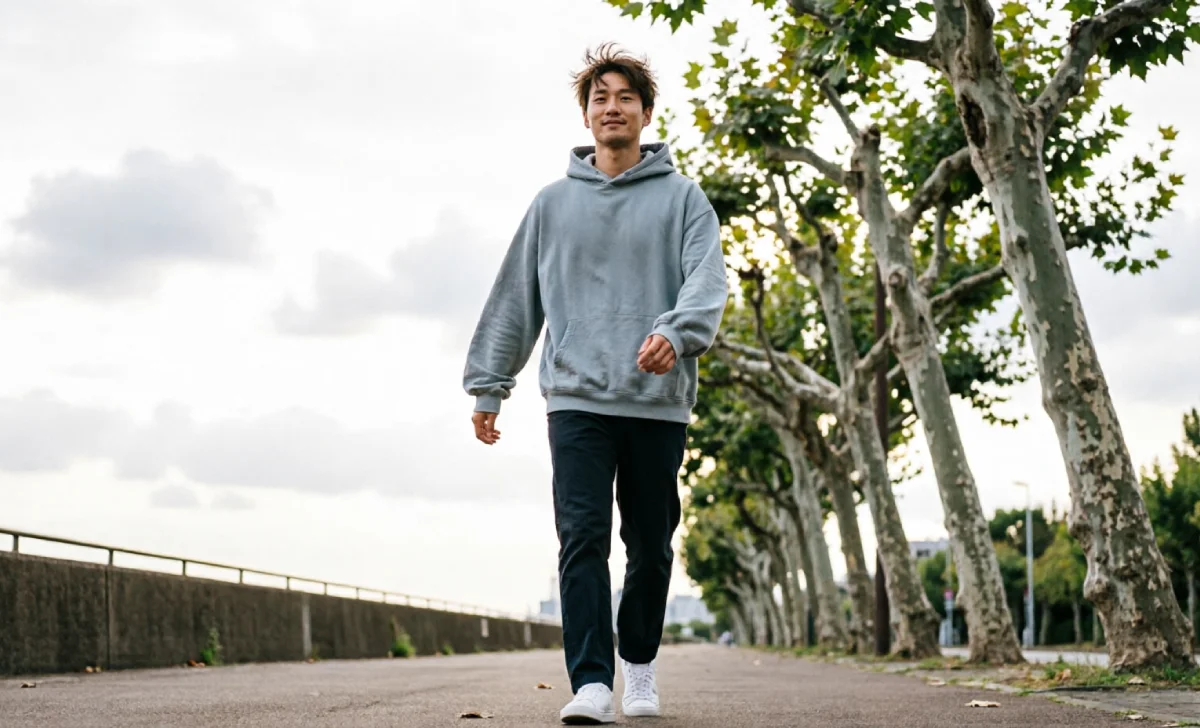
If you only check one thing before dressing, make it the wind. A sunny 70°F day can still turn uncomfortable fast once a steady breeze of eight or ten miles per hour cuts through a loose cotton hoodie.
Wind strips away the thin layer of warmth your body builds up against your clothes. A hoodie doesn’t put up much resistance to that. Air slips right through, making 70°F feel closer to 62°F on your skin.
Before dressing, step outside for ten seconds or check the wind speed on your app. Swaying trees or a flag standing straight out means a jacket wins. Still air means the hoodie stays a great option.
What Fabric Keeps You Comfortable at 70 Degrees?
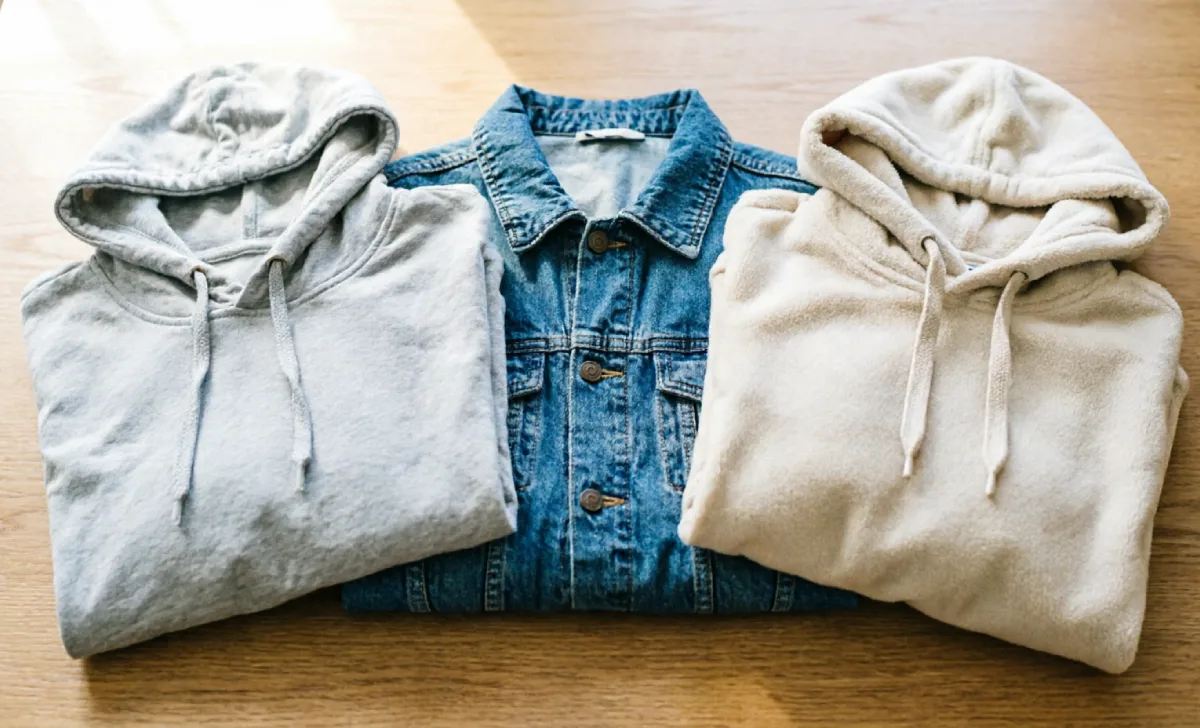
Fabric quietly decides your comfort more than most people realize. A thick fleece hoodie can turn a pleasant afternoon into a sweat session, while an unlined cotton jacket can feel as light as a favorite shirt.
Cotton lets air move, which is why a lightweight hoodie or French terry pullover often feels right on a sunny, calm day. Fleece was built to trap warmth, so it’s a riskier pick unless you run especially cold. Getting your outfit right often comes down to pairing the correct fabric with the correct color and silhouette, something this color rule guide breaks down simply.
Denim jackets sit in a comfortable middle ground. They block wind better than a hoodie without overheating you the way a heavy coat would. When in doubt, ask what the fabric is trying to do, and save the heat-trapping pieces for a cooler day.
When Should You Definitely Choose a Hoodie?
There are clear hoodie moments at 70°F. Picture a calm, sun-warmed morning with nowhere urgent to be, just a coffee shop patio or a slow walk through the park. That’s the hoodie’s sweet spot.
In that kind of calm, sunny setting, a thin cotton zip-up feels comforting rather than heavy. You can push the sleeves up when the sun gets stronger and pull them back down under a passing cloud.
A hoodie also wins when comfort matters most. Errands, a long drive, or a relaxed afternoon all call for that soft, familiar ease a jacket can’t always match.
When Does a Jacket Beat a Hoodie?
Now flip the scene. A breezy rooftop dinner or overcast skies make a jacket the smarter pick. A hoodie might feel cozy for five minutes, but a steady wind chips away at that comfort fast.
A jacket adds structure. A denim jacket blocks wind around your torso while still breathing enough to avoid overheating. A thin bomber or windbreaker adds a light barrier and can even handle a surprise drizzle.
There’s a style factor too. Meeting someone new or heading to a casual gathering feels a touch sharper in a jacket, without pushing into anything formal.
How Does 70°F in the Sun vs. at Night Change Everything?
The same 70°F can feel like two different seasons depending on the sun’s position. At noon, direct rays make a short-sleeved shirt feel completely reasonable. By ten at night, that same number can have you crossing your arms.
What changes is the radiant heat you’re no longer receiving from the sun. Once it sets, a light nighttime breeze makes the air feel noticeably cooler, even though the thermometer hasn’t moved.
If your day stretches into evening, bring a jacket you can layer over a T-shirt. Even a packable windbreaker stashed in your bag can save a night that turns cooler than expected.
Your Simple 3-Question Checklist to Decide Right Now
You’ve absorbed the variables, but in the moment, you just need a fast way out of the closet standoff. Next time 70°F shows up, ask yourself three quick questions.
First, is there noticeable wind or open, exposed walking? A yes points toward the jacket. Second, will you be in direct sun most of the time, or moving between air-conditioned spaces? Sun favors the hoodie; shade favors the jacket.
Third, does your plan call for pure comfort or a slightly polished look? When two of the three answers point the same way, the decision becomes almost automatic.
Outfit Ideas That Prove Both Choices Work

A denim jacket over a white T-shirt, paired with chinos and clean sneakers, works for a casual lunch or a weekend market run. It looks put-together without any real effort.
On the hoodie side, a heather grey cotton pullover with relaxed jeans and low-profile sneakers gives an easy, off-duty feel. A lightweight zip-up worn open over a breathable tee works just as well for warmer stretches of the day.
Both paths look great at 70°F when you keep the materials thin and the colors simple. One good unlined jacket and one reliable lightweight hoodie cover almost every outfit you’ll need.
Packing Smart for a 70°F Day
Traveling with 70°F in the forecast can feel like a puzzle. Too many layers means unnecessary bulk. Too few, and the evening chill catches you off guard.
Pack one packable windbreaker that folds down small, plus one soft cotton hoodie for calmer moments. Together, these two pieces weigh less than a heavy sweater but cover nearly every scenario you’ll run into.
When the sun is strong, you might wear neither. When the breeze picks up, or the sun sets, you’ll be glad you packed both.
Quick Questions About Dressing for 70°F
Is 70 degrees too hot for a hoodie if I overheat easily?
It can be, but fabric matters more than the label “hoodie.” Pick a tissue-thin cotton version and wear it unzipped over a breathable tee, saving thicker fleece for cooler days.
What if it’s 70 degrees with light rain — jacket or hoodie?
A hoodie soaks up moisture and turns heavy fast. A lightweight, water-resistant jacket keeps you drier and far more comfortable through a passing drizzle. If you’re also working out your general style preferences, a body type guide can help you pick jacket cuts that suit your shape.
Can I wear a hoodie to a casual office on a 70-degree day?
Yes, if your workplace allows it. A slim-fitting, solid-colored zip-up hoodie layered over a neat tee or polo keeps the look intentional instead of sloppy. The same instinct that helps you copy a celebrity style guide for outfit inspiration works just as well here.
Conclusion
You started with a simple, familiar question, and now you have a real answer for it. Check the wind, notice the sun, and think about your plans, and the choice becomes obvious every time. No more guessing, no more regret — just walking out the door dressed exactly right.