

You know that feeling right before a haircut. You are sitting in the chair, a photo of a short style on your phone, and suddenly, doubt hits. Will it actually look good on me? What if there was a simple test you could do at home to get an honest answer before the scissors ever touch your hair? That is exactly what the 2.25 rule for haircuts gives you. If you have been searching for a flattering haircut length that works with your face, this rule is the best place to start.
This rule comes from Giles Robinson, a senior stylist for the global brand John Frieda. He developed it as a fast, mathematical way to check if your face proportions balance naturally with shorter lengths. You only need a ruler and a mirror. No styling experience required.
By the time you finish reading, you will know how to take that measurement, what your number means, and how to combine it with a quick face shape check. This is your behind-the-chair secret weapon. Let’s break it all down.
What Exactly Is the 2.25 Rule for Haircuts?
If you have ever wondered why a pixie cut looks effortlessly chic on one person but feels unimaginable for you, the 2.25 rule holds a big part of the answer. It is a measurement-based guide that suggests an ideal hair length based on the distance from your earlobe to the bottom of your chin.
The core idea is beautifully simple. Giles Robinson created the rule using the aesthetic principles of the Golden Ratio, which artists and architects have used for centuries to define visually pleasing proportions. If your ear-to-chin distance is less than 2.25 inches, or about 5.7 centimeters, short hairstyles like bobs, crops, and pixie cuts will naturally highlight your bone structure.
If the measurement is more than 2.25 inches, the rule points toward longer lengths. Hair that falls below the chin tends to create a more harmonious visual balance for longer face proportions. It is not about beauty standards. It is about geometry and how your eye perceives length.
How Do You Perform the 2.25-Inch Haircut Test?
You might expect this to be complicated, but it genuinely takes less than a minute. The only tools you need are a flat ruler or a soft measuring tape and a mirror. Stand in front of that mirror with your face relaxed and your mouth closed.
Looking straight ahead, place the zero end of the ruler flat against the very bottom of your earlobe. You want the ruler to point straight down toward your chin, not angled forward or back. Read the number at the tip of your chin. That is your vertical measurement.
Many people find it helpful to do this twice just to make sure the ruler did not slip. You can also use a pencil held horizontally under your ear to mark the spot and then measure from there to your chin. This is a handy trick if you are struggling with the angle.
What Your 2.25 Rule Measurement Actually Means
Now you have a number, and you are probably wondering what to do with it. The interpretation is reassuringly straightforward. If your ear-to-chin distance came in under 2.25 inches, the geometry of your lower face is relatively compact. Short haircuts work beautifully with that structure, creating a lifted, defined look that puts your eyes and cheekbones center stage.
If your measurement is over 2.25 inches, you have a longer line running from your ear down to your chin. Longer hair lengths often add a softening effect that balances the vertical space naturally. It does not mean you cannot wear short hair. It simply means that collarbone-length cuts or longer tend to be the most effortless choices from a proportional standpoint.
What if you land right at exactly 2.25 inches? You are in that lovely balanced middle ground where both long and short styles tend to work harmoniously with your features. The measurement is not a strict gatekeeper. It is more like a trusted friend who gives you an honest, math-backed opinion before you make a change.
Does Your Face Shape Change the 2.25 Rule’s Advice?
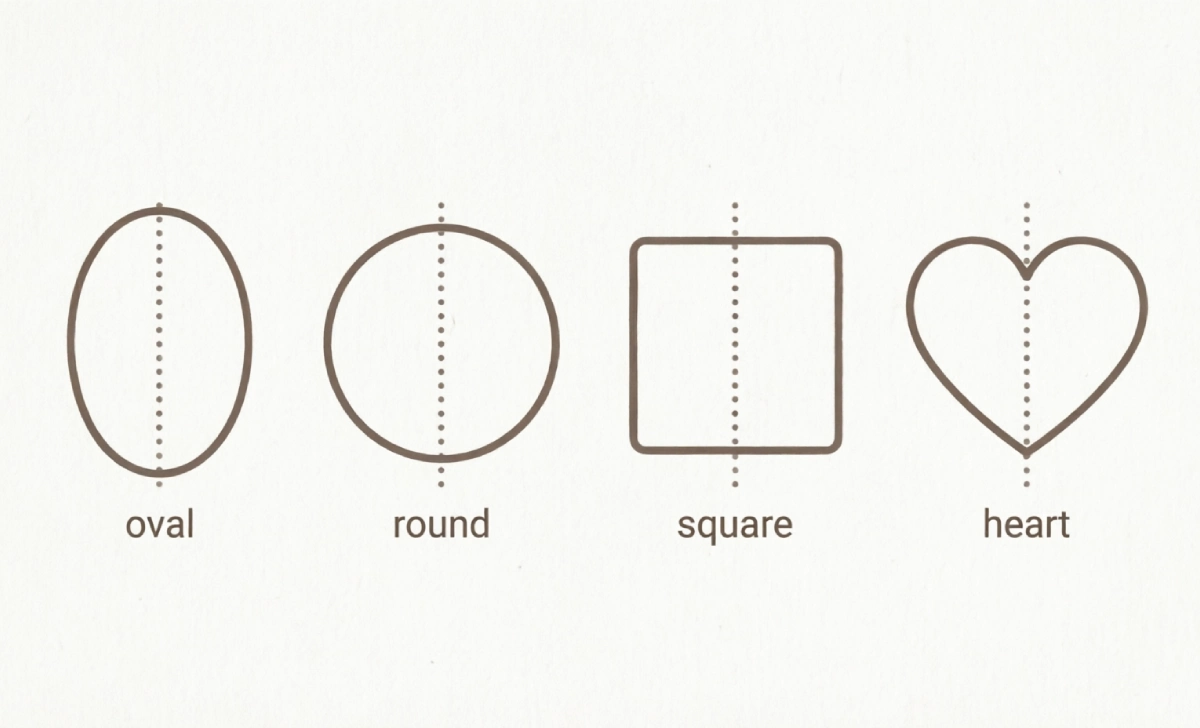
The rule is a brilliant foundation, but your overall face shape adds crucial nuance. To get the full picture, spend a moment figuring out the basic outline of your face. Look in the mirror and trace the lines of your forehead, cheekbones, and jawline.
If your forehead is the widest point and your face tapers down to a narrower chin, you likely have a heart-shaped face. A measurement slightly over 2.25 inches on a heart face can still pair wonderfully with a textured short cut that has side-swept volume. For an oval face, which is gently rounded and balanced, the rule is almost always spot-on.
Round faces have soft, equal width and length. If you have a round face and your measurement is just over 2.25 inches, do not automatically rule out short hair. Adding height at the crown can create the illusion of length. A square face with a strong jawline often shines with styles that graze the jaw, even if the measurement is right on the border.
Is the 2.25 Rule Accurate for Men?

Men often get left out of these styling conversations, but the anatomy behind the rule is completely gender-neutral. The same ear-to-chin distance governs how short cuts frame a man’s face. If you are a guy wondering whether to go for a tight fade, a textured crop, or a classic buzz cut, this test is just as relevant for you. You can explore fade types for men to find the exact style that matches your measurement results.
A measurement under 2.25 inches typically means your lower face is compact. Short, skin-tight fades and styles that keep the sides high and tight will emphasize a sharp jawline. It is a look that reads as clean and defined.
For measurements over 2.25 inches, leaving a bit more length on top and around the temples can balance a longer face. If your jaw is softer, a classic side part with some volume can structure your face beautifully. The ruler does not care about gender. It just gives you an honest starting point.
What Are the Exceptions to the 2.25 Rule?
No style rule is written in stone, and this one has some wonderful exceptions. Your hair texture is one of the most powerful factors in an override. Tight curls and coils can shrink up visually by several inches when dry. You might measure 2.5 inches, but if your natural curl pattern springs up just below your ears, a short cut will still read as perfectly proportional.
Side-swept bangs are another game-changer. A set of blunt or side-swept bangs changes where the eye perceives your face to begin. If your measurement is slightly over 2.25 inches but you want a short style, bangs can shorten the appearance of your face vertically, making the rule work in your favor.
Then there is the most important exception of all: your personal style. Confidence can make a wrong measurement look absolutely right. The rule is a guide to help you understand the geometric default, not a law you must obey.
How Should You Use the 2.25 Rule Before Your Next Haircut?
Think of this entire process as a pre-appointment confidence builder. You now have a number, a sense of your face shape, and a clear understanding of where the mathematical balance lies. Take all of that information with you to the salon.
When you show your stylist a reference photo, you can say, “My ear-to-chin measurement is just over 2.25 inches, but I love this look. How can we adjust it to keep that proportional balance?” That kind of conversation shifts the dynamic from hopeful guessing to informed planning.
If the style you love involves very short sides, it also helps to understand the difference between a taper and fade so you can communicate clearly with your barber or stylist. The rule shines brightest not when it tells you what you cannot do, but when it helps you make the style you love work with your natural features.
The final decision is always yours. Use the measurement as one piece of the puzzle, mix it with your intuition, and choose the haircut that makes you genuinely excited to look in the mirror.
FAQs
What if I don’t have a ruler?
You can use a piece of string or a strip of paper to mark the distance from your earlobe to your chin. Then lay that length flat against any ruler app on your phone to get the exact measurement. The key is keeping the line straight and vertical.
Does the 2.25 rule work if I have a beard?
A beard does not change your underlying bone structure, so the measurement remains the same. However, a full beard can add visual weight and width to the lower face. Consider the beard as part of the overall visual package when making your final decision.
How does the rule apply to mid-length cuts like a lob?
If your measurement is over 2.25 inches, a lob that skims the collarbone is often an ideal mid-length compromise. It keeps some length while still giving you a fresher, lighter feel. It is a great option when you want to change without going fully short.
Is the 2.25 rule backed by science?
The rule is rooted in the aesthetic tradition of the Golden Ratio, used in art and architecture to define pleasing proportions. It is not a rigid scientific law, but a stylist-developed application of proportional principles that has proven helpful for countless clients in real salon settings.
Conclusion
You came here wondering if a simple ruler test could actually help you make a big hair decision. Now you know it can. The 2.25 rule for haircuts gives you an honest, geometry-backed starting point that strips away fear and replaces it with clarity. Your measurement, your face shape, and your personal taste are the only things that matter. Take this knowledge with you, trust your own judgment, and make your next haircut the confident choice you deserve.