
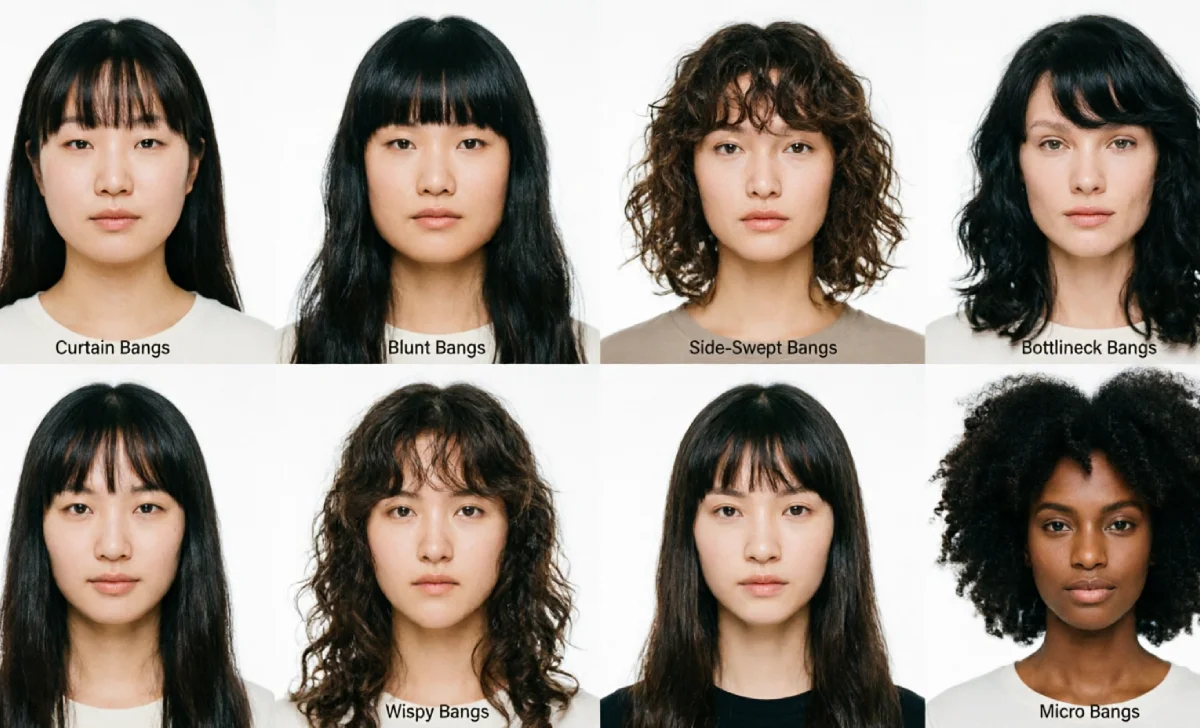
Thinking about getting bangs can feel exciting and a little scary at the same time. You may love the look on someone else but wonder if it will suit your face shape, hair texture, or daily routine.
The good news is that there are many different types of bangs available today. In this guide, you will learn which styles work best for different face shapes, hair types, and lifestyles so you can walk into the salon with confidence.
What Are the Most Popular Types of Bangs Right Now?
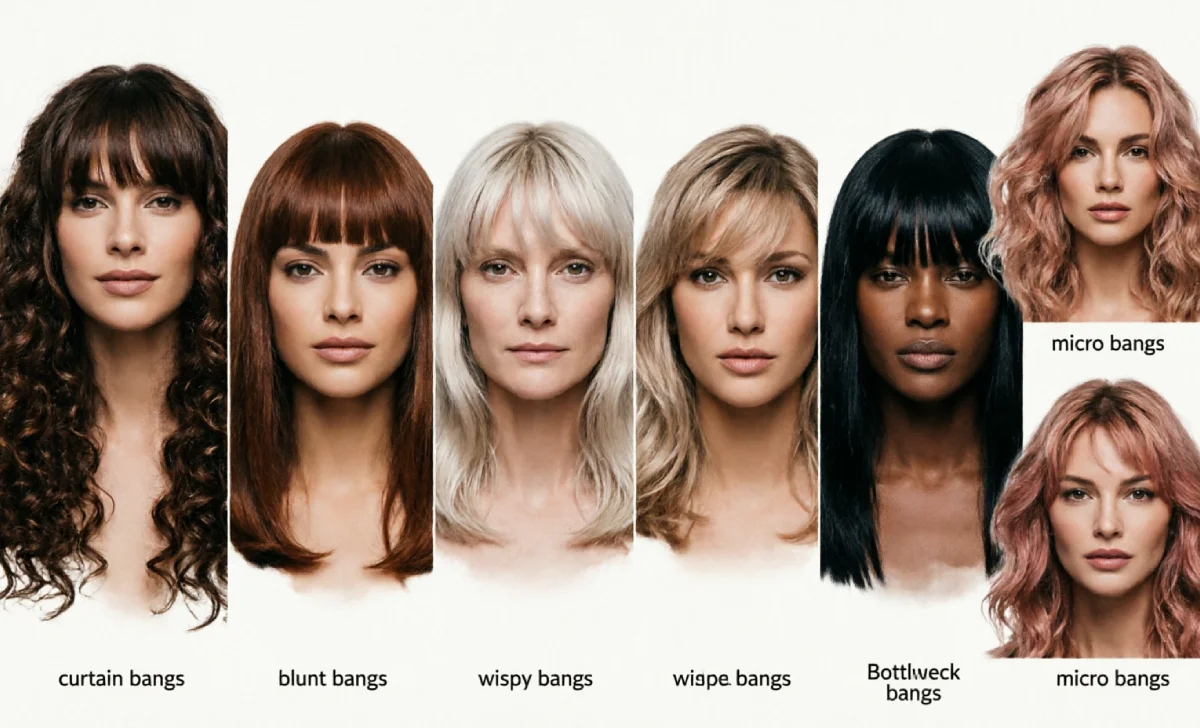
Bangs continue to evolve with new trends appearing every year. If you have been wondering whether fringe styles are still fashionable, these curtain bang trends show why they remain one of the most requested salon looks.
Curtain bangs are among the most popular options today. They part down the middle and frame your face softly. This style works with many face shapes and grows out naturally.
Blunt bangs create a bold statement by cutting straight across the forehead. They draw attention to your eyes and can make a long face appear shorter. This style often works best on straight, thick hair.
Wispy bangs are soft, lightweight, and beginner-friendly. If you are nervous about getting a full fringe, this style offers a gentle introduction. They also require less commitment than heavier bangs.
Side-swept bangs remain a timeless favorite. They fall diagonally across the forehead and help soften facial features. Many people choose them because they are easy to style and maintain.
Bottleneck bangs combine elements of curtain and full bangs. They are narrower near the forehead and gradually widen around the cheeks. This creates a flattering face-framing effect.
Micro bangs, sometimes called baby bangs, sit well above the eyebrows. They create a bold and fashion-forward appearance. However, they require confidence and regular trims.
Curly bangs have become increasingly popular as more people embrace their natural texture. When cut correctly, they add personality and shape without looking bulky. A stylist experienced with curly hair is essential.
Feathered bangs use light layers to create movement and softness. They blend beautifully with medium and long hairstyles. This style works especially well if you prefer a relaxed look.
How to Choose the Best Bangs for Your Face Shape
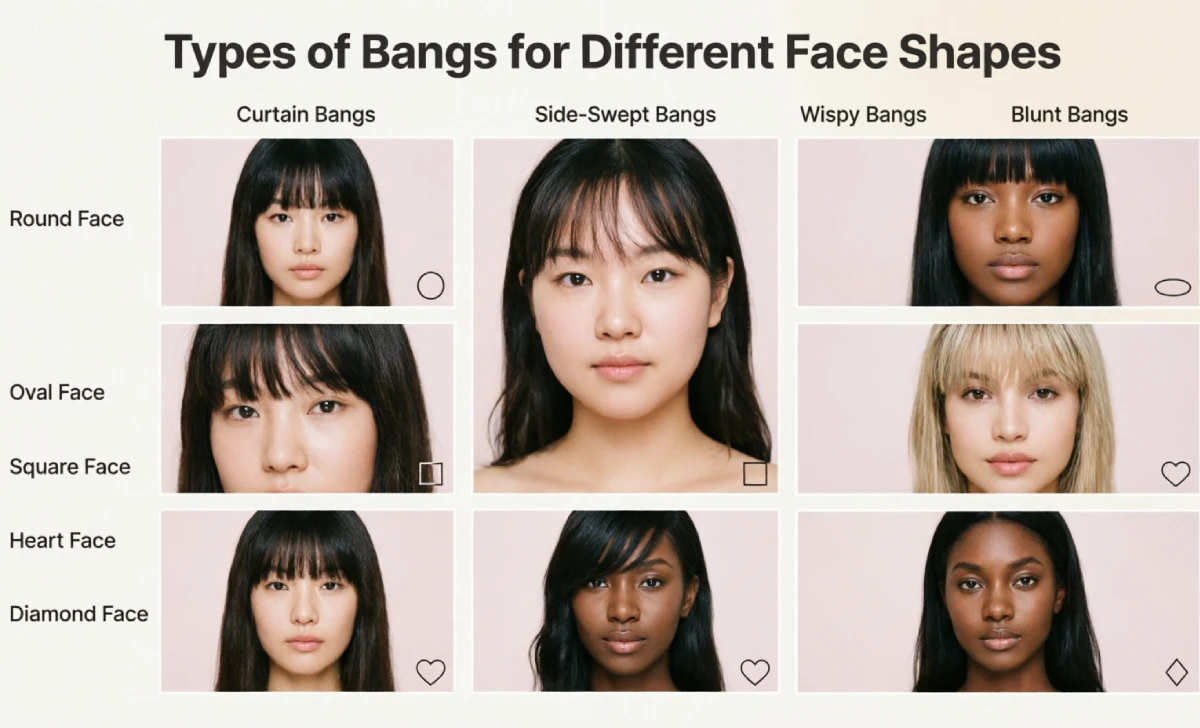
Your face shape plays a major role in determining which fringe will look most flattering. The goal is not to hide your features but to create balance and harmony.
If you have a round face, longer curtain bangs or side-swept bangs are excellent choices. These styles create the illusion of length and help define your features. Avoid very short, heavy bangs that may make the face appear wider.
A square face often benefits from soft and textured styles. Wispy, feathered, and piecey bangs help balance a strong jawline. The added movement prevents the look from feeling too sharp.
People with an oval face are fortunate because most types of bangs work well for them. You can confidently experiment with blunt, curtain, side-swept, or micro bangs. Your naturally balanced proportions allow for greater flexibility.
Heart-shaped faces typically have a wider forehead and narrower chin. Side-swept or curtain bangs help create visual balance. These styles draw attention toward the eyes and cheekbones.
Diamond face shapes feature prominent cheekbones with narrower foreheads and chins. Soft curtain bangs and textured fringe add width where needed. This creates a more balanced overall appearance.
Which Fringe Styles Work Best for Your Hair Texture?
Choosing bangs without considering your hair texture can lead to daily frustration. The right style should work with your natural hair, not against it.
Straight hair is ideal for blunt bangs and micro bangs because it naturally holds clean lines. You can usually maintain the shape with minimal effort. A quick blow-dry or flat iron touch-up is often enough.
Wavy hair pairs beautifully with curtain bangs and layered fringe. These styles allow natural movement to shine through. Many stylists recommend leaving them slightly longer to account for natural waves.
Curly hair can absolutely support bangs when cut properly. Dry cutting is often recommended because curls shrink as they dry. Longer curly bangs generally provide the most flexibility and control.
Thin hair benefits from wispy, piecey, and textured styles. These cuts create the appearance of volume without exposing too much scalp. Lightweight styling products can help maintain fullness.
Thick hair works well with curtain bangs, feathered bangs, and layered fringe. Strategic thinning prevents the style from feeling heavy. A professional stylist can remove bulk while preserving shape.
Essential Styling and Maintenance Tips for Your New Bangs
Even the best haircut needs proper care to look its best. Fortunately, maintaining bangs is usually easier than many people expect.
A small round brush and blow dryer can become your best styling tools. They help create shape, smoothness, and volume within minutes. Most people only need to style the front section rather than their entire head.
Dry shampoo is another useful product to keep nearby. Bangs often collect oil from the forehead faster than the rest of your hair. A quick spray can instantly refresh your fringe.
Many people researching modern fringe styles are surprised by how much maintenance varies between cuts. Curtain and side-swept bangs generally require less upkeep than blunt or micro bangs.
Regular trims are important because bangs grow quickly. Most styles need maintenance every three to five weeks. Keeping up with trims helps preserve the original shape.
Common Mistakes to Avoid When Asking Your Stylist for Bangs
A great consultation often determines whether you love your new hairstyle. Clear communication with your stylist can prevent disappointment.
One common mistake is choosing a style solely because it looks good on a celebrity. Their hair texture, density, and face shape may be completely different from yours. Focus on finding inspiration from people with similar features.
Another mistake is ignoring natural cowlicks and growth patterns. These factors can significantly affect how your bangs behave each day. A skilled hairstylist will account for them during the consultation.
Be honest about how much time you spend styling your hair. If you prefer air-drying and minimal effort, say so. This allows your stylist to recommend a practical option.
Bring several reference photos rather than just one. Multiple images provide a clearer understanding of your desired result. This reduces confusion and improves communication.
What Are the Easiest Bangs to Maintain for Busy Lifestyles?
Not everyone wants to spend twenty minutes styling their fringe every morning. Fortunately, several options are known for being low-maintenance.
Curtain bangs are often considered the easiest style to maintain. They blend naturally into face-framing layers and grow out gracefully. You can also pin them back when needed.
Side-swept bangs are another practical choice. They require minimal styling and can easily be tucked behind the ear. This flexibility makes them popular among busy professionals.
Many hairstylists point to low-maintenance curtain bangs as one of the most forgiving fringe options available today. They suit a wide variety of face shapes and hair textures.
Soft, piecey bangs are also easy to manage because they embrace natural movement. A small amount of texturizing spray is usually enough. This style works particularly well for casual everyday wear.
FAQs
What type of bangs should I get for a large forehead?
Full blunt bangs, curtain bangs, and side-swept bangs are excellent choices. They help reduce the appearance of forehead length while highlighting your eyes.
Do bangs make you look older or younger?
The right bangs often create a younger appearance by softening facial features. However, the effect depends on the style, length, and how well it complements your face shape.
How often do you need to trim bangs?
Most bangs require trimming every three to five weeks. Curtain bangs may last slightly longer because they grow out more naturally.
Can I get bangs if I have a receding hairline?
Yes. Wispy and side-swept bangs can help soften and disguise thinning areas. A professional stylist can recommend the most flattering option.
Conclusion
The best types of bangs are the ones that complement your natural face shape, hair texture, and daily routine. When you choose a style that works with your features, styling becomes easier, and the results look more natural.
Before your next salon appointment, save a few photos that match your goals and discuss them with your stylist. You can also explore these latest bang inspirations to see which trend feels right for you.
With the right guidance and realistic expectations, you can confidently choose a fringe style that enhances your look and fits your lifestyle.