
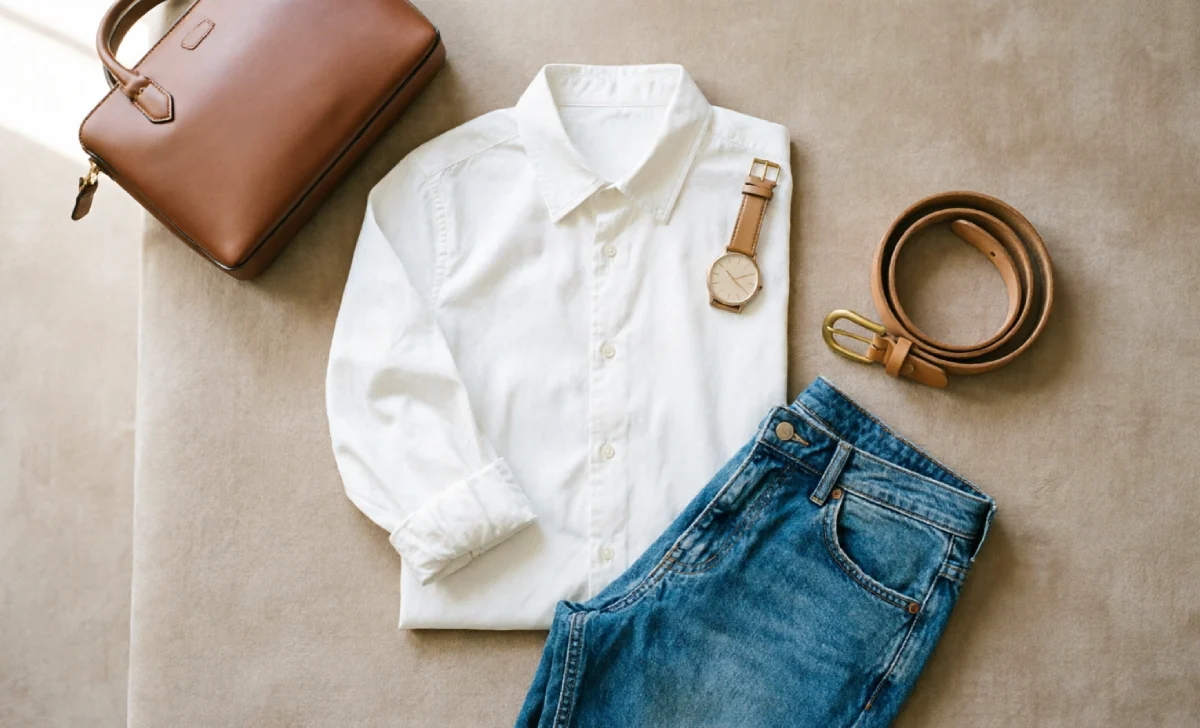
You open your closet every morning and stare at a wall of clothes, yet nothing feels right together. Even your shoes and bags seem to clash with whatever top or jeans you pull out. The 3 color rule fixes this instantly by giving you one simple formula for every outfit. By the end of this guide, you’ll know exactly how to pick your three colors and never second-guess your look again.
What Is the 3 Color Rule and Why Does It Work?
The 3 color rule is a simple styling method. You choose three colors for your outfit — a base, a main color, and an accent — and build every piece around them. This keeps your look clean and prevents chaos.
Color theory in fashion explains why this feels so effortless. When an outfit uses fewer colors, your brain reads it as put-together instead of busy. I’ve seen how this one shift changes the way people feel about getting dressed every morning.
This visual balance is why capsule wardrobes and minimalist style keep growing in popularity. Fewer colors mean fewer decisions, and fewer decisions mean less decision fatigue every single day.
Do Neutrals Count in the 3 Color Rule?
You’ve probably wondered if black, white, or denim take up one of your three color slots. There are two ways people use this rule, and both are correct.
The first approach treats neutral colors like black, white, gray, beige, and navy as a free base. In this version, your three colors are the actual colors you build on top of that neutral foundation.
The second approach counts neutrals as one of your three. If you wear a beige blazer, a white shirt, and blue jeans, that’s already used up your three colors. Pick whichever version matches how bold or simple you want your outfit to feel.
How Do You Choose Your Three Colors for an Outfit?
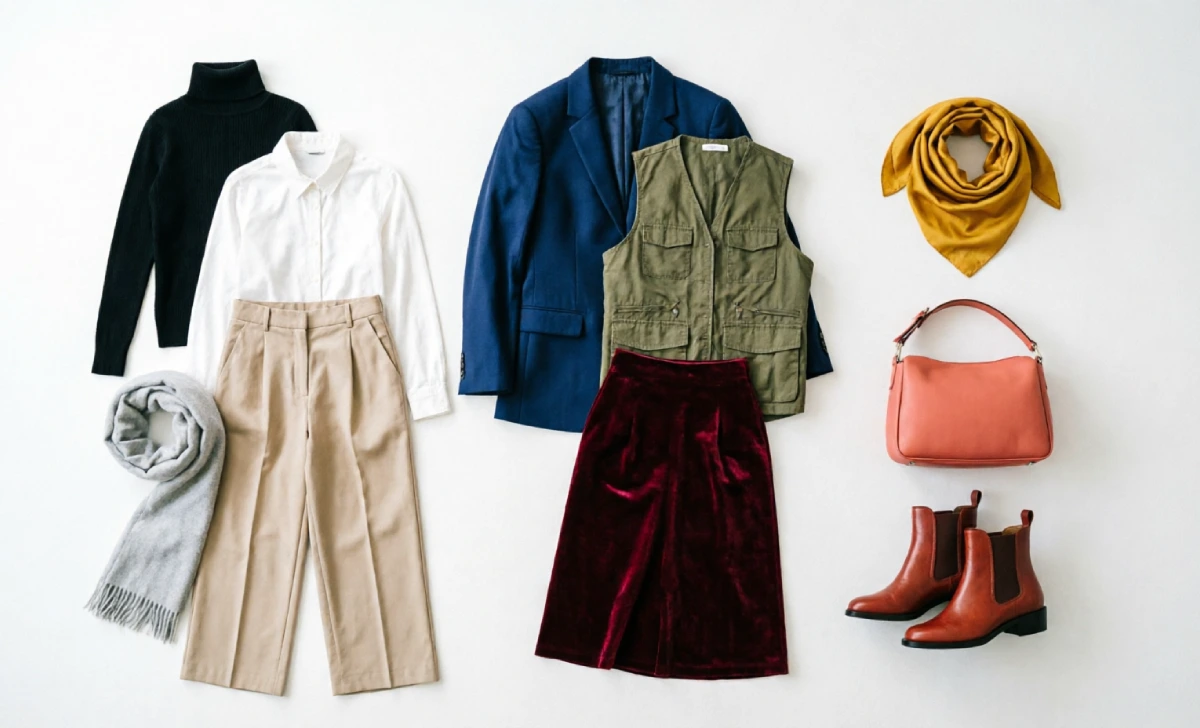
Start with your base. Pick a neutral you already own in large amounts, like black jeans or a white shirt, since this becomes the anchor of your outfit.
Then choose your main color. This is the color that takes up the second-largest space in your outfit, such as a navy sweater or an olive jacket.
Finally, add your accent. A small pop like a red bag or a mustard scarf pulls the whole look together. Complementary colors and analogous colors on the color wheel both work well for this last step.
The Easiest 3 Color Outfit Formulas for Beginners
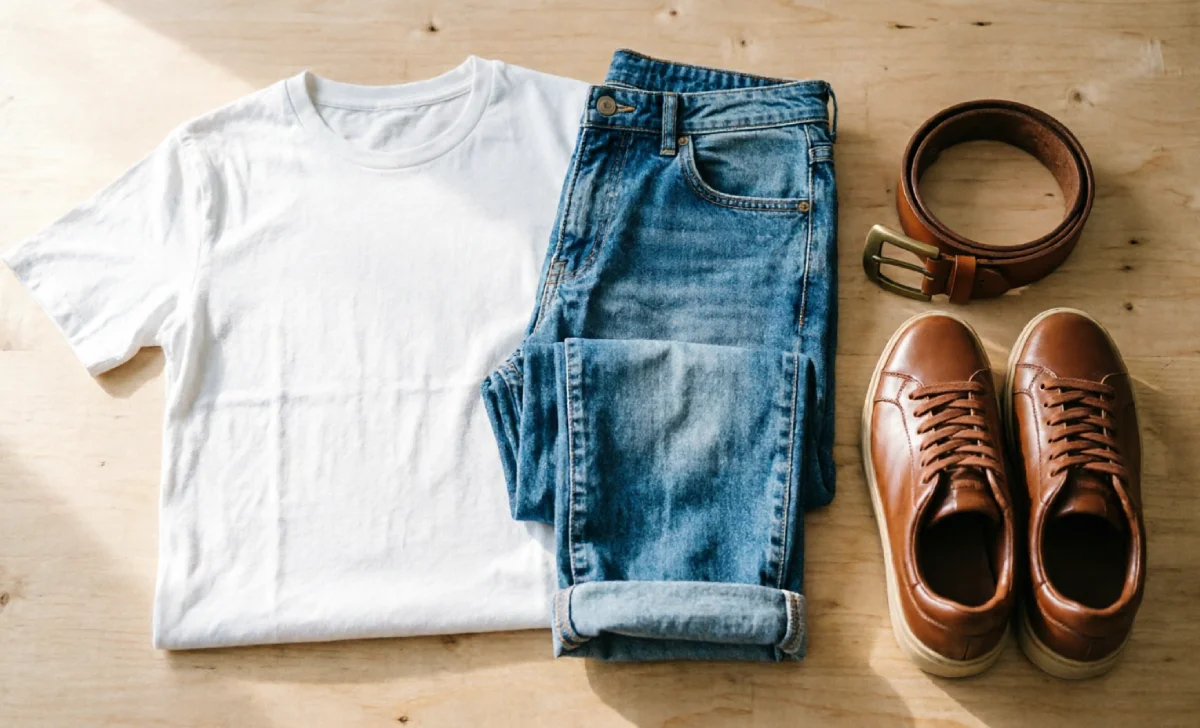
A white tee, blue jeans, and tan accessories are the easiest formula for casual days. It works because the white and blue are calm and the tan accent adds warmth without effort.
For business casual, try a beige blazer, a black top, and white sneakers. This combination looks polished but never feels stiff or overdressed.
A gray sweater, black trousers, and a burgundy scarf give you a smart-casual look for cooler days. Each formula follows the same base, main, accent structure you just learned.
How Does the 3 Color Rule Work with Shoes, Bags, and Accessories?

Shoes can either match one of your three colors or act as your accent. A pair of heels or flats in your accent color instantly ties your feet into the rest of the outfit.
Bags work the same way. A tote in your neutral base color blends in quietly, while a bag in your accent color becomes a small statement piece.
Small accessories like watches, belts, and scarves are the easiest place to sneak in your accent color. They add interest without pushing you past your three colors.
Can You Wear Patterns and Prints with the 3 Color Rule?
Patterns can absolutely fit the rule. Just pull the most dominant color from the print, like the navy in a striped shirt, and treat it as one of your three colors.
A floral blouse with pink, green, and white can count as your main color plus accent, since the print does double duty. Keep everything else around it solid to avoid visual clutter.
This trick works for a pinstripe shirt, a plaid scarf, or any multicolored piece already sitting in your closet. You just have to name its loudest color and build from there.
What Is the Difference Between the 3 Color Rule and the 60-30-10 Rule?
The 3 color rule is about which colors you pick. The 60-30-10 rule, borrowed from interior design, is about how much space each color takes up in your outfit.
You can actually use both together. Let your neutral base cover 60 percent of the outfit, your main color take 30 percent, and your accent fill the last 10 percent.
This combination gives you both color selection and proportion in one simple system. It’s one of the closest things to a foolproof outfit formula that exists.
Adapting the 3 Color Rule to Your Personal Style
A minimalist might choose black, white, and gray for a clean, quiet look. The same three-color logic still applies, just with a calmer palette.
An edgy dresser might lean into black, deep red, and silver hardware for more drama. A flamboyant gamine style lover might mix black, white, and one bold pop like cobalt blue for a playful edge.
A romantic dresser could pick blush pink, cream, and gold accents for a softer feel. The rule flexes to fit your personality instead of forcing you into someone else’s aesthetic.
What Are the Most Common 3 Color Rule Mistakes?
Using three bold colors with no neutral anchor is the biggest mistake. Without a calm base, the outfit feels loud and competitive instead of balanced.
Ignoring proportion is another common slip. Wearing your accent color in equal amounts to your main color removes the visual hierarchy that makes the rule work.
Focusing only on color while ignoring texture and fit can also flatten an outfit. Color coordination matters, but a well-fitted piece always makes the palette look better.
When and How Should You Break the 3 Color Rule?
Once you’ve mastered the basics, you can break the rule on purpose. Fashion rules are tools to guide you, not permanent laws you must follow forever.
Try a monochromatic outfit in different shades and textures of one color for an elevated look. Or add a fourth color in a tiny, controlled dose, like a small pin or a thin belt.
The key is intention. Break the rule because you understand it, not because you forgot it.
Your 3 Color Rule Quick-Start Plan for Tomorrow Morning
Open your closet and pick your neutral base first. This could be black jeans, white trousers, or a beige skirt you already wear often.
Choose one main color you genuinely love wearing. Then add one small accent through a bag, shoes, or jewelry to finish the look.
This three-step method works whether you’re dressing for the office or a weekend brunch. Even fans of Jennifer Aniston’s style rely on this same simple base-plus-accent formula to look put-together effortlessly.
Frequently Asked Questions About the 3 Color Rule in Clothing
Does the 3 color rule include shoes and bags in the count?
Yes, shoes and bags usually count as one of your three colors unless you’re using them purely as your accent color.
Can I wear more than three colors if one is a very small detail?
Yes. A tiny detail like a button or a thin stripe is generally too small to count as a full color.
Is the 3-color rule different for men and women?
No, the core formula stays the same for everyone. Only the specific colors and pieces you choose will differ based on personal style.
What if my patterned shirt has multiple colors—does each color count?
No, only the dominant color in the pattern usually counts as one of your three. The rest of your outfit should stay solid to keep the palette simple.
Conclusion
The 3 color rule turns the daily chaos of getting dressed into one repeatable system: a neutral base, a color you love, and a small accent. You don’t need a fashion degree to look coordinated — you just need this one simple formula. Start tomorrow with your favorite neutral, add one color you love, and finish with a small accent, and you’ll already be mastering the rule.