
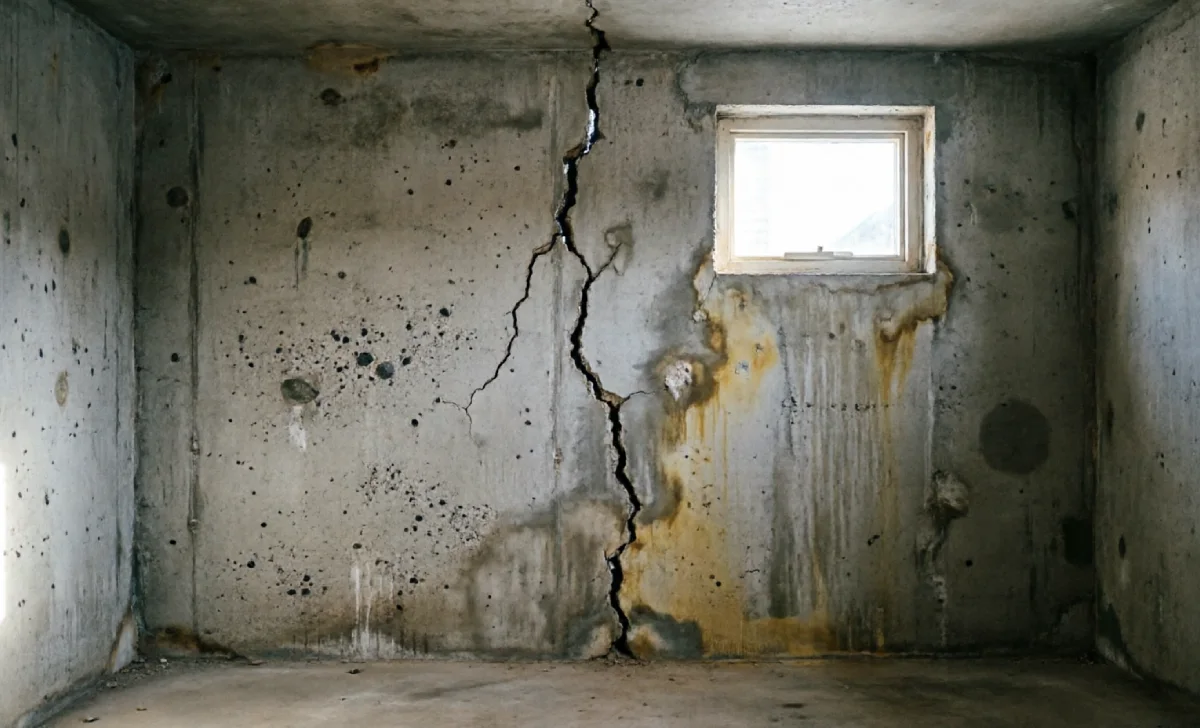
You spot it during your weekend basement sweep: a thin line running straight up the concrete. Your stomach drops. Is this a structural emergency, or just normal house settling? If you’re staring at a vertical basement wall crack, wondering whether to call a pro or just keep an eye on it, you’re not alone. Good news: most vertical cracks aren’t immediate disasters—but you still need to know exactly what you’re looking at before minor issues like excess caulk leaks compound into bigger foundation concerns. Let’s cut through the panic and give you a clear, step-by-step way to read your foundation’s warning signs.
What Causes Vertical Cracks in Foundation Walls?
Houses move. Always have, always will. Fresh concrete cures, shrinks, and settles into the soil beneath it. That initial settling often leaves behind thin, straight lines that stop spreading after a year or two. These are usually harmless.
But not every vertical line comes from gentle settling. Sometimes it’s water doing the heavy lifting. When the soil around your home gets soaked, it expands. That swelling pushes against your foundation with surprising force. Over time, that pressure can split the concrete open. What causes hairline cracks in foundation walls is rarely one single thing—it’s usually a mix of soil movement, temperature shifts, and moisture cycling in and out of the dirt.
Material shrinkage during construction plays a role too. Pour days, humidity levels, and even the mix ratio can leave behind cosmetic surface lines. They look sharp, but they rarely go deep. The real question isn’t just why it’s there. It’s whether it’s still growing.
How to Assess Your Foundation Crack: A 5-Minute Checklist
Grab a ruler, a flashlight, and your phone. You don’t need special tools—just a quiet ten minutes and a calm head.
Start with the quarter test. Slide a U.S. quarter into the widest part of the crack. If it won’t fit, you’re likely looking at something under 1/8 inch. That’s the sweet spot for non-urgent cracks. If the coin drops in easily, or you can see light through it, make a note. Width matters more than length.
Next, run your fingers along both edges. Does one side sit higher than the other? That’s called displacement, and it’s a real red flag. Also, check for stair-step patterns if you have a block foundation. Those follow mortar joints and usually point to serious shifting.
Finally, look for moisture. Is the crack damp? Do you see white, chalky powder (efflorescence) around the edges? That means water’s traveling through the concrete—and if moisture lingers, knowing proper mold removal tips becomes important for keeping your basement air healthy. A dry, stable crack is far less urgent than a wet one. Learning how to tell if a foundation crack is serious comes down to those three checks: width, alignment, and water.
Take a clear photo today. Date it. Check it again in four weeks. If nothing’s changed, breathe easy. If it’s wider, longer, or now leaking, it’s time to move to the next step.
When a Small Crack After Rain Becomes a Warning Sign
You notice a small crack in the foundation wall after rain—maybe it wasn’t visible last week, or the edges just look darker. That timing isn’t random.
Water is heavy. Wet soil swells. Dry soil shrinks. That constant push-and-pull creates pressure cycles that your foundation feels every season. A crack that opens or widens after a heavy storm is your house telling you moisture is getting where it shouldn’t. Does water cause foundation wall cracks? Yes, especially when downspouts dump runoff right against the siding or when yard grading slopes toward the house instead of away from it.
You can tackle the obvious triggers this weekend. Clean clogged gutters. Extend downspout outlets at least five feet from the foundation. Add a few inches of soil near the base so water runs outward. Simple fixes stop a lot of problems before they start—but if you suspect hidden water paths, learning how to fix leaking pipes gives you a head start on diagnosis.
But here’s the hard truth: if water’s already found a path through the concrete, surface tweaks won’t seal the issue. Persistent dampness, musty basement air, or puddles forming near the crack mean you’ve moved past “watch and wait.” That’s when you start weighing professional drainage solutions or structural repairs.
DIY Monitoring vs. When to Call a Professional
Most homeowners can safely keep an eye on a crack that’s:
- Hairline (under 1/8 inch)
- Perfectly vertical and straight
- Completely dry
- Unchanged after two to three monthly checks
Set a phone reminder. Take a quick photo each time you check the basement. Keep a simple notebook or phone note with dates and measurements. That’s smart maintenance.
Call a licensed structural engineer or foundation specialist if you spot any of these:
- Crack wider than 1/4 inch
- Horizontal cracking or visible wall bowing
- Active seepage or dripping water
- Doors or windows nearby that suddenly stick or won’t close
- Multiple cracks radiating from a single corner
You don’t need to panic. Foundation movement happens slowly in most cases. You have time to gather quotes, read reviews, and get a second opinion. The goal is catching movement early, before it turns into a basement renovation budget. Even cosmetic follow-ups—like knowing how to patch wall holes after repairs—help keep your space clean and protected.
Think of this like a triage system. Watch the stable ones. Fix the drainage triggers. Call the pros for anything that’s moving, wet, or pushing walls out of line. Clear rules keep you from overpaying for minor cracks or underreacting to real structural stress.
FAQs
Is a vertical crack always safer than a horizontal one?
Generally, yes. Horizontal cracks usually mean heavy soil pressure pushing inward, which can lead to bowing or collapse if ignored. Vertical cracks most often come from settling or shrinkage. That said, a wide, wet vertical crack still needs attention.
Can I seal a hairline crack with DIY epoxy?
You can, and it works fine for dry, cosmetic lines. But if there’s any chance water is involved, sealing the surface without fixing the drainage source traps moisture inside the wall. That can cause spalling or hidden damage over time.
How quickly do foundation cracks get worse?
Most don’t. If a crack stays the same size and stays dry for six months, it’ll likely stay that way for years. Rapid changes—widening in weeks, new leaks, or shifting nearby walls—are what you need to act on fast.
Will homeowner’s insurance cover foundation cracks?
Rarely for normal settling or shrinkage. Policies typically only cover sudden, accidental damage like a fallen tree or burst pipe. Water damage from poor grading or clogged gutters is usually considered maintenance, which falls on you.
Conclusion
Finding a crack in your basement feels scary because your home is your biggest investment. But panic doesn’t fix concrete. Knowledge does. You now have a straightforward way to measure, track, and decide what’s next.
If your crack passed the quick checks, keep monitoring it monthly and maintain your drainage systems. If it didn’t, start gathering quotes from local structural engineers or foundation repair specialists. Ask questions. Request photo documentation. Compare their diagnosis, not just their price tag.
Your house will keep settling, aging, and reacting to the weather. Now you know exactly how to read the signs before they become expensive problems.