
According to a 2024 survey by the National Association of Realtors, nearly 1 in 3 homebuyers discover unexpected repair costs within the first year of purchase — with average repair bills exceeding $10,000. Many of these problems were present before closing, invisible to the untrained eye.
A thorough property inspection before making an offer is your strongest financial defense. It helps you identify structural flaws, water damage, and system failures before they become your legal — and financial — responsibility. Buyers who skip this step often pay the price for years.
In this guide, you will learn how to inspect property for hidden damage step by step — including a practical checklist you can use anywhere, whether you are a first-time buyer or an experienced investor.
Why Is It Important to Inspect a Property Before Buying?
The average cost of undisclosed home damage ranges from $5,000 to $30,000, depending on severity. Foundation repairs alone can cost $15,000–$50,000 if left unaddressed.
A 2025 Zillow Buyer Report found that 67% of homebuyers expressed regret after purchase, with hidden repair costs being the top reason. Inspecting before you offer protects your investment and gives you negotiating power.
A pre-offer inspection can:
- Reveal problems invisible during casual walkthroughs
- Reduce your offer price based on real repair data
- Help you avoid properties with legal or safety issues
Property Inspection Checklist (Quick Overview Table)
| Area | What to Check | Warning Signs |
|---|---|---|
| Foundation | Cracks, settling | Uneven floors, wall gaps |
| Roof | Shingle condition, age | Water stains, sagging areas |
| Plumbing | Pipes, water pressure | Leaks, low pressure, rust |
| Electrical | Wiring, panel, outlets | Flickering lights, burn marks |
| Walls & Ceilings | Stains, cracks | Yellow/brown spots, bubbling paint |
| Windows & Doors | Seals, alignment | Drafts, difficulty opening |
| Basement / Crawlspace | Moisture, mold | Musty smell, white mineral deposits |
| HVAC System | Age, filter condition | Unusual noise, uneven heating |
| Pest Evidence | Droppings, wood damage | Hollow wood, mud tubes |
How to Inspect a Property for Hidden Damage (Step-by-Step)
Check the Foundation and Structure
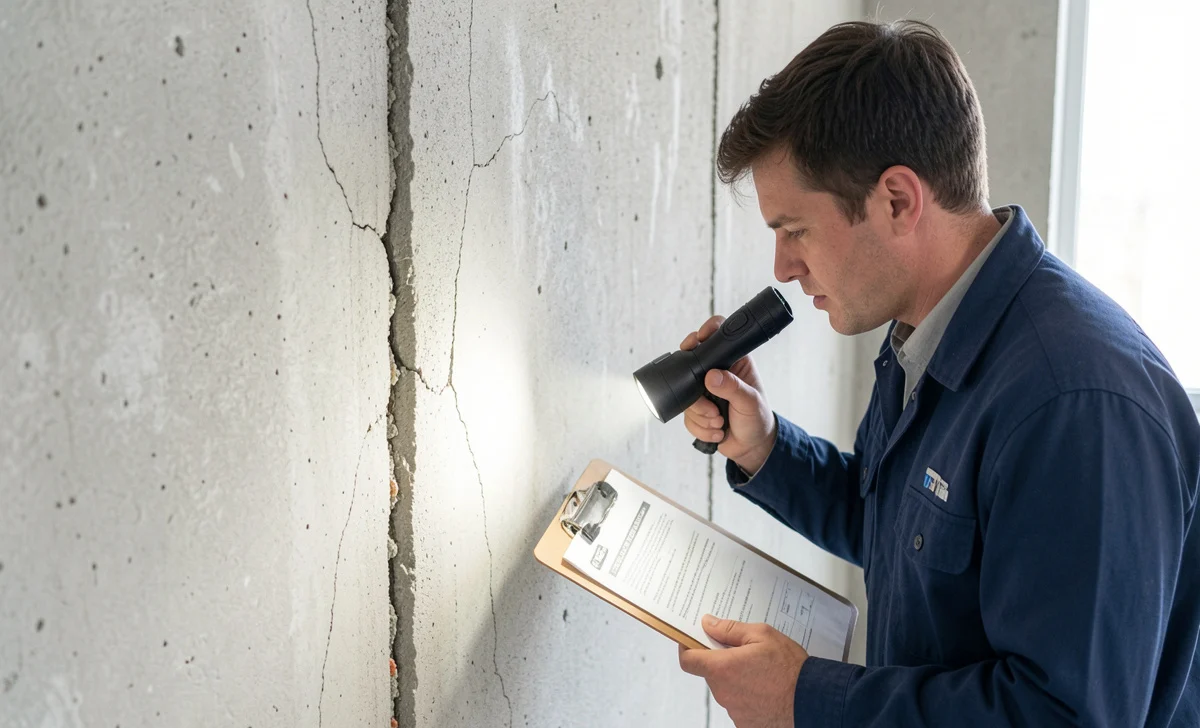
Walk the perimeter of the home and look for cracks in the foundation. Cracks wider than 3mm are a serious warning sign — they indicate active settling or structural stress.
Inside, check floors with a level tool. If the bubble moves more than 5mm off center, the structure may be shifting. Look for gaps between walls and the ceiling, which indicate foundation movement.
Inspect for Water Damage and Leaks
Water is the most destructive force in any home. Check ceilings and walls for yellow or brown stains, which signal past or active leaks.
Open under-sink cabinets and look for soft wood, swelling, or black mold. Smell matters — a persistent musty odor indicates hidden moisture, even when surfaces appear dry.
Examine the Roof Condition
Ask the seller for the roof’s age. Most roofs last 20–25 years; anything older needs immediate evaluation. From the ground, use binoculars to spot missing, curling, or cracked shingles.
Inside the attic, look for daylight through the roof deck and check rafters for water stains or dark streaking. These are signs of slow leaks that the seller may not have disclosed.
Test Electrical Systems
Flip every light switch and test every outlet with a phone charger or outlet tester (under $10). Flickering lights or dead outlets indicate wiring problems that can cost $3,000–$15,000 to fix.
Check the electrical panel for double-tapped breakers, aluminum wiring (silver-colored), or any signs of scorching. Outdated panels like Federal Pacific are a fire risk and must be replaced.
Evaluate Plumbing System
Turn on every faucet and flush every toilet. Low water pressure (below 40 PSI) signals pipe corrosion, partial blockages, or supply line issues. Check under sinks for pipe corrosion, green staining, or moisture rings.
Run the hot water and time how long it takes to heat up. Delays beyond 2 minutes may indicate a failing water heater, which costs $600–$1,800 to replace.
Look for Pest Infestation
Tap wooden baseboards, door frames, and floor joists with a screwdriver. Hollow sounds indicate termite damage inside. Look for mud tubes along foundation walls — a clear sign of subterranean termite activity.
Check corners of basements and garages for droppings. Rodent infestations can cause significant damage to insulation and wiring, costing $500–$5,000 to remediate.
Common Hidden Problems Most Buyers Miss
Most buyers focus on cosmetic issues and miss the expensive structural ones. Here are the most overlooked problems:
- Poor insulation — Missing or inadequate insulation in walls and attics increases energy bills by 20–30% annually.
- Drainage issues — Land that slopes toward the home channels rainwater directly into the foundation or basement.
- Structural shifts — Doors and windows that stick or won’t close properly are early signs of foundation movement.
- Outdated plumbing materials — Polybutylene pipes (used 1978–1995) are known to fail without warning and affect home insurability.
- Hidden additions — Additions built without permits may not meet code and can create liability issues at resale.
Tools You Can Use During Inspection
You don’t need professional equipment to spot major problems. These affordable tools make a real difference:
| Tool | Use | Estimated Cost |
|---|---|---|
| Flashlight / Headlamp | Dark corners, attic, crawlspace | $15–$30 |
| Moisture Meter | Detect hidden moisture in walls | $20–$60 |
| Level Tool | Check floor and wall evenness | $10–$25 |
| Outlet Tester | Identify dead or wired outlets | $8–$15 |
| Binoculars | Inspect the roof from ground level | $20–$50 |
| Screwdriver | Test wood for pest damage | $5–$10 |
When Should You Hire a Professional Inspector?
A DIY walkthrough is valuable, but it cannot replace a licensed inspector’s report. Always hire a professional before finalizing any purchase offer.
Professional inspection costs range from $300 to $600 for standard homes (up to 2,000 sq ft). Larger properties or older homes may cost $600–$1,000. Specialty inspections (mold, radon, sewer scope) add $100–$300 each.
Hire a professional when:
- The home is over 20 years old
- You notice any of the red flags listed above
- The seller is unwilling to allow an inspection (walk away)
- The property has had renovations, additions, or water events
Red Flags That Should Stop You from Buying
Some problems are too costly or legally complex to justify purchasing the property. Walk away if you find:
- Major foundation cracks with active movement or bowing walls
- Severe mold infestation covering more than 10 sq ft — especially black mold (Stachybotrys)
- Knob-and-tube or aluminum wiring throughout the entire home
- Unpermitted structural additions that affect load-bearing walls
- Active sewer line failure — confirmed by a sewer scope inspection
- Legal encroachments on the property line or easement disputes
If you decide to proceed despite these issues, factor in full remediation costs before you negotiate a lower price on the home.
Expert Tips to Avoid Costly Mistakes
Never inspect a property alone. Bring someone with a construction background to spot what you might miss.
“Most buyers look at paint colors and kitchen finishes. The smart ones look at the foundation, roof, and electrical panel first — because those are the costs that can break a deal or break a budget.” — Mark Seidler, Licensed Home Inspector, 20+ years experience, ASHI Member
Additional expert-backed tips:
- Schedule inspections on a dry day after rain — moisture problems become far more visible.
- Request the seller’s disclosure form before you inspect, then verify every claim yourself.
- Unique insight most articles miss: Check the attic ventilation. Poor attic airflow causes moisture buildup that rots roof decking from inside — a $5,000–$12,000 repair that a quick attic look can catch in 5 minutes.
- Never waive an inspection contingency, even in a hot market. The short-term competitive advantage is not worth long-term financial risk.
What to Do After Finding Hidden Damage
Finding damage during inspection does not mean the deal is dead. You have three options:
Option 1 — Negotiate the Price: Get written repair estimates from licensed contractors. Present the data to the seller and request a price reduction equal to repair costs. This is the most common outcome for minor-to-moderate issues.
Option 2 — Request Repairs Before Closing: Ask the seller to fix the issues using licensed contractors before the closing date. Always verify repairs with a re-inspection — never accept verbal confirmation.
Option 3 — Walk Away: If the damage is severe, undisclosed intentionally, or the seller refuses to negotiate, exercise your inspection contingency and walk away. Understanding your full closing costs as a buyer helps you calculate whether the deal still makes financial sense even after repairs.
Key Takeaways — How to Inspect Smartly
- Start with structure — foundation, roof, and load-bearing walls are the most expensive repairs.
- Water is enemy #1 — any sign of moisture deserves deep investigation.
- Use tools — a $20 moisture meter and flashlight can save you $20,000.
- Always hire a professional before closing, regardless of what your DIY inspection found.
- Negotiate with data — inspection findings are your strongest bargaining tool.
- Never skip the contingency — an inspection clause protects your deposit and your decision.
- Red flags are exit signals — not every damaged property is worth saving.
Conclusion
Inspecting a property before making an offer is not a formality — it is the single most important financial decision of the buying process. The buyers who protect themselves are the ones who look beyond the staged furniture and fresh paint to examine what the home is actually made of.
The best offer is an informed offer. Knowledge of a home’s true condition puts you in control of the price, the terms, and the outcome.
If you are ready to take the next step, start with a structured walkthrough using this checklist, bring the right tools, and always back your inspection with a licensed professional. Your future self will thank you.