
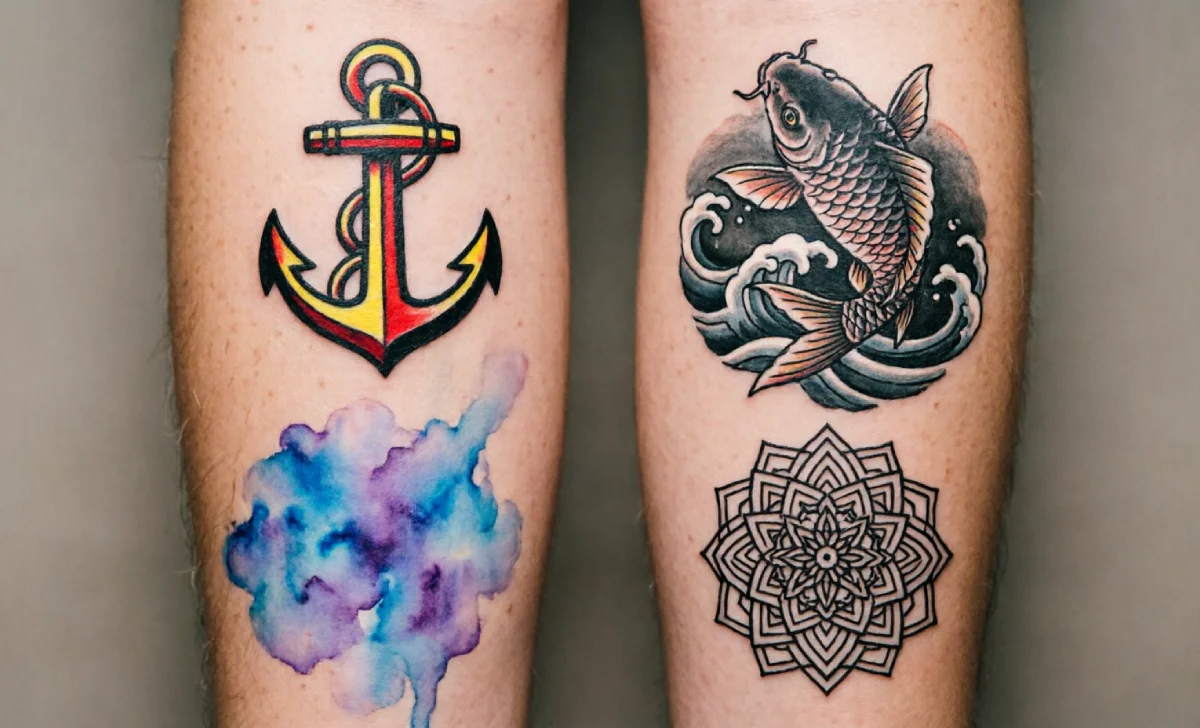
You’re standing at the edge of a big decision. You want a tattoo, but not just any design — you want something that speaks before you say a word. Learning about tattoo styles and meanings first is worth it, since this choice is meant to last, though options like Picoway tattoo removal exist if you ever change your mind. Every time you scroll through images, the styles blur together, and the meanings feel out of reach.
Tattooing has always been a storytelling art. Bold lines, washes of color, and carefully chosen symbols carry histories that stretch back decades or centuries, from sailor docks to the sacred studios of Japan, each style forming its own visual dialect.
This guide is your translator. By the end, you’ll know the major styles, what they mean, and how to pick the one that fits your story.
What Are the Most Popular Tattoo Styles and Their Origins?
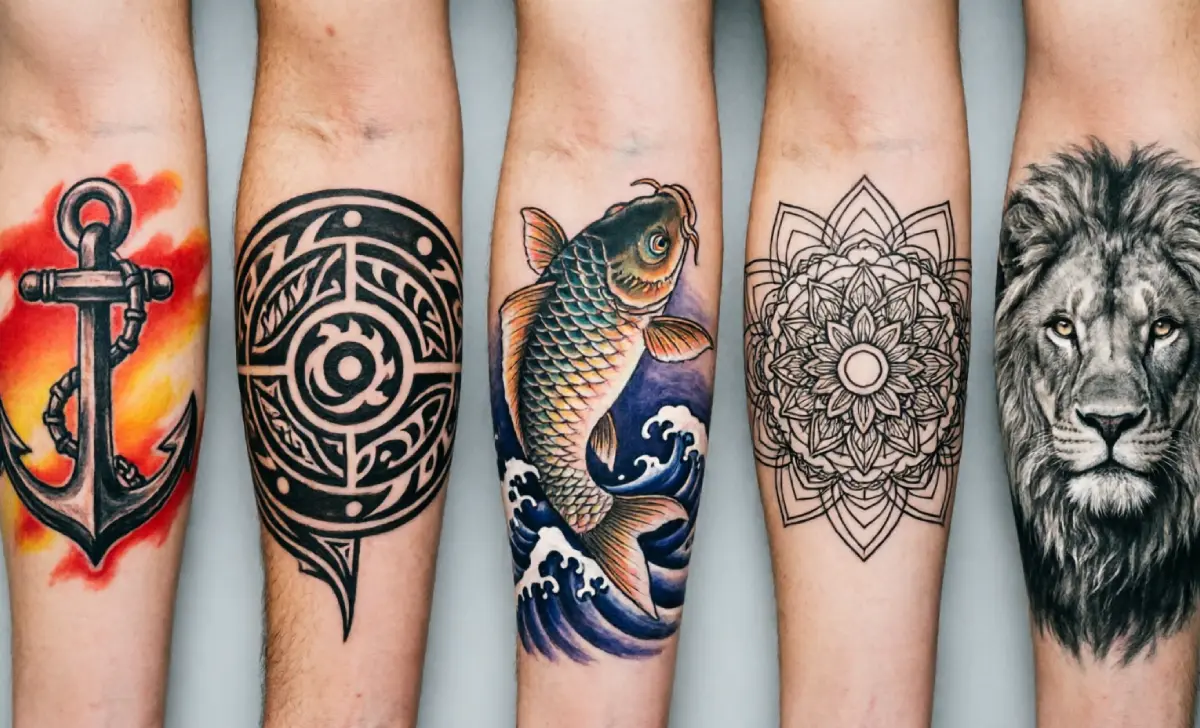
Every tattoo artist’s portfolio spans a huge range of looks, but behind each style sits a birthplace and a reason for existing. Origin shapes meaning, so knowing where a style comes from tells you what it was built to say.
American Traditional was born on the bodies of sailors. Heavy black outlines and solid primary colors weren’t just an artistic choice; they were built to survive skin exposed to sun, salt, and hard labor. Sailor Jerry, the style’s father figure, turned simple symbols into a code of survival and loyalty.
Meanwhile, Japanese Irezumi grew out of woodblock prints and warrior culture. Full-body suits of ink, often hidden beneath clothing, told epics of dragons, koi, and cherry blossoms — talismans of strength shaped by Japan’s deep sense of honor.
Tribal tattooing reaches back even further, rooted in the islands of Polynesia. Each line and geometric pattern once served as a fingerprint of identity — family, rank, deeds — precise enough that no two designs matched.
Realism arrived later, once shading techniques and machines advanced enough to recreate a photograph on skin, shifting tattoo meaning from shared symbols toward personal memory. Newer styles like watercolor and geometric pushed the art toward feeling and abstraction instead.
What Does a Traditional American Tattoo Mean?
A classic anchor or a heart wrapped in a banner might look like a retro design choice, but these images once formed a secret language — one you can still speak today.
Take the swallow. Sailors believed it carried a soul to heaven if the wearer died at sea, so getting one inked marked a long-distance traveler who had crossed rough water and returned. A dagger through a rose read differently: betrayal wrapped in beauty.
Color reinforced the message — red for passion, yellow for energy, black for the weight of experience. Choosing this style today links you to a legacy of bold self-expression that traces straight back to Sailor Jerry’s hand.
You don’t need to be a sailor to wear a swallow. Knowing what it once meant adds depth to a choice you now carry as your own.
How Japanese Irezumi Tattoos Tell a Story of Honor and Myth
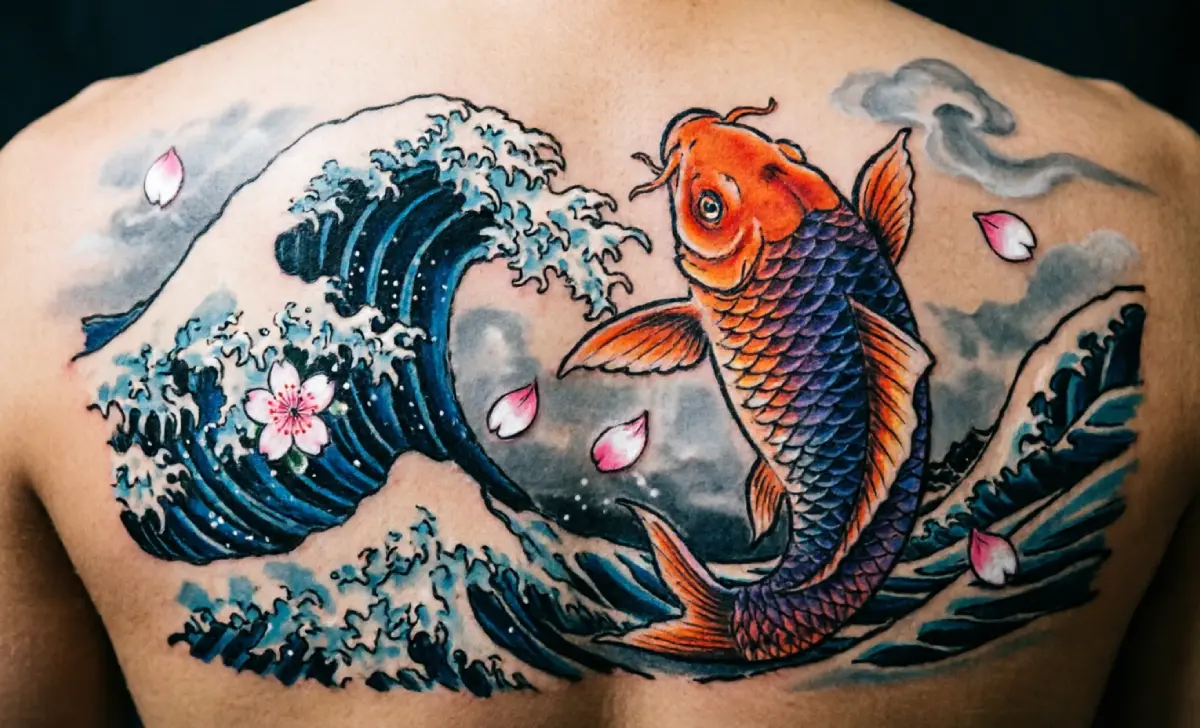
A full Japanese backpiece feels less like a tattoo and more like a painting in motion. Every element works together, turning the piece into a single narrative about transformation rather than a collection of pretty images.
Consider the koi fish. Japanese folklore holds that a koi swimming upstream transforms into a dragon if it succeeds, making it a symbol of perseverance in the face of hardship. The dragon beside it stands for wisdom and protection.
Cherry blossoms add a further layer, blooming brilliantly and falling within days as a reminder that life is both beautiful and brief. Even the background waves and clouds carry weight, representing the chaos and order a person moves through.
Irezumi remains deeply respected in Japan, tied to masters like the legendary Horiyoshi III. Choosing this style means choosing patience — these pieces often take years — and a meaning that unfolds slowly.
What Is the Meaning Behind Geometric and Dotwork Tattoos?
A perfectly balanced geometric tattoo satisfies something instinctive, the same sense of order that makes a starry sky or honeycomb pleasing to look at.
Many geometric designs draw from sacred geometry: the flower of life, mandalas, interconnected triangles. A circle often stands for wholeness, while a triangle can represent change.
Dotwork brings a softer texture that solid lines can’t reach. Thousands of tiny dots form gradients and shadows, and the slow, deliberate process mirrors the calm the finished design evokes. Both styles stay flexible, working equally well as a full sleeve or a tiny wrist piece.
How Do You Choose the Right Tattoo Style for Your Personality?
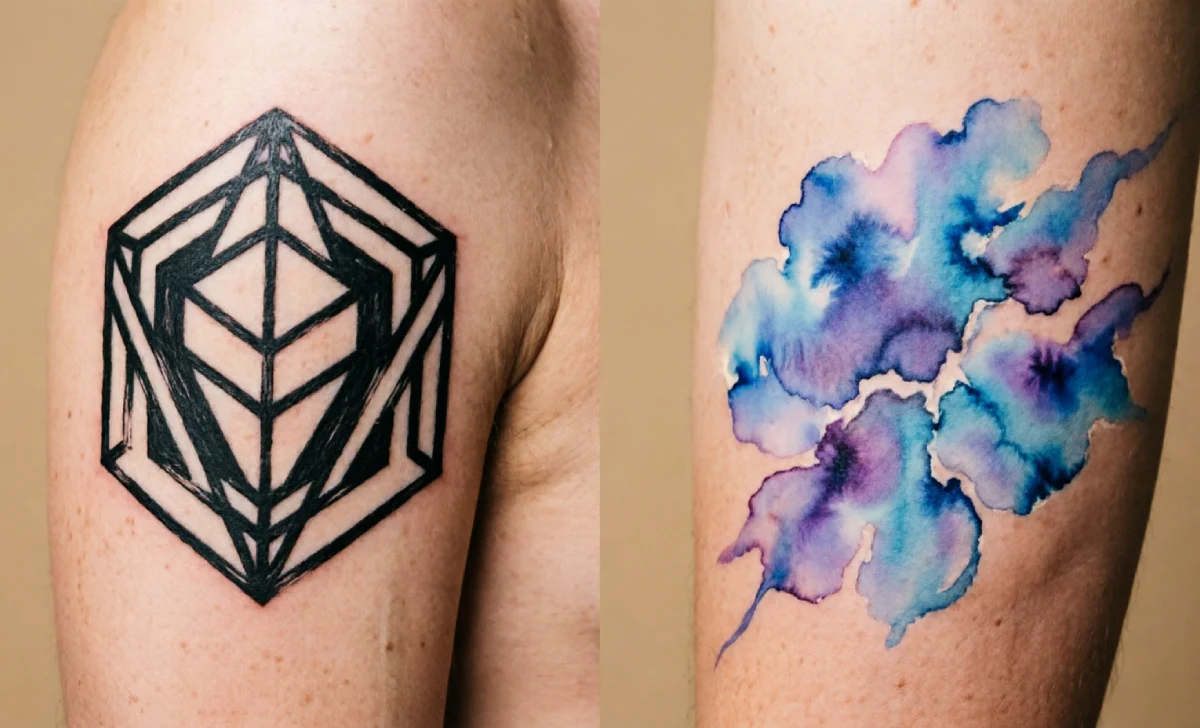
You’ve seen the options; now the real question is which one fits who you are, not just which images look impressive. The strongest choice rarely follows a trend.
Someone who values tradition often gravitates toward American Traditional. If resilience and transformation feel closer to home, Japanese Irezumi’s narrative depth might pull harder. Watercolor suits a creative free spirit, while minimalist and blackwork designs suit people who prefer clean lines and quiet certainty.
If you’re not ready for anything permanent, it’s worth exploring microblading vs tattoo options first; that comparison shows how commitment levels vary even among styles that look simple.
Practical factors matter too. Realism needs a large canvas, so geometric or fine-line pieces often suit smaller placements better. Bold traditional lines hold up beautifully for decades, while delicate watercolor may need touch-ups sooner.
Realism Tattoos: Portraits That Capture a Soul
A well-executed realism tattoo carries an emotional weight beyond its photographic detail — it holds a frozen moment in time.
Artists skip bold outlines in favor of subtle shading, producing portraits of a parent, child, or pet that feel almost alive. Meaning here isn’t hidden in cultural symbols; it sits directly in the eyes looking back at you.
Nature scenes work the same way. A detailed lion or stormy ocean can represent strength without relying on a shared symbol, since the meaning comes from your own memory rather than tradition.
Watercolor Tattoos and the Meaning of Fluidity
Watercolor tattoos skip the black outline entirely, letting colors bleed into each other for an effect that looks spontaneous and alive.
Because the style ignores traditional constraints, its meaning ties more to movement and change than fixed symbols. A hummingbird with wings dissolving into a blue-purple splash might represent freedom rather than a specific idea.
Aging is a fair concern; without an outline, edges soften over time. If the result ever bothers you, treatments such as laser tattoo removal can lighten the piece for a rework. Many wearers embrace that shift as part of the art.
Are Tribal Tattoos Still Meaningful, or Have They Lost Their Roots?
Tribal patterns look striking, but their meaning is inseparable from the cultures that created them, so the line between homage and careless borrowing deserves attention.
In Polynesian and Maori traditions, tribal markings are sacred, mapping ancestry and social role through specific, non-random patterns. Wearing one without understanding it resembles claiming a family crest that isn’t yours.
Modern “neo-tribal” designs borrow the geometric aesthetic while stripping away cultural specifics, shifting the meaning toward personal aesthetic. Research the origins and work with an artist who understands the sensitivity — respect, not fashion, gives this style real meaning.
How Can You Combine Tattoo Styles to Create a Unique Meaning?
You aren’t locked into a single category. Some of the most striking tattoos blend styles into something entirely personal.
Picture a geometric wolf, its face built from clean dotwork lines but fractured by a burst of watercolor across the mane. The wolf still carries loyalty and instinct, while the watercolor spill introduces untamed emotion.
Or consider a realistic rose wrapped in a traditional sailor’s banner carrying a name or date. Combine like this, and you become the author of your own hybrid dialect, bound only by what feels true to you.
Frequently Asked Questions About Tattoo Styles and Meanings
What is the most meaningful tattoo style?
Meaning is personal. Irezumi and Polynesian tribal carry deep cultural significance, while realism often holds intense personal memory — the most meaningful style is whichever aligns with your own story.
Do all traditional tattoos have a set meaning?
Classic motifs carry known symbolism — swallows for travel, anchors for stability — but you can adapt them freely into your own statement.
Which tattoo style ages the best?
Bold styles with strong outlines, like American Traditional, age well because contrast holds as skin changes. If you’re still weighing commitment, comparing eyebrow tattoo options like microblading can clarify how permanence feels.
Can I get a cultural tattoo if I’m not from that culture?
Approach it with sensitivity. Appreciation means understanding the history and avoiding sacred symbols taken out of context.
Conclusion
You started this guide curious, maybe a little overwhelmed. Now you know that every tattoo style is a language, and you’ve learned how to listen.
No style is inherently better than another; the real question is which one feels like home to you. Meaning isn’t something you look up in a chart — it’s something you discover when a visual language matches the life you’ve lived.
Walk into your consultation knowing what you want to say, let a skilled artist help you say it beautifully, and your reflection will show a story you chose to tell.