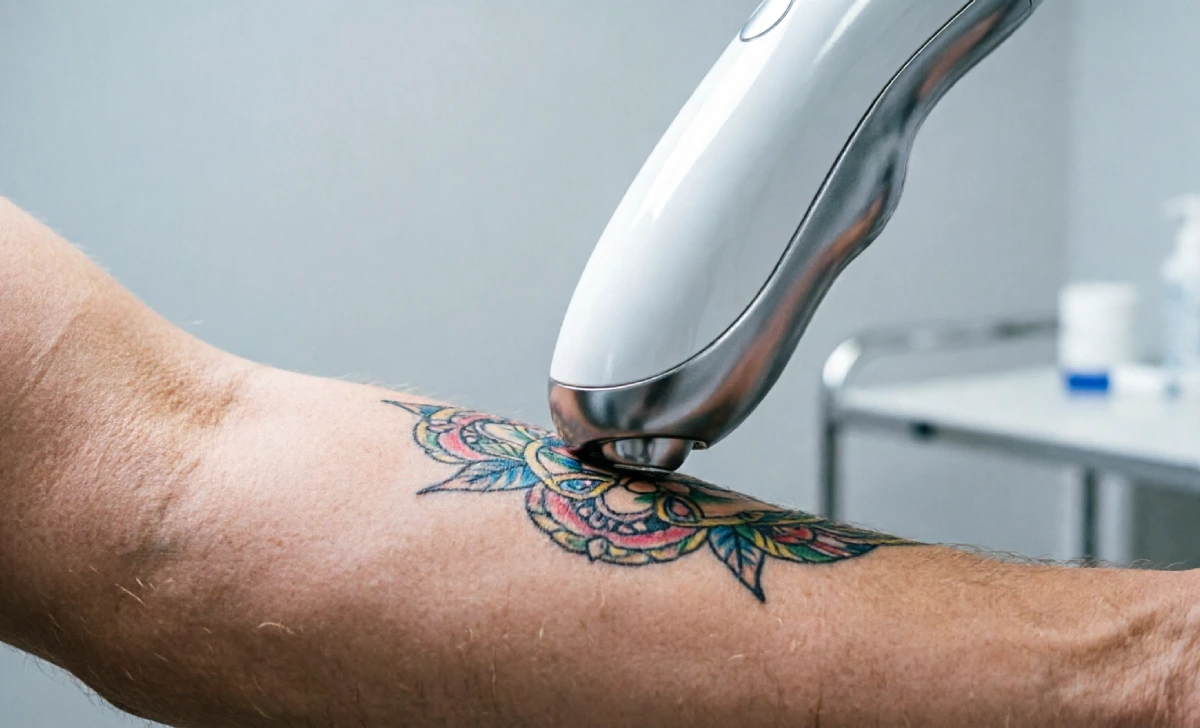
You glance at that tattoo and feel something you would rather not name. Maybe it is an ex’s name, a design you outgrew, or ink that never looked right. PicoWay tattoo removal has changed the conversation completely by using ultra-short pulses that shatter ink rather than burning it.
By the time you finish reading, you will know what happens during a session, what healing demands, and how to find a provider you can trust.
What Is PicoWay Tattoo Removal and How Does the Technology Work?
A picosecond is one trillionth of a second, and PicoWay fires laser pulses that last only that long. That speed changes everything about how the laser interacts with your skin.
Older lasers relied on heat, slowly warming pigment until particles broke apart. That heat spilled into surrounding tissue, which is why burns and scarring were common. PicoWay delivers energy so fast that it creates a mechanical shockwave inside the ink particles rather than warming them.
The shattered fragments become small enough for your lymphatic system to carry away naturally. Candela built the system specifically to address the problems that made people afraid of laser hair removal in the first place.
How Do the PicoWay Wavelengths Target Different Ink Colors?
PicoWay carries three distinct wavelengths, each tuned to a different color range. The 1064 nanometer wavelength handles dark pigments like black and dark blue while largely bypassing the melanin in your skin, making it the safest option for deeper skin tones.
The 532 nanometer wavelength targets warm tones like red and orange. The 785-nanometer wavelength targets greens and teals that resist most other lasers. Your provider can switch handpieces in a single session to treat multiple colors in sequence.
What Happens During a PicoWay Tattoo Removal Session Step by Step?
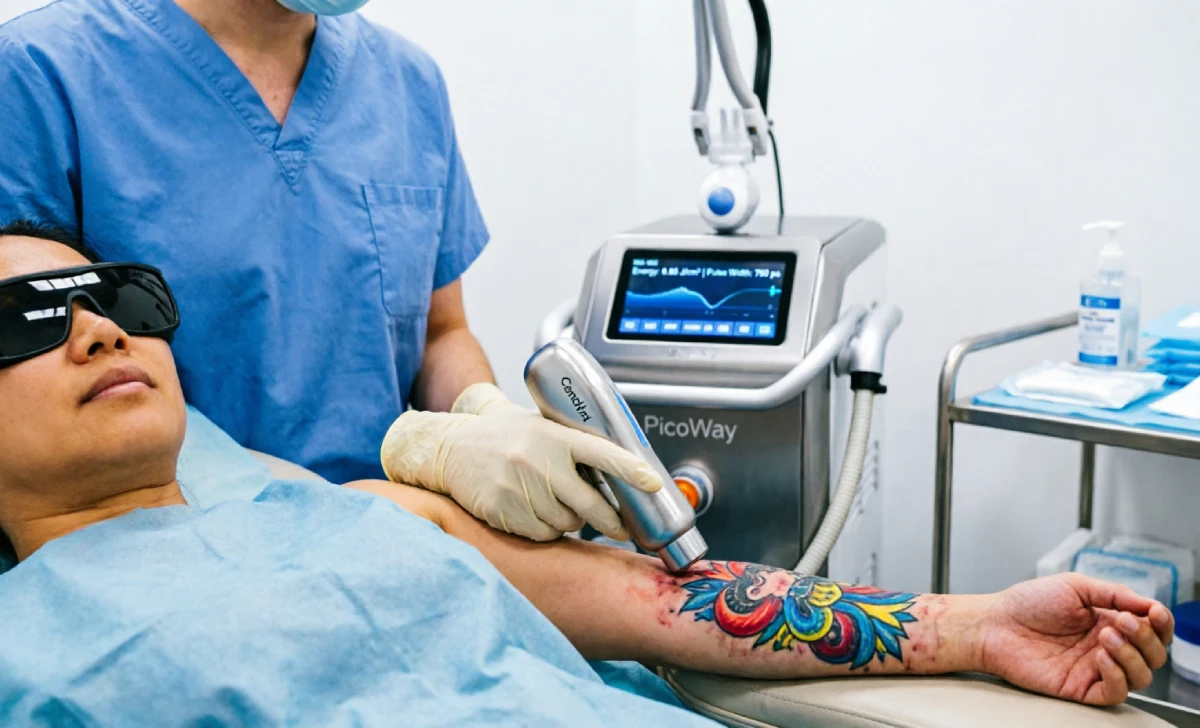
Your first visit begins with a consultation where the provider examines your tattoo and outlines a plan. Many clinics apply numbing cream and have you wait twenty to thirty minutes for it to take effect.
When the laser starts, you wear protective eyewear and feel a series of rapid snaps. The sound is a steady clicking, and you might catch a faint smell similar to singed hair, which is normal. A small tattoo can take under a minute, while a larger piece may take ten minutes or more. Right after, the skin looks whitish and slightly raised, a frosting reaction that confirms the ink absorbed the energy correctly.
How Does PicoWay Tattoo Removal Feel and How Much Pain Is Normal?
You will feel it, but it is more startling than unbearable. Most people compare it to a rubber band snapping against skin, repeated quickly across the treatment area.
Body location plays a real role. Ribs, ankles, and fingers are more sensitive because the skin is thin and the bone sits close to the surface. Fleshier spots like the outer arm feel less sharp. After the session, the discomfort fades almost immediately and gives way to mild warmth that clears within a few hours.
How Many PicoWay Sessions Will You Need for Your Tattoo?
For a professional black tattoo of average density, most people see significant fading in three to five sessions and near-complete clearance in six to eight visits. Amateur tattoos fade faster because they are shallower and lighter in ink.
Black and dark blue respond fastest. Reds take a bit longer, and greens can be the most persistent. You will typically wait six to eight weeks between sessions so your body has enough time to flush the shattered pigment.
Is PicoWay Safe for Darker Skin Tones?
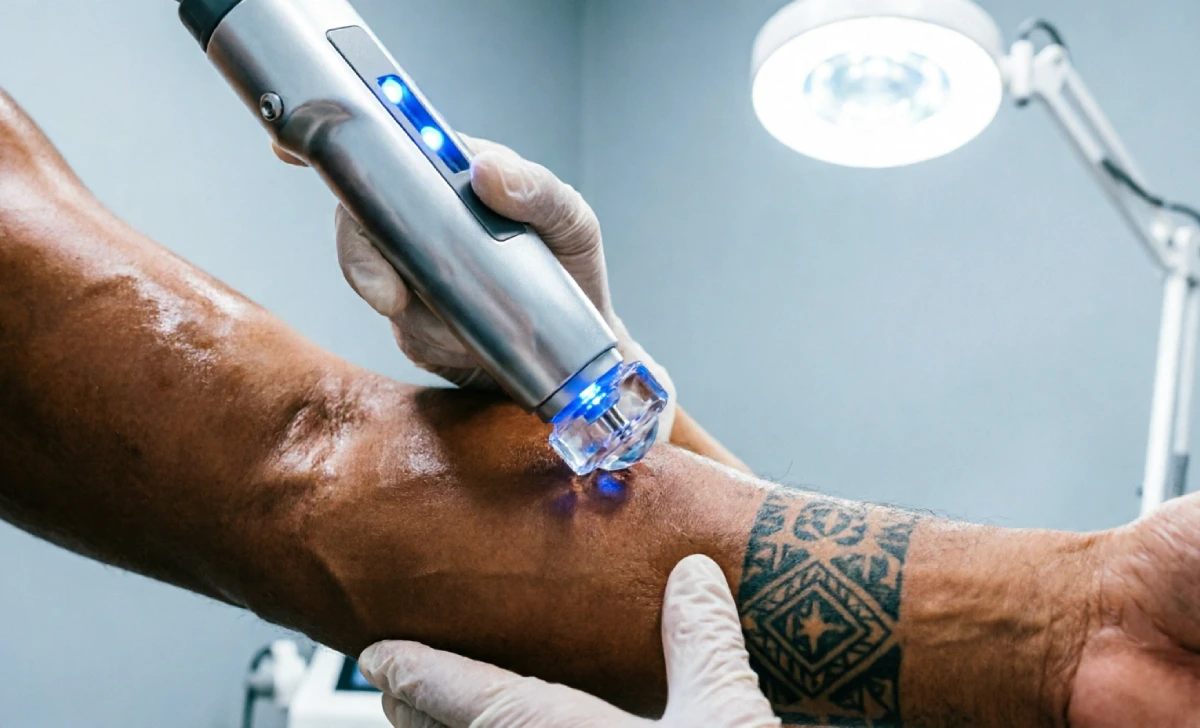
With older lasers, melanin competed with ink for the laser’s energy and absorbed damage meant for the tattoo. PicoWay’s 1064-nanometer wavelength passes through melanin with minimal absorption, focusing its energy on the ink below.
A responsible provider always performs a spot test first and waits before treating the entire area. This step is non-negotiable for Fitzpatrick skin types IV through VI. Many people with deeper skin tones have cleared unwanted ink without pigmentation issues when the right wavelength and a careful practitioner are in place.
What Are the Common Side Effects and How Do You Heal Properly?
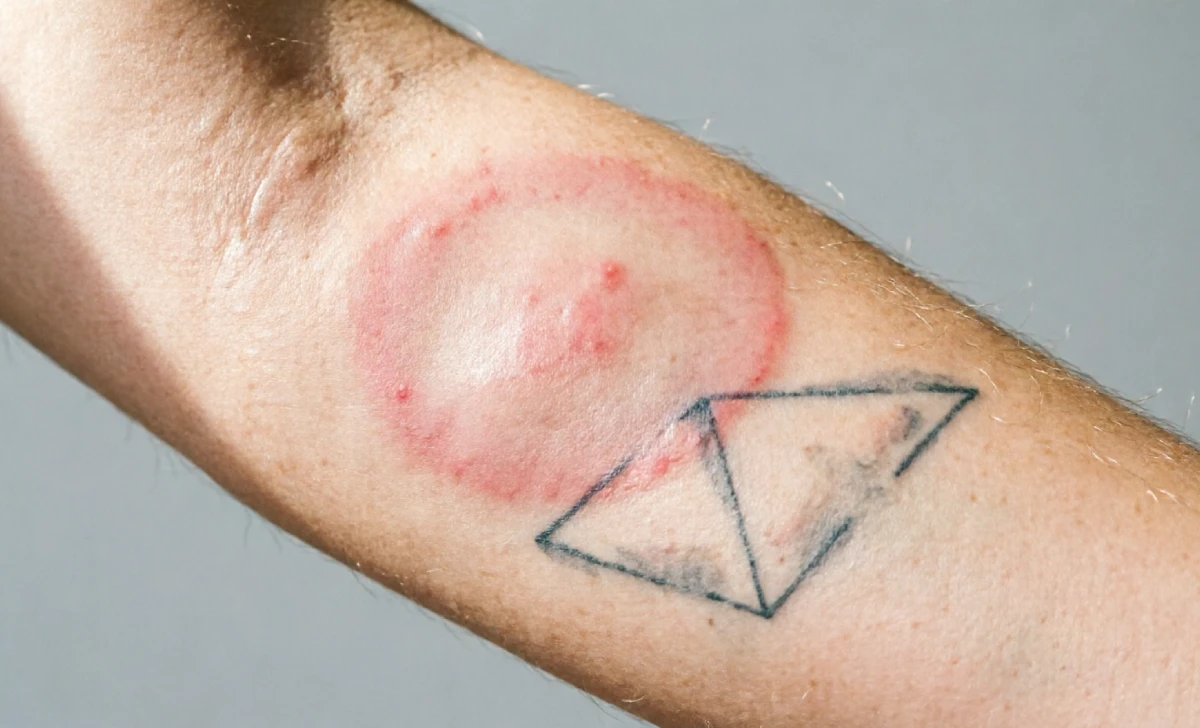
Redness, swelling, and small blisters are normal after a session. They show your body is mounting a healing response, not that something went wrong.
Keep the area clean with mild soap and cool water, apply ointment as directed, and resist picking at scabs. Picking is the most common cause of scarring, and it is entirely preventable. Sun exposure can darken healing skin and set progress back weeks, so keep the area covered or use a high-SPF mineral sunscreen once the skin has closed.
What Results Can You Expect, and How Fast Will You See Fading?
You will not leave your first session with a noticeably lighter tattoo. What happens is a slow, steady fade as your lymphatic system clears shattered pigment over weeks.
The first visible lightening usually appears around the three-to-four-week mark. Most people see the biggest change after sessions three and four. Understanding the skin healing process after treatment helps you stay patient through the stages that look like nothing is happening.
How Much Does PicoWay Tattoo Removal Cost Per Session?
Cost depends on tattoo size, number of colors, and your location. A small single-color piece might run a few hundred dollars per session, while a large multicolored tattoo costs significantly more.
PicoWay sessions often cost more than older Q-switched treatments, but because it clears ink more efficiently, you might need fewer sessions overall. A reputable clinic gives you a clear quote during consultation.
PicoWay vs. PicoSure: Which Picosecond Laser Is Better for You?
Both use ultra-short pulses, but they approach removal differently. PicoSure operates at a 755-nanometer Alexandrite base with pressure-wave technology and works well on blue and green pigments, but its single native wavelength limits versatility.
PicoWay has three native wavelengths, giving it broader coverage across black, red, orange, blue, and green inks. Its pulse duration is also shorter, meaning a stronger mechanical effect and less heat.
PicoWay vs. Traditional Q-Switched Lasers: What’s the Difference?
A Q-switched laser fires in nanosecond pulses, a thousand times longer than PicoWay’s bursts. That extra time lets heat build in the skin, damaging surrounding tissue and causing longer recovery.
For simple black ink on lighter skin, a Q-switched laser can still work. For colored ink or deeper skin tones, PicoWay is a meaningful step forward.
How to Choose a Qualified PicoWay Provider You Can Trust
The laser is only as effective as the person using it. A board-certified dermatologist or licensed medical professional with specific laser training should be involved in your treatment. Candela offers operator training, and a provider who has completed it is more likely to understand wavelength selection for your skin type.
Ask to see before-and-after photos of their actual patients, not manufacturer images. Red flags include rushed consultations, prices that seem too low, and anyone who dismisses questions about your skin or aftercare.
PicoWay Tattoo Removal Aftercare Instructions You Must Follow
For the first twenty-four hours, keep the area clean and dry. After that, gentle washing with lukewarm water and a fragrance-free cleanser is all you need. Avoid tight clothing, heavy exercise, or anything causing friction for at least forty-eight hours.
Sun protection is non-negotiable throughout the removal process. Small consistent habits that support healthy skin, like those in a solid glow-up routine, compound over months and genuinely accelerate how fast your body clears the ink.
PicoWay Tattoo Removal Myths and Facts You Should Know
One persistent myth is that laser removal leaves skin looking worse than the original tattoo. That was a concern with older thermal lasers, but PicoWay’s mechanical approach has reduced scarring risk significantly.
The idea that full removal happens in one or two sessions is seldom true. The myth that darker skin cannot be treated safely is also outdated. The right wavelengths and pulse speeds have changed what is possible for people with deeper skin tones.
FAQs
Can PicoWay remove permanent makeup and microblading?
Yes, but with extra caution. Cosmetic tattoo pigments often contain iron oxides that can darken with certain wavelengths. A test spot is essential before full treatment on eyebrows, eyeliner, or lip blush.
Will my tattoo be completely gone after treatment?
Many tattoos clear completely. Others leave a faint shadow, particularly if the original work was dense or placed very deep. Your provider can estimate the likelihood during consultation.
What should I do to prepare for my first session?
Arrive with clean skin, free of lotions or self-tanner on the treatment area. Avoid sun exposure for at least two weeks before your appointment and do not chemically irritate the skin beforehand.
Is PicoWay safe during pregnancy or breastfeeding?
Most providers decline to treat during pregnancy or breastfeeding because safety data in these groups are limited. Waiting until after this period is the standard recommendation.
Conclusion
PicoWay uses ultra-fast pulses to break ink apart with far less heat than older methods, and real fading is a gradual process your body handles with the right support.
Your most important next step is finding a provider who respects your skin and your questions. Ask what you need to ask, and do not rush into treatment until you feel genuinely ready.