
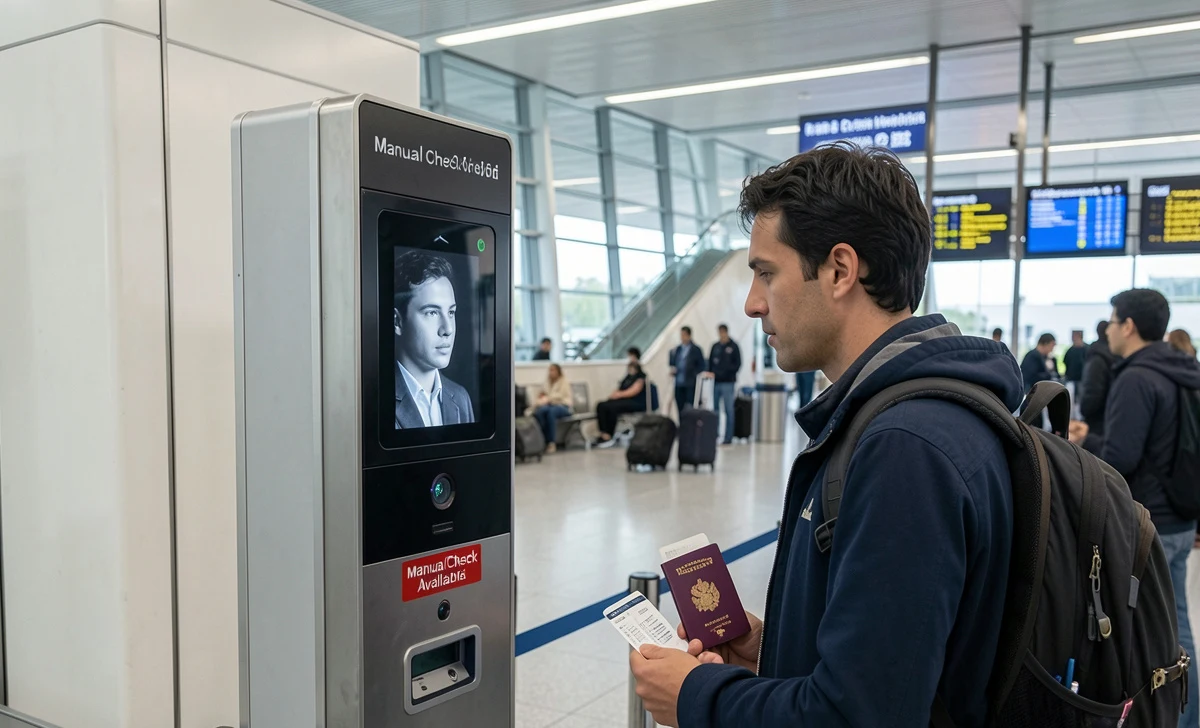
You’re standing at the gate, the agent points to a camera, and suddenly you’re wondering: can you opt out face scans? Short answer: usually, yes — and knowing how to opt out of face scans could save you time and stress at busy terminals. But the “how” and “what happens next” depends entirely on where you’re flying, who you are, and which airline you’re with. Let’s cut through the noise on your right to opt out of face scans in 2026.
Here’s the thing—biometric boarding isn’t some distant future concept anymore. It’s happening right now at major hubs from Atlanta to Amsterdam. And while the tech promises speed, long waits are still real. Finding an airport lounge sleep spot can help if you’re stuck in manual-check lines.
You’ve probably noticed the signs: “Smile, you’re on camera.” But noticing and understanding your options are two very different things.
Yes, You Can Usually Opt Out (But Know the Exceptions)
If you’re traveling within or from the European Union, you have a clear legal right to refuse facial recognition at boarding. GDPR isn’t just a buzzword here—it means airlines must offer a non-biometric alternative, no questions asked.
The U.S. is trickier. TSA says participation is voluntary for domestic flights. But step onto an international route, and CBP’s rules take over. While you can still request a manual ID check, the process isn’t always smooth, and not every agent is trained on the opt-out protocol.
And if you’re entering the Schengen Area as a non-EU national? The new Entry/Exit System (EES) changes the game. Facial and fingerprint data become mandatory for first-time entry—opting out isn’t really an option (EU EES Guidelines).
Bottom line: your ability to say “no” depends on your citizenship, your route, and whether you’re departing or arriving.
How Airport Facial Recognition Actually Works in 2026
It’s not magic. Here’s the basic flow:
- You present your passport or boarding pass.
- A camera captures your face.
- The system compares that image to the photo in your passport chip or a government database.
- If it matches, you’re cleared to board.
Two quick terms matter here: verification (1:1 match: is this you?) vs. identification (1:many search: who is this?). Most boarding gates use verification, which is less invasive—but the line can blur depending on the airport.
If you’re traveling long distances, these quick checks add up—so knowing the process helps you prepare.
Now, let’s break down what actually happens if you decide to skip the scan.
Your Legal Rights: When You Can Say “No” to Face Scans
EU Travelers: GDPR & EDPB Protections
If you’re an EU citizen flying anywhere, or anyone flying within the EU, GDPR gives you strong leverage. You can refuse biometric processing, and the airline must provide a reasonable alternative—like a standard ID check. No penalty, no delay (in theory).
The European Data Protection Board has been clear: consent must be freely given. If the only “choice” is a 2-hour wait in a separate line, that’s not really consent.
US Travelers: TSA Policy vs CBP Reality
For domestic flights, TSA’s official stance is that biometric screening is optional. You can ask for a manual ID verification. But—and this is a big but—not every checkpoint agent knows the script. You might get pushback or be directed to a supervisor.
For international departures from the U.S., CBP runs the show. Their rules are less flexible. You can still request an alternative, but expect more scrutiny and potentially longer processing.
Non-EU Nationals Entering Schengen: The EES Exception
Here’s where it gets sticky. If you’re a U.S., UK, or Canadian citizen visiting Europe for the first time under the new Entry/Exit System, facial and fingerprint data collection is mandatory. There’s no opt-out for that initial enrollment.
After that first entry, subsequent trips may offer more flexibility—but the rules are still evolving. Keep an eye on official EU sources before you fly.
Practical Guide: How to Skip Facial Recognition at Boarding
So you’ve decided to opt out. What now?
First, know your script. Calmly say: “I’d prefer a manual ID check, please.” Avoid arguing about privacy or policy at the gate—that’s not the agent’s job to debate.
Second, arrive early. Manual checks take longer. Give yourself an extra 20–30 minutes to avoid stress.
Third, look for signage. Some airports label the “non-biometric” lane. If you don’t see it, ask: “Where do I go for a standard ID verification?”
And if an agent insists the scan is mandatory? Politely ask to speak with a supervisor. In most cases, especially in the EU, they’ll accommodate you once the request is escalated.
Truth is, most travelers who opt out report only minor delays—if they prepare ahead.
Real Concerns, Real Answers
You’ve got questions. Let’s tackle the ones that actually matter.
“Will I Be Denied Boarding If I Refuse?”
In the EU, you seldom follow the proper opt-out process. Airlines risk heavy fines for denying boarding solely over biometric refusal.
In the U.S.: highly unlikely for domestic flights. For international routes, it’s rare but not impossible if CBP deems manual verification insufficient. Always carry a backup ID.
“Does Facial Recognition Work With Glasses, Masks, or Darker Skin?”
Good question—and a fair concern. Studies show accuracy can drop for people with darker skin tones, especially women. Glasses and masks can also cause false rejects.
If the system fails to match you, you’ll be routed to a manual check anyway. So ironically, opting out upfront might save time if you wear glasses or have features the algorithm struggles with.
That’s one reason travelers ask: Does facial recognition work with a glasses mask? The honest answer: sometimes, but don’t bet your boarding pass on it.
Privacy Deep Dive: How Long Is Your Face Data Stored?
This is where things get… complicated.
In the U.S., CBP says photos of U.S. citizens are deleted within 12 hours of flight departure. But photos of foreign nationals? They can be stored for up to 75 years in DHS databases۔
In the EU, the rule is stricter: biometric data collected at boarding should be deleted shortly after flight departure, unless there’s a security incident. GDPR’s “purpose limitation” principle applies.
Some airports, like Singapore Changi, process images on-device and delete them within 24 hours. Others? Less transparent.
So when travelers wonder how long airport face data is stored, the real answer is: it depends on your passport, your route, and which government is running the system.
That’s exactly why airport face scan privacy rights 2026 aren’t one-size-fits-all. Know your route. Know your rights.
Pre-Flight Checklist: Prepare for Biometric Boarding in 2026
Before you head to the airport, do this:
Test your passport chip. Use a free app like ReadID to confirm it’s readable. A damaged chip = more manual checks anyway.
Screenshot the relevant policy. Save the TSA, CBP, or EDPB page that confirms your opt-out rights. Having it on hand helps if an agent is unsure.
Pack a backup ID—and if you’re learning how to pack a carry-on efficiently, that backup ID should be easy to access.
Practice your phrase: “I’d like a manual ID check, please.” Short, polite, firm.
Check your airport’s website. Some hubs post specific instructions for non-biometric boarding.
FAQs
If I opt out, will I miss my flight?
Unlikely if you arrive early. Manual checks add 5–15 minutes. Build that buffer in.
Can airlines penalize me for refusing a face scan?
In the EU, no GDPR prohibits it. In the U.S., policies vary, but denying boarding solely for opting out would invite legal scrutiny.
What if the agent says, “It’s mandatory,” but I know it’s not?
Stay calm. Ask politely for a supervisor. Reference the official policy you screenshot. Most issues resolve at that level.
Do children have to do face scans?
Rules vary. In the EU, kids under 12 often only need facial verification (no fingerprints). In the U.S., minors can opt out with a parent’s request. Always confirm with your airline ahead of time.
Wrapping Up: Travel on Your Terms
Look, biometric boarding isn’t going away. But neither are your rights.
Knowing can you opt out of airport face scans—and exactly how to do it—puts you back in control. You don’t have to choose between convenience and privacy. You can have both if you prepare.
Next time you book a flight, spend five minutes checking the biometric policy for your route. Save the opt-out steps. Pack that backup ID. Then fly with confidence.
And if you’re curious how specific airports handle manual checks, we’ve got a breakdown coming soon for the world’s busiest hubs. Bookmark this page—we’ll update it as policies shift. If reducing your travel carbon footprint matters to you, we’ve got practical guides for that too.