
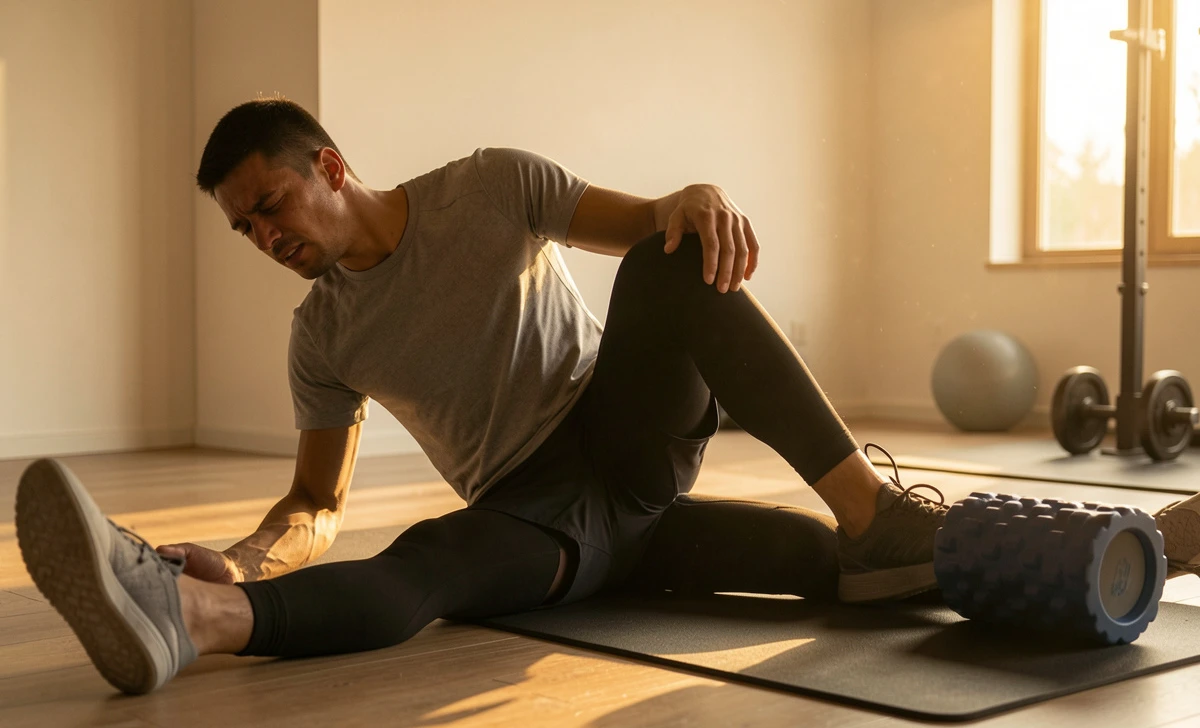
You just crushed a new workout. Felt great. Then two days later, you can barely sit down without wincing. Sound familiar? That’s DOMS—delayed onset muscle soreness—, and if you’re wondering how long DOMS lasts, you’re not alone. Most people want a straight answer: is this normal, or did I push too hard? But your timeline might look different depending on your fitness level, what you did, and how you recover—especially if you’re working to endurance without overtraining.
Here’s the short version: DOMS usually peaks around 48 hours and fades within 3–5 days. But your timeline might look different depending on your fitness level, what you did, and how you recover. Let’s break down what’s actually happening in your body, when to relax, and when to pay attention.
What Is DOMS, Exactly?
DOMS isn’t just “being sore.” It’s your muscles reacting to new or intense movement—especially exercises with a strong lowering (eccentric) phase, like squats, lunges, or downhill running. Those tiny micro-tears? They’re normal. They’re how muscles adapt and get stronger.
What DOMS isn’t: sharp, stabbing pain. Or swelling. Or pain that stops you from moving normally. That’s a different conversation.
Think of DOMS like your body’s way of saying, “Hey, that was new. I’m adjusting.” It’s not a badge of honor, and it’s not a failure if you don’t feel it. More on that soon.
The DOMS Timeline: When to Expect Pain
Hours 0–24: The Quiet Phase
You finish your workout. Maybe you feel a little tightness, but nothing major. That’s typical. DOMS rarely shows up right away. Your muscles are busy with the initial inflammatory response, but you won’t feel the real “ouch” yet.
Pro tip: Don’t use this calm window as proof you “didn’t do enough.” The soreness isn’t a scorecard.
Hours 24–72: Peak Soreness Window
This is when DOMS usually hits hardest. Stairs feel tricky. Laughing hurts your abs. Getting out of a chair requires strategy. For most people, day two is the peak. That’s why so many folks Google why does DOMS hurt more on day 2—it’s not in your head. Inflammation and nerve sensitivity ramp up during this window.
Days 4–7: The Fade-Out
By day four or five, the stiffness should be easing. You might still feel a dull ache, especially when you first move, but it shouldn’t limit your daily life. If it does? That’s worth noting.
Is It Normal to Be Sore 3+ Days After a Workout?
Short answer: yes, often. Especially if:
- You tried a new activity (hello, first spin class)
- You increased weight, reps, or intensity suddenly
- You focused heavily on eccentric movements
- You’re under extra stress or low on sleep
But here’s the nuance: is it normal to be sore 3 days after a workout depends on the type of soreness. DOMS feels like a dull, widespread ache. It’s symmetrical (both quads, both arms), which reflects how muscle memory sports adaptation works across balanced movement patterns. It eases with gentle movement.
Is your pain sharp, localized to one spot, or gets worse with light activity? That’s your cue to pause and reassess.
No Soreness? That Doesn’t Mean Your Workout Failed
Let’s bust a myth right now: Does no soreness mean a bad workout? Nope. Not even close.
Your body adapts. The more consistently you train, the less DOMS you’ll feel—even when the workout is tough. That’s progress, not a problem.
Better ways to gauge a good session:
- Did you maintain solid form?
- Could you complete your planned reps or time?
- Did you feel challenged but in control?
- Are you slightly stronger or more enduring than last week?
Soreness is a side effect, not the goal. Chasing it often leads to overtraining or injury.
DOMS vs. Injury: 5 Red Flags to Watch For
It’s easy to confuse the two when you’re new to training. Here’s a quick way to tell:
| DOMS | Possible Injury |
|---|---|
| Dull, achy, widespread | Sharp, stabbing, pinpoint |
| Starts 24–48 hrs post-workout | Pain during or immediately after |
| Eases with light movement | Worse with any movement |
| Symmetrical (both sides) | One-sided or isolated |
| Fades in 3–5 days | Persists or worsens after 7 days |
If you notice any of the injury-side signs, don’t push through. Rest, ice if helpful, and consider checking in with a physical therapist or sports med pro.
Why Does DOMS Hurt More on Day 2? The Science
You’ve probably noticed the delay. Why doesn’t it hurt right away?
Blame inflammation and nerve sensitivity. After eccentric loading, your muscle fibers undergo microscopic damage. Your immune system sends repair cells, which release compounds that temporarily increase sensitivity in local nerves. That process takes time to ramp up—hence the 24–48 hour delay.
It’s not that your muscles are “more torn” on day two. It’s that your body’s repair crew is in full swing, and that process comes with temporary discomfort. Totally normal. Totally temporary.
Smart Recovery: Ease DOMS Without Skipping Workouts
You don’t need to freeze your life while waiting for soreness to fade. Try these:
- Move gently: A 10-minute walk or light cycling—whether aerobic vs anaerobic—increases blood flow without adding stress.
- Hydrate well: Dehydration can amplify soreness. Aim for water throughout the day, not just post-workout.
- Prioritize protein: 20–30g within a couple of hours post-session supports repair.
- Try foam rolling: 5–10 minutes on sore areas can reduce perceived tightness. Don’t overdo it—gentle pressure wins.
- Sleep: This is when most repair happens. Protect your 7–9 hours.
What doesn’t reliably help? Static stretching before workouts (save it for after), mega-doses of ibuprofen (can blunt adaptation), or complete rest for days (movement aids recovery).
FAQs
Can I work out with DOMS?
Yes—if it’s mild to moderate and symmetrical. Stick to lighter weights, lower impact, or train a different muscle group. If moving feels sharp or unstable, take an extra rest day.
Does DOMS mean I’m building muscle?
Not necessarily. DOMS signals novelty or intensity, not growth. You can build strength and muscle with zero soreness. Consistency and progressive overload matter far more.
Why do I get DOMS but my workout partner doesn’t?
Recovery varies by genetics, training history, sleep, stress, and even hydration. Comparing soreness isn’t useful. Focus on your own signals.
When should I actually worry about soreness?
If pain lasts longer than 7 days, is severe enough to limit daily tasks, or comes with swelling, bruising, or dark urine (rare, but serious), contact a healthcare provider.
Wrap-Up
DOMS is normal. It’s temporary. And it’s not the measure of a good workout. Most people feel the peak around 48 hours and bounce back within a week. If your soreness fits that pattern and eases with movement, you’re likely fine.
But if something feels off—sharp, one-sided, or stubborn—listen to that too. Your body’s feedback is data, not drama.
Next time you’re sore, try the quick self-check: Is it dull or sharp? Symmetrical or isolated? Getting better or worse? That simple framework helps you build muscle memory for smarter recovery decisions.